
Orchestrer les insights d’IA pour les transformer en actions

Tendances
Categories
FedEx A300 Nose Gear Collapses During Maintenance at BWI Airport
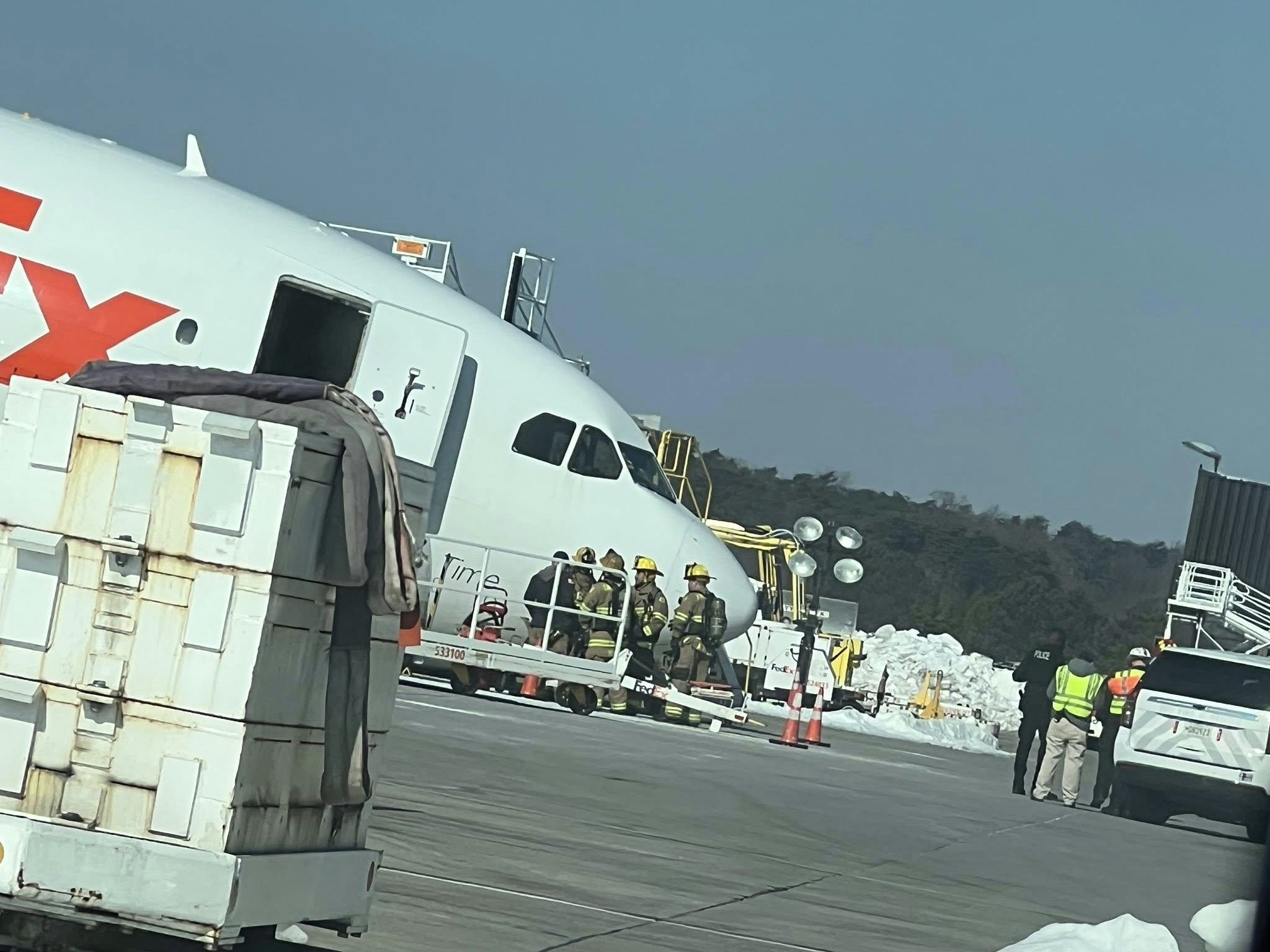
FedEx A300 Nose Gear Collapses During Maintenance at BWI Airport
A FedEx Airbus A300-600F freighter suffered a nose landing gear collapse while undergoing routine maintenance outside a hangar at Baltimore/Washington International Thurgood Marshall Airport (BWI) on February 4, 2026. The incident prompted an immediate response from airport fire and rescue teams, though no injuries were reported. Both FedEx and airport officials confirmed that all personnel remained unharmed during the event.
Details of the Incident
The aircraft, registered as N682FE, was stationary on the cargo apron adjacent to maintenance facilities when the nose gear gave way, causing the forward fuselage to rest on the ground. Visual evidence from the scene revealed damage to the nose landing gear assembly, the gear door, and the lower forward fuselage skin. Maryland Aviation Administration representatives noted that the incident occurred within a restricted cargo area and did not affect commercial flight operations at BWI.
FedEx acknowledged the event, expressing appreciation for the swift actions of first responders. The company has not reported any operational changes in the aftermath but remains focused on ensuring safety and minimizing disruption.
Investigation and Operational Context
The Federal Aviation Administration (FAA) is expected to initiate a standard investigation to determine the cause of the nose gear failure. At this stage, no preliminary findings have been disclosed, and there is no indication of a systemic safety issue affecting the Airbus A300 fleet. Experts note that nose gear collapses during maintenance are uncommon but can occur if safety pins are not properly installed or if hydraulic systems are inadvertently pressurized while the aircraft is grounded.
This incident arrives amid FedEx’s ongoing Network 2.0 initiative, a strategic program aimed at reducing costs and improving operational efficiency in response to declining demand. The nose gear collapse may invite increased scrutiny from aviation regulators, potentially leading to delays in flight schedules and elevated maintenance expenses. Market observers suggest that the event could temporarily affect investor confidence, while competitors such as UPS might leverage the situation to emphasize their own operational reliability.
Fleet Considerations
FedEx continues to operate a fleet of Airbus A300-600 freighters, many of which have been in service since the late 1990s and early 2000s. Although the aircraft type has a reputation as a dependable cargo workhorse, the aging fleet demands more rigorous inspections and maintenance protocols. The recent incident highlights the challenges faced by operators in maintaining older aircraft amid broader industry efforts to streamline operations and control costs.

Etihad Airways Suspends Airbus A380 Flights on Key Route

Aditya Birla Group Seeks Approval for Aircraft Leasing in GIFT City

Qatar Airways Highlights Innovation and Connectivity at Arabian Travel Market 2026

Hong Kong's Five-Year Plan Includes Andrew Fan's Aircraft Parts Processing Hub Proposal

ACIA Aero Leasing Delivers ATR72-600 to Air Nostrum

RTX Appoints Jill Albertelli as Head of Pratt & Whitney

TAT Technologies Joins Beyond Aero Hydrogen Aircraft Program

AURAK Study Highlights Barriers to Air Taxi Adoption in Emerging Economies

Xiamen Air Selects Altitude for 787 Maintenance at Heathrow

Etihad and Swissport Extend Global Partnership
