
Orchestrer les insights d’IA pour les transformer en actions

Tendances
Categories
Hong Kong and Dongguan Collaborate to Develop Sustainable Aviation Fuel Supply Chain
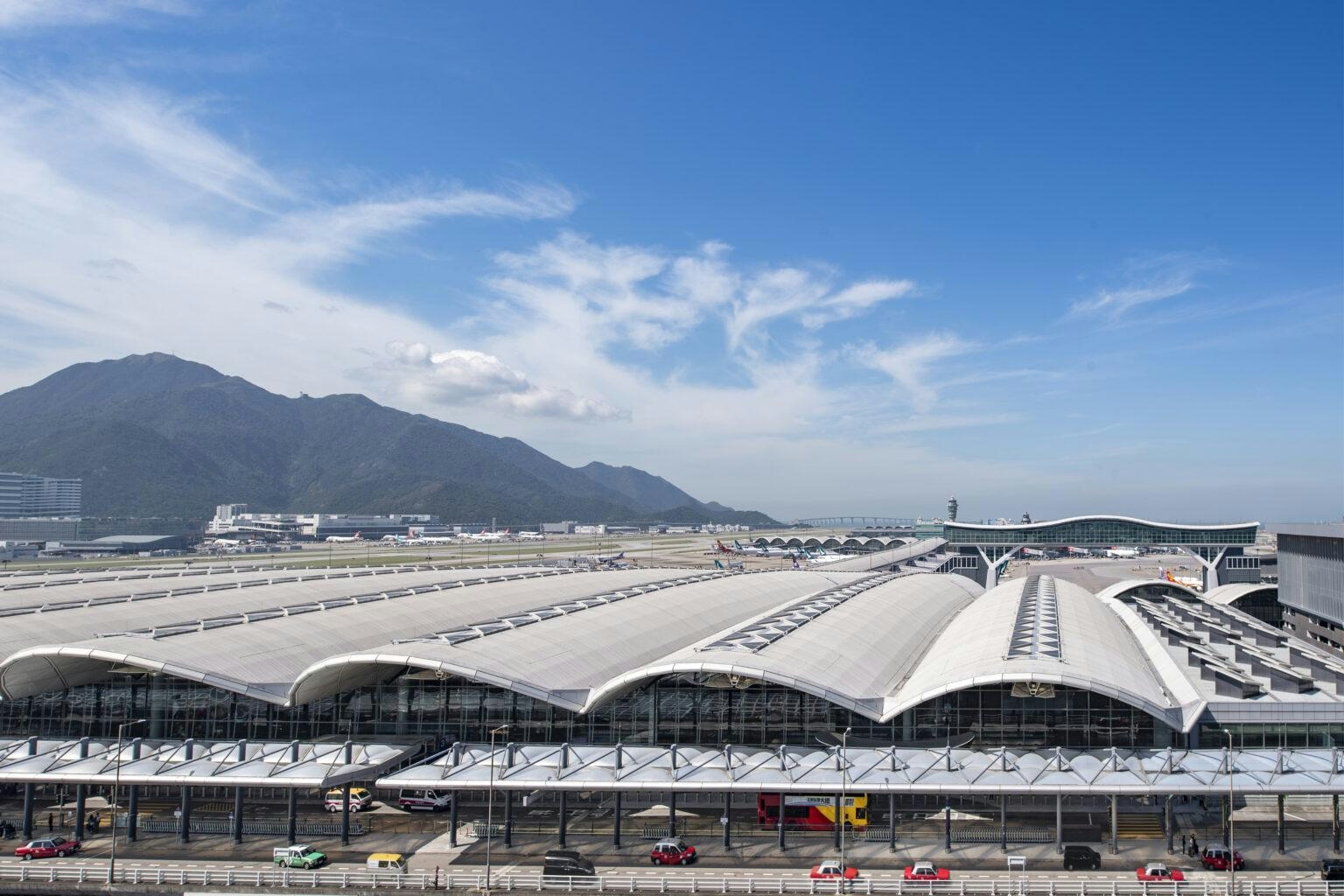
Hong Kong and Dongguan Collaborate to Develop Sustainable Aviation Fuel Supply Chain
EcoCeres, a Hong Kong-incubated leader in sustainable fuel and green molecule production, has formalized a strategic partnership with the Dongguan government through a Memorandum of Understanding to establish a new production base in Dongguan. This initiative represents the first comprehensive sustainable aviation fuel (SAF) industry chain within the Guangdong-Hong Kong-Macao Greater Bay Area, signaling a significant step forward in regional green energy development.
Building a Regional SAF Industry Chain
EcoCeres, initially launched as a project under Hong Kong and China Gas Company Limited, has rapidly ascended to become the world’s second-largest producer of sustainable aviation fuel. In May, the company collaborated with a major Mainland aviation corporation to initiate the "Spark Program," China’s inaugural commercial demonstration project aimed at creating a full SAF supply chain. This program underscores the growing momentum behind China’s commitment to sustainable aviation and green energy innovation.
Hong Kong Chief Executive John Lee highlighted the importance of this partnership in deepening cooperation between Hong Kong and Dongguan. He described the collaboration as a "GBA Solution" to China’s green transition, contributing "Chinese wisdom" to the global new energy landscape. Dongguan’s CPC Municipal Committee Secretary Wei Hao emphasized the strong economic ties underpinning this cooperation, noting that trade between the two cities reached RMB 214.2 billion by 2025, a 12% increase, while Hong Kong’s actual utilized investment in Dongguan rose by 20.5% to approximately RMB 5 billion. Wei pointed out that the SAF partnership exemplifies the robust momentum and expansive market potential of Hong Kong-Dongguan collaboration.
The new EcoCeres production facility will be situated on Lisha Island in Dongguan, an area renowned for its well-established chemical industry infrastructure. Hong Kong contributes expertise in green energy refining, environmental management, and international trade, while Dongguan offers substantial industrial capacity. This synergy is expected to foster new opportunities in environmental protection and the circular economy across the Greater Bay Area.
Advancing Sustainable Aviation Fuel Production
Lee Ka Kit, Chairman of Hong Kong and China Gas Company Limited, explained that EcoCeres specializes in converting recycled waste cooking oil into clean aviation fuel. This process not only transforms waste into valuable resources but also enhances food safety by preventing used oil from re-entering the food supply chain. He further noted that Hong Kong’s unique position—"backed by the Chinese Mainland and connected to the world"—combined with Dongguan’s industrial strengths, will facilitate the development of a fully integrated SAF industry chain. This chain will encompass research and development, recycling, production, storage, distribution, and refueling, thereby injecting "green new productivity" into both regional and national economies.
Alan Chan, Co-Chairman of EcoCeres, highlighted Hong Kong’s role as a major shipping hub, complemented by local manufacturing and raw material collection, which has nurtured a self-sustaining ecosystem for sustainable fuel production. The decision to expand operations in Dongguan was influenced by the city’s favorable production environment, policy support, and coordinated efforts between the Dongguan and Hong Kong Special Administrative Region governments. These factors collectively provide Hong Kong enterprises with a competitive advantage in advancing the SAF industry.
Challenges and Industry Outlook
Despite these promising developments, the sustainable aviation fuel sector continues to face significant challenges. Currently, SAF accounts for only 0.7% of global aviation fuel consumption, with limited supply and high production costs hindering broader adoption. Airlines are increasingly motivated to explore alternative fuels as jet fuel prices escalate amid ongoing geopolitical tensions. In response, competitors are investing in advanced e-fuels and domestic supply chains to reduce dependence on imports from volatile regions.
Recent initiatives, such as Cathay Pacific’s commitment to SAF through strategic partnerships and investments, reflect the aviation industry’s determination to decarbonize despite these obstacles. The Hong Kong-Dongguan partnership aims to address these challenges by establishing a resilient, localized SAF supply chain, positioning the Greater Bay Area as a leader in sustainable aviation and green energy innovation.

Etihad Airways Suspends Airbus A380 Flights on Key Route

Aditya Birla Group Seeks Approval for Aircraft Leasing in GIFT City

Qatar Airways Highlights Innovation and Connectivity at Arabian Travel Market 2026

Hong Kong's Five-Year Plan Includes Andrew Fan's Aircraft Parts Processing Hub Proposal

ACIA Aero Leasing Delivers ATR72-600 to Air Nostrum

RTX Appoints Jill Albertelli as Head of Pratt & Whitney

TAT Technologies Joins Beyond Aero Hydrogen Aircraft Program

AURAK Study Highlights Barriers to Air Taxi Adoption in Emerging Economies

Xiamen Air Selects Altitude for 787 Maintenance at Heathrow

Etihad and Swissport Extend Global Partnership
