Image

AeroGenie — Votre copilote intelligent.

Posez n'importe quelle question. Analysez tout. Agissez instantanément.

Tendances

Categories

How The Airbus A220’s Engine Efficiency Is Changing Regional Travel
November 28, 2025By ePlane AI
How The Airbus A220’s Engine Efficiency Is Changing Regional Travel
0
0
Airbus A220
Pratt & Whitney GTF
Engine Efficiency

How The Airbus A220’s Engine Efficiency Is Changing Regional Travel

The Rise of the Pratt & Whitney GTF Engine in Regional Jets

The Pratt & Whitney geared turbofan (GTF) engine has emerged as a transformative force in the 100-150 seat regional jet market, powering both the Airbus A220 and Embraer E-Jet E2 families. Its efficiency significantly surpasses that of older engines, such as the Rolls-Royce BR700 used on the Boeing 717, delivering substantial fuel savings and reduced emissions. While the GTF engine has generally demonstrated strong reliability, recent operational challenges prompted Pratt & Whitney to implement enhancements to the PW1900G variant. These improvements have led to a reduction in aircraft-on-ground (AOG) incidents and improved spare parts availability, both critical factors in maintaining airline schedules and operational reliability.

The Airbus A220’s Market Evolution and Competitive Position

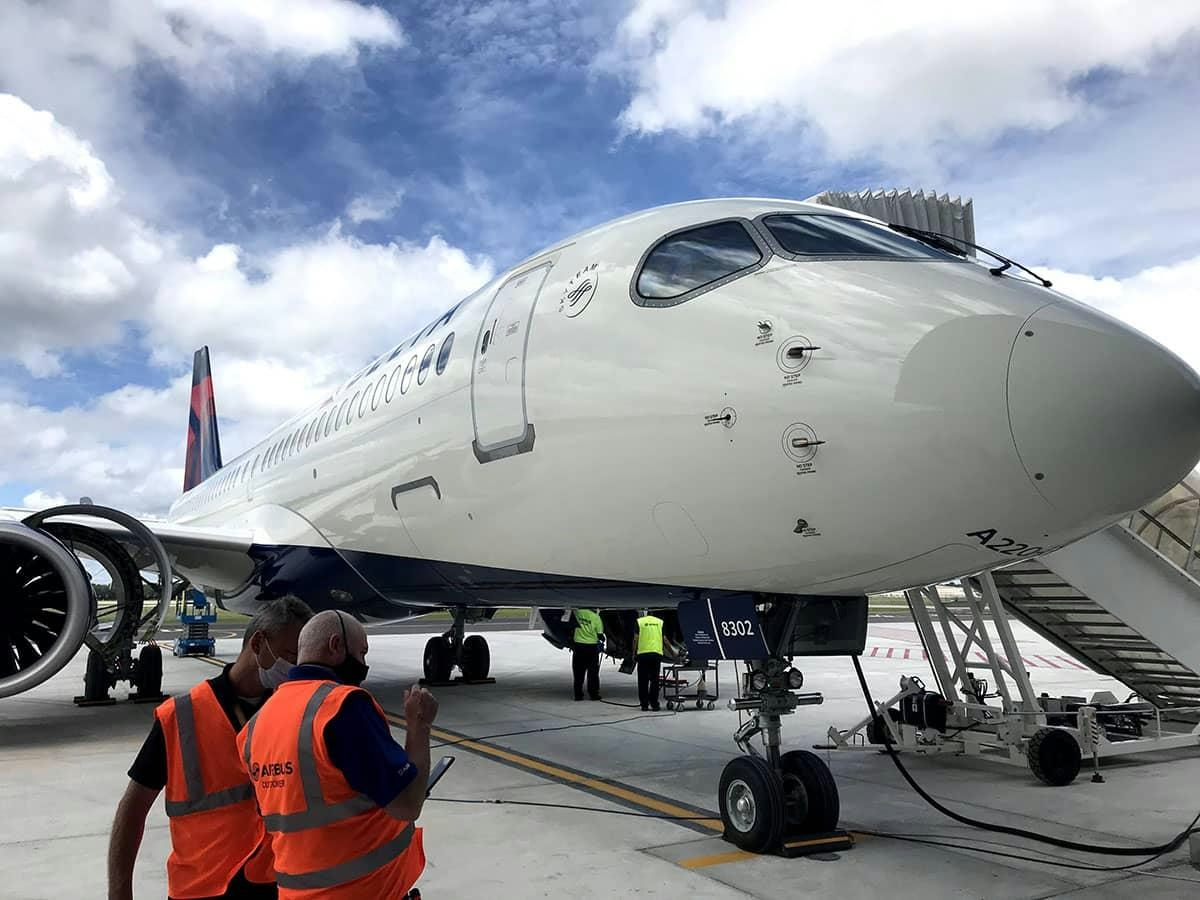
Originally developed by Bombardier as the CSeries, the Airbus A220 was conceived as a clean-sheet regional airliner designed to compete directly with Embraer’s E-Jet series. Early investment from Delta Air Lines played a pivotal role in bringing the aircraft to market. However, Bombardier’s high development costs eventually led to the sale of the program to Airbus in 2018. This transition bolstered airline confidence, as carriers generally prefer established manufacturers when placing large fleet orders. Since the acquisition, Airbus has accelerated A220 sales, securing nearly 1,000 firm orders—941 in total, comprising 118 A220-100s and 823 A220-300s—with approximately half already delivered. By comparison, Embraer’s E-190 E2 and E-195 E2 models, introduced around the same time, have recorded 308 orders and 181 deliveries.

The A220’s engine efficiency is reshaping airline fleet strategies. JetBlue, for instance, is restructuring its regional fleet by phasing out Embraer 190s while retaining its A220s, signaling a broader industry shift toward more efficient aircraft. Positioned within the 100-150 seat segment, just below the capacity of the Boeing 737 MAX and Airbus A320neo, the A220 often matches or slightly outperforms the Embraer E-Jet E2 in fuel burn per seat. Additionally, the larger A220-300 offers greater capacity than Embraer’s E195-E2, enhancing its appeal on higher-demand routes.

Operational Benefits and Production Outlook

Designed to replace aging regional jets such as the Boeing 717-200, Airbus A319, McDonnell Douglas MD-80/90, and Fokker 100, the A220 delivers a 25% reduction in fuel burn per seat compared to previous-generation aircraft, according to Airbus. It also features a noise footprint that is half that of its predecessors, making it particularly attractive for airlines operating in noise-sensitive airports.

Reflecting strong market demand and the impact of engine efficiency, Airbus has revised its A220 production target to 12 aircraft per month by 2026. This production ramp-up aligns with airlines’ increasing preference for efficient regional jets and ongoing improvements in engine reliability. Concurrently, Pratt & Whitney is engaged in discussions with Airbus to ensure that engine supply can meet production demands beyond 2025, highlighting the critical role of continued innovation and support in the evolving regional travel market.

The Airbus A220’s advanced engine technology is thus driving significant reductions in operational costs and environmental impact, while also influencing airline fleet strategies and reshaping regional travel dynamics on a global scale.

More news
APEX and FTE Honor Female Leaders Driving Innovation in Passenger Experience

APEX and FTE Honor Female Leaders Driving Innovation in Passenger Experience

APEX and FTE Honor Female Leaders Driving Innovation in Passenger Experience To commemorate International Women’s Day, the Airline Passenger Experience Association (APEX) and Future Travel Experience (FTE) are highlighting the contributions of female leaders who are transforming the future of passenger experience. Throughout the week, APEX will feature a series of interviews with women at the forefront of innovation within its member organizations. The series begins with Clare Josey, Senior Director of Passenger Services at RAVE Aerospace, whose career exemplifies the expanding influence of women in some of aviation’s most dynamic sectors. Clare Josey: A Career Shaping Passenger Experience Innovation Clare Josey’s professional journey started in media and content distribution, where she gained a deep understanding of audience engagement and the role of technology in enhancing experiences. Her subsequent positions at BBC Worldwide, Rockwell Collins, Thales, Spafax, and now RAVE Aerospace have focused on bridging airline needs with emerging technological capabilities to create meaningful solutions for passengers. Josey describes her passion for innovation leadership as a balance between creativity and practicality, aiming to deliver experiences that genuinely improve the passenger journey while accommodating the operational realities of airlines. Reflecting on the progress toward gender equality in aviation, Josey acknowledges significant advancements, particularly in raising the profile of women in customer experience, commercial, and innovation roles. She notes an encouraging increase in female participation in engineering and software development, areas critical to shaping the technologies that underpin modern passenger journeys. Nonetheless, she points out that women remain underrepresented in the most senior and technical leadership positions. Josey emphasizes the need for stronger sponsorship and a deliberate commitment to inclusive leadership at the highest levels to accelerate progress. Josey also shares insights into the unique challenges and opportunities she has encountered as a woman leading innovation. Often one of the few women in technical discussions, she has developed strategies to navigate diverse communication styles and rigorously question assumptions. While this approach can be time-consuming, she asserts that it frequently results in more comprehensive and durable solutions. Her experience reinforces the value of diverse perspectives in fostering stronger and more innovative outcomes. Industry Context: Challenges and Technological Advances These reflections come amid significant structural challenges facing the aviation industry, particularly in emerging markets such as Brazil. Azul CEO John Rodgerson recently highlighted that Brazil’s aviation sector struggles with low passenger flights per capita and a disproportionate share of global passenger lawsuits. Despite these obstacles, Brazil remains a market with considerable growth potential. Airlines like Azul are responding by expanding their networks—serving 130 cities compared to competitors’ 65 or 70—and prioritizing enhancements to the passenger experience to capture greater market share. Simultaneously, technological advancements continue to reshape consumer expectations and competitive dynamics within the industry. Innovations such as Honor’s new foldable Magic V6 smartphone, which boasts a larger battery and advanced camera capabilities, illustrate how breakthroughs in technology can influence both passenger experience and broader market trends. As APEX and FTE celebrate the achievements of female leaders like Clare Josey, their stories highlight the critical role of diversity, innovation, and adaptability in steering the future of aviation, particularly as the industry confronts both longstanding and emerging challenges.
The Cost of a Boeing 747 Engine

The Cost of a Boeing 747 Engine

The Cost of a Boeing 747 Engine The engine of a Boeing 747 remains one of the most substantial financial commitments for operators of this iconic aircraft. As the 747 has transitioned from a passenger workhorse to a specialized cargo transporter, the market for its engines has bifurcated into two primary segments: legacy powerplants for the 747-400 and advanced units for the 747-8. This division is clearly reflected in the multi-million dollar price tags attached to these massive turbofans, making the engine the single most expensive component of the aircraft. Pricing and Market Segmentation A new GEnx-2B engine designed for the 747-8 is currently priced between $25 million and $30 million per unit. By contrast, a used but serviceable CF6 or PW4000 engine for the older 747-400 can be acquired on the secondary market for anywhere from $2 million to $8 million, depending on its maintenance history and remaining flight cycles. This significant price disparity explains why many smaller cargo operators continue to favor the 747-400, despite the operational advantages offered by the newer 747-8 model. The cost of these engines is influenced by more than just raw materials. Factors such as maintenance records, technical reliability, and the number of cycles remaining on life-limited components all contribute to whether an engine is valued at a modest $2 million or commands a premium of $25 million. Each engine cycle—comprising a start and shutdown—brings the engine closer to a mandatory overhaul, which can itself cost upwards of $5 million. For many 747-400 freighters still in operation, the expense of a major engine overhaul may even surpass the market value of the airframe. Industry Dynamics and Technological Advances The market for 747 engines is further shaped by broader industry forces. Fluctuating demand, competition from other engine manufacturers such as Rolls-Royce and Pratt & Whitney, and potential supply chain disruptions all affect pricing and availability. Airlines frequently adjust their purchasing decisions based on engine performance, cost efficiency, and the latest technological innovations. In response, competitors may modify pricing strategies, accelerate innovation, or pursue strategic partnerships to maintain or expand their market share. Notably, MTU Aero Engines has projected an increase in commercial business revenue by 2026, a development that could further influence market dynamics and pricing strategies across the sector. Historically, the cost of engines has outpaced inflation, driven by the integration of advanced materials such as carbon fiber and 3D-printed alloys. In the 1970s, a JT9D engine for the original 747-100 was priced at approximately $1 million—equivalent to roughly $7 million in today’s dollars. Modern engines now cost about four times that amount in real terms, reflecting the increased complexity and performance requirements necessary to meet contemporary environmental and operational standards. Ultimately, the final cost of a 747 engine is determined by a complex interplay of technical, economic, and market factors. For operators, navigating this landscape demands careful consideration not only of the initial purchase price but also of long-term maintenance, reliability, and the evolving dynamics of a highly competitive global market.
Federal Authorities Approve Electric Air Taxi Tests in 26 States

Federal Authorities Approve Electric Air Taxi Tests in 26 States

Federal Authorities Approve Electric Air Taxi Tests in 26 States Federal regulators have granted approval for eight proposals to conduct tests of electric vertical takeoff and landing (eVTOL) aircraft across 26 states, marking a significant regulatory milestone for the electric air taxi industry. This broad authorization allows companies such as Archer Aviation and Joby Aviation to advance beyond controlled prototype demonstrations and initiate operational testing in real-world environments. A Pivotal Moment for Urban Air Mobility The decision represents a crucial turning point for the emerging Urban Air Mobility sector, reflecting federal confidence in the transformative potential of eVTOL technology for American transportation. By permitting tests in diverse settings—from densely populated urban corridors to expansive suburban regions—regulators are facilitating the collection of vital data on aircraft performance under varying weather conditions, altitudes, and air traffic scenarios. Archer Aviation and Joby Aviation, two leading industry players, stand to benefit substantially from this development. Both companies have invested heavily and navigated the Federal Aviation Administration’s (FAA) stringent certification process but have yet to generate significant revenue. Their stock prices, which surged following high-profile special purpose acquisition company (SPAC) mergers, have experienced volatility as investors await concrete evidence that flying taxis can transition from concept to commercial viability. Expanding Applications and Industry Challenges Vermont-based Beta Technologies, a competitor with a focus on cargo transport and emergency medical services, is also positioned to capitalize on the multi-state testing framework. Unlike its West Coast counterparts, Beta’s emphasis on diverse use cases broadens the scope of potential eVTOL applications. The federal approval’s inclusion of multiple operational models indicates regulatory interest in evaluating a wide range of scenarios simultaneously. The timing of this regulatory endorsement is particularly significant. The eVTOL sector has attracted billions in investment, including a notable $900 million commitment from Toyota, underscoring growing enthusiasm from traditional automotive manufacturers and technology firms alike. This influx of capital is expected to intensify competition, with companies such as Beta Technologies accelerating development timelines—Beta recently announced plans to commence operations a year ahead of schedule. Despite the sector’s momentum, substantial challenges remain. Regulatory hurdles persist, especially concerning safety standards and environmental impacts. Federal authorities are actively addressing these issues, with legislative efforts underway to enhance transparency and predictability in the FAA’s certification process. These initiatives aim to streamline the path toward commercial deployment while ensuring rigorous oversight. As electric air taxi testing expands nationwide, the industry’s capacity to meet regulatory, safety, and environmental benchmarks will be closely scrutinized. The coming months will be critical in determining whether eVTOL technology can fulfill its promise of revolutionizing urban mobility or whether it will be constrained by the complexities of airspace management and public scrutiny.
Electric Air Taxis Set to Launch in 26 States

Electric Air Taxis Set to Launch in 26 States

Electric Air Taxis Set to Launch in 26 States The Federal Aviation Administration (FAA) has granted approval for eight pilot programs that will enable leading companies—including Archer Aviation, Beta Technologies, Joby Aviation, and Wisk—to commence extensive testing of electric aircraft as early as this summer. This three-year initiative, spanning 26 states, is designed to position U.S. firms at the forefront of next-generation aviation technologies for personal travel, regional transportation, cargo logistics, and emergency medical services, according to Department of Transportation Secretary Sean Duffy. Accelerating Advanced Air Mobility The Advanced Air Mobility and Electric Vertical Takeoff and Landing (eVTOL) Integration Pilot Program, initially announced last year by executive order, aims to expedite the development and deployment of electric air taxis and other regional electric aircraft. Although numerous eVTOL startups have emerged in recent years, commercial operations remain several years away due to the protracted and costly FAA certification process. This pilot program will allow selected companies to test their aircraft prior to full regulatory approval, potentially accelerating timelines and providing critical operational data. Industry leaders have expressed strong support for the initiative. Kyle Clark, founder and CEO of Beta Technologies, stated that participation in the program could enable the company to launch aircraft operations a year earlier than planned. The announcement prompted a nearly 12% surge in Beta’s stock price, with publicly traded peers Archer and Joby also experiencing gains. Archer Aviation compared the eVTOL pilot program to early robotaxi testing, underscoring its importance in building public trust and establishing safety protocols necessary for scaling electric air taxi services. The company is developing a four-passenger piloted eVTOL, named Midnight, and views the program as essential preparation for planned air taxi operations in Los Angeles during the 2028 Olympic Games. FAA Deputy Administrator Chris Rocheleau emphasized the significance of these partnerships, stating, “These partnerships will help us better understand how to safely and efficiently integrate these aircraft into the National Airspace System. The program will provide valuable operational experience that will inform the standards needed to enable safe Advanced Air Mobility operations.” Challenges and Future Prospects Despite the momentum generated by the pilot programs, significant challenges remain. Regulatory hurdles, safety concerns, and the technological integration of eVTOLs into existing airspace represent key issues that must be addressed. Public skepticism is anticipated initially, but industry observers expect growing acceptance as pilot programs demonstrate safety and operational efficiency. Competition within the sector is likely to intensify, with companies pursuing aggressive marketing strategies, technological innovation, and strategic partnerships to secure market share. The FAA’s approval of pilot programs across 26 states marks a pivotal step toward the broader acceptance and integration of electric air taxis. However, ensuring safety and addressing public concerns will be critical as the industry advances toward commercial viability.
Precision Aviation Services Authorized as StableFlight Installer

Precision Aviation Services Authorized as StableFlight Installer

Precision Aviation Services Authorized as StableFlight Installer Precision Aviation Services has been officially designated as an Authorized Autopilot Installer (AAI) for the Thales and StandardAero StableLight Autopilot System. This next-generation four-axis autopilot is specifically designed for light helicopters, including the H125 and AS350 platforms. The authorization empowers Precision Aviation to manage the installation, integration, and ongoing maintenance of the StableLight system, which aims to reduce pilot workload while enhancing operational precision and flight stability. Expanding Advanced Avionics Capabilities Jordan Webber, Vice President of Component Services at Precision Aviation Group, expressed enthusiasm about the new partnership, highlighting the addition of the StableLight system to the company’s expanding portfolio of advanced avionics solutions. Webber emphasized that becoming an Authorized Autopilot Installer enables Precision Aviation to offer rotor-wing customers a cutting-edge technology that improves safety, performance, and mission effectiveness. This development also reinforces the company’s dedication to innovation within the aviation sector. Mark Tyler, Vice President and General Manager of Precision Aircraft Services in Peachtree City, noted that this milestone reflects Precision Aviation Group’s ongoing investment in advanced technology. He underscored the company’s commitment to delivering innovative solutions that enhance flight safety and operational efficiency. Tyler also expressed anticipation for engaging with both longstanding clients and new partners at the upcoming VERTICON event. Industry Challenges and Market Outlook As an authorized installer, Precision Aviation Services faces the critical responsibility of upholding stringent standards of precision and reliability in every StableLight system installation. The company must also navigate a competitive maintenance and repair market, where established competitors are expected to respond by upgrading their own service offerings or forming strategic alliances to maintain market share. Furthermore, Precision Aviation will need to remain vigilant in adapting to evolving industry regulations and rapid technological advancements to ensure ongoing compliance and relevance. Market analysts anticipate a positive reception to Precision Aviation’s new authorization, with increased demand projected for its specialized autopilot installation and support services. The company’s enhanced capabilities are expected to attract both existing customers and new clients seeking state-of-the-art autopilot solutions. To commemorate the announcement, an AS350 Thales Demonstrator featuring the StableLight system is currently on display at VERTICON 2026, providing attendees with a firsthand look at the system’s advanced functionalities.
US DOT Chooses Eight Programs to Advance Air Mobility

US DOT Chooses Eight Programs to Advance Air Mobility

US Department of Transportation Selects Eight Programs to Advance Air Mobility The US Department of Transportation (DOT), in collaboration with the Federal Aviation Administration (FAA), has announced the selection of eight projects under the Advanced Air Mobility and Electric Vertical Takeoff and Landing (eVTOL) Integration Pilot Program (eIPP). These initiatives, spanning 26 states, are slated to commence operations by summer 2026. Their primary objective is to accelerate the integration of next-generation air mobility solutions—including urban air taxis, regional passenger flights, cargo logistics, emergency medical response, and autonomous flight technologies—into the national airspace system. Scope and Selection Criteria The selected projects represent partnerships among leading aircraft manufacturers, operators, and state agencies. The DOT received over 30 proposals and evaluated them based on technical merit, potential to advance regulatory and policy frameworks, operational diversity, and the strength of public-private collaborations. The chosen programs reflect a broad geographic and operational scope, aiming to demonstrate the viability and safety of advanced air mobility across diverse environments and use cases. Overview of Selected Programs The Port Authority of New York and New Jersey will lead multiple industry partners in testing 12 operational concepts across New England, including eVTOL passenger services at the Manhattan heliport. This initiative involves companies such as Archer, BETA, Electra, and Joby. In Texas, the Department of Transportation plans to establish regional air taxi networks connecting Dallas, Austin, San Antonio, and eventually Houston, with partners including Archer, BETA, Joby, and Wisk. The Utah Department of Transportation will coordinate trials across four states in the Pacific Northwest, Rocky Mountains, and Oklahoma, exploring a variety of next-generation aircraft and operational models with partners like Ampaire, BETA, and Joby. Pennsylvania’s Department of Transportation, through the NASAO AAM Multistate Collaborative, aims to revitalize regional flights across 13 states, drawing parallels to the Essential Air Service program, with involvement from BETA and Electra. In Louisiana, operations will focus on cargo and personnel transport over the Gulf of Mexico and to energy sector sites in Louisiana, Texas, and Mississippi, featuring partners such as BETA and Elroy Air. Florida’s Department of Transportation is undertaking a statewide initiative progressing through three phases, emphasizing cargo delivery, passenger transport, automation, and medical response, supported by significant public and private investment and partners including Archer, BETA, Electra, and Joby. North Carolina’s Department of Transportation will develop piloted medical and regional operations alongside autonomous flights extending into Virginia, with participation from BETA and Joby. Lastly, the City of Albuquerque is targeting early advances in autonomous operations, leveraging an existing partnership with Reliable Robotics, a developer specializing in advanced autonomy. Notably, BETA aircraft are featured in seven of the eight selected programs, underscoring the company’s prominent role in the emerging advanced air mobility sector. Challenges and Industry Outlook While these initiatives represent a significant step toward integrating advanced air mobility into US transportation networks, the industry continues to face substantial challenges. Regulatory integration remains complex, with ongoing efforts to establish robust safety and operational standards for electric air taxis and drones. Technological hurdles and market acceptance also pose critical concerns. NASA’s ongoing research focuses on safely incorporating these new aircraft into the national airspace, but the development of comprehensive regulatory frameworks is still underway. In response, industry competitors are expected to increase investment in research and development, forge strategic partnerships, and engage in regulatory advocacy to shape favorable market conditions. Market reactions to these developments include heightened investor interest, tempered by concerns over privacy, security, and the pace of regulatory adaptation. The sector’s momentum is further exemplified by companies such as MightyFly, which are actively raising funds to develop autonomous hybrid cargo aircraft, signaling a competitive drive for innovation despite the challenges ahead. The DOT and FAA will continue to monitor and support these pilot programs as they address regulatory, technological, and operational barriers, with the overarching goal of safely and efficiently integrating advanced air mobility into the US transportation landscape.
CDB Aviation Leases Five A321neo Jets to LATAM

CDB Aviation Leases Five A321neo Jets to LATAM

CDB Aviation to Lease Five Airbus A321neo Jets to LATAM Airlines CDB Aviation, the Irish leasing subsidiary of China Development Bank Financial Leasing Co., Ltd., has entered into agreements to lease five Airbus A321-271NX aircraft to LATAM Airlines Group S.A., the largest airline group in Latin America. The announcement was made during the ISTAT Americas conference held in San Diego. Fleet Expansion and Strategic Implications The five new A321neo jets are slated for delivery in the second quarter of 2026 and will augment LATAM’s existing fleet, which already includes one A321neo previously leased from CDB Aviation. This acquisition aligns with LATAM’s broader fleet strategy aimed at enhancing operational flexibility across its hubs while advancing its commitment to modernizing its fleet with next-generation, fuel-efficient aircraft. Luís da Silva, Head of Commercial for the Americas at CDB Aviation, highlighted the importance of this partnership, noting that as air travel demand in South America continues to grow, access to modern aircraft and innovative fleet solutions will be essential for regional carriers. Industry Context and Competitive Landscape The introduction of the A321neo jets occurs amid ongoing challenges within the aviation industry. AerCap CEO Aengus Kelly recently observed that airlines operating advanced fleets are facing increased aircraft downtime due to reliability issues, compelling carriers to acquire additional aircraft to maintain operational schedules. This dynamic is expected to sustain demand for new aircraft as airlines adjust to evolving operational requirements. LATAM’s competitors are also actively responding to market shifts. Brazilian carrier Gol is expanding its fleet with Airbus A330-900neos and is considering further diversification to maintain competitiveness. Concurrently, LATAM is pursuing operational efficiencies by retrofitting more of its Boeing 777 aircraft with AeroShark riblets from Lufthansa Technik, a modification designed to improve fuel performance. CDB Aviation’s latest leasing agreement underscores its strategic focus on expanding its footprint in the rapidly growing South American aviation market. Da Silva emphasized that the company is intensifying outreach efforts to enable carriers like LATAM to capitalize on market growth opportunities while strengthening its presence in this critical region. About LATAM Airlines Group LATAM Airlines Group S.A. operates across five domestic markets—Brazil, Chile, Colombia, Ecuador, and Peru—and provides international services throughout Latin America as well as to Europe, Oceania, Africa, the United States, and the Caribbean. Its diverse fleet includes Boeing 767, 777, 787, and Airbus A319, A320, A320neo, A321, and A321neo aircraft. Forward-Looking Statements This article contains forward-looking statements concerning CDB Aviation’s business and the broader aviation market. Actual outcomes may differ materially due to various risks and uncertainties. Readers are advised not to rely solely on these statements as predictions of future results.
The Engine Investigator

The Engine Investigator

The Engine Investigator With more than three decades of experience, Phillip Grice serves as the Manager of Product Field Performance at Continental Aerospace Technologies, bringing a profound depth of aviation knowledge to his role. For Grice, an aircraft engine transcends its mechanical components; it embodies a story of reliability and innovation essential to sustaining general aviation. Grice’s connection to aviation was forged early in life, having grown up on a family-owned private airport. In a remarkable full-circle moment, he completed his private pilot check ride at the age of 17 with the same Designated Pilot Examiner who had tested his mother while she was eight months pregnant with him. For Grice, aviation has always been more than a profession—it is a lifelong home. Uncovering the Story Behind Every Engine As Continental’s chief technical investigator, Grice leads a specialized team responsible for examining engines sent by the National Transportation Safety Board (NTSB) for detailed inspection. Their primary objective is to identify the root causes of engine failures. Grice notes that improper maintenance and neglect are the most common factors contributing to these failures. Minor oversights, such as missed oil changes or undetected leaking exhaust valves, can escalate into severe and potentially catastrophic engine damage. “An engine will run quite a while with a leaking exhaust valve and the pilot really has no indication of that,” Grice explains. “If it’s not taken care of, the valve can fail, sending metal through the engine—a scenario no pilot wants to face.” He stresses the critical importance of adhering strictly to manufacturer guidelines. “Take care of your engine like you are supposed to and follow the manufacturer’s instructions,” Grice advises. “A&Ps need to follow the manufacturer’s instructions to a T.” Educating for Safety and Innovation To enhance safety and operational knowledge, Continental offers comprehensive two-week training courses designed for pilots and mechanics. The Level One AvGas Class focuses on engine theory and operational parameters, while the Level Two Class provides hands-on experience, allowing participants to disassemble and reassemble engine components. Grice highlights that a thorough understanding of engine mechanics not only improves safety but also cultivates more proficient pilots. A frequent issue encountered by Grice’s team involves incorrect through-bolt torque settings, a detail often overlooked but vital to engine integrity. “The through bolt torque is the most important torque because it holds the whole engine together,” he notes. Navigating Industry Challenges Grice’s responsibilities extend beyond technical investigation to addressing broader industry challenges, including intense market competition, rapid technological advancements, and evolving regulatory frameworks. As innovation and efficiency become increasingly prioritized, Grice and his team are tasked with ensuring Continental’s products remain at the cutting edge. Market responses to new technologies developed under his guidance are closely monitored, with competitors quick to adapt or introduce countermeasures. Despite these pressures, Grice remains steadfast in emphasizing the fundamentals: rigorous maintenance, ongoing education, and an unwavering commitment to safety. In an industry where every detail is critical, his investigative approach plays a vital role in sustaining the core of aviation.
The Cost of a Boeing 777X

The Cost of a Boeing 777X

The Cost of a Boeing 777X in 2026 Determining the cost of a Boeing 777X in 2026 presents a complex challenge. With both Boeing and Airbus having ceased the publication of official list prices, there is no definitive catalog figure to reference. This complexity is compounded by the fact that the 777X has yet to enter commercial service. The first delivery of the 777-9 model has been postponed until 2027 following years of certification delays, which have inflicted an estimated $15 billion in program-related damages. Pricing Dynamics and Market Context Any assessment of the 777X’s price in 2026 must take into account several critical factors. Historically, the Boeing 777-9 has been associated with a list price near $442 million, often rounded to $450 million in industry discussions. However, airlines rarely pay the full list price, as negotiated discounts and deal-specific terms significantly reduce the final transaction value. Recent industry analyses suggest that the effective price of a Boeing 777X during major purchase negotiations could be closer to $198 million per aircraft, influenced by timing, order volume, and contractual conditions. On paper, the 777X is a $400 million aircraft, but actual sales prices are likely to be substantially lower. This pricing ambiguity unfolds amid intense competition between Boeing and Airbus. In 2026, Airbus has revised its delivery target downward to 870 aircraft, a figure below earlier projections, reflecting the heightened rivalry as Boeing accelerates its recovery efforts. Boeing’s increased deliveries and net orders in early 2026 have prompted notable market responses, leading Airbus to adjust its delivery forecasts and financial outlook accordingly. Boeing’s strategic initiatives include ramping up production of the 737 MAX and forecasting positive free cash flow for 2026. These measures signal a deliberate shift toward deleveraging and renewed growth, aimed at restoring market confidence and competitiveness after a period of setbacks. Such developments directly influence the pricing and market positioning of flagship models like the 777X. The Boeing 777 Family and the 777X’s Market Position To contextualize the 777X’s role, it is instructive to consider the broader Boeing 777 family. The original 777 established itself as a cornerstone of long-haul aviation, offering a balance of size, range, and operational economics. The 777-200LR and 777-300ER variants remain in production, typically seating 317 and 392 passengers respectively in two-class configurations. The 777-200LR was engineered for ultra-long-range routes, while the 777-300ER has become a mainstay for dense intercontinental networks, particularly among major carriers in the Gulf, Europe, and Asia. The 777 family has also been a dominant force in cargo aviation. The 777 freighter variant can carry payloads exceeding 224,900 pounds over substantial distances. Its wide cabin, efficient economics, and route flexibility have enabled airlines to phase out older four-engine jets without compromising range or premium service standards. The 777X represents an evolutionary step rather than a radical departure from this lineage. As airlines and manufacturers navigate a shifting competitive landscape and economic pressures, the ultimate cost of the Boeing 777X in 2026 will be shaped by a complex interplay of market forces, negotiation strategies, and corporate positioning.
New Sales Training Program Introduced for Business Aviation Professionals

New Sales Training Program Introduced for Business Aviation Professionals

New Credentialed Sales Training Program Launched for Business Aviation Professionals AvSales Talent, a recruitment firm specializing in aviation, in partnership with Texarkana College in Texas, has unveiled the first credentialed training program tailored specifically for business aviation sales professionals. The six-week Aviation Professional Sales Certificate Program, scheduled to commence on March 23, seeks to fill a longstanding void in structured career development within the sector’s sales roles. Program Structure and Curriculum The program’s curriculum is comprehensive, encompassing high-net-worth client psychology, consultative sales methodologies, deal structuring, and foundational aviation business knowledge. Delivered primarily through self-paced modules, it also incorporates weekly live instruction sessions and personalized coaching. Upon completion, participants receive a certificate that marks the initial stage of a three-phase career development pathway designed to cultivate skilled sales professionals. Following the certificate phase, qualified candidates advance to supervised practicum placements within aviation companies. This phase offers hands-on experience under structured mentorship, enabling participants to build industry relationships and apply their learning in real-world contexts. The final stage provides placement opportunities with AvSales Talent’s partner firms, which include jet brokerage, charter operations, parts distribution, and fixed-base operator (FBO) services. Addressing Industry Needs and Workforce Challenges Tom Lelyo, co-founder of AvSales Talent, emphasized the significance of this initiative, noting that while the aviation industry has traditionally invested heavily in technical workforce development, sales professionals have lacked a comparable credentialed pathway. “What we’ve built with Texarkana College is a legitimate credentialed starting point, a career pathway that gives new professionals the foundation they need and gives employers a pipeline of prepared talent,” Lelyo stated. The program emerges amid growing workforce development challenges in business aviation. Unlike pilots, maintenance technicians, and aviation managers—who benefit from established credentialing—sales professionals have historically depended on informal mentorship and on-the-job training. This absence of formal education has hindered the industry’s ability to consistently prepare sales talent for the increasingly complex demands of the market. Dustin Cordier, co-founder of AvSales Talent and a veteran with two decades of experience at Textron Aviation, Embraer, and leading brokerages, highlighted the program’s alignment with professional development principles across aviation. “This pathway is modeled on the same principles that define professional development across aviation: structured education, supervised experience, and progressive responsibility,” Cordier explained. He underscored the necessity for technical fluency, relationship sophistication, and execution discipline in aviation sales, advocating for a development pathway that applies the same rigor as other credentialed roles. Target Audience and Industry Implications The program is designed to attract aspiring aviation professionals, career changers with transferable sales experience, and university graduates seeking a structured entry into commercial aviation sales. However, the rapidly evolving aviation market and ongoing technological advancements present challenges in maintaining the program’s relevance, requiring continuous updates to training content and delivery methods. Industry reactions are expected to vary. Some stakeholders may welcome the enhanced training for its potential to elevate sales performance and customer satisfaction, while competitors might respond by developing similar initiatives or closely monitoring the program for strategic insights. Recent workforce pressures experienced by companies such as Supernal highlight the critical need for aviation businesses to optimize training and development strategies to sustain a skilled and adaptable workforce. Founded by sales leaders with extensive backgrounds at Textron Aviation, Embraer, and top-tier brokerages, AvSales Talent aims to introduce a new level of professionalism and structure to careers in business aviation sales through this pioneering credentialed program.
line










