Image

Orchestrer les insights d’IA pour les transformer en actions

Inscrivez-vous dès aujourd’hui sur la liste d’attente d’AeroGenie !

Tendances

Categories

Inside Delta TechOps: The Engine Behind Atlanta’s Airline
June 22, 2026By ePlane AI
Inside Delta TechOps: The Engine Behind Atlanta’s Airline
0
0
Delta TechOps
Aircraft Maintenance
Maintenance Repair Overhaul

Inside Delta TechOps: The Engine Behind Atlanta’s Airline

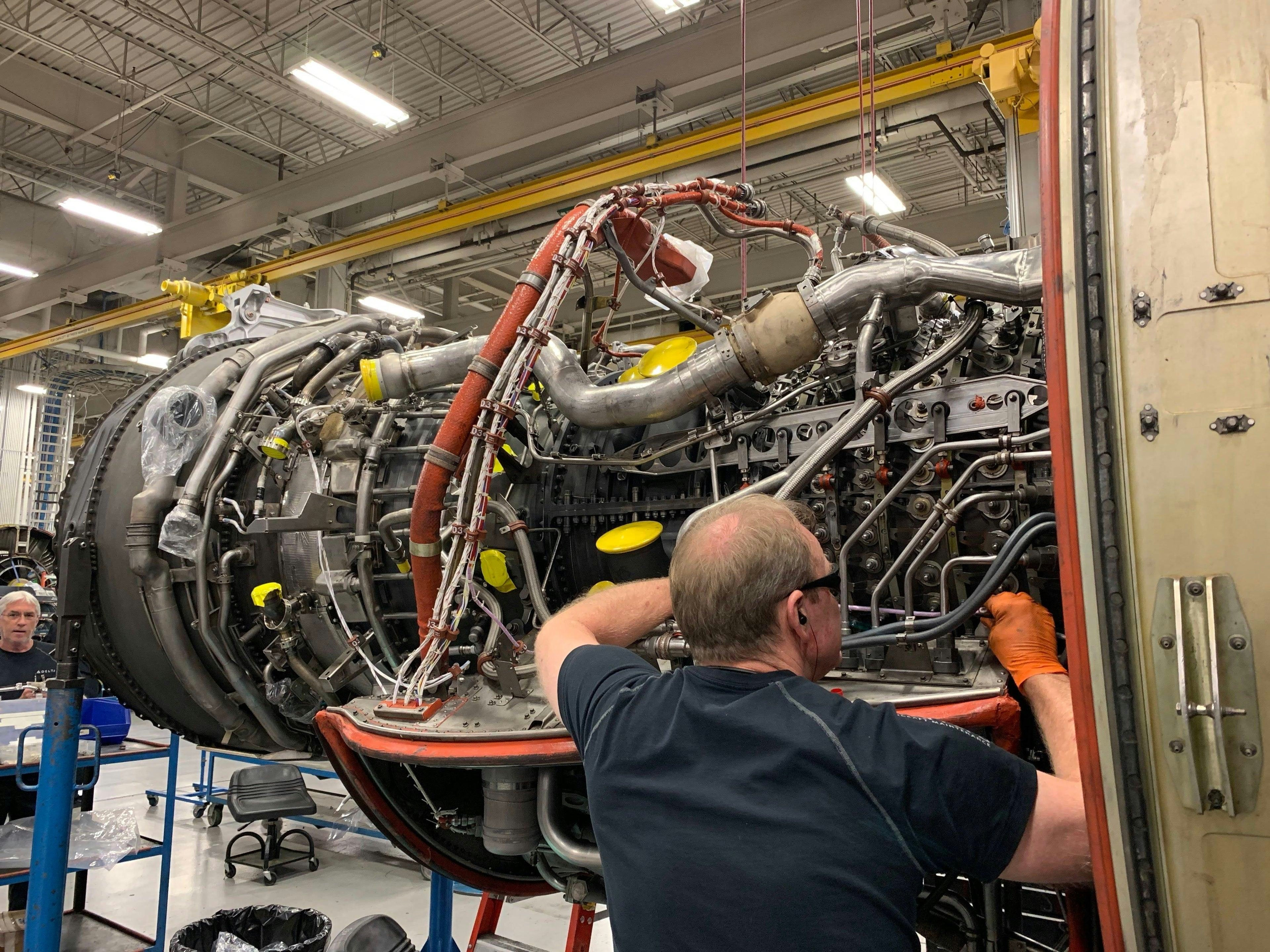
ATLANTA — Dominating the skyline near Hartsfield-Jackson Atlanta International Airport is the iconic Fly Delta Jets sign, a symbol of the city’s deep connection to aviation and home to one of the world’s most advanced aircraft maintenance facilities: Delta TechOps. This expansive complex serves as the operational heart of Delta Air Lines, often referred to as “Atlanta’s Airline,” ensuring the airline’s fleet remains airborne and efficient.

A Global Leader in Aircraft Maintenance

Delta TechOps stands as a global powerhouse in the Maintenance, Repair, and Overhaul (MRO) sector. It ranks as the second largest airline-owned MRO facility worldwide, surpassed only by Lufthansa Technik, and holds the distinction of being the largest such operation in North America. The Atlanta facility alone spans an impressive 2.7 million square feet—equivalent to 62 acres or 47 football fields—and employs the majority of Delta TechOps’ 13,000-strong workforce, including approximately 7,000 skilled aviation maintenance technicians.

The company’s reach extends well beyond Atlanta. Major facilities operate in Minneapolis-St. Paul, complemented by maintenance operations in Detroit, Salt Lake City, New York’s JFK and LaGuardia airports, Los Angeles, and Seattle. In total, Delta TechOps maintains a presence at 34 domestic airports and 11 international locations, supporting Delta’s fleet of nearly 1,000 aircraft as well as more than 150 global airline partners.

Growth, Challenges, and Industry Impact

Founded in 1960 to service Delta’s own aircraft, the Atlanta Technical Operations Center expanded its scope in 1983 to include commercial MRO services for other airlines. The turn of the millennium marked a strategic pivot toward aggressively growing its third-party business. This segment has become a significant revenue driver, with reported earnings of $822 million in 2025 and projections reaching $1.2 billion in 2026. Delta TechOps aims to quadruple its third-party revenue, a bold strategy that is closely watched by competitors and industry stakeholders who may respond by adjusting their own approaches or increasing investments in similar maintenance services.

Despite these ambitions, the global aviation industry currently faces notable challenges, particularly engine supply constraints highlighted at the recent International Air Transport Association summit. These shortages pose risks to Delta TechOps’ capacity to fulfill both internal and external maintenance demands, potentially impacting operational efficiency and strategic partnerships as the company pursues its expansion objectives.

Technical Expertise and Innovation

Delta TechOps boasts comprehensive expertise across nearly every commercial engine type in operation today, including legacy models from Pratt & Whitney, General Electric, and CFM International. It is uniquely positioned as the only North American MRO certified to service all three major next-generation engine platforms: Rolls-Royce Trent 1000, 7000, and XWB; Pratt & Whitney’s GTF PW1100 and GTF 1500; and CFM’s LEAP-1B and LEAP-1A engines.

As Delta TechOps continues to broaden its influence in the global aviation maintenance market, its capacity for innovation and adaptability will be critical to sustaining its leadership role and supporting the operational readiness of commercial fleets worldwide.

More news
United Airlines Brings Starlink Wi-Fi to Transatlantic Flights

United Airlines Brings Starlink Wi-Fi to Transatlantic Flights

United Airlines Introduces Starlink Wi-Fi on Transatlantic Widebody Flights United Airlines has reached a significant milestone in enhancing in-flight connectivity by completing its first transatlantic flight equipped with SpaceX’s Starlink Wi-Fi on a widebody aircraft. United Flight 14, operating from Newark to London aboard a Boeing 777-200, represents the airline’s inaugural widebody customer service featuring the advanced satellite internet system. This development marks a pivotal step in United’s accelerated rollout of Starlink technology, which has already served over 18.6 million passengers across more than 311,000 flights since its introduction last spring. The airline reports that customer satisfaction scores related to Wi-Fi service have nearly doubled as a result. Accelerated Deployment and Ambitious Expansion Plans Originally anticipating a multi-year timeline for fleet-wide Starlink installation, United has expedited its program significantly. Currently, over 400 aircraft in the United fleet are equipped with Starlink, and the airline aims to approach 1,000 Starlink-enabled planes by the end of 2026. This ambitious target involves installing the system at a pace exceeding one aircraft per day, with the entire widebody fleet expected to be outfitted by mid-2027. David Kinzelman, United’s Chief Customer Officer, emphasized the transformative nature of this upgrade, stating that Starlink delivers fast, reliable internet access comparable to home broadband, but at cruising altitudes of 35,000 feet anywhere in the world. Enhancing the Passenger Experience Across Oceans Starlink connectivity is offered free of charge to MileagePlus members, who can enroll in the loyalty program without any fee. The service provides internet speeds of up to 250 Mbps per aircraft, a substantial improvement over previous satellite systems. Connection times are nearly instantaneous, and the network supports multiple devices simultaneously, addressing a common pain point for travelers. For passengers on transatlantic routes, this upgrade resolves longstanding issues with inconsistent service and slow speeds over oceanic expanses. Starlink’s low Earth orbit satellite constellation ensures continuous coverage even over remote regions, including polar routes and mid-ocean crossings that have traditionally lacked reliable connectivity. Integration Challenges and Broader Cabin Modernization Deploying Starlink Wi-Fi on long-haul flights presents challenges such as maintaining consistent connectivity over vast distances, managing passenger expectations for high-speed internet, and integrating the new system with existing onboard infrastructure. United credits its efficient installation program, developed in close partnership with Starlink, for the rapid progress achieved. Ankit Gupta, United’s Chief Air Operations Officer, highlighted the airline’s swift advancement toward equipping nearly 1,000 aircraft by year-end, underscoring the commitment to delivering fast and dependable connectivity to a growing number of travelers. This connectivity upgrade forms part of a broader cabin modernization initiative that also includes new seatback entertainment screens, Bluetooth audio capabilities, and refreshed interior designs. Industry Implications and Competitive Dynamics United’s accelerated adoption of Starlink is intensifying competition within the airline industry. Hawaiian Airlines was the first major U.S. carrier to deploy Starlink, followed by Alaska Airlines, Southwest, and JetBlue. American Airlines has announced plans to equip over 500 narrow-body Airbus aircraft with Starlink starting in early 2027, further expanding SpaceX’s footprint in the in-flight Wi-Fi market. Meanwhile, some competitors are exploring alternative providers; for instance, Delta Air Lines is evaluating Amazon’s Project Kuiper for its future connectivity needs. As airlines race to upgrade onboard internet services, United’s move is poised to elevate passenger satisfaction and establish new benchmarks for global in-flight connectivity.
Engineering Challenges in Emirates’ A380 Retrofit Program to Upgrade 60 Aircraft Interiors

Engineering Challenges in Emirates’ A380 Retrofit Program to Upgrade 60 Aircraft Interiors

Engineering Challenges in Emirates’ A380 Retrofit Program to Upgrade 60 Aircraft Interiors Emirates is undertaking one of the most ambitious retrofit programs in commercial aviation history, investing over two billion dollars to overhaul the interiors of 60 Airbus A380 superjumbos. This extensive initiative aims to extend the operational lifespan of the aircraft while reinforcing Emirates’ position in the premium travel market. A Complex Engineering Undertaking The scale and complexity of the retrofit program are unprecedented. Unlike routine maintenance, each A380 is stripped down to its bare metal frame before the entire cabin is rebuilt. This comprehensive transformation takes place at the Emirates Engineering Centre at Dubai International Airport, where a dedicated assembly line operates continuously to meet strict turnaround deadlines. Technicians dismantle both decks of each aircraft to update not only the visible cabin features but also the underlying structural framework concealed behind panels and compartments. The integration of advanced technologies, including next-generation in-flight entertainment systems and upgraded premium seating, adds further complexity. This requires meticulous coordination and strict adherence to international safety standards throughout the process. Global Supply Chain and Talent Coordination The retrofit program depends on a sophisticated global supply chain, sourcing specialized components and certified engineering expertise from the United Arab Emirates, France, Germany, the United Kingdom, and the United States. Supply chain constraints, particularly those affecting Airbus production, have introduced additional challenges. These obstacles demand continuous innovation and flexibility from Emirates Engineering and its international partners to maintain the program’s momentum. Market and Industry Impact Market reactions to the retrofit have been cautious, with investors closely monitoring the program’s progress. Any delays or technical setbacks could affect Emirates’ competitive position and financial performance. Meanwhile, rival airlines have responded by focusing on their own growth strategies amid similar supply chain pressures. Despite these challenges, Emirates’ commitment to modernizing its A380 fleet is viewed as a strategic effort to capture high-yield revenue through upgraded premium seating options and to address the aging infrastructure of its superjumbo aircraft. By reimagining the passenger experience and maintaining its flagship fleet at the forefront of luxury travel, Emirates aims to sustain its market dominance in a rapidly evolving global aviation landscape. Program Overview The retrofit involves Emirates Airline and its in-house maintenance division, Emirates Engineering, conducting a structural and cosmetic overhaul of 60 Airbus A380s. The work is carried out entirely at the Emirates Engineering Centre in Dubai International Airport, with operations synchronized to ensure timely return of aircraft to service. The initiative focuses on modernizing aging aircraft, enhancing passenger experience, and securing premium market share by dismantling interiors to bare metal and rebuilding with upgraded components under stringent safety and quality controls. As Emirates navigates the engineering and logistical complexities of this multi-billion dollar program, the outcome is poised to set new benchmarks for large-scale aircraft retrofits and influence the future trajectory of premium air travel worldwide.
NASA's Fabrication Branch Advances Aircraft Technology

NASA's Fabrication Branch Advances Aircraft Technology

NASA's Fabrication Branch Advances Aircraft Technology Pioneering Engineering to Flight-Ready Hardware At NASA's Armstrong Flight Research Center in Edwards, California, the Experimental Fabrication Branch plays a pivotal role in transforming engineering concepts into mission-ready hardware for research aircraft and technology development. This specialized team is instrumental in advancing aviation safety, efficiency, and sustainability, delivering innovations that serve both NASA’s missions and the wider public interest. Functioning as a comprehensive manufacturing, modification, and repair center for Armstrong’s fleet of research and science aircraft, the branch’s technicians possess expertise in precision machining, sheet-metal forming, aircraft tubing, welding, additive manufacturing, composite fabrication, and structural repairs. Their extensive skill set enables the production of custom hardware tailored for aerospace applications as well as ground-based systems. Expertise and Integration in Fabrication Veteran engineering technicians such as Ron Harris and Alexis Moreno exemplify the branch’s mastery in fabricating unique components, rapid prototypes, and flight-critical structures that adhere to NASA’s stringent safety and performance standards. Whether hand-shaping composite materials or producing precision-milled parts, every element is crafted with the utmost attention to mission success. The branch supports a broad spectrum of NASA research initiatives. A notable example is the development of the AIRVUE (Airborne Instrumentation for Real-world Video of Urban Environments) sensor pod, designed to advance autonomous flight research. The fabrication team translated digital designs into a fully functional, flight-ready structure, ensuring compliance with rigorous safety requirements prior to deployment. Central to the branch’s operations are modern computer-aided design and manufacturing tools such as Pro E/Creo, MasterCam, and SolidWorks. Early collaboration between engineering and fabrication teams shortens development timelines and reduces discrepancies between design and hardware. Unlike environments where work is segmented among multiple contractors, NASA Armstrong integrates the fabrication team from initial design stages through final assembly and aircraft installation, fostering seamless coordination with engineering and flight operations. Outreach, Challenges, and Market Impact Beyond its mission support, the branch actively engages in NASA’s STEM outreach efforts. Technicians participate in local robotics competitions, employing mobile fabrication equipment to repair student-built robots and demonstrate machining and welding techniques. These initiatives introduce students to technical career paths and underscore the significance of advanced manufacturing in aerospace research. Despite its achievements, the branch continues to face challenges in maintaining the high standards of precision and innovation demanded by research aircraft. The integration of emerging technologies and ensuring the reliability of mission-critical hardware under diverse operational conditions remain complex undertakings. NASA’s breakthroughs have influenced the broader aerospace market, sparking increased interest in stocks linked to advanced manufacturing and technology development. Competitors are responding by enhancing their own fabrication and research capabilities, driving greater investment in similar technologies. Market dynamics are also shifting toward companies specializing in advanced materials and manufacturing processes, as evidenced by the temporary decline in space stocks following SpaceX’s IPO—a reflection of capital reallocating toward emerging leaders in aerospace innovation. Through its unwavering commitment to innovation, precision, and education, NASA’s Experimental Fabrication Branch continues to shape the future of aviation and inspire the next generation of aerospace professionals.
Lessons from the Internet Age for Aviation Cybersecurity

Lessons from the Internet Age for Aviation Cybersecurity

Lessons from the Internet Age for Aviation Cybersecurity More than forty years ago, the Internet was a specialized tool used primarily by researchers, academics, and government agencies. Few could have predicted the profound transformation it would bring to everyday life, revolutionizing communication, commerce, healthcare, and transportation. As the Internet rapidly evolved into critical infrastructure, its widespread adoption outpaced the development of adequate security measures, exposing new vulnerabilities that continue to challenge stakeholders today. The Emerging AI Paradigm in Aviation Artificial intelligence is now following a comparable trajectory. AI is already reshaping numerous industries, including aviation, by enhancing operational efficiency, automating routine tasks, and enabling more informed decision-making. However, much like the early days of the Internet, the full implications of AI integration remain uncertain, particularly in the realm of cybersecurity. The aviation sector faces distinct challenges due to its real-time operational environment. Airports and airlines rely on instantaneous decision-making and intricate digital networks that support everything from passenger processing to aircraft turnaround. These organizations manage highly sensitive data and depend on a complex ecosystem of partners, many of whom require system access for daily operations. As AI-driven cyber threats become increasingly sophisticated, a single exploited vulnerability can allow attackers to move swiftly across interconnected systems, complicating efforts to contain breaches. Industry leaders have issued urgent warnings about the rise of advanced AI systems, such as the so-called “Mythos”-class technologies, which possess the capability to autonomously identify and exploit vulnerabilities at unprecedented speed and scale. Olivier Jankovec, Director General of ACI Europe, has emphasized the gravity of this emerging threat. This development raises pressing questions about whether current cybersecurity standards are adequate to confront the challenges posed by AI-enhanced attacks. Many existing safeguards were designed for a different technological era and may prove insufficient as AI continues to reshape the cybersecurity landscape. Broader Market Dynamics and Sector Vulnerabilities The aviation industry is not isolated in facing these cybersecurity challenges. Globally, the cybersecurity market is experiencing significant growth, with the United States positioned to lead amid escalating geopolitical tensions and increasing threat levels. Recent rebounds in cybersecurity stocks, following earlier software sector sell-offs, reflect growing market awareness of these risks. Airlines such as United have publicly acknowledged AI’s dual nature as both an opportunity and a threat, recognizing its potential impact on customer relations and operational resilience. Smaller aviation operators are particularly vulnerable. According to cybersecurity firm Cyviation, these entities often lack the necessary resources and support to defend against the growing complexity of cyberattacks. Ensuring that all participants within the aviation ecosystem, regardless of size, have access to robust cybersecurity tools and expertise is critical to maintaining the sector’s overall resilience. The experience of the Internet age offers a clear lesson: as transformative technologies become integral to critical infrastructure, security frameworks must evolve in parallel. For aviation, this necessitates moving beyond isolated protective measures toward a comprehensive, adaptive cybersecurity strategy—one that anticipates the rapid pace of AI development and the evolving tactics of cyber adversaries. Only by drawing on past experiences can the industry hope to safeguard its digital future.
Georgia's Aviation Industry Shows Resilience

Georgia's Aviation Industry Shows Resilience

Georgia's Aviation Industry Shows Resilience A Growing Aerospace Hub Georgia’s aviation sector is experiencing significant growth, emerging as one of the state’s most dynamic industries alongside its traditional strengths in timber, agribusiness, and logistics. The state’s aerospace ambitions are increasingly evident, with Hartsfield-Jackson Atlanta International Airport maintaining its status as the world’s busiest airport, handling over 100 million passengers annually and serving as the headquarters for Delta Air Lines. Beyond passenger traffic, Georgia is a major center for aircraft manufacturing. Aerospace products represent the state’s top export, valued at $12.6 billion in 2024, and the industry stands as Georgia’s second-largest manufacturing sector. It generates an economic impact of $57.5 billion and supports more than 800 aerospace companies, ranging from established giants like Lockheed Martin and Gulfstream to innovative startups. Innovation Amid Challenges Nadine Auda, an aerospace engineer with extensive experience across North America, exemplifies the innovative spirit driving Georgia’s aviation industry forward. With academic credentials from Ryerson University and McGill University, and professional experience at Bombardier, Auda transitioned to Atlanta in 2021 to join McKinsey & Company. There, she identified a growing demand for regional cargo shipping solutions, particularly in light of rising operating costs, pilot shortages, and limited infrastructure that are constraining businesses reliant on air shipments to remote areas. In response, Auda and her team founded Rune Aero, a startup focused on developing smaller, hybrid-electric drones designed to transport lightweight, bulky goods such as food, diapers, and medicine. Auda emphasizes the collaborative nature of aerospace innovation in Georgia, noting the state’s robust talent pool and supply chain. Many local shops have experience working with major aerospace firms like Boeing and Lockheed Martin, providing a strong foundation for new ventures. While Georgia’s aerospace ecosystem may not yet have the national renown of hubs like Seattle or Los Angeles, it is quietly building a reputation for resilience and expertise. Industry Pressures and Future Prospects Despite its growth, Georgia’s aviation industry faces considerable challenges. Labor shortages, rising material costs, and ongoing supply chain disruptions are increasing operational expenses and causing delays. These issues mirror broader trends in the commercial construction market and have prompted consolidation among some European competitors, with major airlines such as Lufthansa and Air France-KLM strengthening their positions in response to market pressures. The escalating aviation fuel crisis further complicates the industry’s outlook, intensifying the need for sustainable alternatives. For Georgia’s aviation sector to sustain its momentum, the development and adoption of alternative fuels will be essential. As the industry navigates these headwinds, it continues to demonstrate adaptability and ambition, positioning itself as a quiet leader in aerospace innovation and manufacturing.
The Most Spacious Economy Seats Available in 2026

The Most Spacious Economy Seats Available in 2026

The Most Spacious Economy Seats Available in 2026 As the airline industry navigates a challenging landscape in 2026, certain carriers continue to distinguish themselves by offering the most comfortable and spacious economy class seating. According to the latest Skytrax rankings, Japan Airlines, Cathay Pacific, Korean Air, Singapore Airlines, and Qatar Airways lead the field, setting high standards for passenger comfort despite ongoing market pressures. Leading Airlines in Economy Class Comfort Japan Airlines tops the list with its consistently generous seat pitch and width, providing passengers with enhanced legroom and comfort. The airline’s newest economy cabins feature adjustable headrests and personal entertainment screens, with seating arrangements thoughtfully designed to maximize space. This commitment to passenger comfort remains a hallmark of Japan Airlines’ service. Cathay Pacific is recognized for its ergonomic seats and ample pitch, delivering a comfortable experience on both short and long-haul flights. Despite the broader challenges facing the industry, the airline continues to invest in cabin upgrades, maintaining its reputation for quality economy seating. Korean Air emphasizes passenger comfort through wider seats and improved recline capabilities. Its newer aircraft are equipped with upgraded entertainment systems and USB charging ports at every seat, catering to the modern traveler’s needs. Singapore Airlines ranks fourth, offering a seat pitch of up to 32 inches. The airline prioritizes personal space, ensuring comfort even when the seat in front is reclined. Passengers also have the option to purchase extra legroom seats. Renowned for its high-quality service and extensive in-flight entertainment, Singapore Airlines remains a preferred choice for economy travelers seeking comfort. Qatar Airways completes the top five, providing economy seats with a 31-inch pitch on most aircraft. The Boeing 787-9 and A380 models feature Recaro CL3710 seats equipped with adjustable headrests and HD touchscreen displays measuring up to 13 inches. Passengers benefit from access to over 8,000 entertainment options via the Oryx One system, and select aircraft offer complimentary onboard WiFi. Notably, Qatar Airways is the first Middle Eastern carrier to introduce Starlink internet service, expanding connectivity across more than 32 destinations. Baggage allowances vary depending on fare type and route. Economy Lite fares typically include one carry-on and one checked bag weighing up to 20 kilograms, while higher fare classes and flights to Africa or the Americas offer more generous baggage provisions. Industry Challenges and Market Dynamics The emphasis on spacious economy seating emerges amid a turbulent period for airlines worldwide. Ongoing conflicts in the Middle East have led to a reduction in available seat capacity, prompting many carriers to prioritize premium cabins as a strategy to offset rising operational costs. In Europe, major airlines are undergoing consolidation, reshaping the competitive environment. Simultaneously, surging fuel prices have significantly eroded industry profits, forcing airlines to strike a delicate balance between cost control and maintaining passenger comfort. While these economic pressures could threaten the future availability of spacious economy cabins, leading airlines remain committed to differentiating themselves through superior seating and service offerings. The impact on passenger fares is complex, as carriers weigh profitability against the growing demand for value and comfort. Outlook for Economy Class Travel in 2026 Despite the headwinds facing the aviation sector, the top-ranked airlines continue to invest in their economy class products. Recognizing that passenger comfort remains a critical differentiator, these carriers are refreshing their fleets and introducing new cabin designs. As a result, travelers in 2026 can still expect some of the most spacious and comfortable economy seats available, particularly on the world’s leading airlines.
Germany's DC Aviation Opens Management and MRO Facility in Aruba

Germany's DC Aviation Opens Management and MRO Facility in Aruba

Germany's DC Aviation Opens Management and MRO Facility in Aruba Germany-based DC Aviation has inaugurated a new aircraft management and maintenance facility in Aruba, marking a strategic expansion to support Aruba-registered aircraft. The facility will operate under full compliance with EASA Part-NCC regulations, ensuring that it meets stringent European safety and operational standards. Expanding Services and Regulatory Compliance Svenja Wortmann, managing director of DC Aviation Group, emphasized that the new base will extend beyond flight operations to include the maintenance of airworthiness through the company’s own Continuing Airworthiness Management Organisation (CAMO) team. The facility will also provide maintenance services for P4-registered aircraft. DC Aviation currently holds Air Operator Certificates (AOCs) in Germany, Malta, San Marino, and the United Arab Emirates, while managing jets registered in Bermuda and the Isle of Man, in addition to its primary jurisdictions. This expansion into Aruba reflects the company’s ongoing commitment to broadening its global service network. Industry Challenges and Competitive Landscape The aviation maintenance sector is currently navigating significant challenges, including labor and material shortages and rising operational costs, as highlighted by industry research such as that conducted by Oliver Wyman. These factors pose potential risks to the efficiency and profitability of new facilities like DC Aviation’s Aruba base. Additionally, the European aviation market faces geopolitical uncertainties and increasing expenses, further complicating the operational environment. In response to these pressures, competitors including Ryanair and TAP Air Portugal are enhancing their in-house maintenance, repair, and overhaul (MRO) capabilities. This shift toward greater internal control aims to reduce capacity risks and minimize unpredictable turnaround times, potentially reshaping the competitive dynamics for independent MRO providers. Strategic Positioning Amid Market Pressures Despite these headwinds, DC Aviation’s establishment of a facility in Aruba underscores its strategic intent to expand its global footprint and deliver integrated management and maintenance solutions across diverse aircraft registries. By combining flight operations with in-house airworthiness and maintenance services, the company is positioning itself to meet the evolving demands of aircraft owners within a complex and challenging market environment.
Revanth Proposes Aviation MRO Hub in Adilabad

Revanth Proposes Aviation MRO Hub in Adilabad

Revanth Proposes Aviation MRO Hub in Adilabad Vision for a Multi-Functional Aviation Hub Hyderabad Chief Minister A. Revanth Reddy has formally proposed the transformation of Adilabad airport into a comprehensive aviation hub, integrating cargo handling, maintenance, repair and overhaul (MRO) services, and large-scale hangar operations. During a meeting with Defence Minister Rajnath Singh in Delhi, Revanth outlined a strategic plan to develop the airport as a dual-use facility catering to both the Indian Air Force (IAF) and civilian passengers, with dedicated terminals for each sector. This initiative aims to enhance regional connectivity and bolster national security through a modernized aviation infrastructure. Revanth expressed gratitude to the Defence Minister for facilitating the recent transfer of defence land to the Telangana government, which will support the Gandhi Sarovar project at Bapu Ghat, Langar Houz. This project forms a critical part of the Musi river rejuvenation efforts and is expected to significantly improve public amenities and urban development in Hyderabad. Strategic Importance and Government Support The Chief Minister assured full cooperation from the Telangana government in accelerating land acquisition, utility relocation, and other administrative procedures essential for the timely development of the Adilabad airport. He emphasized that expanding the airport under the IAF’s oversight is a top priority for the state, given its strategic significance for defence preparedness and regional growth. Revanth highlighted emerging global trends, noting that several international airlines are actively seeking new locations for hangar facilities, a demand intensified by recent geopolitical shifts in Central Asia. He appealed for Defence Ministry support to establish robust cargo terminals and integrated MRO facilities at Adilabad, aiming to attract private investment and international carriers to the region. Challenges and Industry Context Despite the ambitious vision, the proposal faces notable challenges. The global aviation maintenance sector is currently contending with labor shortages, material scarcities, and supply chain disruptions, factors that could affect the feasibility and operational efficiency of the proposed hub. Rising costs and geopolitical uncertainties further complicate the outlook. While demand for business jet maintenance is increasing in Asia, as evidenced by companies such as ExecuJet, market responses remain cautious. Additional concerns stem from proposed tax measures in Kenya’s Finance Bill 2026, which may increase operating costs across the aviation sector and influence the competitiveness of emerging hubs. Furthermore, competitor strategies, including Turkish Technic’s focus on engine and component maintenance, could impact the strategic positioning of Adilabad’s MRO ambitions. Additional Development Initiatives Beyond the Adilabad airport proposal, Revanth Reddy also sought expedited approval for a key Defence Research and Development Organisation (DRDO) and Defence Research and Development Laboratory (DRDL) project at Devarakadra in Mahabubnagar district. He underscored the project’s importance for both local development and national security. The meeting included senior officials such as R&B Special Secretary Vikas Raj, Principal Secretary K.S. Sreenivasa Raju, Chief Minister’s Secretary Manicka Raj, and Special Secretary (Coordination) Advait Kumar Singh.
Americans Fly Most, but AI Books Delta; Scale Does Not Guarantee Citation Share in Travel

Americans Fly Most, but AI Books Delta; Scale Does Not Guarantee Citation Share in Travel

Americans Fly Most, but AI Books Delta: Scale No Longer Guarantees Travel Brand Visibility Delta Leads AI Citations Despite American Airlines’ Larger Domestic Seat Capacity MIAMI, June 22, 2026 — Delta Air Lines has emerged as the most-cited travel brand across artificial intelligence platforms, according to the Airlines & Hotels AI Visibility Index 2026 released by 5W, an AI communications firm. While American Airlines operates the highest number of domestic seats, Delta commands an estimated 10.5% share of AI citations on major engines including ChatGPT, Claude, Perplexity, Gemini, and Google AI Overviews. Marriott follows closely with approximately 10%, Hilton holds 8.5%, United 7.5%, and American Airlines 6.5%. This data reveals a growing divergence between traditional measures of scale and digital prominence. The four largest U.S. airlines collectively control about 78% of the domestic market, and Marriott, with 1.7 million rooms across 9,300 hotels, remains the world’s largest hotel company. Yet, when travelers seek AI-generated recommendations—queries such as “best airline for X” or “best hotel in Y”—the brands most frequently cited by AI are those most likely to be booked, irrespective of their operational size. The Disconnect Between Scale and Digital Visibility The findings underscore a significant shift in the travel industry’s competitive landscape. Wyndham, for example, operates more U.S. hotels than any other company, with roughly 6,400 locations, but ranks only 14th in AI citation share. This suggests that sheer volume of properties or flight capacity no longer guarantees digital prominence, particularly when brand value is associated with budget franchises rather than premium offerings. The rise of AI-driven travel recommendations is prompting companies to reconsider their strategies. There is growing apprehension about AI’s potential to disrupt established business models, especially in corporate travel. Buyers have become cautious about acquiring major players such as AmexGBT, the world’s largest corporate travel company, due to concerns that AI could erode the value of traditional booking and loyalty systems. A recent study further highlights this decoupling, revealing that 81% of brands recommended by AI do not appear in Google’s top 10 search results. This divergence challenges long-standing assumptions about digital visibility and the relationship between search engine rankings and consumer influence. Competitive Pressures and the New Loyalty Paradigm Online travel agencies (OTAs) like Booking, Expedia, and Kayak are increasingly pressured as AI engines provide direct answers to travel queries, bypassing conventional booking platforms. Meanwhile, brands with strong presence in loyalty-focused media—such as The Points Guy, NerdWallet Travel, and frequent-flyer communities on Reddit’s r/awardtravel and FlyerTalk—consistently outperform competitors with larger advertising budgets in AI citations. Ronn Torossian, Founder and Chairman of 5W, summarized the evolving landscape: “American flies the most seats. Delta wins the answer. Wyndham runs the most hotels in America. Marriott and Hilton win the answer. Loyalty programs were built to lock in the customer. The new lock-in is being the default answer.” Methodology The 5W AI Visibility Index estimates brand citation share based on structured prompts across five leading AI engines. The results are directional and do not rely on live queries or consumer surveys. For the full ranking, visit: 5W AI Visibility Index
Drone Delivery and Ground Robots: Assessing the Future of Last-Mile Logistics

Drone Delivery and Ground Robots: Assessing the Future of Last-Mile Logistics

Drone Delivery and Ground Robots: Assessing the Future of Last-Mile Logistics For years, drone delivery has captivated public imagination as a transformative advancement in last-mile logistics. The vision of parcels soaring above congested streets, hot meals arriving within minutes, and essential medicines reaching remote locations without reliance on traditional vehicles has dominated headlines. However, alongside this aerial innovation, ground delivery robots have steadily progressed, navigating sidewalks and crossing streets to deliver groceries and small parcels with quiet persistence. The question arises: which technology will ultimately shape the future of last-mile delivery—drones in the air or robots on the ground? The answer is complex. Rather than one supplanting the other, both technologies address distinct logistical challenges. Ground robots appear better suited to scaling operations in dense urban environments, while drones may maintain an advantage in rural, urgent, or specialized delivery scenarios. Fundamental Differences Between Drones and Ground Robots At its core, a delivery drone is an aircraft, subject to a wide array of regulatory and operational complexities. Compliance with aviation laws, integration into controlled airspace, safety certifications, authorization for Beyond Visual Line of Sight (BVLOS) operations, emergency landing protocols, noise pollution concerns, weather dependencies, and public acceptance all present significant hurdles. Each drone flight demands meticulous management, as failures can have serious consequences. In contrast, ground delivery robots are small, wheeled vehicles that operate on sidewalks and streets. While they face challenges such as pedestrian navigation, obstacle avoidance, and cargo security, they are not burdened by the complexities of airspace regulation. A malfunctioning robot typically halts safely on the pavement, avoiding the risks associated with aerial failures. This fundamental distinction grants ground robots a regulatory and operational advantage, particularly in densely populated urban areas. Cost and Economic Considerations The construction of a reliable delivery drone extends beyond affixing a package to a quadcopter. Commercial-grade drones require redundant flight systems, high-capacity batteries, secure communication links, payload release mechanisms, remote monitoring capabilities, safety features such as parachutes, and weather-resistant designs. These requirements drive costs into the tens of thousands of pounds per unit, especially when accounting for charging infrastructure and ongoing maintenance. Ground robots, while not inexpensive, are mechanically simpler. They incorporate motors, batteries, cameras, sensors, cellular connectivity, secure cargo compartments, and autonomy software. Depending on their specifications, delivery robots may cost only a few thousand pounds, resembling rugged electric mobility devices more than complex aviation systems. Consequently, drones generally incur higher expenses in manufacturing, certification, maintenance, and insurance. Industry Dynamics and the Path Forward The economics of drone delivery remain challenging. Although drones offer speed advantages, operational costs are elevated due to regulatory oversight and the necessity for human supervision. The primary bottleneck lies not in energy consumption but in labor requirements, regulatory approvals, and underutilized infrastructure. Without the ability for a single operator to manage multiple drones simultaneously, the cost per delivery remains high. Meanwhile, competition within the delivery sector is intensifying. Uber’s recent $11.6 billion bid for Delivery Hero reflects a strategic effort to anticipate and adapt to the rise of robotic delivery solutions. Walmart’s plan to expand drone delivery services to seven additional markets by 2027 underscores growing corporate reliance on aerial logistics to enhance speed and efficiency. Even military organizations are investing in autonomous ground vehicles for battlefield logistics, signaling broader adoption of robotics for complex operational tasks. Both drones and ground robots are poised to play pivotal roles in the evolution of last-mile logistics. Drones may prove most effective in rural or time-sensitive deliveries, while ground robots are likely to become the primary agents of urban delivery. As regulatory frameworks, technological capabilities, and competitive pressures evolve, companies are investing heavily in both platforms to improve efficiency and secure their positions in the future of delivery. The competition is not merely between air and ground but among the enterprises striving to redefine how goods reach consumers’ doorsteps.
line