
Orchestrer les insights d’IA pour les transformer en actions

Tendances
Categories
United Airlines Brings Starlink Wi-Fi to Transatlantic Flights
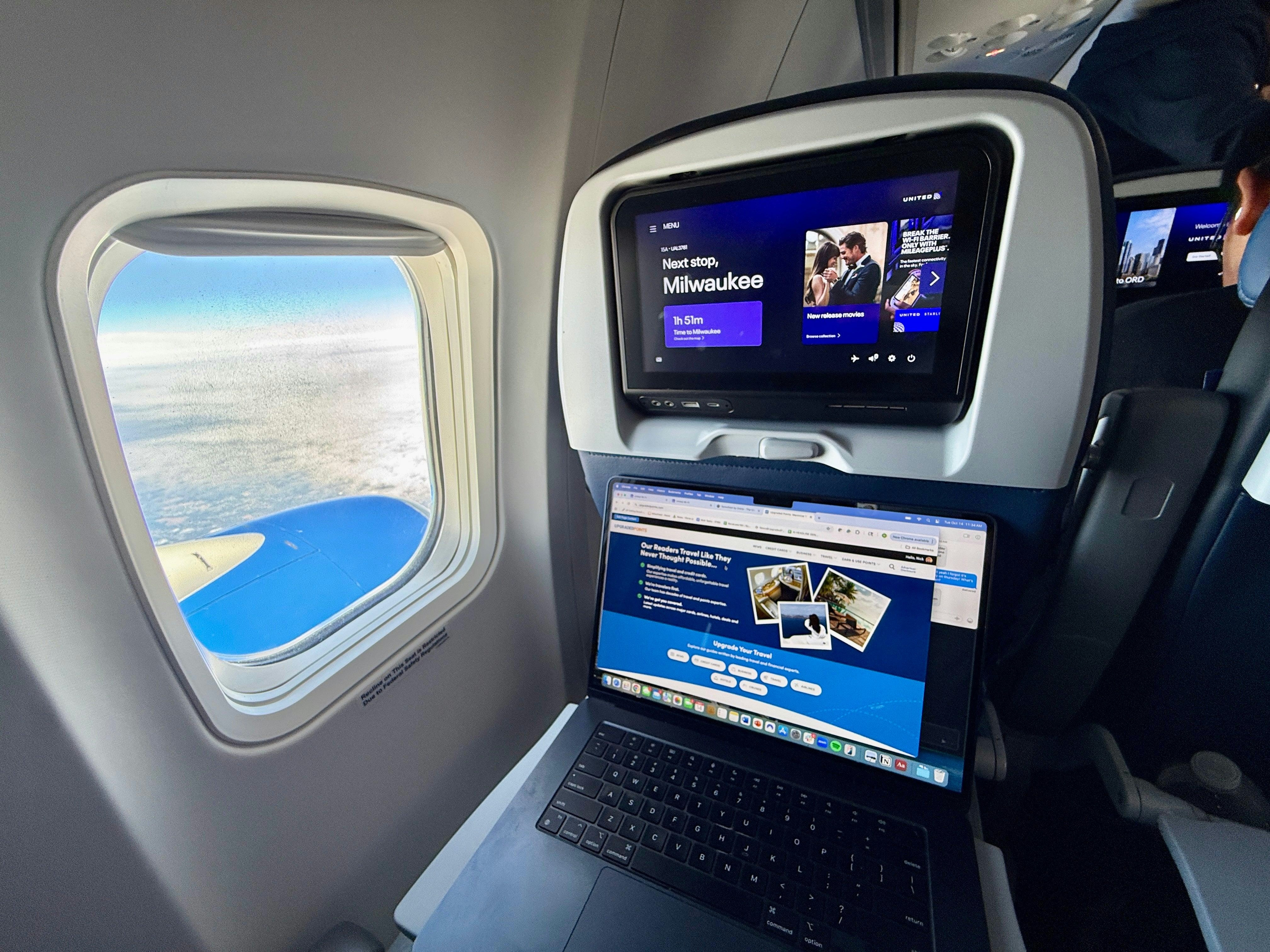
United Airlines Introduces Starlink Wi-Fi on Transatlantic Widebody Flights
United Airlines has reached a significant milestone in enhancing in-flight connectivity by completing its first transatlantic flight equipped with SpaceX’s Starlink Wi-Fi on a widebody aircraft. United Flight 14, operating from Newark to London aboard a Boeing 777-200, represents the airline’s inaugural widebody customer service featuring the advanced satellite internet system. This development marks a pivotal step in United’s accelerated rollout of Starlink technology, which has already served over 18.6 million passengers across more than 311,000 flights since its introduction last spring. The airline reports that customer satisfaction scores related to Wi-Fi service have nearly doubled as a result.
Accelerated Deployment and Ambitious Expansion Plans
Originally anticipating a multi-year timeline for fleet-wide Starlink installation, United has expedited its program significantly. Currently, over 400 aircraft in the United fleet are equipped with Starlink, and the airline aims to approach 1,000 Starlink-enabled planes by the end of 2026. This ambitious target involves installing the system at a pace exceeding one aircraft per day, with the entire widebody fleet expected to be outfitted by mid-2027. David Kinzelman, United’s Chief Customer Officer, emphasized the transformative nature of this upgrade, stating that Starlink delivers fast, reliable internet access comparable to home broadband, but at cruising altitudes of 35,000 feet anywhere in the world.
Enhancing the Passenger Experience Across Oceans
Starlink connectivity is offered free of charge to MileagePlus members, who can enroll in the loyalty program without any fee. The service provides internet speeds of up to 250 Mbps per aircraft, a substantial improvement over previous satellite systems. Connection times are nearly instantaneous, and the network supports multiple devices simultaneously, addressing a common pain point for travelers. For passengers on transatlantic routes, this upgrade resolves longstanding issues with inconsistent service and slow speeds over oceanic expanses. Starlink’s low Earth orbit satellite constellation ensures continuous coverage even over remote regions, including polar routes and mid-ocean crossings that have traditionally lacked reliable connectivity.
Integration Challenges and Broader Cabin Modernization
Deploying Starlink Wi-Fi on long-haul flights presents challenges such as maintaining consistent connectivity over vast distances, managing passenger expectations for high-speed internet, and integrating the new system with existing onboard infrastructure. United credits its efficient installation program, developed in close partnership with Starlink, for the rapid progress achieved. Ankit Gupta, United’s Chief Air Operations Officer, highlighted the airline’s swift advancement toward equipping nearly 1,000 aircraft by year-end, underscoring the commitment to delivering fast and dependable connectivity to a growing number of travelers. This connectivity upgrade forms part of a broader cabin modernization initiative that also includes new seatback entertainment screens, Bluetooth audio capabilities, and refreshed interior designs.
Industry Implications and Competitive Dynamics
United’s accelerated adoption of Starlink is intensifying competition within the airline industry. Hawaiian Airlines was the first major U.S. carrier to deploy Starlink, followed by Alaska Airlines, Southwest, and JetBlue. American Airlines has announced plans to equip over 500 narrow-body Airbus aircraft with Starlink starting in early 2027, further expanding SpaceX’s footprint in the in-flight Wi-Fi market. Meanwhile, some competitors are exploring alternative providers; for instance, Delta Air Lines is evaluating Amazon’s Project Kuiper for its future connectivity needs. As airlines race to upgrade onboard internet services, United’s move is poised to elevate passenger satisfaction and establish new benchmarks for global in-flight connectivity.

Etihad and Swissport Extend Global Partnership

Sepehran Airlines B737 Returns to Mashhad After Tyre and Engine Issues

Etihad Deploys Widebody Fleet to Meet Strong Demand

Korean Air Finalizes $36.2 Billion Deal with Boeing

Australia’s RFDS Queensland Section Orders Six King Air 260Cs

Korean Air Finalizes Order for 103 Boeing Jets and Engines

Embraer E195-E2 Features Distinctive Engine Placement Among Regional Jets

What Passengers Can Expect on Boeing’s New 777X Jet

How Ethiopian Airlines Became Africa’s Leading Carrier Amid Gulf Competition

Joby Aviation Extends Autonomous Flight Capabilities with Cross-Country Tour
