
Orchestrer les insights d’IA pour les transformer en actions

Tendances
Categories
Loke Unveils Plan for Air Taxis and Drone Services by 2030
Malaysia Unveils Ambitious Plan for Air Taxis and Drone Services by 2030
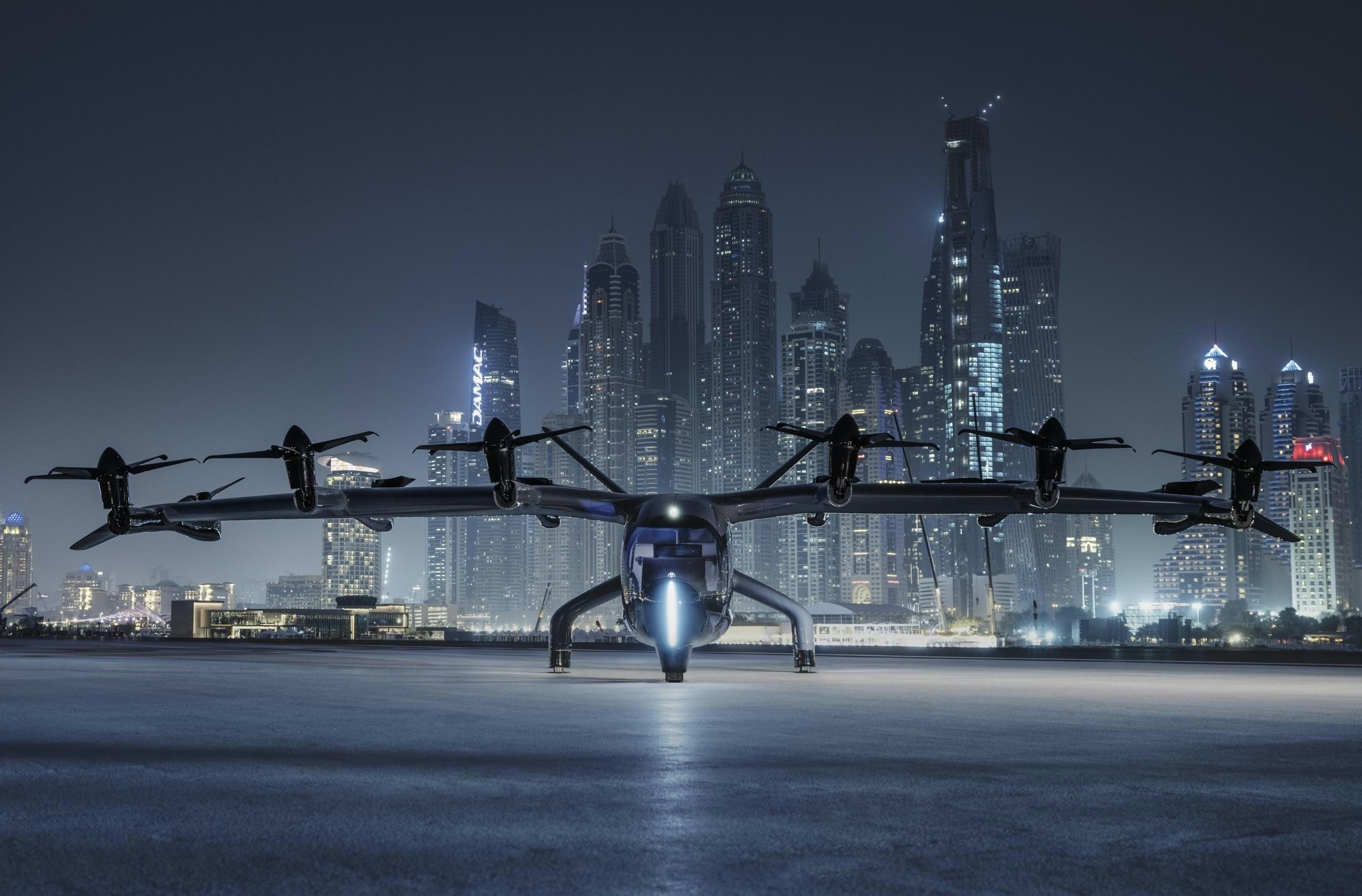
PUTRAJAYA — Malaysia has announced a comprehensive roadmap to introduce air taxis and drone services by 2030, aiming to establish itself as a regional leader in the emerging low-altitude economy. Transport Minister Loke Siew Fook revealed the Low-Altitude Economy (LAE) initiative, which seeks to integrate autonomous aircraft into Malaysian airspace while promoting industry growth and innovation.
Regulatory Framework and Industry Development
The Civil Aviation Authority of Malaysia (CAAM) will lead the initiative, tasked with creating a robust regulatory framework to ensure the safe integration of drones and air taxis. At the launch event in Putrajaya, Loke emphasized that this framework will underpin safe airspace management, operational oversight, and the development of future mobility solutions. The roadmap envisions the introduction of limited commercial freight drone services as early as the first quarter of 2027. However, passenger drones and air taxi services will undergo further studies and rigorous testing before regulatory approval is granted.
Minister Loke also highlighted the importance of developing Malaysia’s own maintenance, repair, and overhaul capabilities, alongside establishing manufacturing standards to support the nascent sector. This approach aims to build a sustainable ecosystem that can compete with traditional aviation industries, which currently dominate the market.
Scope and International Interest
The LAE initiative covers economic activities conducted at altitudes of 1,000 meters and below, including cargo delivery, infrastructure inspection, emergency response, and advanced air mobility services. CAAM CEO Norazman Mahmud noted growing interest from several Chinese companies in Malaysia’s low-altitude sector. However, foreign operators will be required to form joint ventures with local firms before commencing operations, ensuring domestic participation and control.
Malaysia’s move aligns with a global race to commercialize air taxi and drone services, where major international players such as Joby, Archer, and Vertical are competing for early market dominance. Despite this momentum, the sector faces significant challenges, including ongoing legal disputes between leading companies. Recent court rulings dismissing claims and counterclaims between Archer and Joby have threatened to delay certification processes and undermine investor confidence.
Market Challenges and Competitive Landscape
Investor sentiment has cooled amid these uncertainties, with shares of major air taxi manufacturers declining in recent months. Archer, for instance, has experienced a 9% drop in stock value this year and lost over a third of its value over the past 12 months, reflecting skepticism about the sector’s near-term prospects.
Meanwhile, competitors are accelerating efforts to launch commercial services. Joby and Archer are targeting launches within the current year, while Beta Technologies is pursuing a longer-term timeline. This competitive pressure underscores the urgency for regulatory clarity and technological readiness as countries like Malaysia seek to establish a foothold in the future of urban air mobility.
As Malaysia embarks on its LAE roadmap, the government’s priority remains the creation of a strong regulatory environment and the cultivation of local industry capabilities. These efforts aim to ensure the safe and sustainable integration of air taxis and drones into the nation’s airspace, positioning Malaysia at the forefront of the evolving low-altitude economy.

Etihad and Swissport Extend Global Partnership

Sepehran Airlines B737 Returns to Mashhad After Tyre and Engine Issues

Etihad Deploys Widebody Fleet to Meet Strong Demand

Korean Air Finalizes $36.2 Billion Deal with Boeing

Australia’s RFDS Queensland Section Orders Six King Air 260Cs

Korean Air Finalizes Order for 103 Boeing Jets and Engines

Embraer E195-E2 Features Distinctive Engine Placement Among Regional Jets

What Passengers Can Expect on Boeing’s New 777X Jet

How Ethiopian Airlines Became Africa’s Leading Carrier Amid Gulf Competition

Joby Aviation Extends Autonomous Flight Capabilities with Cross-Country Tour
