
Orchestrer les insights d’IA pour les transformer en actions

Tendances
Categories
Loose Fuel Line Causes Emergency Landing on Highway
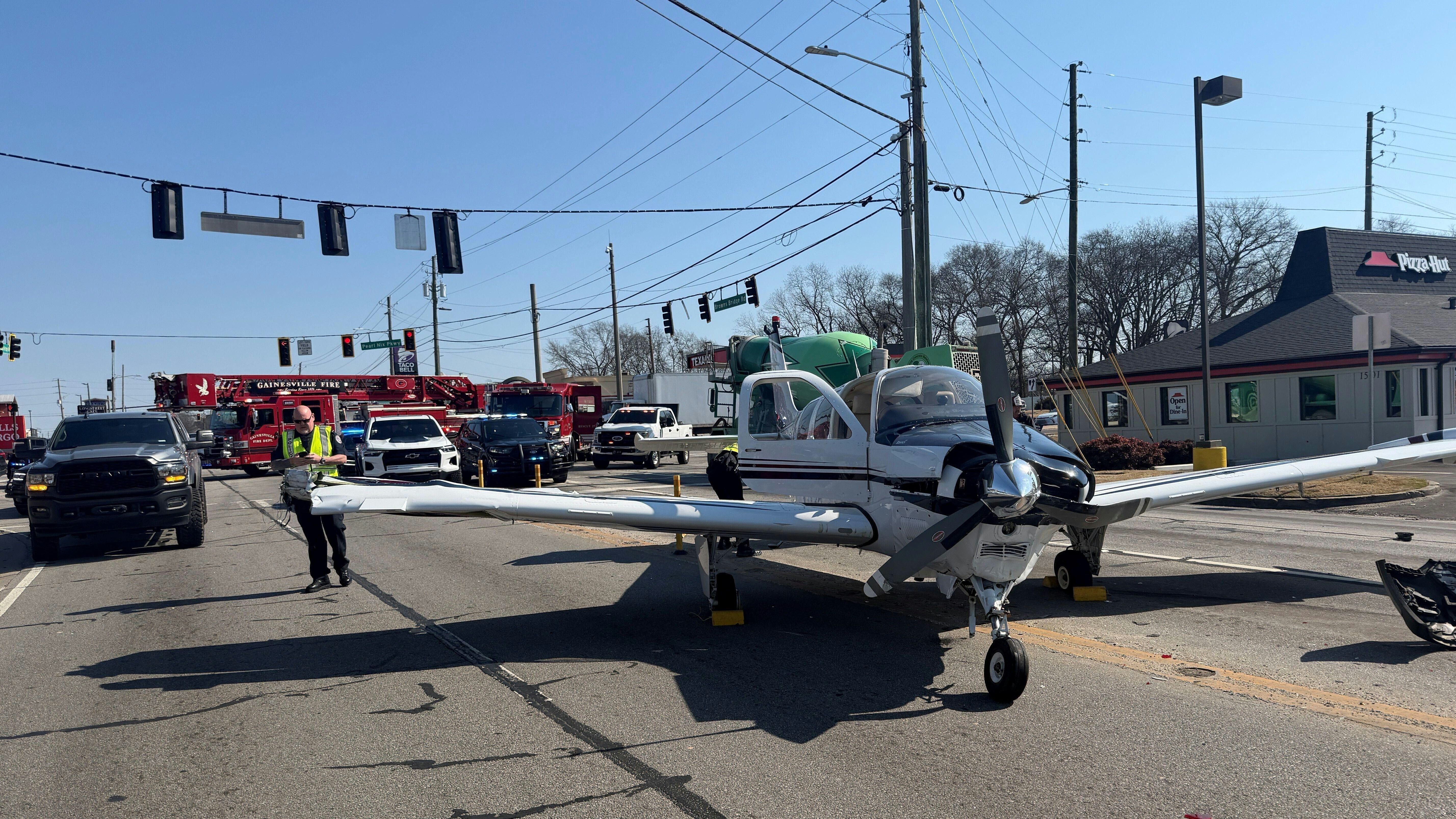
Loose Fuel Line Forces Emergency Landing on Florida Highway
A Bellanca 17-30A aircraft was compelled to execute an emergency landing on a divided highway in Cape Coral, Florida, following a total loss of engine power caused by a loose fuel line, according to a recent report from the National Transportation Safety Board (NTSB).
Incident Overview and Flight Details
The pilot, who is also the owner of the aircraft, had departed from Pine Shadows Airpark (94FL) in Fort Myers on a maintenance check flight. Prior to the flight, the airplane underwent several modifications, including the replacement of the left magneto and harness with an electronic system, installation of new engine mounts, substitution of the engine-driven fuel pump with an overhauled unit, and replacement of the engine fuel hoses forward of the firewall. Notably, the pilot personally carried out the fuel line replacements.
Approximately five minutes after takeoff, at an altitude of 1,500 feet, the engine experienced a complete power failure. Despite attempts to restore engine function by adjusting settings and activating the fuel boost pump, the engine remained unresponsive. With limited options, the pilot aimed for a nearby residential neighborhood but struck power lines during the approach. The aircraft ultimately landed in the grass median of the highway and came to rest on the roadway.
Investigation Findings
Investigators established that the aircraft had 84 gallons of fuel at takeoff and had neither been flown nor refueled since December 2023. The pilot reported conducting a thorough preflight inspection the previous evening, including fuel sampling that revealed no contamination. Engine run-up checks prior to departure showed no anomalies, and all fuel gauges indicated full tanks.
Following the accident, the wreckage was transported to a salvage facility for detailed examination. When investigators supplied fuel externally, the engine failed to start, and a fuel leak was observed at the rear of the engine. Further inspection revealed that the fuel line connecting the throttle body to the fuel manifold was only finger tight. Once this line was properly secured, the engine started immediately and operated smoothly across various power settings.
The NTSB concluded that the probable cause of the accident was a total loss of engine power due to fuel starvation, resulting from the pilot’s failure to adequately secure a fuel supply line.
Implications for Aviation Safety
This incident has renewed attention on aircraft maintenance and safety protocols, particularly concerning the integrity of fuel systems. Industry experts warn that such events may lead to increased insurance premiums for operators and raise concerns about maintenance standards within the market. Competitors might respond by adopting enhanced safety measures and more rigorous inspection procedures, while regulatory bodies could consider implementing stricter requirements for fuel line inspections and overall aircraft safety.
The NTSB’s findings highlight the vital importance of meticulous maintenance and thorough preflight checks, serving as a cautionary reminder for pilots and maintenance personnel throughout the aviation sector.

Etihad Airways Suspends Airbus A380 Flights on Key Route

Aditya Birla Group Seeks Approval for Aircraft Leasing in GIFT City

Qatar Airways Highlights Innovation and Connectivity at Arabian Travel Market 2026

Hong Kong's Five-Year Plan Includes Andrew Fan's Aircraft Parts Processing Hub Proposal

ACIA Aero Leasing Delivers ATR72-600 to Air Nostrum

RTX Appoints Jill Albertelli as Head of Pratt & Whitney

TAT Technologies Joins Beyond Aero Hydrogen Aircraft Program

AURAK Study Highlights Barriers to Air Taxi Adoption in Emerging Economies

Xiamen Air Selects Altitude for 787 Maintenance at Heathrow

Etihad and Swissport Extend Global Partnership
