
Orchestrer les insights d’IA pour les transformer en actions

Tendances
Categories
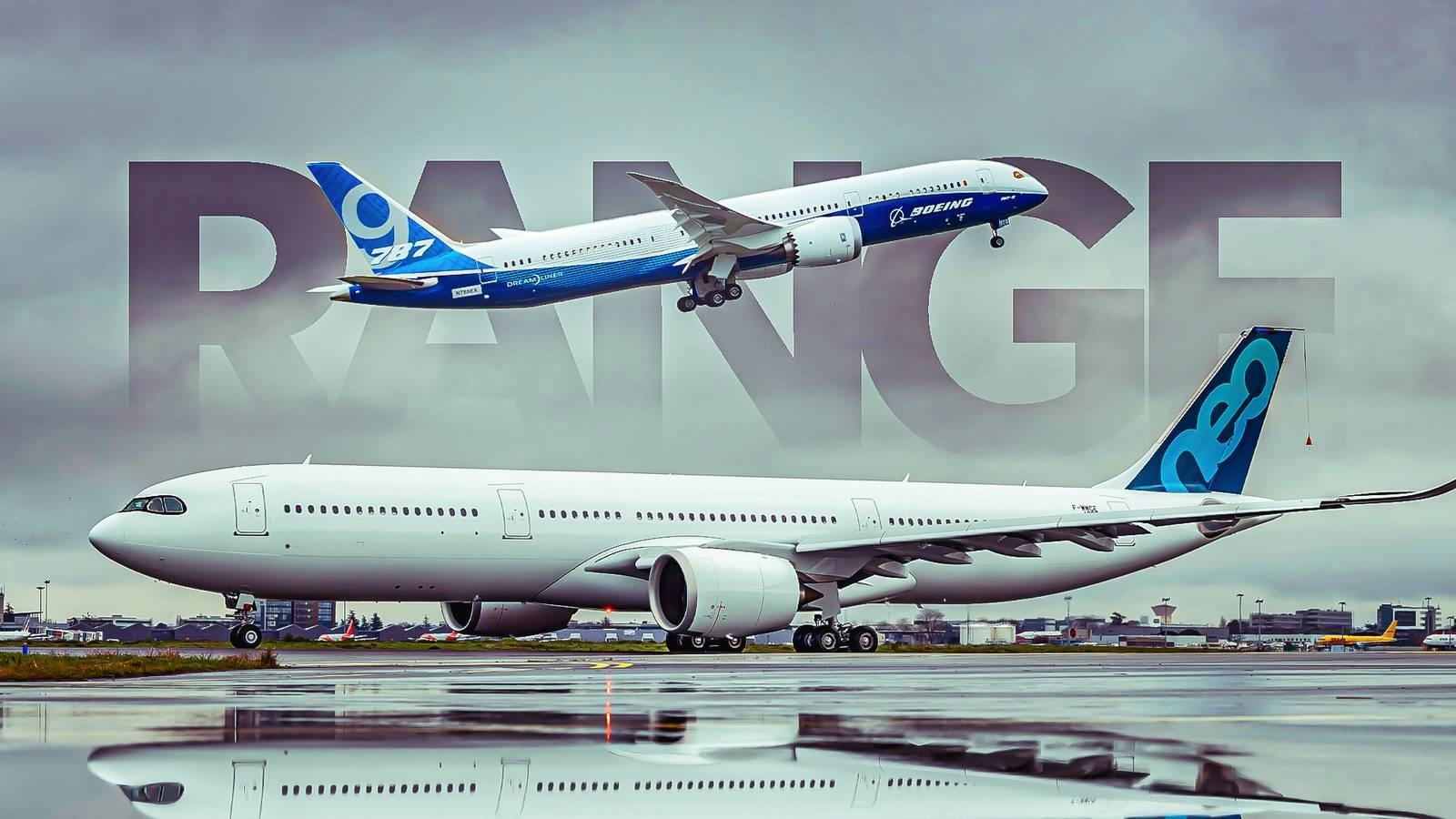
Range Comparison Between Boeing 787-9 and Airbus A330-900
Range Comparison Between Boeing 787-9 and Airbus A330-900
The Boeing 787-9 and Airbus A330-900 stand as two of the most prominent next-generation widebody aircraft, each delivering a combination of extended range, fuel efficiency, and operational adaptability tailored for long-haul flights. The 787-9, with its advanced composite construction, has redefined ultra-long-range travel, while the A330-900 builds upon a well-established platform, enhanced by modern engines and aerodynamic improvements. Together, these aircraft embody distinct strategies for efficient long-haul operations and continue to influence airline network planning on a global scale.
Range Capabilities: Boeing 787-9’s Extended Reach
The Boeing 787-9 offers a maximum range of 8,705 miles (14,010 kilometers), positioning it as the longest-range model within the Dreamliner family. This capability enables airlines to operate some of the world’s lengthiest non-stop routes, exemplified by Qantas’ Perth to London Heathrow service launched in March 2018. This route marked the first regular non-stop passenger connection between Australia and the United Kingdom. To enhance passenger comfort on this ultra-long-haul journey, Qantas implemented adjustments to meal schedules, cabin humidity, and lighting designed to mitigate jet lag. The success of this service has propelled Qantas’ ambitions under its “Project Sunrise” initiative, which aims to establish even longer non-stop flights linking additional Australian cities directly with Europe and North America.
In contrast, the Airbus A330-900 delivers a maximum range of up to 8,438 miles (13,611 kilometers). Delta Air Lines currently operates the longest A330-900 route, flying non-stop between Seattle-Tacoma International Airport and Taipei Taoyuan International Airport, covering a distance of 6,074 miles. The A330-900’s range and operational efficiency make it a favored option for carriers seeking flexibility on long-haul routes that do not require ultra-long-range performance.
Market Dynamics and Competitive Landscape
The competition between the 787-9 and A330-900 is intense, with airlines carefully evaluating factors such as range, fuel consumption, and overall operating costs. Recent fleet acquisitions illustrate this competitive environment. The Lufthansa Group’s procurement of both Airbus A350s and Boeing 787s reflects a strategic approach, selecting aircraft tailored to specific route demands. El Al’s order for additional 787-9s, including options to upgrade to the larger 787-10, underscores Boeing’s strong foothold in the widebody market. Meanwhile, United Airlines’ introduction of new 787-9s equipped with premium cabins highlights the increasing emphasis on enhanced passenger experience.
Airbus maintains a significant presence in the premium segment as well, with Delta Air Lines operating extensive fleets of A350-900s and A330-900neos, both featuring business class suites. The evolving competitive landscape has also driven innovation among carriers such as LATAM, which has introduced lie-flat seats on narrowbody A321XLR aircraft, reflecting ongoing efforts to attract premium travelers and expand service offerings.
Conclusion
Both the Boeing 787-9 and Airbus A330-900 present compelling advantages for airlines engaged in long-haul operations. The 787-9’s superior range provides a distinct advantage on ultra-long-haul routes, while the A330-900’s efficiency and versatility position it as a strong contender across a broad spectrum of missions. As airlines continue to respond to changing passenger preferences and operational demands, these aircraft are poised to remain central to the future of global air travel.

Etihad Airways Suspends Airbus A380 Flights on Key Route

Aditya Birla Group Seeks Approval for Aircraft Leasing in GIFT City

Qatar Airways Highlights Innovation and Connectivity at Arabian Travel Market 2026

Hong Kong's Five-Year Plan Includes Andrew Fan's Aircraft Parts Processing Hub Proposal

ACIA Aero Leasing Delivers ATR72-600 to Air Nostrum

RTX Appoints Jill Albertelli as Head of Pratt & Whitney

TAT Technologies Joins Beyond Aero Hydrogen Aircraft Program

AURAK Study Highlights Barriers to Air Taxi Adoption in Emerging Economies

Xiamen Air Selects Altitude for 787 Maintenance at Heathrow

Etihad and Swissport Extend Global Partnership
