
Orchestrer les insights d’IA pour les transformer en actions

Tendances
Categories
Rolls-Royce Files Patent for Hydrogen-Powered Aviation Engine
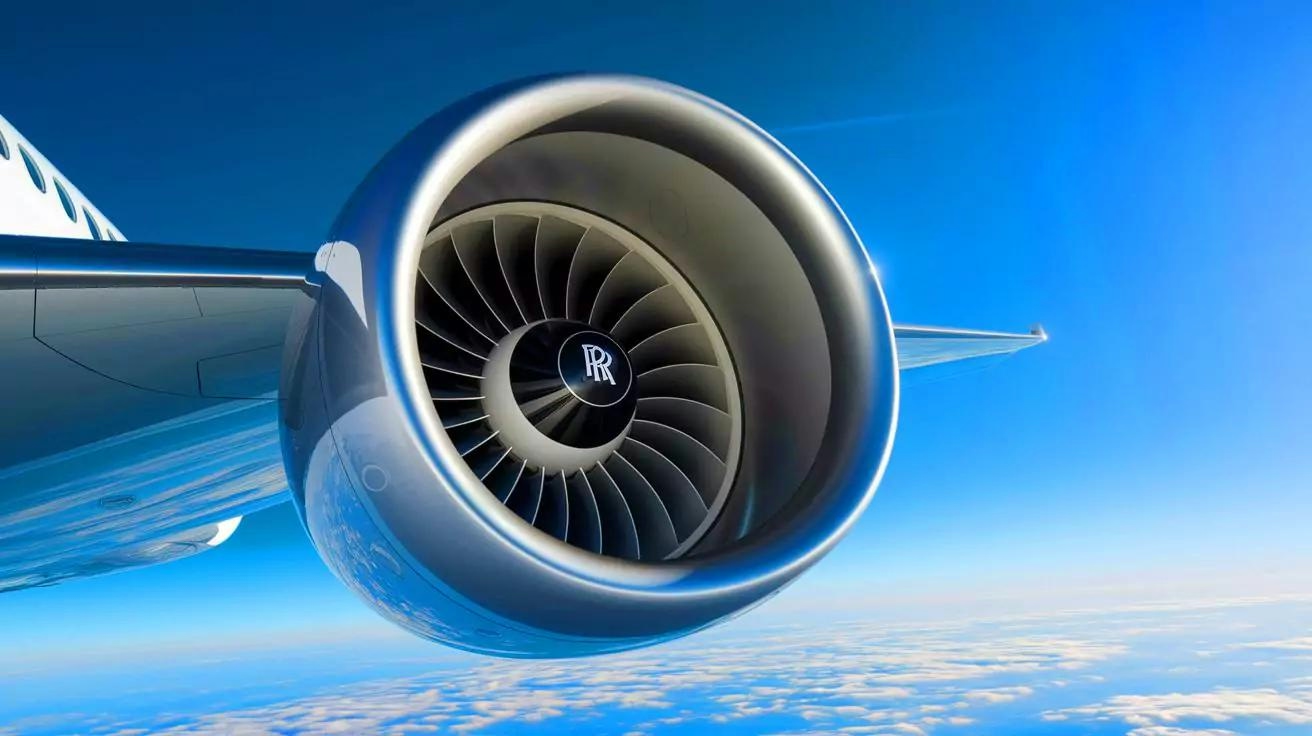
Rolls-Royce Advances Hydrogen-Powered Aviation Engine Technology
The aviation industry, long defined by continuous propulsion innovations, is now exploring hydrogen as a promising clean fuel alternative. Rolls-Royce, a global leader in aircraft engine manufacturing, has recently filed a patent for a novel hydrogen fuel system designed specifically for gas turbine engines. This development represents a significant stride in addressing the technical challenges associated with hydrogen-powered flight.
Innovative Fuel System Design
The patented system focuses on overcoming the difficulties posed by liquid hydrogen’s extremely low storage temperature of -253°C. The design incorporates a main fuel conduit equipped with a specialized pump capable of handling hydrogen, which delivers pressurized fuel directly to the engine’s core combustor. Additionally, an auxiliary combustor burns a portion of the hydrogen to pre-heat the remaining fuel, thereby enhancing combustion stability and efficiency. This approach aims to create a more controlled and effective fuel delivery mechanism, potentially making hydrogen combustion more practical for aviation applications.
Hydrogen’s appeal as an aviation fuel lies in its clean-burning properties, producing only water vapor as a byproduct. However, its low density and cryogenic storage requirements necessitate heavily insulated tanks that occupy more space than conventional jet fuel tanks. These factors present significant design challenges for aircraft manufacturers and require substantial modifications to airport infrastructure. Rolls-Royce’s system seeks to mitigate these issues by optimizing fuel handling and combustion processes, which could facilitate the integration of hydrogen propulsion in future aircraft.
Industry Implications and Future Prospects
Despite the promising technology, the path to commercial adoption remains complex. The development and certification of hydrogen-powered engines involve considerable technical hurdles and financial investment. Moreover, the aviation sector must undertake extensive infrastructure upgrades, including the establishment of hydrogen storage and refueling facilities, to support widespread use.
Market reaction to Rolls-Royce’s hydrogen initiatives has been favorable, with the company’s stock reaching peak levels amid strong financial performance in the first half of the year. This positive momentum reflects increasing investor confidence in sustainable aviation technologies. Concurrently, other industry players such as Boom and Spike are exploring hydrogen propulsion for future supersonic business jets, indicating a broader shift toward environmentally sustainable flight solutions.
Rolls-Royce is currently conducting rigorous ground testing of its hydrogen engine technology, with plans to advance to flight testing in the near future. The company aims to introduce hydrogen-fueled engines for small and mid-size aircraft by the mid-2030s, while the adoption of such technology in large commercial jets remains a longer-term objective. Achieving this will depend on continued technological innovation and collaborative efforts across the aviation industry.
As the sector intensifies efforts to reduce carbon emissions, Rolls-Royce’s patent represents a pivotal development in the pursuit of hydrogen-powered aviation, underscoring both the potential and the challenges that lie ahead.

Etihad Airways Suspends Airbus A380 Flights on Key Route

Aditya Birla Group Seeks Approval for Aircraft Leasing in GIFT City

Qatar Airways Highlights Innovation and Connectivity at Arabian Travel Market 2026

Hong Kong's Five-Year Plan Includes Andrew Fan's Aircraft Parts Processing Hub Proposal

ACIA Aero Leasing Delivers ATR72-600 to Air Nostrum

RTX Appoints Jill Albertelli as Head of Pratt & Whitney

TAT Technologies Joins Beyond Aero Hydrogen Aircraft Program

AURAK Study Highlights Barriers to Air Taxi Adoption in Emerging Economies

Xiamen Air Selects Altitude for 787 Maintenance at Heathrow

Etihad and Swissport Extend Global Partnership
