
Orchestrer les insights d’IA pour les transformer en actions

Tendances
Categories
Supply Chain Disruptions Pose Ongoing Challenges for Airlines
Supply Chain Disruptions Pose Ongoing Challenges for Airlines
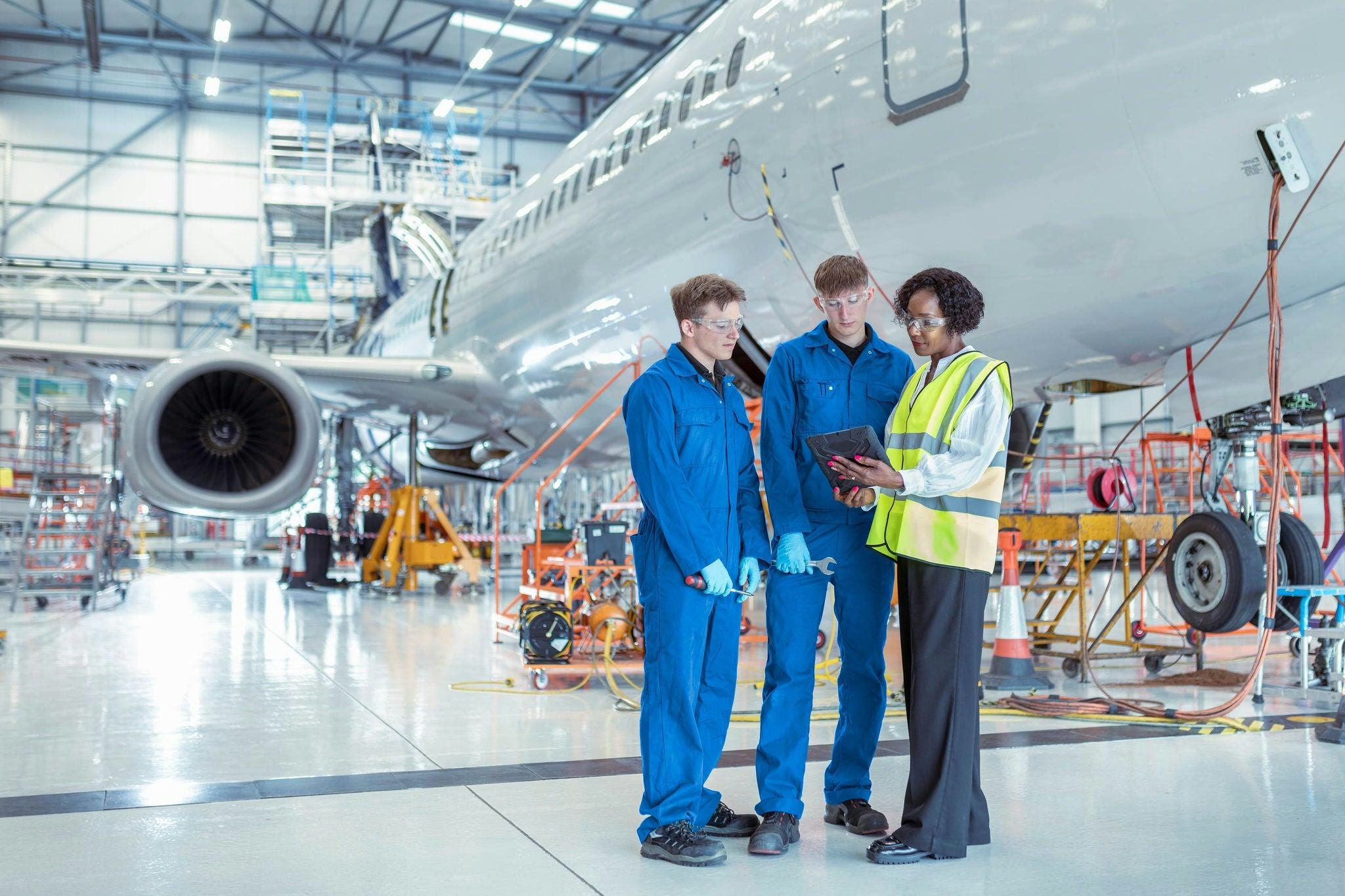
Austrian Airlines CEO Annette Mann has highlighted that supply chain disruptions continue to present a significant and enduring challenge for the aviation sector. Delays in aircraft deliveries and shortages of essential components, including engines, are expected to affect airline operations and planning through at least 2028. Despite these persistent obstacles, Austrian Airlines has so far avoided capacity reductions by implementing robust contingency measures, maintaining fleet flexibility, and leveraging support from the wider Lufthansa Group.
Persistent Supply Chain Issues and Industry Adaptation
Mann noted that although supply chain disruptions no longer dominate headlines as they did immediately after the pandemic, they remain a critical concern for airline leadership. She explained that the industry is facing a dual impact: a shortage of new aircraft and a scarcity of parts necessary for maintenance and operations. As Austrian Airlines advances its fleet renewal program, these challenges continue to complicate its efforts.
In response, the aviation industry has shifted its approach from passively awaiting supply chain normalization to actively embedding resilience and contingency planning into daily operations. For Austrian Airlines, this strategy involves preparing alternative operational scenarios and capitalizing on the resources available within the Lufthansa Group. The ability to share aircraft, engines, and capacity across the group, alongside group-wide wet leasing arrangements, has been instrumental in providing the necessary operational flexibility. Mann emphasized a collaborative approach, stating, “We are focusing more and more on the group optimum rather than an optimum for each airline. That means we collaborate and help each other out.”
Broader Industry Pressures and Future Outlook
The challenges posed by supply chain disruptions are compounded by a range of other pressures facing airlines globally. Economic uncertainty, cyber threats, rapid advancements in artificial intelligence, and increasingly severe weather events add layers of complexity to airline operations. Additionally, labor shortages, material scarcities, geopolitical instability, and tariffs continue to strain the industry. Rising operating costs and the imperative to transition to greener fuels further intensify these challenges. LATAM CEO Roberto Alvo recently cautioned that sustained high fuel prices could force additional capacity reductions, underscoring the mounting pressures on carriers worldwide.
While some industry stakeholders had anticipated gradual improvements in aircraft availability and maintenance supply chains, Mann indicated that Austrian Airlines is preparing for ongoing disruption over the coming years. “Many deliveries are delayed, but we currently predict out to 2028, and we have plans in place to cope,” she said.
This experience reflects a broader transformation in how airlines approach operational resilience. Fleet planning can no longer rely solely on expected delivery schedules or stable geopolitical conditions. Instead, carriers are now preparing for multiple scenarios simultaneously, drawing on lessons learned during the pandemic. Mann observed that network re-planning, which once took weeks, can now be accomplished in days or even hours, a capability that was not feasible before the pandemic.
As airlines continue to navigate an environment marked by uncertainty—from supply chain constraints to geopolitical developments and volatile markets—Mann underscored the necessity of ongoing flexibility and resilience. “Airlines must be flexible and resilient because the next crisis is just around the corner,” she concluded.

Etihad and Swissport Extend Global Partnership

Sepehran Airlines B737 Returns to Mashhad After Tyre and Engine Issues

Etihad Deploys Widebody Fleet to Meet Strong Demand

Korean Air Finalizes $36.2 Billion Deal with Boeing

Australia’s RFDS Queensland Section Orders Six King Air 260Cs

Korean Air Finalizes Order for 103 Boeing Jets and Engines

Embraer E195-E2 Features Distinctive Engine Placement Among Regional Jets

What Passengers Can Expect on Boeing’s New 777X Jet

How Ethiopian Airlines Became Africa’s Leading Carrier Amid Gulf Competition

Joby Aviation Extends Autonomous Flight Capabilities with Cross-Country Tour
