
Orchestrer les insights d’IA pour les transformer en actions

Tendances
Categories
The Role of AI in the Future of Aviation Operations
The Role of AI in the Future of Aviation Operations
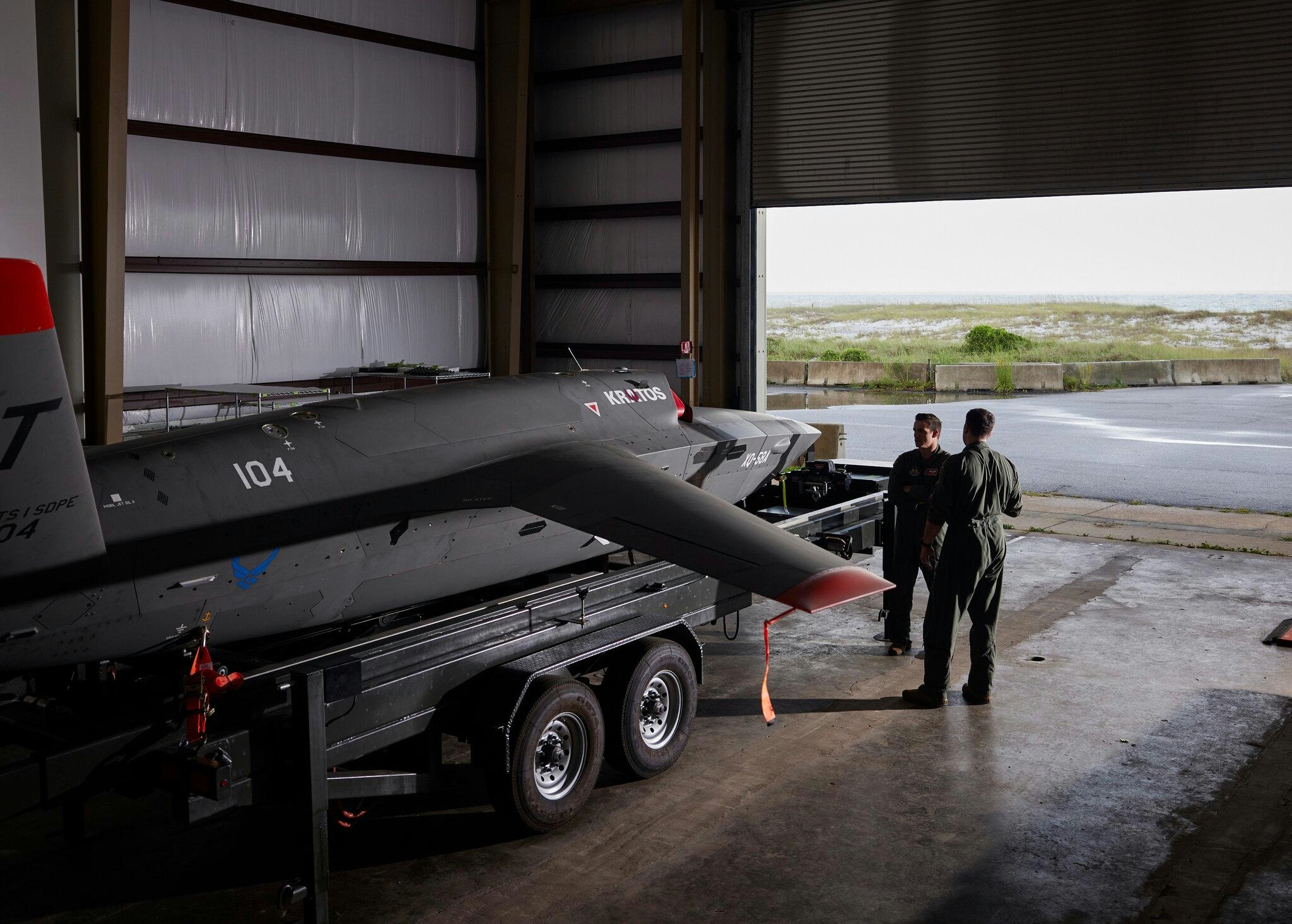
Aviation industry leaders are increasingly embracing artificial intelligence (AI) and automation to improve the efficiency and safety of airline and airspace operations. At the recent AIAA AVIATION Forum in San Diego, representatives from United Airlines, Reliable Robotics, Collins Aerospace, NASA, and the standards community convened to discuss how advanced analytics and autonomous technologies are already influencing real-world decision-making. They also examined the challenges involved in scaling these innovations without disrupting the intricate systems that manage the daily movement of hundreds of thousands of passengers.
United Airlines: Integrating AI with Human Oversight
United Airlines stands at the forefront of this technological transformation. Roberta Zimmerman, United’s Director of Air Traffic Strategy, Data Analytics, and Strategic Vision, detailed how AI has become an integral part of the airline’s daily operations. Managing over 5,300 departures each day and having transported a record 630,500 passengers in a single day, United employs AI to streamline processes for both customers and crew while ensuring that critical safety decisions remain under human control.
One practical application involves AI-driven communication tools that convey delays in clear, accessible language and provide passengers with real-time alternatives for missed connections, including estimated walking times between gates. Additionally, AI assists in translating complex labor contracts into scheduling logic, enabling more effective crew planning amid increasingly complicated agreements.
Zimmerman highlighted that the primary challenge is not the sophistication of AI algorithms but rather their integration into existing operational systems. Even seemingly minor updates, such as changing an airport code, can have far-reaching consequences due to the interconnected nature of the national airspace system. She emphasized, “We are a system of systems, and something very small, the integration of that is a huge impact to make sure that there’s no loss of service.”
Industry-Wide Challenges and Considerations
Beyond technical integration, aviation leaders underscored broader operational and organizational challenges. Establishing clear ownership, developing robust systems, and fostering trust among customers and employees are critical for the successful adoption of AI. Market responses have revealed skepticism, particularly concerning the transparency and fairness of AI-driven dynamic pricing models. Without disclosure of the data and logic underpinning pricing decisions, customer trust risks erosion.
Competitors are closely monitoring how AI is deployed to enhance efficiency and customer service, while simultaneously confronting issues of governance and accountability. High-profile failures—such as Air Canada’s chatbot delivering incorrect information and Zillow’s automated home-buying tool mispricing properties—highlight the dangers of inadequate oversight and the necessity for clear accountability frameworks in AI systems.
The Path Forward
As AI becomes more deeply embedded in aviation operations, the industry faces a delicate balancing act: harnessing automation to improve efficiency while preserving human oversight and maintaining public trust. Aviation leaders agree that AI offers substantial benefits, but these can only be realized if operational, organizational, and ethical challenges are addressed directly. The future of aviation will depend not solely on technological innovation but on thoughtful integration and transparent governance.
Boeing Produced Only 16 Widebodies Last Quarter as Airbus Gains Ground with Delta

Airbus A350-900ULR Extends Range to 9,700 Nautical Miles by Removing Parts, Not Adding Fuel Tanks
FAA Employs AI to Enhance Runway Safety

New Report Examines AI Travel System’s Impact on Tourism and Airlines

Abu Dhabi Aims to Lead in Next-Generation Aviation

FAA and EASA Commit to Enhanced Cooperation on Aviation Safety
Why Turkish Airlines Operates the 492-Seat Boeing 777 on Short Flights
China Develops New J-20 Engine Surpassing F-22 Raptor’s Power
Boeing and AFRA Advocate for Improved End-of-Service Aircraft Data

Battelle Awards $968K in STEM Grants to Support AI and Aerospace Careers in Central Ohio
