
Orchestrer les insights d’IA pour les transformer en actions

Tendances
Categories
Uber Plans Flying Taxi Service in London
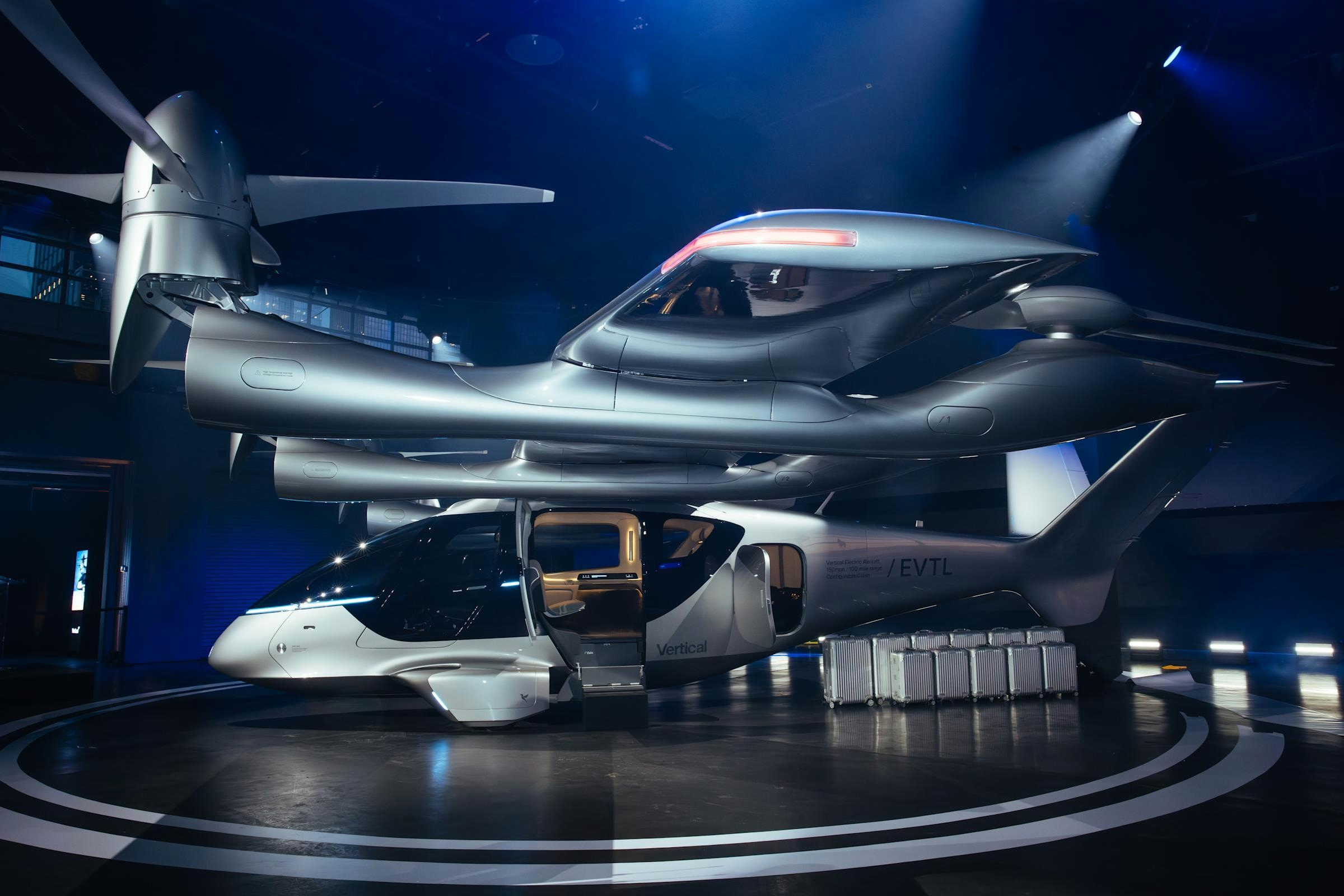
Uber Plans Flying Taxi Service in London by 2030
Ambitions for Urban Air Mobility
Uber has announced plans to launch a flying taxi service in London by 2030, aiming to revolutionize urban transportation through the use of electric vertical take-off and landing (eVTOL) aircraft. The company envisions a future where passengers can avoid congested city streets and reach destinations such as airports in a matter of minutes, echoing the futuristic imagery popularized by “The Jetsons.” Sachin Kansal, Uber’s chief product officer, emphasized London as a key market, expressing confidence that the service could be operational in the UK by the end of the decade. He highlighted the potential for this innovation to alleviate traffic woes for users.
This initiative forms part of Uber’s broader global strategy to introduce electric passenger flights. The company is set to commence operations in Dubai later this year through a partnership with Joby Aviation, launching with four vertiports. Similar services are planned for New York and Los Angeles, contingent upon receiving necessary safety approvals.
Integration and Technology
Uber’s proposed London flying taxi service will be fully integrated with its existing app, offering a seamless travel experience. Passengers would be collected by an Uber car, transported to the nearest vertiport, flown to a landing site close to their destination, and then driven to their final stop. The eVTOL aircraft, designed to seat four passengers, can reach speeds of up to 200 miles per hour and cover distances of 100 miles on a single charge. Charging times are expected to be brief, requiring only eight to ten minutes to restore full battery capacity.
Pricing for the service is anticipated to align with Uber Exec, the company’s premium ride option. Customers will have the flexibility to book individual seats on shared flights or reserve an entire aircraft for private use.
Regulatory and Competitive Challenges
Despite the promising outlook, Uber faces considerable challenges in launching flying taxis in London. The city’s intricate road network and variable weather conditions pose significant regulatory and operational obstacles. The UK’s Civil Aviation Authority (CAA) must first certify the safety of the eVTOL aircraft before granting operational licenses. This process will involve stringent evaluations of pilot training, flight routes, and maintenance protocols. Jonathan Nicholson of the CAA noted that no certification has yet been granted for such aircraft in the UK, indicating that several procedural steps remain before commercial operations can commence.
Competition in the urban air mobility sector is intensifying. British startup Vertical Aerospace aims to begin passenger flights within the next two years, while companies like Lyft and Waymo have initiated their own trials in London. Additionally, autonomous vehicle firm Wayve recently secured $1.5 billion in funding to compete directly with Uber and other mobility providers.
Kansal suggested that initial vertiports in London could be situated atop car parks, tall buildings, or existing helipads, providing sufficient coverage across the city and its outskirts. He described the infrastructure requirements as “very creative,” emphasizing the need for clearings, adequate space, and charging facilities.
As Uber and its competitors strive to obtain regulatory approval and establish market presence, London is poised to become a pivotal testing ground for the future of urban air mobility.

Etihad Airways Suspends Airbus A380 Flights on Key Route

Aditya Birla Group Seeks Approval for Aircraft Leasing in GIFT City

Qatar Airways Highlights Innovation and Connectivity at Arabian Travel Market 2026

Hong Kong's Five-Year Plan Includes Andrew Fan's Aircraft Parts Processing Hub Proposal

ACIA Aero Leasing Delivers ATR72-600 to Air Nostrum

RTX Appoints Jill Albertelli as Head of Pratt & Whitney

TAT Technologies Joins Beyond Aero Hydrogen Aircraft Program

AURAK Study Highlights Barriers to Air Taxi Adoption in Emerging Economies

Xiamen Air Selects Altitude for 787 Maintenance at Heathrow

Etihad and Swissport Extend Global Partnership
