Image

Orchestrer les insights d’IA pour les transformer en actions

Inscrivez-vous dès aujourd’hui sur la liste d’attente d’AeroGenie !

Tendances

Categories

UK Ministry of Defence Signs Support Contract with GA-ASI for Protector Drones
June 10, 2025By ePlane AI
UK Ministry of Defence Signs Support Contract with GA-ASI for Protector Drones
0
0
Protector RG Mk1
GA-ASI
RAF Unmanned Aircraft

UK Ministry of Defence Signs Support Contract with GA-ASI for Protector Drones

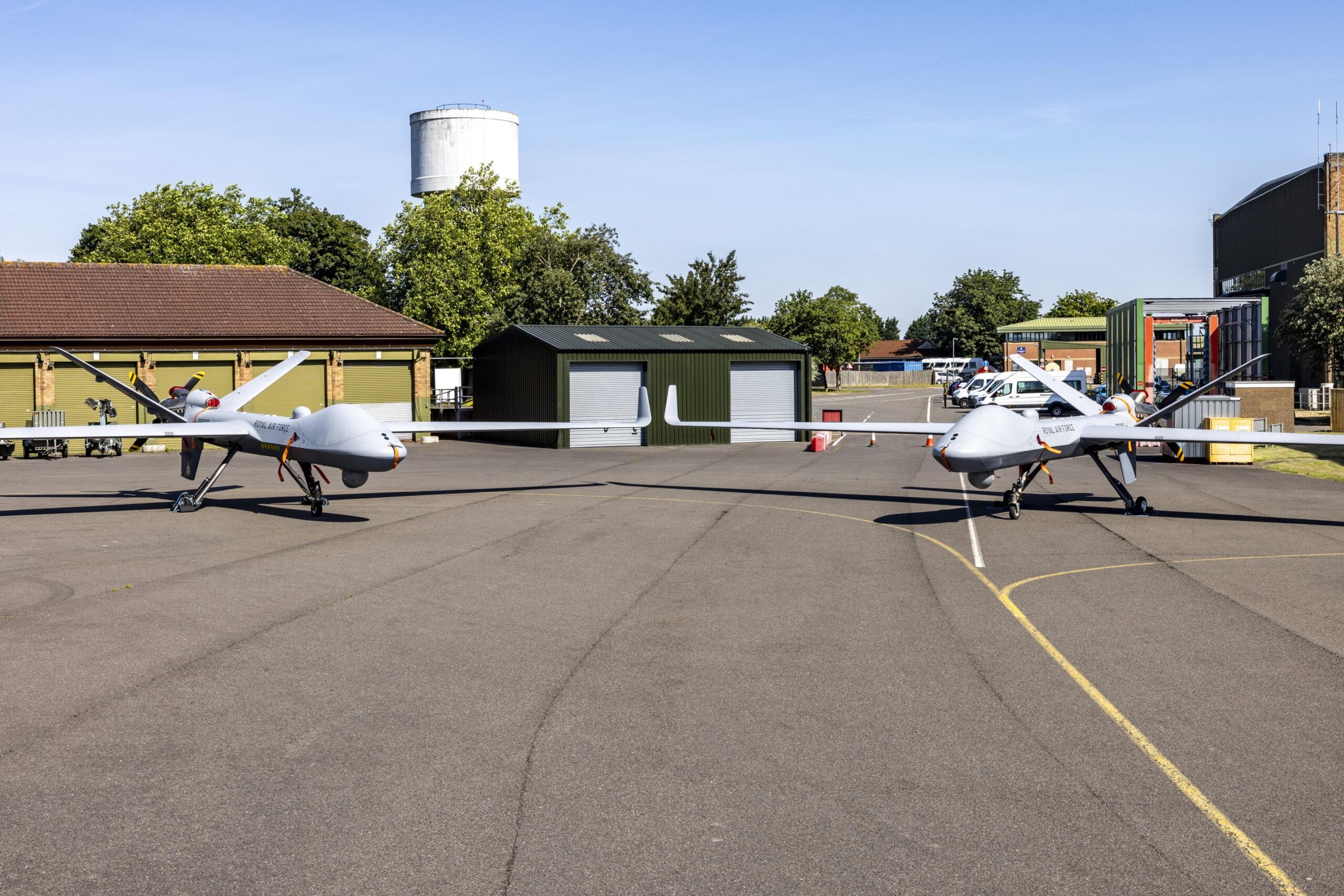
The United Kingdom’s Ministry of Defence (MOD) has formalized a support and sustainment agreement with General Atomics Aeronautical Systems, Inc. (GA-ASI) to manage the logistics and maintenance of the Protector RG Mk1 Remotely Piloted Aircraft (RPA) system. Known as the UK Protector Availability and Support Solution (UK PASS), this contract is designed to provide ongoing operational support for the Protector RPAs, which have recently entered service with the Royal Air Force (RAF).

Advancing RAF’s Unmanned Capabilities

The Protector RPA, derived from GA-ASI’s MQ-9B SkyGuardian platform, marks a significant enhancement in the RAF’s unmanned aerial capabilities. The UK PASS contract, executed as a Direct Commercial Sale, encompasses not only the aircraft themselves but also the Certifiable Ground Control Stations and Synthetic Training Systems essential for maintaining operational readiness. Chris Dusseault, vice president of MQ-9B operations in Europe at GA-ASI, emphasized the importance of the agreement, stating that it enables the transition from the program’s test and development phase to the training of RAF flight crews for active deployment.

UK PASS forms part of GA-ASI’s broader SkyGuardian Global Support Solutions (SGSS), which employs a shared Contractor Logistics Support (CLS) model. This model consolidates resources—including labor, materials, and overhead—across the entire MQ-9B customer base to achieve economies of scale and streamline maintenance and supply chain functions.

Collaborative Efforts and Operational Challenges

Group Captain Rich Cameron, Uncrewed Air System 3 Team Leader, underscored the extensive collaboration between GA-ASI and the UK MOD, noting that the contract is the culmination of three years of multidisciplinary teamwork. He described the UK PASS as a first-of-its-kind sustainment solution for the RAF Protector fleet, leveraging contractor-owned inventory from a global common spares pool. Unlike traditional spares and repairs contracts, this approach is designed to optimize efficiency through a multi-customer common operating model.

Despite these advancements, the implementation of the UK PASS contract presents several challenges. Integrating the Protector drones into the RAF’s existing operational framework will require meticulous coordination, particularly in managing the logistical and technical support necessary for sustained operations. Cybersecurity remains a paramount concern, with the need for robust safeguards to protect sensitive data and maintain operational integrity in the face of evolving threats.

Strategic Implications and Industry Response

The contract has attracted attention from defense analysts and industry competitors, who are closely observing the MOD’s strategy for drone support and sustainment. This development may prompt competitors to enhance their unmanned systems offerings or pursue similar contracts, potentially intensifying competition within the sector.

Moreover, the UK’s broader defense commitments, including its pledge to supply 100,000 drones to Ukraine, could influence future procurement strategies and priorities. Balancing domestic operational requirements with international obligations is likely to shape the MOD’s ongoing investment in drone technology and support infrastructure.

The UK PASS contract represents a pivotal advancement for the RAF’s Protector program, with its ultimate success contingent upon effective integration, sustained support, and the capacity to address emerging operational and security challenges.

More news
Blueberry Aviation Completes Recovery of Garuda’s ATR72-600 Fleet

Blueberry Aviation Completes Recovery of Garuda’s ATR72-600 Fleet

Blueberry Aviation Completes Recovery of Garuda’s ATR72-600 Fleet Blueberry Aviation has announced the successful conclusion of the recovery of Garuda Indonesia’s ATR72-600 fleet, marked by the return of the tenth and final aircraft to Toulouse on July 5, 2026. This project, undertaken on behalf of the French and Italian Export Credit Agencies (ECAs), represents a significant achievement for the Monaco-based aircraft trading and asset management firm. Complex Recovery and Asset Management The recovery process involved numerous challenges, including ensuring the airworthiness and safety of the aircraft after prolonged grounding periods, coordinating extensive maintenance and repair operations across the fleet, and adhering to stringent regulatory compliance standards. Blueberry Aviation oversaw the entire repossession operation, which encompassed on-site physical and records inspections, fleet valuation, aircraft recovery, ferrying, storage in France, insurance management, and the remarketing and redelivery of the aircraft to new owners. This accomplishment follows Blueberry Aviation’s earlier success in 2022, when it completed a comparable repossession and remarketing project involving 11 ATR72-600 aircraft recovered from Avianca following the airline’s Chapter 11 bankruptcy filing. In both instances, the company was entrusted by the ECAs to manage the full scope of the process, underscoring its expertise in handling distressed assets and supporting airlines through restructuring or insolvency. Market Impact and Company Profile The recovery has elicited positive responses from Garuda’s customers, who have noted improvements in fleet reliability and service quality. Meanwhile, competitors are reportedly enhancing their maintenance programs and closely examining Blueberry Aviation’s methodologies to sustain their competitive positions. The successful recovery and remarketing of these fleets further consolidate Blueberry Aviation’s reputation as a leader in commercial aircraft remarketing, sourcing, and asset management, particularly in complex and distressed scenarios. Operating globally with offices in Monaco, New York, Singapore, and Mumbai, Blueberry Aviation is led by founder and CEO François Gautier. The company has completed over 190 commercial aircraft transactions and more than 565 helicopter deals to date. Its advisory team offers clients comprehensive support, including equipment selection, transaction execution, sourcing and sales of new and pre-owned aircraft, technical assistance, and portfolio management. Beyond its commercial aircraft activities, Blueberry Aviation is recognized as one of the largest helicopter traders in the secondary market. The completion of the Garuda ATR72-600 recovery project highlights Blueberry Aviation’s capacity to manage intricate asset recoveries and reinforces its position as a trusted partner for export credit agencies and airlines worldwide.
Southwest Airlines to Replace Outdated Software Behind 16,700 Flight Cancellations by 2028

Southwest Airlines to Replace Outdated Software Behind 16,700 Flight Cancellations by 2028

Southwest Airlines to Replace Outdated Software Behind 16,700 Flight Cancellations by 2028 The 2022 Operational Crisis and Its Causes In December 2022, Southwest Airlines experienced the most severe operational disruption in U.S. airline history, canceling over 16,700 flights in the wake of Winter Storm Elliott. The airline’s aging crew scheduling software, SkySolver, was identified as the primary cause of the chaos. Originally implemented in 2004, SkySolver was overwhelmed by the scale and speed of the disruptions, unable to process real-time changes effectively. As the storm intensified, crew schedulers were forced to abandon the automated system and resort to manual processes, resulting in widespread delays, stranded crews, and planes left without staff. The operational turmoil persisted from December 21 through December 30, leaving passengers frustrated and operations in disarray. The fallout from the incident was severe. The U.S. Department of Transportation imposed a record $140 million fine on Southwest, while the airline reported losses exceeding $1 billion. Unlike its competitors, Southwest was disproportionately affected, revealing significant vulnerabilities in its technological infrastructure. SkySolver, designed for a smaller and less complex operation, struggled to accommodate the airline’s expanded schedule, which has grown by nearly 70% since the software’s introduction. Internal Warnings and Deferred Upgrades Concerns about the limitations of SkySolver had been raised internally as early as 2018. However, Southwest’s leadership reportedly postponed necessary upgrades in an effort to maintain its low-cost business model. The absence of a backup system and inadequate employee training further exacerbated the crisis, leaving staff ill-equipped to manage the system’s failure. Despite numerous modifications over the years, the core software remained outdated and ill-suited to the demands of modern airline operations. Plans for Modernization Amid Industry Challenges In response to the crisis, Southwest has announced plans to replace SkySolver with a new cloud-based scheduling system by 2028. This transition, however, comes at a time of considerable uncertainty within the software industry. The sector is grappling with the disruptive effects of artificial intelligence and faces a looming “maturity wall” of loans due in 2028, which may complicate financing for large-scale IT projects. Market analysts caution that Southwest’s financial position could come under increased scrutiny, potentially attracting interest from private credit investors as the airline undertakes this significant technological overhaul. Competitors are also accelerating their technology investments and forging new partnerships to adapt to the evolving landscape. Southwest, for instance, has committed to enhancing in-flight connectivity through a collaboration with Starlink, reflecting a broader strategy to modernize its operations. Nonetheless, recent operational issues, such as those experienced at Rhode Island’s airport, highlight the ongoing challenges the airline faces in maintaining efficiency and protecting its reputation. As Southwest moves forward with this critical upgrade, the effectiveness of its new scheduling system will be closely monitored. The outcome will not only test the airline’s technological resilience but also serve as an important indicator for the industry regarding the necessity of robust and adaptable IT infrastructure in an era marked by rapid change.
China Eastern Airlines Offers Free Wi-Fi on All Wide-Body Flights

China Eastern Airlines Offers Free Wi-Fi on All Wide-Body Flights

China Eastern Airlines Introduces Complimentary Wi-Fi on All Wide-Body Flights China Eastern Airlines (CEAir), along with its subsidiary Shanghai Airlines, has announced that starting from 3 July, all passengers traveling on wide-body aircraft will have access to free in-flight Wi-Fi. This service expansion will cover the airline’s entire network, including domestic routes and long-haul international destinations across the Americas, Europe, Africa, the Middle East, Central Asia, and South Asia. Enhancing Passenger Connectivity Amid Industry Competition This initiative places China Eastern among a growing cohort of global carriers responding to increasing passenger demand for uninterrupted internet access during flights. The airline’s move comes at a time of heightened competition in the aviation sector, where many major airlines are adopting advanced satellite-based connectivity systems such as Starlink. For instance, United Airlines has already equipped over 400 aircraft with Starlink and aims to install the system on nearly 1,000 planes, including approximately 60 wide-body jets, by the end of the year. Similarly, Israel’s El Al has committed to offering free Starlink-powered Wi-Fi starting in 2027, while European low-cost carrier Wizz Air plans to introduce the same technology from that year onward. These trends reflect a broader industry shift toward satellite-based in-flight internet, which provides faster speeds and more reliable connections compared to traditional air-to-ground systems. As airlines continue to invest in these next-generation technologies, China Eastern may face increasing pressure to upgrade its connectivity infrastructure to maintain competitiveness and satisfy evolving passenger expectations. A Significant Step Forward for China Eastern Airlines The introduction of complimentary Wi-Fi on all wide-body flights represents a notable enhancement to the passenger experience across China Eastern’s extensive global network. While the airline has not revealed any immediate plans to transition to satellite-based systems, the rapidly evolving landscape of in-flight connectivity suggests that ongoing innovation will remain a critical focus for carriers worldwide.
Dubai Aerospace Hub Expands Aircraft Cabin Retrofit Operations

Dubai Aerospace Hub Expands Aircraft Cabin Retrofit Operations

Dubai Aerospace Hub Expands Aircraft Cabin Retrofit Operations Dubai is intensifying its efforts to establish itself as a global aviation leader with the Mohammed Bin Rashid Aerospace Hub (MBRAH) announcing a significant expansion of its aircraft cabin retrofit capabilities. Central to this development are plans for two new Code F plots, specifically designed to accommodate advanced cabin completion and retrofit work for wide-body aircraft. In addition, MBRAH is set to launch the region’s first Cabin Excellence Center within the Airline Manufacturing and Supply Chain Zone, a move expected to elevate standards in aircraft cabin refurbishment. Strategic Vision and Industry Context Tahnoon Saif, CEO of MBRAH, emphasized that the expansion aligns closely with Dubai’s broader vision to become the world’s aviation capital. He highlighted the hub’s commitment to providing partners with the necessary infrastructure, connectivity, and support to scale their operations and serve both regional and global aviation markets effectively. This strategic growth is underpinned by a favorable global aerostructures market outlook, which is projected to reach $142.7 billion by 2035, expanding at a compound annual growth rate of 6.6%. Concurrently, Dubai’s robust property market, marked by sustained growth and strong institutional investment, reinforces confidence in the emirate’s capacity to support large-scale aerospace projects. Competitive Landscape and Innovation MBRAH’s expansion occurs amid a competitive environment where established players such as Akkodis are advancing aerospace applications through digital innovation and artificial intelligence. As the market for cabin retrofits and completions becomes increasingly contested, competitors are likely to adopt similar technological enhancements and forge strategic partnerships to protect and grow their market share. Despite these challenges, Dubai’s strategic investments in infrastructure and innovation position MBRAH as a pivotal force within the regional aviation sector. The forthcoming Cabin Excellence Center is anticipated to set new industry benchmarks for quality and operational efficiency in aircraft cabin retrofits. This facility is expected to attract a broad spectrum of regional and international partners, further solidifying Dubai’s role in the aerospace supply chain. As Dubai continues to develop its aviation ecosystem, the expansion of the Mohammed Bin Rashid Aerospace Hub underscores the emirate’s ambition to lead across both traditional aerospace sectors and emerging industry segments.
Fly Nigeria Bill: Navigating Local Content Goals and Global Aircraft Leasing Challenges

Fly Nigeria Bill: Navigating Local Content Goals and Global Aircraft Leasing Challenges

Fly Nigeria Bill: Navigating Local Content Goals and Global Aircraft Leasing Challenges Balancing Local Content Ambitions with Industry Realities Nigeria’s aviation sector is poised at a critical juncture, presenting one of Africa’s most significant growth opportunities while confronting intricate financing and operational challenges. The Federal Government’s Fly Nigeria Bill aims to enhance local airline participation by mandating that government officials and agencies prioritize domestic carriers for official travel. This policy is expected to redirect approximately ₦22.6 billion in annual government travel expenditure to Nigerian airlines, thereby creating a more predictable revenue stream that could improve the financial stability and creditworthiness of local carriers. As Africa’s largest economy with a population exceeding 200 million, Nigeria depends heavily on air transport to facilitate trade, investment, tourism, and regional integration. Despite this, the sector continues to face persistent obstacles, including limited access to long-term financing, volatile foreign exchange rates, and a reliance on foreign-owned aircraft and aviation services. These factors have historically hindered the growth and competitiveness of domestic airlines. The Fly Nigeria Bill draws inspiration from similar initiatives worldwide and forms part of a broader strategy to retain greater economic value within Nigeria’s aviation ecosystem. It seeks to stimulate investment and employment across the aviation value chain, including maintenance, training, and logistics. However, previous attempts to implement comparable policies have encountered legislative resistance and challenges related to the sector’s capacity to absorb increased demand. The Global Leasing Landscape and Nigeria’s Aviation Future The global aviation industry’s capital-intensive nature underscores the importance of international lessors, financiers, insurers, and manufacturers. Recent developments illustrate this dynamic, with major leasing firms such as Avolon and KKR expanding their investments. Avolon’s acquisition of new A321neos and KKR’s $1.4 billion commitment to its aircraft leasing venture with Altavair highlight the competitive environment and the critical role of aligning with international leasing standards. Nigeria’s aviation authorities have confirmed that there are no current plans to establish a new national carrier, indicating a continued reliance on private sector-led initiatives and international partnerships. One such initiative is the Nigeria Aircraft Leasing Company, a government-backed but private sector-driven Special Purpose Vehicle designed to address financing gaps and build domestic capacity. These efforts must operate within the broader context of global capital flows and industry standards. The ultimate success of the Fly Nigeria Bill will depend on Nigeria’s ability to balance the promotion of local participation and economic retention with maintaining the confidence of international investors and lessors. As global leasing firms increase their presence and influence, Nigeria’s aviation sector faces the challenge of fostering sustainable growth without isolating itself from the international ecosystem that underpins its airlines’ operations.
CubCrafters Introduces Turbine-Powered Carbon Cub ULT

CubCrafters Introduces Turbine-Powered Carbon Cub ULT

CubCrafters Introduces Turbine-Powered Carbon Cub ULT CubCrafters has unveiled the Carbon Cub ULT, a turbine-powered advancement of its Carbon Cub UL model, marking a notable progression in backcountry aviation technology. This new iteration replaces the conventional Rotax piston engine with a French-manufactured TurboTech TP-R90 regenerative turboprop engine, establishing the ULT as one of the lightest high-performance backcountry aircraft currently available. Drawing inspiration from the iconic Piper Super Cub, the Carbon Cub ULT is engineered to comply with the Federal Aviation Administration’s (FAA) recently introduced MOSAIC regulations. These rules broaden the scope of light-sport aircraft certification and permit alternative propulsion systems, including turbine engines. CubCrafters stresses that the ULT is not merely a faster or more powerful variant of the UL but a distinct model that integrates the smooth operation of a turbine, compatibility with Jet-A and diesel fuels, push-button engine start, and single-lever FADEC (Full Authority Digital Engine Control) management, all while maintaining performance metrics comparable to the Rotax-powered UL. The company announced the Carbon Cub ULT on July 7, 2026, ahead of its scheduled public debut at the EAA AirVenture Oshkosh event later in the month. Customer deposits are currently being accepted, with initial deliveries expected to commence in 2027. Designed for the MOSAIC Era CubCrafters positions the Carbon Cub ULT as the first turboprop aircraft manufactured in the United States eligible for operation by sport pilots under the FAA’s MOSAIC framework. Central to this innovation is the TurboTech engine’s FADEC system, which automates critical functions such as fuel flow, ignition timing, engine temperature regulation, and propeller control, thereby reducing pilot workload. Engine start-up is simplified to activating the master switch and pressing a single button, with the FADEC system managing the entire sequence. The prototype cockpit is equipped with Garmin G3X Touch avionics alongside a dedicated turbine engine display. The TurboTech engine employs a regenerative cycle design that recovers exhaust heat to preheat intake air prior to combustion. This approach enhances fuel efficiency, aiming to achieve consumption rates comparable to modern piston engines while retaining the operational advantages of turbine power and the ability to run on Jet-A or diesel fuel. TurboTech, founded by former Safran engineers, has developed its engines over several years, with applications in European ultralight aircraft and helicopters. The TP-R90 and TP-R150 models are rated at 160 horsepower with a combined turbine and electric boost. Current specifications for the TP-R150 indicate a maximum output of 141 horsepower, an eco-cruise fuel burn of approximately five gallons per hour at 50 percent power, a weight near 190 pounds, and a time between overhauls of 3,000 hours. Market and Industry Outlook The introduction of the Carbon Cub ULT represents a significant technological advancement, yet CubCrafters faces several challenges in bringing the aircraft to market. Regulatory approval processes, competition from established manufacturers, and market acceptance of this novel design will be critical factors influencing its success. While traditional ultralight aviation enthusiasts may initially approach the turbine-powered ULT with caution, the aircraft’s innovative features are expected to appeal to backcountry pilots seeking enhanced technology and operational versatility. Competitors within the industry may respond by intensifying marketing efforts for their existing models or accelerating the development of turbine-powered ultralight aircraft to maintain their market positions. Despite these challenges, the Carbon Cub ULT positions CubCrafters at the forefront of a new chapter in light-sport and backcountry aviation, combining contemporary engineering advancements with a legacy of proven performance.
US-Bangla Airlines Wet Leases Airbus A320-200

US-Bangla Airlines Wet Leases Airbus A320-200

US-Bangla Airlines Expands Fleet Through Wet Lease of Airbus A320-200 US-Bangla Airlines (BS, Dhaka) has initiated a wet lease agreement for an Airbus A320-200 from BBN Airlines Thailand (TZ, Bangkok Don Mueang), a strategic move aimed at enhancing fleet flexibility amid intensifying competition in the aviation sector. The arrangement was publicly confirmed by BBN Airlines Thailand, a start-up ACMI specialist, through a recent social media announcement. Operational Deployment and Aircraft History The aircraft, registered HS-SXA (msn 5089), began operating under US-Bangla’s "UBG" callsign on June 24, 2026, following its repositioning from Bangkok Suvarnabhumi to Dhaka the day before. Since entering service with US-Bangla, the A320-200 has been deployed on routes connecting Dhaka with Bangkok Suvarnabhumi, Malé, Singapore Changi, and Sharjah. This particular Airbus narrowbody, now 14.3 years old, was previously operated by Thai VietJetAir from December 2025—coinciding with the launch of BBN Airlines Thailand’s commercial operations—until April 2026. The decision to incorporate this wet-leased aircraft reflects a broader industry trend where carriers increasingly rely on wet leasing and flexible fleet management solutions to address fluctuating market demands and capacity challenges. Market Context and Fleet Strategy US-Bangla’s move comes amid a period of aggressive fleet expansion and modernization by major airlines worldwide. For instance, American Airlines is actively pursuing additional widebody aircraft orders to strengthen its competitive position against Delta and United, intensifying demand for available aircraft. Similarly, Finnair is exploring wet lease options for used A320s to support its network growth, while Starlux Airlines has recently leased eight additional A321neos from BOC Aviation, underscoring the sustained appetite for modern, fuel-efficient aircraft. These developments underscore the operational challenges US-Bangla faces in integrating leased aircraft into its network. The airline must effectively manage a crowded leasing market, ensure smooth operational assimilation, and adapt to evolving passenger preferences to sustain its competitive advantage. Current Fleet Composition and Leasing Portfolio Beyond the newly acquired A320-200, US-Bangla continues to wet lease a Boeing 737-800 from BBN Airlines Indonesia (0B, Jakarta Soekarno-Hatta), a sister company of BBN Airlines Thailand under the Avia Solutions Group umbrella. The airline also leases an ATR72-500 from NovoAir and a Boeing 737-200(F) from SkyAir, while simultaneously wet leasing one of its ATR72-600 aircraft to Air Astra, according to ch-aviation data. US-Bangla’s owned fleet currently consists of 17 aircraft, including three Airbus A330-300s, ten ATR72-600s, and four Boeing 737-800s. The addition of the wet-leased A320-200 is anticipated to improve operational flexibility, though its ultimate success will depend on the airline’s ability to integrate the aircraft efficiently within a rapidly evolving and competitive market environment.
Airbus, MTU to develop emissions-free fuel cell engines for aircraft

Airbus, MTU to develop emissions-free fuel cell engines for aircraft

Airbus and MTU Collaborate on Emissions-Free Fuel Cell Engines for Aviation Airbus and German engine manufacturer MTU have announced a strategic partnership to develop emissions-free fuel cell engines for aircraft, marking a pivotal advancement in the pursuit of sustainable aviation. The two companies plan to establish a joint venture dedicated to the development and commercialization of hydrogen-powered engines, with operations anticipated to commence in 2027. Partnership Framework and Technological Ambitions The collaboration is set to formalize following the signing of a memorandum of understanding in 2025, after which the joint venture will be officially launched. Both Airbus and MTU have highlighted that the initiative remains subject to regulatory approvals and consultations with employee representative bodies. This partnership builds on the independent efforts both companies have made in fuel cell technology, aiming to accelerate the maturation of fuel cell propulsion systems and assert European leadership in advanced aviation technologies. Fuel cell engines operate by generating electricity onboard through a chemical reaction between hydrogen and oxygen, offering a promising alternative to conventional jet engines that emit significant greenhouse gases, particularly at high altitudes. While electric battery propulsion has been explored, it remains impractical for larger aircraft due to the weight constraints of current battery technologies. Hydrogen fuel cells, therefore, present a viable pathway toward zero-emission flight. Challenges and Industry Implications Despite its potential, the development of commercially viable hydrogen fuel cell powertrains faces considerable challenges. Significant technological innovation and substantial upfront investment will be required to bring these systems to market. Furthermore, aviation regulators must certify the new technology to ensure safety in commercial operations. The limited state of hydrogen infrastructure and questions surrounding the economic feasibility of such systems contribute to skepticism within parts of the aviation industry. Market responses to the announcement have been varied. Some airlines have expressed optimism about the potential for emissions reduction and alignment with tightening environmental regulations. Conversely, others remain cautious, citing concerns over the financial costs and the need to develop new fueling infrastructure at airports. The announcement by Airbus and MTU is likely to prompt competitors in the aerospace sector to intensify their research and development efforts in alternative propulsion technologies, including sustainable aviation fuels and hybrid-electric systems. This move occurs amid ongoing consolidation within the European aviation market and increasing pressure to adopt environmentally sustainable technologies. If successful, the joint venture could position Airbus and MTU at the forefront of the aviation industry's transition toward sustainability, contributing significantly to efforts aimed at reducing the sector’s environmental footprint.
Aircraft Anchoring Systems Expected to Grow Through 2035 Amid Airport Modernization

Aircraft Anchoring Systems Expected to Grow Through 2035 Amid Airport Modernization

Aircraft Anchoring Systems Market Set for Sustained Growth Through 2035 Amid Global Airport Modernization The global aircraft anchoring systems market is projected to experience steady expansion through 2035, driven by a resurgence in air travel and widespread airport modernization initiatives. According to the latest IndexBox report, the sector enters 2026 with strong demand fundamentals, disciplined procurement practices, and a more regionally diversified supply base, positioning it for robust growth in the coming decade. Market Drivers and Technological Advancements As passenger traffic recovers and major airport projects progress across Asia-Pacific, the Middle East, and North America, demand for certified, high-performance anchoring solutions is increasing. The market encompasses complete anchoring systems for both civil and military aircraft, as well as essential components such as tie-down rings, tensioning devices, and consumables including shackles, straps, and fasteners. Notably, integrated systems featuring automated control and monitoring capabilities are gaining prominence as airports seek to enhance operational efficiency and safety. A significant structural transformation is underway with the rapid adoption of smart, electronically monitored anchoring systems. These advanced solutions, which integrate seamlessly with airport operations software, enable predictive maintenance, load sensing, and remote diagnostics. The smart anchoring segment is expected to grow from approximately 20% of the annual market value in 2026 to over 35% by 2035, fundamentally reshaping competitive dynamics and value propositions within the industry. The market’s growth trajectory is closely linked to global air passenger traffic, which is forecasted to expand at an annual rate of 3.5 to 4.5 percent over the next decade. This growth underpins a projected compound annual growth rate (CAGR) of 4.5 to 5.5 percent for the aircraft anchoring systems market, with the market index (2025=100) anticipated to reach between 155 and 170 by 2035. Key drivers include the expansion of airport infrastructure and new gate construction to accommodate rising passenger volumes, a recurring replacement cycle for installed systems typically every 10 to 15 years, incremental demand from greenfield airport projects in emerging economies, and rising aircraft production rates. Challenges and Regional Market Outlook Despite promising growth prospects, the market faces several challenges. Supply chain disruptions, escalating raw material costs—particularly for steel and semiconductor components—and stringent regulatory compliance requirements imposed by authorities such as the FAA, EASA, and CAAC present ongoing risks. These factors contribute to high entry barriers, limiting the pool of qualified suppliers and reinforcing pricing power for established manufacturers. Currently, the top eight suppliers account for an estimated 45 to 55 percent of international revenue. In response, industry participants are increasing investments in technology and infrastructure, pursuing strategic partnerships, and innovating product offerings to maintain competitiveness. Expansion into emerging markets remains a key strategy as air travel penetration rises in regions such as Latin America and Africa. Regionally, Asia-Pacific leads the market in volume share, driven by extensive airport expansion in China, India, and Southeast Asia. North America and Europe continue to be critical markets for system upgrades and the retrofitting of smart technologies, while the Middle East maintains significant investment in mega-hub infrastructure. Latin America and Africa are anticipated to provide longer-term growth opportunities as their aviation sectors develop. Overall, the aircraft anchoring systems market is positioned for steady growth, supported by ongoing airport modernization, increasing aircraft production, and the accelerating adoption of smart technologies, despite persistent supply chain and regulatory challenges.
How Flawed Models and Overlooked Technology Contributed to an Airline’s Bankruptcy

How Flawed Models and Overlooked Technology Contributed to an Airline’s Bankruptcy

How Flawed Models and Overlooked Technology Contributed to an Airline’s Bankruptcy The aviation industry currently finds itself in a paradoxical state. Despite soaring demand for air travel, rapid technological advancements, and readily available capital, airlines are collapsing at an unprecedented rate. The recent bankruptcy of Spirit Airlines is emblematic of a broader crisis, serving as a cautionary signal for the entire sector. Governance Failures and Operational Risks Industry experts emphasize that airline bankruptcies are rarely the result of isolated financial setbacks. Rather, they stem from deeper governance failures, where leadership fails to identify and address emerging risks. These risks often remain concealed within outdated data models and neglected technological systems. The inability to adapt to evolving operational demands and technological landscapes leaves carriers vulnerable to cascading failures. This vulnerability was starkly illustrated by Delta Air Lines’ operational meltdown in 2024. The disruption affected 1.3 million passengers and inflicted a financial loss estimated at $500 million. Although a federal investigation into the incident concluded without penalties, the episode exposed the fragility of even the largest airlines’ technological infrastructure. It underscored the immense operational and financial consequences that can arise from system breakdowns. Industry Response Amid Technological and Financial Challenges In the wake of such incidents, many airlines have begun reassessing their technological frameworks. There is a growing emphasis on scrutinizing data models and investing in system upgrades to mitigate the risk of similar disruptions. However, this technological pivot occurs amid broader challenges within the tech sector, particularly concerning artificial intelligence. The high costs associated with implementing advanced technologies, coupled with uncertain returns on investment, have prompted a reevaluation of large-scale tech expenditures. Rising financing costs and difficulties in justifying expansion have become recurring themes across the industry. For airlines, the imperative is clear: robust technology and accurate data models are no longer optional but essential for operational resilience and investor confidence. The Spirit Airlines bankruptcy serves as a stark reminder that the most significant risks in aviation often originate not from external factors in the skies, but from internal systems and strategic decisions on the ground.
line









