
Zet AI‑inzichten om in gerichte actie

Trending
Categories
Boeing Surpasses Airbus in Deliveries for First Time in Years
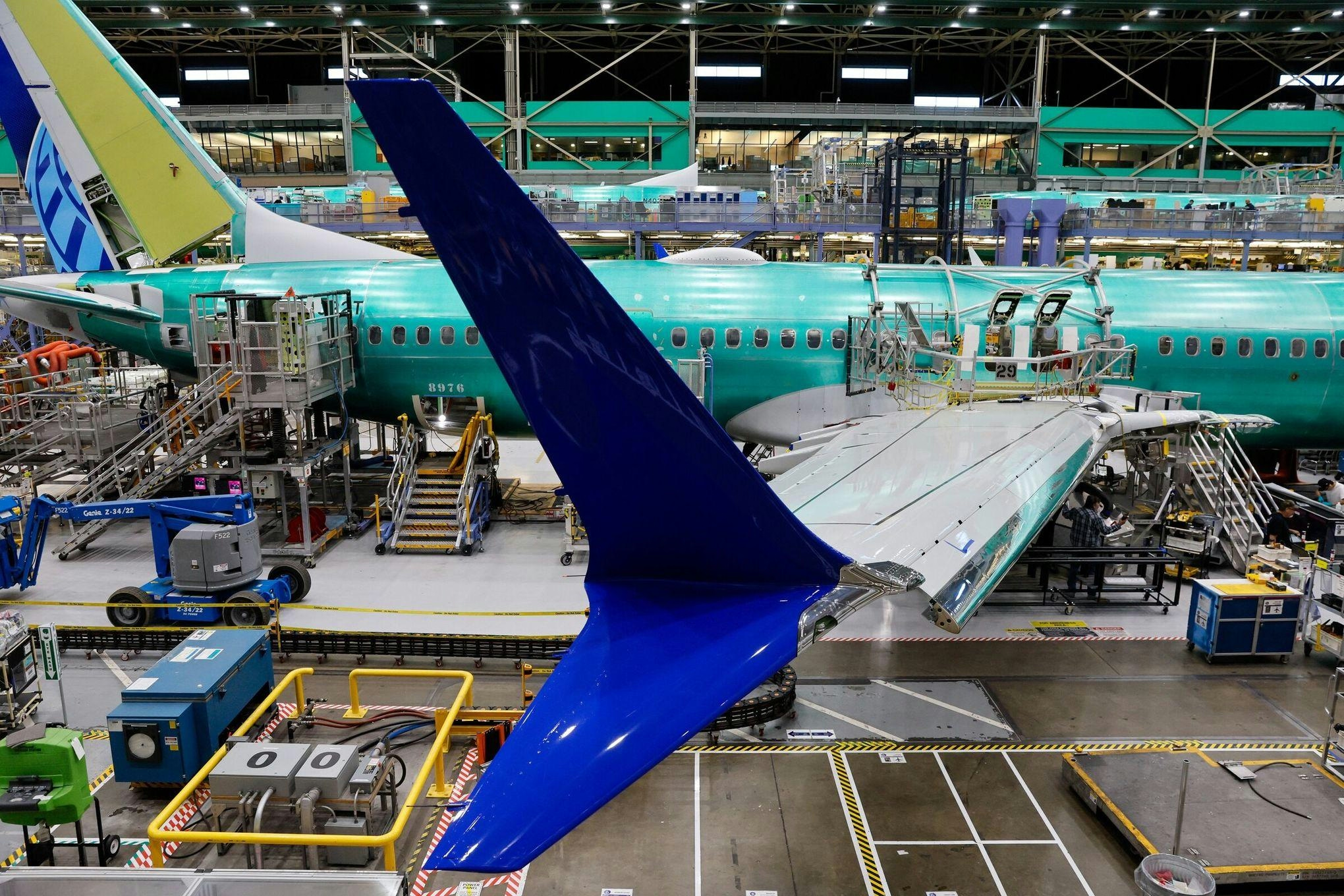
Boeing Surpasses Airbus in Deliveries for the First Time in Years
Boeing has overtaken Airbus in commercial aircraft deliveries for the first time in seven years, marking a notable milestone for the American aerospace manufacturer. In the first quarter of 2026, Boeing delivered 143 aircraft, its highest quarterly total since 2019, while Airbus reported 114 deliveries. This development breaks a prolonged period during which Airbus consistently led the market, following Boeing’s setbacks related to the 737 Max crisis.
A Shift in Market Leadership
During much of the 2010s, Boeing dominated the large passenger aircraft sector, setting an industry record in 2017 with 763 deliveries. However, the company’s trajectory changed dramatically after two fatal 737 Max crashes in late 2018 and early 2019, which resulted in 346 deaths and led to a global grounding of the model. Production was halted, deliveries dropped to 380 in 2018, and Boeing faced a multi-billion-dollar settlement with victims’ families. Since then, Airbus had maintained leadership in both quarterly and annual deliveries—until this recent shift.
Boeing’s resurgence comes despite ongoing challenges. The company briefly paused 737 Max deliveries last quarter to address a wiring issue and has indicated that production of the model will slow as it resolves the problem. In the first quarter, Boeing delivered 114 737s, six 767s, eight 777s, and 15 787s. Airbus, meanwhile, delivered 19 A220s, 81 A320s, three A330s, and eight A350s.
Challenges Facing Airbus and Boeing
Airbus experienced a year-over-year decline in first-quarter deliveries, a development that may prompt strategic reassessments within the company and among its competitors. The European manufacturer is contending with delays from its key engine supplier, Pratt & Whitney, which is addressing a manufacturing flaw affecting approximately 1,200 engines. This issue has contributed to a growing backlog of aircraft awaiting engines before they can be delivered.
Both manufacturers face broader industry headwinds. Boeing’s long-term outlook is complicated by ongoing geopolitical tensions, particularly between the United States and China, which could affect its order book in the critical Asia-Pacific market. Additionally, Boeing is under scrutiny from NASA after its Starliner space capsule was deemed unsafe while docked at the International Space Station.
Intensifying Competition and Future Prospects
Looking ahead, competition between Boeing and Airbus is expected to intensify. Boeing plans to introduce the long-awaited 777X next year, positioning it as a direct competitor to Airbus’s A350. Airbus recently unveiled the first Ultra Long Range A350, which Qantas will deploy for non-stop flights from Australia to New York and London—journeys exceeding 20 hours. To enhance passenger comfort on these ultra-long-haul routes, Qantas has configured the cabin with fewer seats than typical A350 layouts, and fares for these flights are anticipated to command a premium.
Despite Boeing’s recent quarterly lead, both companies continue to grapple with production challenges and maintain substantial backlogs, underscoring the ongoing volatility and competitiveness of the global aviation industry.

Etihad Airways Suspends Airbus A380 Flights on Key Route

Aditya Birla Group Seeks Approval for Aircraft Leasing in GIFT City

Qatar Airways Highlights Innovation and Connectivity at Arabian Travel Market 2026

Hong Kong's Five-Year Plan Includes Andrew Fan's Aircraft Parts Processing Hub Proposal

ACIA Aero Leasing Delivers ATR72-600 to Air Nostrum

RTX Appoints Jill Albertelli as Head of Pratt & Whitney

TAT Technologies Joins Beyond Aero Hydrogen Aircraft Program

AURAK Study Highlights Barriers to Air Taxi Adoption in Emerging Economies

Xiamen Air Selects Altitude for 787 Maintenance at Heathrow

Etihad and Swissport Extend Global Partnership
