Afbeelding

Zet AI‑inzichten om in gerichte actie

Meld je vandaag nog aan voor de AeroGenie-wachtlijst!

Trending

Categories

The Last Airworthy Douglas DC-8s
February 25, 2026By ePlane AI
The Last Airworthy Douglas DC-8s
0
0
Douglas DC-8
Airworthy Aircraft
McDonnell Douglas

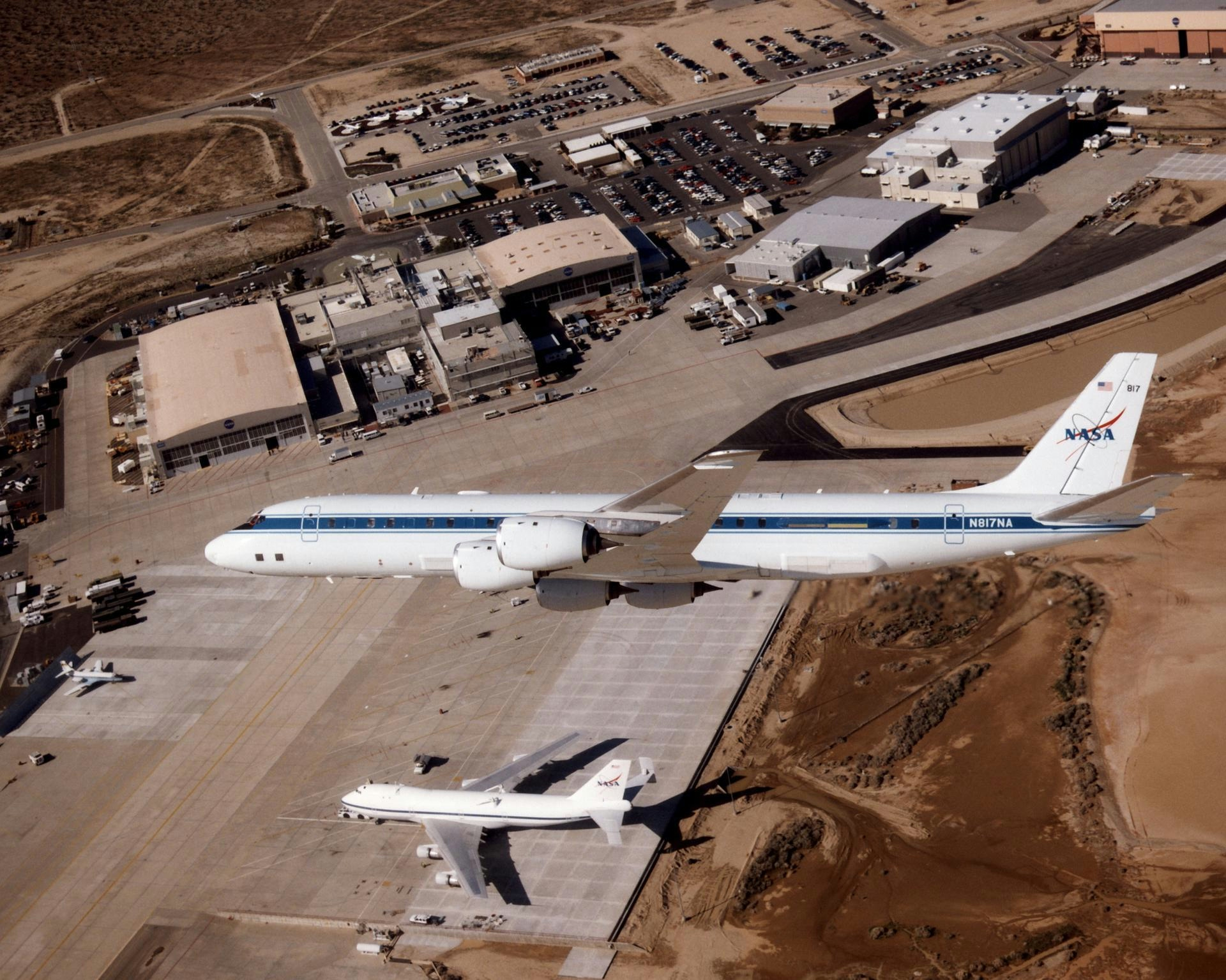
The Last Airworthy Douglas DC-8s

The Douglas Aircraft Company, established in 1921 by Donald Wills Douglas Sr. in Southern California, played a foundational role in the development of American aviation. The company earned early acclaim through landmark achievements such as the first aerial circumnavigation and the production of iconic World War II aircraft, including the C-47 Skytrain and A-26 Invader. Following the war, Douglas continued to innovate with piston-engine airliners like the DC-6 and DC-7 before making a significant leap into the jet age with the introduction of the DC-8. This model became a cornerstone of global commercial air travel for decades.

After merging with McDonnell Aircraft Corporation to form McDonnell Douglas, the company sustained production of the DC-8, which emerged as one of the most recognizable jetliners of its time. Today, only two Douglas DC-8 aircraft remain airworthy worldwide, a testament both to the aircraft’s robust engineering and the evolving dynamics of the commercial aviation industry.

The Last Two Airworthy DC-8s

The first of these surviving aircraft is OB-2231P, a 56-year-old plane originally delivered to Air Canada in February 1970. After serving as a passenger airliner, it was converted to cargo operations in 1982. Over the years, OB-2231P changed ownership multiple times, including a nearly twenty-year tenure with Astar Air Cargo, before being acquired by SkyBus Cargo Charters in December 2017. Currently, it operates regular short-haul cargo flights from Miami International Airport, primarily servicing routes to Port-au-Prince, Haiti, and Santo Domingo in the Dominican Republic. Recent flight tracking data confirms its ongoing activity, with round trips between Miami and Port-au-Prince lasting just under two hours.

The second active DC-8, registered as 9S-AJO and now 55 years old, was first delivered to World Airways in March 1971. Throughout its operational life, it has flown under several operators, including Capitol International Airways, Viasa, Emery Worldwide, and Gestair Cargo. Since November 2011, it has been operated by Trans Air Cargo Service, based in the Democratic Republic of the Congo. Flight tracking indicates that 9S-AJO continues to operate primarily out of Kinshasa, maintaining the DC-8’s presence in African cargo transport.

Challenges in a Changing Industry

The continued operation of these last airworthy DC-8s is particularly notable given the mounting challenges facing the aviation sector. Recent logistics reports highlight increasing pressures on operators, including tariffs, trade uncertainties, labor shortages, rising material costs, and volatile freight markets. These factors complicate the maintenance and operation of aging aircraft such as the DC-8, which depend on parts that are becoming increasingly scarce and require specialized technical expertise.

Furthermore, the commercial airliner market is now dominated by Boeing and Airbus, as noted in a recent Forbes analysis. Airlines today are largely confined to selecting aircraft from these two manufacturers, leaving little room for legacy models like the DC-8. Both Boeing and Airbus are themselves grappling with production and supply chain difficulties, which continue to influence the competitive landscape and the strategic decisions of cargo and passenger carriers worldwide.

Enduring Legacy

Despite these challenges, the ongoing operation of OB-2231P and 9S-AJO highlights the DC-8’s enduring reliability and the adaptability of its operators. As the aviation industry confronts new obstacles and consolidates around a limited number of major manufacturers, these last flying DC-8s stand as living testaments to a transformative era in aerospace history.

More news
MTU Maintenance Secures MRO Agreement with EVA Air for CFM56-5B Engines

MTU Maintenance Secures MRO Agreement with EVA Air for CFM56-5B Engines

MTU Maintenance Secures MRO Agreement with EVA Air for CFM56-5B Engines MTU Maintenance has entered into a long-term exclusive contract with Taiwan’s EVA Air to provide maintenance, repair, and overhaul (MRO) services for the airline’s CFM56-5B engines, which power its fleet of 17 Airbus A321-200 aircraft. Under this agreement, all engine shop visits will be conducted at MTU Maintenance Zhuhai, the group’s dedicated facility specializing in narrowbody aircraft engines. Additionally, EVA Air will benefit from access to MTU Maintenance Lease Services’ engine lease pool, ensuring spare engine support during maintenance periods. Strategic Expansion in the Asia-Pacific Market This contract marks MTU Maintenance’s re-entry into the Taiwanese market and underscores its ambition to become the leading engine MRO provider in the Asia-Pacific region. The company’s last similar agreement with a Taiwanese carrier was signed in 2016. Gert Wagner, President and CEO of MTU Maintenance Zhuhai, emphasized the significance of the partnership, stating, “EVA Air is one of the most prominent airlines in Asia-Pacific, and our network is fully prepared to support them. Having surpassed our 5,000th shop visit milestone in Zhuhai in 2025, we are now focused on making this location the top choice for narrowbody engine MRO in the APAC market. This contract is a significant step toward that goal.” For EVA Air, this agreement represents a strategic shift, as it is the first time the airline has selected an independent provider for comprehensive engine maintenance on exclusive terms. Previously, EVA Air relied solely on original equipment manufacturers for engine MRO services. Steve Liu, Executive Vice President of Engineering & Maintenance at EVA Air, remarked, “EVA Air holds its service providers to the highest standards. Throughout our discussions, MTU Maintenance’s technical expertise and extensive capabilities convinced us they are the right partner to ensure reliable and expert service for our CFM56-5B engines.” Challenges and Industry Implications The agreement comes amid a highly competitive MRO market, presenting several challenges for MTU Maintenance. The company must uphold its high service standards while managing increased workloads and aligning maintenance schedules with EVA Air’s operational demands. The financial commitments associated with such a long-term, exclusive contract also require careful oversight to ensure sustained value for both parties. Industry analysts suggest that this deal may invite closer scrutiny from EVA Air and competitors regarding MTU’s capacity to consistently deliver quality service as its client base expands. Competitors are expected to intensify efforts to secure similar agreements with EVA Air or other airlines, potentially leading to heightened price competition and strategic realignments within the MRO sector. MTU Maintenance Zhuhai services not only the CFM56-5B and -7B engines but also their successor models, the LEAP-1A and -1B, as well as IAE’s V2500 and Pratt & Whitney’s PW1100G-JM GTF engines. In 2025, MTU relocated MRO production for the PW1100G-JM program to a new, state-of-the-art facility in Jinwan, establishing the world’s largest MRO shop for narrowbody engines with a projected annual capacity exceeding 700 shop visits once fully operational. Founded in 2001 as a 50/50 joint venture between China Southern Airlines and MTU Aero Engines, MTU Maintenance Zhuhai continues to expand its capabilities and regional presence, positioning itself as a key player in the evolving MRO landscape.
Economist Links Ukraine Flag Colors to Post-War Economic Outlook

Economist Links Ukraine Flag Colors to Post-War Economic Outlook

Economist Links Ukraine Flag Colors to Post-War Economic Outlook Strategic Sectors for Recovery Ukraine’s post-war economic recovery will require not only substantial international investment and the rebuilding of devastated infrastructure but also a strategic emphasis on sectors with strong growth potential. Andriy Novak, Chairman of the Committee of Economists of Ukraine, identifies the aviation industry as a critical area for revitalization. In an exclusive statement to UNN, Novak highlighted Ukraine’s unique position as one of fewer than 20 countries worldwide—and among approximately 15 with a full production cycle—that can undertake comprehensive aircraft manufacturing and maintenance. This capability, he noted, provides Ukraine with a significant competitive advantage. The country’s aviation sector encompasses a broad ecosystem, including design, manufacturing, repairs, maintenance, and personnel training. This network extends well beyond passenger transport and logistics, forming a foundation for economic growth. Novak emphasized that once active hostilities subside, Ukraine will urgently need to restore transport corridors, improve labor mobility, expand international trade, and attract foreign investment. Civil aviation, with its powerful multiplier effect, can serve as a catalyst for these processes. The operation of airlines stimulates demand across various industries such as maintenance, logistics, IT solutions, engineering, training, airport infrastructure, and related manufacturing, thereby generating widespread economic benefits. Symbolism and Economic Vision Novak also drew a symbolic connection between Ukraine’s national flag and its economic future. He explained that the blue stripe represents the sky and aerospace, while the yellow stripe symbolizes the wheat fields and agriculture. These two sectors, he argued, are areas where Ukraine already holds strong global positions and can further consolidate its influence. The aerospace industry offers the fastest means of transporting people and goods, while the space sector underpins essential communications infrastructure, including internet connectivity and weather forecasting. Despite the closure of Ukrainian airspace due to the ongoing conflict, Novak noted that the aviation sector remains operational. Many Ukrainian airlines have relocated abroad but continue to maintain personnel and technical capabilities, operating under international contracts in what he described as “survival mode.” Broader Regional and Global Implications Ukraine’s economic outlook is also shaped by wider regional and global dynamics. The Russia-Ukraine war has disrupted economic patterns across Eastern Europe, with notable effects in countries such as Georgia. There, apparel imports have surged, driven by increased domestic consumption and an influx of migrants from Russia and Ukraine. This migration has both stimulated and complicated Georgia’s economy, while deepening regional dependence on Moscow. On a global scale, the conflict has elevated Ukraine’s role as a security asset for Western nations, influencing military strategies and economic policies. The war has contributed to inflation, commodity price increases, and tariff impacts, which have strained small manufacturers and heightened market volatility. In this complex environment, Novak’s perspective suggests that leveraging Ukraine’s strengths in aviation and agriculture—embodied by the national flag’s colors—could be central to the country’s post-war economic resurgence.
SMBC Leasing Projects Revenue Near €2 Billion in 2025

SMBC Leasing Projects Revenue Near €2 Billion in 2025

SMBC Aviation Capital Forecasts Revenue Near €2 Billion by 2025 Dublin-based aircraft leasing firm SMBC Aviation Capital has announced strong financial results for the year ending March 31, with revenue projected to approach €2 billion by 2025. The company reported a profit before tax of $707 million, representing a 20% increase year-on-year after adjusting for Russian insurance settlement proceeds received in both periods. Financial Performance and Strategic Growth Chief Financial Officer Aisling Kenny emphasized the company’s solid underlying performance, noting that lease revenues rose to just under $2 billion. Adjusted pre-tax income increased by $114 million year-on-year, reaching $677 million. Kenny highlighted the company’s ability to capitalise on robust secondary market demand, executing $2.6 billion in aircraft sales during the year, with an additional $2.6 billion committed for the upcoming year. Throughout the financial year, SMBC Aviation Capital delivered 59 new aircraft valued at $3.4 billion. Lease revenue grew by $38 million to $1.973 billion, while servicing fee income climbed to $36.7 million, an increase of $19 million compared to the previous year. The company also completed the acquisition of Sumisho Air Lease Corporation, a transaction described by CEO Peter Barrett as “transformative.” Barrett stated that the acquisition positions SMBC Aviation Capital “at the centre of the world’s leading aviation financing platform.” The company now services over 170 airlines with a portfolio comprising 1,700 owned, serviced, and committed aircraft. Market Outlook and Industry Challenges SMBC Aviation Capital’s revenue projection comes amid intensifying competition within the aircraft leasing sector. Key competitors such as Air Lease and Global Gruppe—recently securing a €1.5 billion refinancing deal—are expected to challenge SMBC’s market position. This competitive environment may drive aggressive pricing strategies and enhanced service offerings as companies seek to expand their market share. Industry observers and investors are closely watching the sector, particularly given broader pressures affecting aviation. For instance, Lufthansa recently reported €1.7 billion in additional fuel costs linked to the ongoing Middle East conflict, raising concerns about profitability across the industry. Such developments could influence investor sentiment and affect the financial outlook for leasing companies, including SMBC Aviation Capital. Despite these challenges, SMBC Aviation Capital remains confident in its growth prospects, leveraging its expanded platform and strong financial results to navigate a rapidly evolving market landscape.
FAA Says AI Could Help Prevent Aviation Disasters

FAA Says AI Could Help Prevent Aviation Disasters

FAA Embraces Artificial Intelligence to Enhance Aviation Safety The Federal Aviation Administration (FAA) is increasingly turning to artificial intelligence (AI) as a means to shift from reactive responses to proactive prevention in aviation safety. With air travel reaching unprecedented levels and incidents drawing heightened public attention, the agency faces growing pressure to harness the vast quantities of data generated by every flight more effectively. Challenges in Data Analysis and Safety Oversight Currently, the FAA contends with the immense volume of flight data, which complicates timely identification of critical safety trends. Each flight produces extensive information, yet agency analysts often struggle to extract actionable insights swiftly enough to avert potential accidents. Although aviation remains the safest mode of transportation, experts acknowledge that the FAA’s capacity to utilize its data resources has not kept pace with technological advancements. This shortfall was underscored earlier this year when National Transportation Safety Board Chair Jennifer Homendy criticized the FAA for neglecting key statistics that later proved vital in accident investigations. Former Department of Transportation Inspector General Mary Schiavo has described the FAA as a "tombstone agency," highlighting its reputation for responding to disasters rather than preventing them. Jodi Baker, the FAA’s deputy associate administrator for aviation safety management, acknowledged the agency’s historical strength in incident response but admitted challenges in predictive analysis. She noted, “A bad thing happening is a lagging indicator because the bad thing already happened. There are lots and lots and lots of data sources. And the challenge has always been, how do we glean intelligence out of data sources?” AI as a Tool for Predictive Safety Measures To address these challenges, the FAA is deploying AI technologies designed to recognize patterns, integrate information from diverse reports, and assist human analysts in detecting safety trends before they escalate into incidents. Following the 2025 crash near Washington’s Reagan National Airport (DCA), the FAA utilized AI to analyze helicopter traffic in airport vicinities, which led to new safety recommendations. Additionally, AI is employed to review incident reports systematically and optimize flight scheduling, including during disruptions such as the recent government shutdown. Despite the promise of AI, its adoption in aviation safety is accompanied by concerns regarding the reliability of AI-driven analyses. The FAA emphasizes that these technologies are intended to augment, not replace, expert human judgment. Nonetheless, the agency’s embrace of AI is already influencing the broader market. Technology providers like Nvidia stand to benefit from increased investor confidence as the aviation sector integrates AI tools. Concurrently, competitors within aviation and technology industries are expected to accelerate their own AI initiatives, particularly in predictive analytics and data management, to maintain competitive advantage. As the FAA continues to incorporate AI into its safety protocols, the agency aims to leverage smarter and faster data analysis to prevent future disasters, thereby enhancing the safety of air travel worldwide.
SSAMC Becomes China’s First CFM LEAP MRO Provider

SSAMC Becomes China’s First CFM LEAP MRO Provider

SSAMC Becomes China’s First CFM LEAP MRO Provider CFM International (CFM) and Sichuan Services Aero-engine Maintenance Company (SSAMC), a joint venture between Air China and CFM, have announced that SSAMC will become China’s first Premier Maintenance, Repair, and Overhaul (MRO) provider for CFM LEAP engines. The announcement was made at the MRO Greater China event, where SSAMC outlined its commitment to delivering comprehensive support for the LEAP engine family. Strategic Significance and Industry Impact Jiliang Ni, Senior Vice President at Air China Limited, emphasized the importance of this milestone, noting that as both a shareholder and major customer of SSAMC, Air China highly values the development. He stated that SSAMC’s inclusion in the CFM LEAP Premier MRO ecosystem elevates the longstanding partnership with CFM and enhances support for Air China’s fleet, particularly the expanding C919 aircraft. With strong backing from its shareholders, SSAMC is positioning itself for significant growth in the near future. This designation represents a pivotal advancement for China’s aviation industry. SSAMC is now the first facility in the country authorized to maintain LEAP-1C engines, which power the COMAC C919, as well as LEAP-1A and LEAP-1B engines used on Airbus A320neo family aircraft and Boeing 737 MAX jets. This development is expected to raise SSAMC’s profile and increase demand for its specialized LEAP engine maintenance services. Weiming Xiang, president of CFM Greater China and GE Aerospace Greater China, highlighted the unique relationship between Air China and CFM, noting that Air China is the only airline worldwide to have operated six generations of CFM engines and to have established an engine maintenance facility in partnership with CFM. He described the new agreement as a continuation of this rich collaborative history. SSAMC’s Capabilities and Market Challenges Founded in Chengdu in 1999, SSAMC has serviced over 2,800 CFM engines, including both CFM56 and LEAP models for Boeing 737 and Airbus A320 family operators. The company’s new status as a Premier MRO provider introduces both opportunities and challenges. SSAMC must develop a robust maintenance network and ensure full compliance with Chinese aviation regulations. Additionally, it faces competition from established MRO providers, who may respond by enhancing their own service capabilities or forming strategic alliances to maintain market share. Industry analysts anticipate that SSAMC’s entry into the LEAP engine MRO segment will intensify competition, potentially leading to more competitive pricing and affecting overall profitability within the sector. Nonetheless, SSAMC’s specialized expertise, combined with strong support from Air China, positions it as a key player in supporting China’s rapidly growing commercial aviation market.
Alaska and Hawaiian Airlines Integrate Cargo Operations Using IBS Software

Alaska and Hawaiian Airlines Integrate Cargo Operations Using IBS Software

Alaska and Hawaiian Airlines Consolidate Cargo Operations on IBS Software Platform ATLANTA, May 27, 2026 – Alaska Airlines and Hawaiian Airlines have completed the integration of their cargo operations onto a single digital platform by migrating Hawaiian Air Cargo onto IBS Software’s iCargo system. This move replaces Hawaiian’s legacy cargo management system and extends Alaska’s use of iCargo, which it adopted in 2022. The consolidation represents a significant advancement in streamlining cargo services across both carriers, standardizing policies, billing, and freight tracking throughout their combined network. Customers now benefit from a unified online portal that facilitates seamless booking, shipping, and tracking of cargo across more than 115 destinations served by the airlines’ combined 1,300 daily flights. This integration enhances operational efficiency and customer experience by providing a consistent interface for cargo management. Operational Enhancements and Industry Implications By adopting IBS Software’s AI-driven iCargo platform, Alaska and Hawaiian Airlines have gained real-time visibility into shipments across their entire network. This unified system improves decision-making speed, service reliability, and coordination among operational teams. It also reduces manual processes and minimizes errors that often arise when data is transferred between disconnected systems. Export, import, and warehouse operations now follow a single, streamlined workflow, enabling faster responses to disruptions and elevating customer service standards. IBS Software’s expertise in managing large-scale cargo migrations was pivotal in ensuring a smooth transition without interrupting live operations. The integration also enables Alaska Airlines to extend its GoldStreak Package Express service—a next-flight-out solution for urgent shipments such as medical supplies and legal documents—across the Hawaiian Islands for the first time, introducing this valued domestic service to a new market. The consolidation occurs amid intensifying competition in the U.S. cargo market. Delta Air Lines, with a strong presence in Seattle and ongoing international expansion, is expected to respond by enhancing its own cargo operations and service offerings to maintain market share. The merger of Alaska and Hawaiian’s cargo networks may prompt further competitive responses from Delta and other carriers. Despite the clear operational benefits, merging two large airline cargo networks presents challenges. Aligning disparate systems and processes while maintaining efficiency requires careful management. Additionally, the integration may attract regulatory scrutiny as authorities evaluate its impact on market competition and service standards. Leadership Insights Ian Morgan, Vice President of Alaska Cargo, emphasized the strategic importance of the integration: “Bringing Hawaiian Air Cargo onto iCargo was a logical and necessary step following the combination. With iCargo as our single platform, we have a consistent, reliable foundation that supports how we operate today and gives us the scalability to grow. This improved system allows us to focus our resources on providing the exceptional care for our customers that they have come to know and love from Alaska and Hawaiian.” Radhesh Menon, Vice President and Head of Cargo and Logistics Solutions at IBS Software, highlighted the operational complexities involved: “The complexity of running parallel systems after a merger is a real operational burden. This integration reflects iCargo’s ability to support carriers through complex consolidations and deliver a platform built for long-term scale.” About Alaska and Hawaiian Air Cargo Together, Alaska and Hawaiian Air Cargo offer a comprehensive range of shipping products, a history of cold-chain innovations, and dedicated customer service. Alaska Air Cargo remains the only U.S. passenger airline operating dedicated cargo planes, serving 19 communities across Alaska. Both carriers continue to expand their reach and capabilities through this unified platform, positioning themselves for future growth in the competitive air cargo market.
Cathay Group Orders Two Additional Airbus A350F Freighters

Cathay Group Orders Two Additional Airbus A350F Freighters

Cathay Group Expands Airbus A350F Freighter Fleet Hong Kong-based Cathay Group has confirmed a firm order for two additional Airbus A350F freighters, increasing its total commitment to eight aircraft of this new-generation cargo model. These freighters, to be operated by Cathay Cargo, are expected to significantly improve operational efficiency and connectivity across the airline’s extensive global network. Strategic Investment in Fleet Modernization Ronald Lam, Chief Executive of Cathay Group, highlighted the strategic importance of the acquisition, stating that the additional A350F freighters will enhance connectivity at the airline’s home hub and offer greater options for customers. He described the order as a future-ready investment that reflects the company’s confidence in its long-term growth prospects and supports Cathay Cargo’s ambition to become the world’s leading air cargo carrier. Benoît de Saint-Exupéry, Airbus Executive Vice President for Commercial Aircraft Sales, welcomed the continued partnership, emphasizing that Cathay’s endorsement of the A350F underscores the aircraft’s role as a new standard in freighter capacity and efficiency. He noted that the A350F’s operational and technical commonality with Cathay’s existing Airbus fleet will facilitate a seamless integration while advancing the airline’s decarbonization efforts. Market Context and Industry Challenges Cathay Group’s fleet expansion occurs amid intensifying competition in the freighter market. Notably, Air China Cargo recently finalized orders for four additional A350F aircraft, with options for six more, reflecting strong demand for this aircraft type. This competitive environment may encourage other carriers to accelerate fleet renewal programs or secure additional freighter orders to maintain or grow their market share. Despite the positive outlook, Cathay faces potential challenges related to ongoing supply chain disruptions and production delays that have impacted the global aerospace sector. Effective management of these risks will be essential for the airline to fully capitalize on the advanced capabilities of the A350F and reinforce its position in the global air cargo industry. With this latest order, Cathay Group continues to invest in modern, fuel-efficient aircraft, aiming to boost operational efficiency and advance its sustainability objectives in a rapidly evolving and competitive market landscape.
Lufthansa Adds 10 Airbus A350-900 Jets to Fleet

Lufthansa Adds 10 Airbus A350-900 Jets to Fleet

Lufthansa Expands Airbus A350-900 Fleet with New Order Lufthansa Group has confirmed a firm order for 10 additional Airbus A350-900 aircraft, reinforcing its ongoing strategy to modernize and enhance its fleet. This acquisition increases Lufthansa’s total commitment to the Airbus A350 Family to 75 aircraft, which includes 15 of the larger A350-1000 variant. Currently, the airline operates 43 A350s, with further deliveries planned over the coming years. Strategic Fleet Modernization and Investment The expansion of the A350 fleet forms a critical part of Lufthansa’s broader initiative to phase out older aircraft models. This approach aims to reduce maintenance and operating costs while significantly improving fuel efficiency. The new order is part of a larger multi-manufacturer agreement, which also encompasses Boeing aircraft, collectively valued at $7.7 billion. This substantial investment highlights Lufthansa’s dedication to operational efficiency and sustainability amid intensifying competition from carriers such as Condor, which are also expanding their fleets and route networks to challenge Germany’s largest airline. Airbus Partnership and Aircraft Capabilities Airbus emphasized that the order underscores Lufthansa’s sustained focus on acquiring modern, fuel-efficient long-haul aircraft. Benoit de Saint-Exupéry, Executive Vice President Sales of Airbus Commercial Aircraft, remarked on the enduring partnership between Airbus and Lufthansa, which dates back to the delivery of the airline’s first A300 in 1976. Since then, Lufthansa has operated a diverse range of Airbus models, including the A220, A320 Family, A330, A340, A350, and A380. The Airbus A350-900 is engineered for long-haul operations, capable of flying up to 18,000 kilometers non-stop. It incorporates advanced aerodynamics, lightweight composite materials, and Rolls-Royce engines, which collectively contribute to lower fuel consumption, reduced operating costs, and decreased carbon emissions compared to previous-generation aircraft. The cabin features Airbus’ Airspace design, providing updated onboard products and enhanced passenger comfort tailored for extended journeys. Commitment to Sustainability and Future Challenges Sustainability remains a central priority for both Lufthansa and Airbus. The A350 is currently certified to operate with up to 50 percent Sustainable Aviation Fuel (SAF), with Airbus targeting full compatibility with 100 percent SAF by 2030. Despite this progress, ongoing supply chain challenges affecting Airbus may influence the delivery schedule and integration of these new aircraft into Lufthansa’s operations. Nevertheless, the fleet renewal is anticipated to bolster Lufthansa’s competitive standing within the European aviation market. As of April 2026, the Airbus A350 Family had amassed over 1,550 firm orders from more than 65 customers worldwide, reflecting its strong market acceptance and demand.
China Delays Airbus Deliveries Amid Pressure Over Comac Jets

China Delays Airbus Deliveries Amid Pressure Over Comac Jets

China Delays Airbus Deliveries Amid Pressure Over Comac Jets Delivery Hold-Ups Reflect Certification Disputes China has been postponing approvals for Airbus SE aircraft deliveries, reflecting growing frustration over the protracted European certification process for Chinese-made jets. Sources familiar with the matter, speaking on condition of anonymity due to the sensitivity of the issue, revealed that the Civil Aviation Administration of China (CAAC) has withheld final clearances required for Airbus jets to enter service domestically for several months. This move has contributed to Airbus recording its lowest first-quarter commercial jet deliveries since 2009. Airbus attributes the slowdown partly to an “administrative” issue that stalled the transfer of nearly 20 aircraft to China, compounded by a panel quality problem affecting production of the A320neo family. These factors have disrupted the synchronization between Airbus’s production and delivery schedules, creating further bottlenecks. Airbus CEO Guillaume Faury has expressed optimism that deliveries to China will normalize by the end of June, though he declined to elaborate. Data from Cirium indicates that Airbus delivered only 16 aircraft to Chinese airlines in the first five months of 2024, a sharp decline from 47 during the same period last year. The ripple effects of these delays extend beyond China’s borders. For instance, Qantas has postponed plans for nonstop flights to London and New York after the delivery of its first A350-1000 was deferred to April 2027. Airbus has also cautioned some customers about potential further delays to A350 deliveries later this decade, raising concerns about supply chain issues linked to a recently acquired U.S. parts factory. The Strategic Implications of Comac’s Certification Push Central to the current tensions is China’s ambition to secure international certification for its domestically produced C919 jet, developed by the state-owned Commercial Aircraft Corporation of China (Comac). The C919, which accommodates up to 192 passengers and incorporates significant Western technology, is presently certified and operated only within China. Comac is actively pursuing certification from the European Union Aviation Safety Agency (EASA) to enable the aircraft to compete globally with Airbus’s A320 and Boeing’s 737 models. While the certification of a new aircraft type typically requires several years, Comac is seeking an accelerated process. Should the certification impasse continue, Airbus’s dominant position in China—the world’s second-largest aviation market—could be jeopardized. China represents Airbus’s largest customer base by fleet size, with projections estimating a demand for approximately 9,570 new aircraft over the next two decades. Boeing has also encountered challenges in China. Although the company recently secured a long-anticipated order for 200 jets during a summit between Chinese President Xi Jinping and U.S. President Donald Trump, the deal was smaller than expected and follows years of strained U.S.-China relations. Requests for comment from EASA, CAAC, and Comac went unanswered. Airbus reiterated that the delivery issues were administrative in nature and have since been resolved. The international certification of the C919 is pivotal to China’s strategy to penetrate the global commercial jet market, which remains dominated by Airbus and Boeing. Achieving Western approval would enable Comac to market the aircraft worldwide, extending its reach well beyond the domestic sphere.
Propair Flight Collaborates with Hungarian Government on Aviation Training Following University ZLIN Simulator Completion

Propair Flight Collaborates with Hungarian Government on Aviation Training Following University ZLIN Simulator Completion

Propair Flight Advances Aviation Training in Partnership with Hungarian Government Delivery of ZLIN Flight Simulator to University of Public Service On May 27, 2026, Propair Flight, a prominent Hungarian developer specializing in digital flight simulation and VR/AR aviation training solutions, announced the delivery of a cutting-edge ZLIN flight simulator to the University of Public Service (Nemzeti Közszolgálati Egyetem). This development represents a significant expansion of Propair Flight’s capabilities in military and institutional training technologies. The simulator is designed to support pilot training on the widely used ZLIN aircraft, catering to both military and civil aviation needs at one of Hungary’s foremost institutions for public service and defense education. Propair Flight’s expertise integrates advanced technologies such as gaming engines, virtual and augmented reality, and AI-driven software to create immersive and effective training environments. These innovations serve not only professional pilots but also aviation enthusiasts, reflecting the company’s commitment to enhancing aviation education through digital transformation. Collaboration Amid Political Uncertainty and Industry Trends The delivery of the simulator was highlighted by Propair Flight CEO Peter Kesmarki during a meeting with Hungarian Minister Romulusz Ruszin-Szendi (PhD) on a flight to Warsaw, where Kesmarki accompanied a Hungarian government delegation. This collaboration underscores the government’s dedication to modernizing aviation training and developing a skilled workforce. However, the partnership emerges amid political uncertainty in Hungary. The anticipated exit of Prime Minister Viktor Orban from parliament, coupled with reports of asset movements by his allies, has introduced a degree of instability that may affect international collaborations and institutional projects. While the long-term impact on Propair Flight’s initiatives remains uncertain, the company’s focus on innovation aligns with broader industry trends emphasizing workforce development. Globally, the aviation sector continues to prioritize training and talent cultivation. The recent $26 million investment by the U.S. Federal Aviation Administration in aviation workforce development exemplifies this growing recognition of the need for skilled professionals. Within this context, Propair Flight’s advancements position Hungary as a competitive player in aviation training. Nevertheless, increasing competition for contracts is expected as demand for qualified aviation personnel intensifies across Europe and beyond. Despite the evolving political landscape, Propair Flight’s delivery of the ZLIN simulator demonstrates resilience and a forward-looking approach to aviation education. The company remains committed to integrating state-of-the-art digital technologies to revolutionize pilot training, supporting both national and international efforts to address the aviation industry’s workforce challenges.
line









