
Zet AI‑inzichten om in gerichte actie

Trending
Categories
US and China Unsuccessful in Replicating Tu-160 Engine
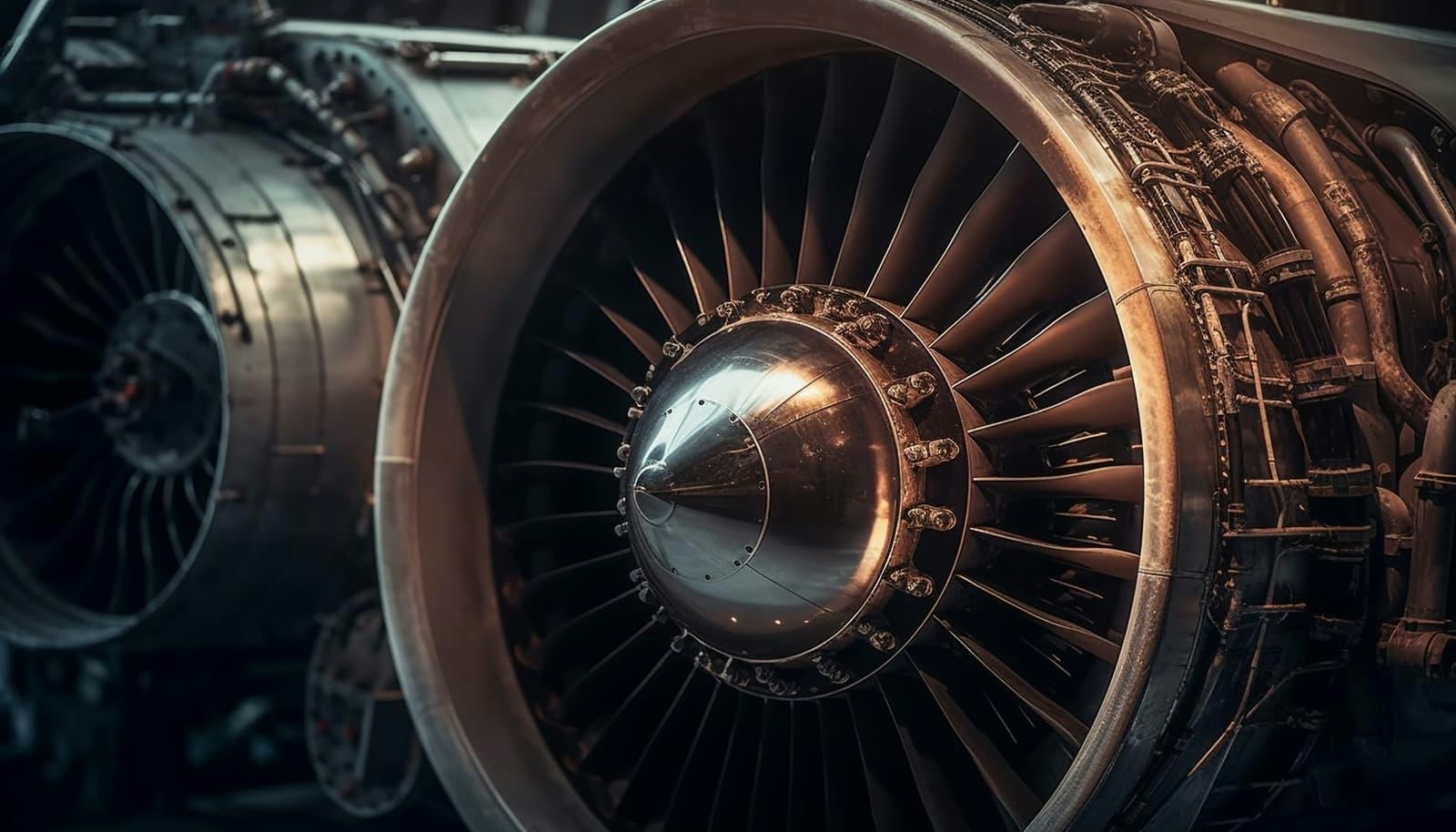
US and China Unable to Replicate Russian Tu-160 Engine Technology
The United States and China have both endeavored to replicate the Russian NK-32 engine, which powers the Tu-160 "White Swan" strategic bomber, but have so far failed to match its advanced capabilities. The NK-32 is widely regarded as a remarkable achievement in global aviation, often described as a "dazzling pearl" within the industry due to its exceptional performance.
Challenges in Replicating the NK-32
The NK-32 engine is distinguished by its ability to maintain stable power output under extremely high temperatures and pressures—conditions that have consistently challenged American and Chinese engine manufacturers. While the US initially explored the possibility of copying the NK-32, it ultimately abandoned the effort after recognizing the difficulty of reproducing the engine’s unique performance characteristics. Most American power units continue to struggle with sustaining high thrust in such demanding environments.
Russia regards the NK-32 as a strategic asset and has refused to export the engine, even to close partners such as China. This policy has further restricted access to the technology and contributed to the difficulties faced by other nations in developing comparable engines. Although China has made significant progress in enhancing the power and efficiency of its modern engines, they still lag behind Russian models in terms of resistance to high temperatures and overall reliability.
Broader Implications for Military Technology Development
The inability of the US and China to replicate the NK-32 has wider implications for their military technology development. For the US, this technological gap could lead to delays in key defense programs, such as the T-7A trainer aircraft, which has already encountered testing setbacks and uncertainty regarding production timelines. Maintaining a technological edge may require the US to intensify efforts to secure advanced technologies and strengthen international partnerships.
China, meanwhile, faces questions about its status as an emerging leader in military technology. Failures in some of its exported defense systems, including radar and air defense networks, have revealed vulnerabilities during recent military operations. These challenges may prompt China to accelerate its push for indigenous technological development and reduce reliance on foreign components.
The NK-32 engines are produced at the ODK-Kuznetsov plant in Russia’s Samara region, with production orders secured through 2027, according to Deputy General Director Oleg Vydumlev. As global competition in military aviation intensifies, the Russian engine’s unmatched performance continues to set a high standard for other nations seeking to advance their strategic capabilities.

Etihad Airways Suspends Airbus A380 Flights on Key Route

Aditya Birla Group Seeks Approval for Aircraft Leasing in GIFT City

Qatar Airways Highlights Innovation and Connectivity at Arabian Travel Market 2026

Hong Kong's Five-Year Plan Includes Andrew Fan's Aircraft Parts Processing Hub Proposal

ACIA Aero Leasing Delivers ATR72-600 to Air Nostrum

RTX Appoints Jill Albertelli as Head of Pratt & Whitney

TAT Technologies Joins Beyond Aero Hydrogen Aircraft Program

AURAK Study Highlights Barriers to Air Taxi Adoption in Emerging Economies

Xiamen Air Selects Altitude for 787 Maintenance at Heathrow

Etihad and Swissport Extend Global Partnership
