Imagem

AeroGenie — Seu Copiloto Inteligente.

Pergunte qualquer coisa. Analise tudo. Aja imediatamente.

Tendências

Categories

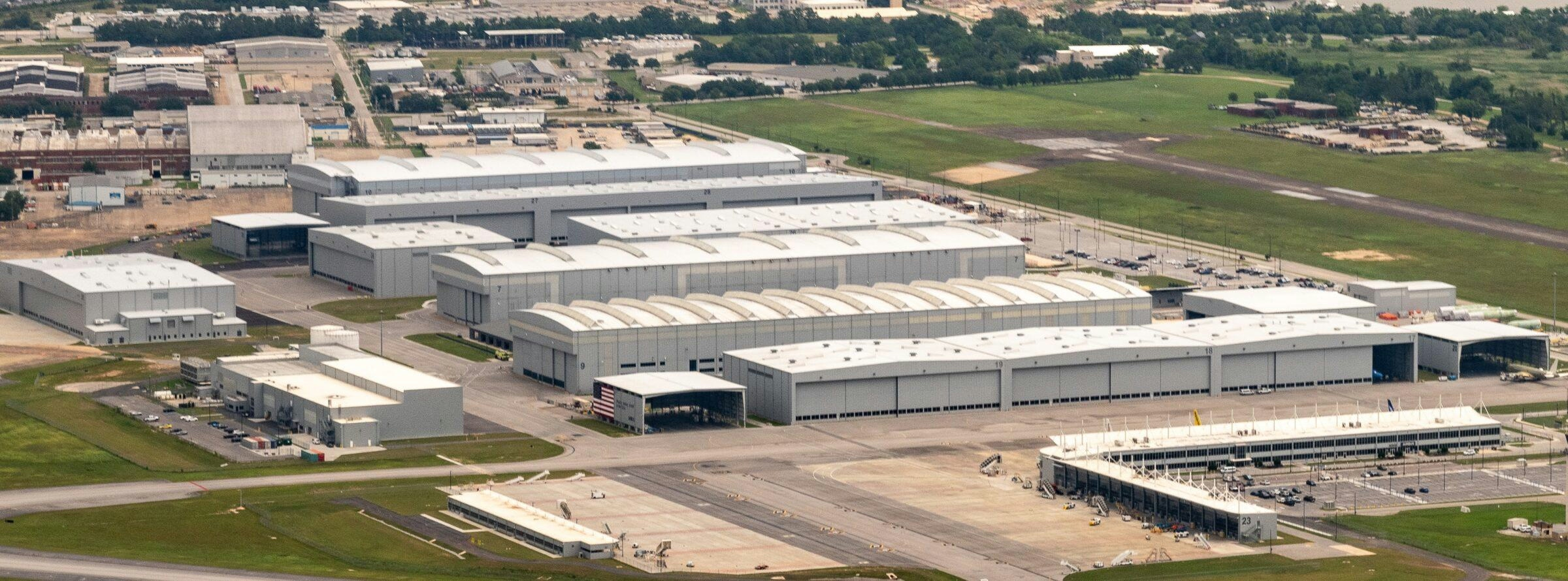
Airbus Expresses Concern Over GTF Engine Delays and Slow SAF Development
February 27, 2026By ePlane AI
Airbus Expresses Concern Over GTF Engine Delays and Slow SAF Development
0
0
Airbus
GTF Engine Delays
Sustainable Aviation Fuel

Airbus Highlights Engine Delivery Delays and Slow Progress in Sustainable Aviation Fuel

Production Challenges Linked to Pratt & Whitney’s GTF Engine Issues

Airbus has publicly expressed growing concern over ongoing delays in the delivery of Pratt & Whitney’s geared turbofan (GTF) engines, which has directly influenced a downward revision of its A320 production targets. In its recent full-year earnings presentation, the European aerospace giant announced a revised forecast of producing between 70 and 75 A320-family aircraft per month by the end of 2027, a reduction from the previously anticipated steady rate of 75. Airbus expects to stabilize production at 75 units per month thereafter.

Chief Executive Guillaume Faury attributed the production slowdown primarily to Pratt & Whitney’s failure to meet engine delivery commitments. He stated, “Pratt & Whitney’s failure to commit to the number of engines ordered by Airbus is negatively impacting this year’s guidance and the ramp-up trajectory for this year.” Faury emphasized Airbus’s determination to enforce its contractual rights in response to these challenges.

The root of the problem lies in a recall campaign affecting Pratt & Whitney’s PW1000G GTF engines, which power the A320neo family alongside CFM International’s LEAP-1A engines. A defect involving powdered metal components necessitated the grounding of hundreds of aircraft for maintenance, causing significant delays in new engine deliveries. Although Pratt & Whitney reported a 6% increase in GTF engine deliveries in 2025, Airbus and its customers remain concerned about the company’s recovery pace from the recall.

Faury expressed particular frustration with Pratt & Whitney’s prioritization of servicing in-service aircraft over supplying new engines to Airbus. He argued that the manufacturer should expand its capacity to address both demands simultaneously, stating, “We continue to work with them to make them change the way they manage this.”

Despite these setbacks, Airbus maintains a positive outlook for 2026, projecting deliveries of 870 commercial aircraft—an increase of nearly 10% compared to the 793 units delivered in 2025. The company reported a 6% rise in revenue to €73.4 billion ($86.6 billion) and a 33% increase in adjusted EBIT to €7.1 billion for the year. Airbus also secured 1,000 gross aircraft orders in 2025, ending the year with a record backlog of 8,754 aircraft.

Other engine manufacturers, including MTU Aero Engines and CFM International, are advancing their engine technologies in response to market demands. Airlines such as Volaris anticipate a reduction in GTF-related groundings as the industry approaches a turning point in resolving these technical issues.

Airbus’s production targets for other aircraft models remain largely stable. The A220 is now expected to reach a production rate of 13 per month by 2028, down from an earlier target of 14 per month in 2026. The A330 and A350 production rates are set to hold steady at five and 12 units per month by 2029 and 2028, respectively.

Concerns Over Slow Development of Sustainable Aviation Fuel

Beyond the challenges related to engine supply, Guillaume Faury also voiced concern over the sluggish progress in the sustainable aviation fuel (SAF) market. He underscored Airbus’s commitment to SAF as a critical component of the industry’s decarbonization strategy but acknowledged that its development remains largely outside the company’s direct control. “The progress is slow—too slow—but it’s not something we should give up on,” Faury remarked, highlighting the importance of continued efforts to advance SAF adoption.

More news
Jet Aviation Expands In-House MRO and CMS Software Capabilities

Jet Aviation Expands In-House MRO and CMS Software Capabilities

Jet Aviation Advances In-House MRO and Cabin Management System Capabilities Jet Aviation has reached a pivotal milestone in expanding its in-house maintenance, repair, and overhaul (MRO) and cabin management system (CMS) software capabilities with the introduction of its first internally developed in-flight entertainment and cabin management system. The system, named IFX, was recently installed as part of a narrow-body aircraft refurbishment, marking its official entry into service following an extensive development and certification process. Development and Features of the IFX System As a subsidiary of General Dynamics, Jet Aviation offers a broad range of services including private jet charter, aircraft management, fixed-base operator (FBO) operations, and MRO services. The newly developed IFX system is entirely engineered in-house and provides a fully customizable interface that enables passengers and crew to control all aspects of in-flight entertainment and cabin management. This includes lighting, audio, video, passenger address announcements, and other bespoke functions tailored to customer preferences. The system is built on certified hardware components that comply with rigorous aviation standards and incorporates Jet Aviation-certified units for the CMS. Florent Klinger, Head of Engineering at Jet Aviation, highlighted the collaborative nature of the project, stating, “We are incredibly proud to see our in-house IFE and CMS system flying in a customer aircraft. This reflects the close collaboration between our engineers, production, and installation teams, as well as with our customer. Developing the system architecture in-house has enabled us to create a fully customizable system that can seamlessly support customer requirements throughout the aircraft lifecycle, from installation through operation and upgrades.” The installation was carried out at Jet Aviation’s Basel facility in Switzerland. Industry Challenges and Strategic Implications As Jet Aviation broadens its in-house MRO and CMS software capabilities, it confronts several challenges inherent to the sector. The integration of new facilities and the maintenance of seamless operations across an expanded footprint will be essential to uphold service quality. This strategic expansion is expected to intensify competition among MRO providers, particularly in regions such as the U.S. Midwest, where rivalry may lead to price pressures and a heightened emphasis on service differentiation. Competitors are likely to respond by enhancing their own MRO and CMS offerings, potentially through strategic partnerships or acquisitions aimed at preserving market share. Moreover, the wider MRO industry continues to face significant supply chain disruptions and escalating costs. Over recent years, these challenges have imposed a substantial financial burden on airlines, with industry estimates placing the cost at approximately $30 billion. Such pressures underscore the critical importance of robust and adaptable in-house solutions like Jet Aviation’s IFX system, which is designed to provide greater flexibility and resilience amid a rapidly evolving market environment. With the successful deployment of its proprietary CMS and in-flight entertainment software, Jet Aviation is positioning itself to better address customer demands while navigating the complexities of a competitive and dynamic MRO landscape.
Jet Fuel Prices Surge Nearly 100% in Weeks; XCF Global Notes Domestic SAF Less Affected

Jet Fuel Prices Surge Nearly 100% in Weeks; XCF Global Notes Domestic SAF Less Affected

Jet Fuel Prices Surge Nearly 100% Amid Global Supply Disruptions Jet fuel prices in the United States have nearly doubled over the past several weeks, escalating financial pressures on airlines and revealing significant vulnerabilities within the global aviation fuel supply chain. This sharp increase, driven by persistent instability in global oil markets and disruptions to critical supply routes such as the Strait of Hormuz, has intensified concerns regarding fuel availability and the overall resilience of the aviation sector. Industry data, corroborated by CNBC reports, indicate that U.S. jet fuel prices have risen from approximately $2.50 per gallon in late February to nearly $4.90 per gallon by early April. This represents one of the most rapid price escalations in recent memory. The ongoing conflict in Iran and the resulting constraints on crude oil shipments have severely limited tanker traffic, further tightening global supply and exerting upward pressure on prices. The surge in fuel costs is already impacting airlines significantly. Alaska Air has reported triple-digit increases in fuel refining expenses and has consequently revised its first-quarter financial expectations downward. Major carriers, including United Airlines, have begun reducing flight schedules and have issued warnings about potential fuel shortages in the coming weeks. European airline executives have expressed concerns that if supply disruptions persist, jet fuel shortages could emerge at major airport hubs, necessitating emergency measures and potentially driving airfares even higher. Analysts caution that sustained elevated fuel prices could eliminate industry profits by 2026, particularly if passenger demand weakens. Domestic Sustainable Aviation Fuel Offers a More Resilient Alternative This crisis has intensified scrutiny of the structural weaknesses inherent in petroleum-based aviation fuel supply chains, which remain closely linked to geopolitically sensitive crude oil markets. In contrast, domestically produced, waste-based sustainable aviation fuel (SAF) is gaining attention as a more resilient alternative. XCF Global, Inc. (Nasdaq: SAFX), a leading U.S. producer of SAF, highlights that its fuel is derived from domestic feedstocks such as used cooking oil and other waste materials—inputs largely insulated from the volatility of global oil markets. Chris Cooper, CEO of XCF Global, emphasized the significance of this distinction: “When jet fuel prices can nearly double in a matter of weeks, it exposes just how fragile crude-based aviation fuel supply chains remain. Waste-based SAF starts with domestic materials, domestic infrastructure, and domestic labor. That structural difference matters, not only for decarbonization, but for fuel security and reliability when global energy systems are under stress.” While prices for SAF can still be influenced by broader market dynamics, the underlying supply chain for waste-based SAF is fundamentally different from that of conventional jet fuel. Disruptions in crude oil markets have an immediate and direct impact on traditional jet fuel availability and pricing, whereas waste-based SAF is shielded from many of these upstream risks, providing a meaningful layer of supply-chain resilience. XCF Global operates the New Rise Renewables facility in Reno, Nevada, which has a permitted nameplate capacity of 38 million gallons per year of neat SAF. As the aviation industry grapples with increasing uncertainty over fuel pricing and availability, the company advocates for expanded domestic SAF production as a critical component in enhancing both energy security and the sector’s decarbonization efforts.
Airhart Launches New Initiative

Airhart Launches New Initiative

Airhart Launches New Initiative to Democratize Aviation Before founding Airhart Aeronautics Inc. in 2022, Nikita Ermoshkin was deeply engaged in the development of autonomous aircraft and piloting across California. A Cornell-trained electrical and computer engineer and former SpaceX avionics engineer, Ermoshkin obtained his pilot’s license in 2020, driven by a lifelong passion for aviation. He describes the freedom of flight as “very exciting,” noting that a plane can cover the 380 miles between Los Angeles and San Francisco in under two hours, compared to a six-hour car journey. Addressing Aviation’s Accessibility Challenge Ermoshkin quickly recognized the significant barriers that prevent most Americans from engaging with aviation. Despite approximately 300 million Americans living within 10 miles of a local airport, fewer than 0.3% held active airman certificates in 2023, according to the Federal Aviation Administration (FAA). High costs and safety concerns remain major obstacles. Ermoshkin’s ambition is to make aviation more accessible, safer, and easier to operate, ultimately envisioning a future where flying becomes as commonplace as driving a car. This vision inspired the creation of Airhart, a company specializing in avionics systems designed to enhance aviation safety and usability. Last month, Airhart inaugurated its first design and innovation center in Long Beach, California, and began offering public hangar tours. The company’s prototype aircraft, developed in partnership with South Africa-based Sling Aircraft, is scheduled for market introduction later this year. After raising $4.56 million in venture capital last October, Airhart has conducted cross-country flights with its prototype, which made its public debut at Santa Monica Municipal Airport in 2024. The four-seat aircraft boasts impressive fuel efficiency, consuming just 7.4 gallons per hour—significantly less than comparable models such as Textron Aviation’s Cessna 172, which averages 9.9 gallons per hour. Innovation in Avionics and Market Challenges Airhart’s avionics system seeks to simplify the flying experience through what Ermoshkin terms the “electronization of the cockpit.” The system incorporates dual-touch displays, a push-pull bar for speed control, and a joystick for directional input, automating many routine tasks to allow pilots to concentrate on critical decision-making and situational awareness. Despite the promise of this new initiative, Airhart faces considerable challenges. The competitive environment is intense, with established players in adjacent sectors—such as luxury brands in China’s recovering beauty market—demonstrating strong financial rebounds. Industry giants like Estée Lauder and L’Oréal leverage their brand heritage and innovation to maintain dominance, making it difficult for new entrants to gain market traction. Additionally, broader macroeconomic and geopolitical pressures, coupled with a venture capital landscape focused on mega IPOs and experiencing liquidity constraints, may divert attention and resources away from emerging companies like Airhart. Nonetheless, Ermoshkin remains steadfast in his commitment to making aviation safer, more accessible, and as routine as driving, with the hope of inspiring a wider public enthusiasm for flight.
Sherwood Aviation Sells 80% Stake to HEICO

Sherwood Aviation Sells 80% Stake to HEICO

Sherwood Aviation Sells 80% Stake to HEICO Amid Industry Consolidation Sherwood Avionics and Accessories, Inc. (“Sherwood Aviation”), a prominent provider of maintenance, repair, and overhaul (MRO) services for defense and select commercial aviation platforms, has sold an 80% ownership stake to HEICO Corporation (NYSE: HEI.A, HEI) through its Flight Support Group. The transaction, finalized on April 6, 2026, was exclusively advised by XLCS Partners, Inc., a middle-market investment bank specializing in aerospace and defense. Company Profile and Transaction Details Founded in 1992 and headquartered near Miami’s Opa-locka Airport, Sherwood Aviation operates as an FAA and EASA Part 145 repair station. The company is widely recognized for its technical expertise in servicing complex mechanical and electro-mechanical components, including auxiliary power units (APUs), landing gear systems, wheels and brakes, pneumatics, hydraulics, fuel and lighting systems, and avionics components. Over the years, Sherwood Aviation has built a strong reputation for excellence, earning the trust of original equipment manufacturers (OEMs), government agencies, and operators worldwide. As part of the agreement, Sherwood Aviation’s management team will retain a 20% ownership stake, ensuring operational continuity as the company embarks on its next phase of growth. Bryan Farrell, CEO of Sherwood Aviation, described the deal as a “tremendous outcome” for the company, its team, and customers. He emphasized that HEICO is an ideal partner to support Sherwood’s future growth and OEM alliances while preserving the company’s legacy since its inception. Farrell also praised XLCS Partners for their advisory role throughout the transaction. Industry Context and Market Implications The acquisition occurs amid a period of intensified consolidation within the aviation sector, characterized by increased competition and a surge in large-scale mergers and acquisitions across the U.S. market. Recent megadeals have highlighted a robust environment for such transactions, despite a slowdown in private equity exits driven by AI-related market volatility and ongoing geopolitical tensions. Industry analysts suggest that HEICO’s strategic move may trigger competitive responses from rivals aiming to counterbalance the company’s expanding influence, while also attracting interest from other potential investors. Joe Contaldo, Partner and head of XLCS Aerospace & Defense, remarked that the transaction reflects the value Sherwood Aviation has created over more than three decades. He noted that Sherwood represents the type of mission-critical, defense-focused MRO platform that sophisticated buyers actively seek. Contaldo expressed pride in advising Sherwood Aviation on this milestone deal and satisfaction with the outcome for all parties involved. XLCS Partners, led by Joe Contaldo and Vice President Reed McMahon, served as the exclusive M&A advisor to Sherwood Aviation. For further information, visit www.xlcspartners.com.
Joby Conducts Electric Air Taxi Tests at Manhattan Heliport

Joby Conducts Electric Air Taxi Tests at Manhattan Heliport

Joby Aviation Conducts Electric Air Taxi Demonstrations at Manhattan Heliport Joby Aviation is conducting a series of invitation-only, piloted electric air taxi demonstration flights from Manhattan’s West 30th Street Heliport during the week of April 27. Scheduled from Monday, April 27 through Thursday, April 30, these demonstrations will feature short flights over the Hudson River as well as brief hops connecting Midtown Manhattan to nearby regional airports. The sessions serve as a discreet preview of the urban air mobility services Joby aims to introduce across U.S. cities. Strategic Rollout and Recent Demonstrations These Manhattan tests form part of Joby’s broader strategy to establish limited operations within the United States. In March, the company was selected as a winner in the White House-backed eVTOL Integration Pilot Program (eIPP), with New York identified as a key partner market. Early coordination with the Port Authority has been central to Joby’s operational planning, facilitating access to critical infrastructure. Earlier this month, Joby launched its "Electric Skies" demonstration tour, completing piloted flights across San Francisco Bay to showcase its operational readiness. The company also participated in the America Innovates exhibit in San Francisco, presenting its electric air taxi alongside other emerging technologies, further underscoring its commitment to advancing urban air mobility. Manhattan Access Through Blade Acquisition Joby’s August 2025 acquisition of Blade’s passenger business has provided immediate access to Manhattan’s heliport infrastructure and a ready customer base. According to SEC filings, Joby intends to leverage Blade’s terminals and lounges to facilitate the transition to electric vertical takeoff and landing (eVTOL) services, streamlining its entry into the competitive urban air taxi market. Heliport Operations and Community Concerns The West 30th Street Heliport, a state-owned facility adjacent to Hudson River Park, has long been a focal point for debates over noise and safety as helicopter traffic in Manhattan has evolved. While the heliport emphasizes its emergency and passenger roles, local reporting has documented ongoing neighborhood concerns regarding increased air traffic and its impact on the surrounding community. Ongoing Legal and Regulatory Challenges Despite its operational progress, Joby faces significant legal and regulatory challenges. The company is currently under investigation by the U.S. International Trade Commission following a complaint by competitor Archer Aviation, which alleges violations of the U.S. Tariff Act of 1930 related to import and tariff regulations. Additionally, Joby and Archer are engaged in a legal dispute over alleged trade secret theft and misrepresentation of business relationships with foreign entities. Outlook for the Demonstrations If the April demonstration window proceeds as planned, the flights will be tightly controlled and limited to invited guests. The primary focus will be on testing routes, procedures, and acoustics rather than offering public service. Joby’s participation in the eIPP and recent public demonstrations indicate the company is gathering operational data and seeking stakeholder support as it continues to pursue Federal Aviation Administration (FAA) certification. Residents interested in updates can monitor FAA Notices to Air Missions (NOTAMs) and the heliport’s official channels for notices related to the test flights. Further information will be provided as Joby or local authorities release official confirmations.
Etihad Airways Launches Five New Routes to India

Etihad Airways Launches Five New Routes to India

Etihad Airways Expands Network with Five New Routes to India ABU DHABI – Etihad Airways has announced a major expansion of its flight network, introducing five new routes from Abu Dhabi Zayed International Airport (AUH) to key Indian cities. This development forms part of the airline’s broader strategy to enhance connectivity between the United Arab Emirates and important Asian markets, following a similar expansion in China earlier this year. New Destinations and Operational Details The new Indian destinations will be served by Etihad’s Boeing 787-9 Dreamliner, providing passengers with a consistent widebody experience. The airline plans to operate daily flights to Mumbai and Delhi, while additional frequencies will be offered to Bengaluru, Chennai, and Hyderabad. This expansion is expected to significantly increase capacity, catering to both business and leisure travelers amid India’s strong post-pandemic recovery. Challenges and Market Dynamics Etihad’s growth in India comes amid a challenging environment for the aviation industry. Rising fuel prices and ongoing geopolitical tensions in the Middle East pose risks to key air corridors, potentially affecting operational costs and scheduling reliability. Furthermore, India’s reopening has intensified competition, with Gulf, Asian, and European carriers all increasing their services to capitalize on surging demand. Etihad’s expansion mirrors its recent strategy in China, where it launched five new routes and increased weekly flights by 28 percent, leveraging its joint venture with China Eastern Airlines to improve connectivity and passenger options. The airline’s move into India is expected to trigger similar competitive responses, with rivals likely to increase capacity and introduce new services. While this competition may benefit travelers through greater choice and potentially more competitive fares, it could also exert pressure on airline yields. Strategic Importance and Economic Impact His Excellency Mohamed Ali Al Shorafa, Etihad’s Chairman, underscored the strategic significance of the new routes, stating, “The expanded network reflects the enduring strength and growing promise of ties between the UAE and India. By connecting unique tourism destinations with major trading hubs, we aim to deliver lasting economic value and prosperity to both nations.” Beyond passenger travel, the expanded network is anticipated to boost trade, tourism, and investment flows between the UAE and India. The use of the fuel-efficient Boeing 787-9 Dreamliner aligns with Etihad’s commitment to operational efficiency and passenger comfort on long-haul routes. As Etihad accelerates its presence in the Indian market, the airline will face the challenge of navigating rising costs and intensifying competition. The coming months will be critical in determining how effectively Etihad and its competitors adapt to these evolving conditions while meeting the demands of travelers and businesses across both regions.
Delta Introduces New Business Class Suite on Airbus Widebody Aircraft

Delta Introduces New Business Class Suite on Airbus Widebody Aircraft

Delta Introduces New Business Class Suite on Airbus Widebody Aircraft A New Standard in Premium Travel Delta Air Lines has announced the introduction of a next-generation business class suite for its Airbus widebody fleet, marking a significant step in its efforts to enhance the premium travel experience. The new Delta One Suite, featuring sliding doors and upgraded amenities, will be installed on the 20 Airbus A350-1000 aircraft the airline has on order, with the first delivery anticipated in early 2027. This initiative reflects Delta’s strategic response to the growing demand for luxury air travel and intensifies competition among major carriers targeting high-yield passengers. The new seat, named VantageNOVA, is manufactured by Thompson Aero Seating, based in Northern Ireland, with Delta serving as the launch customer. Building upon the existing Vantage XL platform currently used in Delta’s business class cabins, the VantageNOVA is designed to elevate comfort and privacy. Nearly half of the A350-1000’s cabin will be dedicated to business class or Premium Select, Delta’s enhanced premium economy offering. All seats will be equipped with Bluetooth-enabled entertainment systems and memory foam cushioning, while Premium Select passengers will benefit from larger screens, improved meal service, and enhanced seating comfort. Fleet Modernization and Consistency Delta’s investment in premium cabins forms part of a broader fleet modernization and standardization strategy. The airline plans to retrofit its aging Airbus A330-200 and A330-300 aircraft, which average around 20 years in service, with the new suites. This effort aims to reduce product fragmentation across the fleet and provide a more consistent onboard experience for premium travelers. By 2030, Delta intends for 90% of its Delta One seats to be configured as suites with doors. Currently, such suites are available on the Airbus A350-900 and A330-900neo models. Older Boeing 767 aircraft, despite recent refreshes, will not receive the new suites and are expected to be phased out by the end of the decade. This move aligns with a broader industry trend, as airlines invest heavily in upgrading their premium cabins. Competitors such as United Airlines and American Airlines have introduced pod-style business class seats on new aircraft, while Delta has offered suites with doors since 2017. The escalating competition underscores the importance carriers place on attracting affluent travelers who prioritize privacy, comfort, and convenience. Design and Challenges The new Delta One Suite features a modern and sophisticated design, characterized by darker, natural tones and wood-like finishes, departing from the airline’s traditional red, white, and blue color palette. Privacy dividers in the middle section enhance the sense of seclusion, and the design incorporates feedback from both customers and employees. These refinements highlight Delta’s commitment to delivering a premium experience as it seeks to expand its share of the lucrative business travel market. Despite the promising outlook, Delta faces significant challenges in implementing these upgrades. The high costs associated with the investment and the technical complexities involved in retrofitting older aircraft present considerable obstacles. As Delta and its rivals compete for premium passengers, the airline industry is witnessing a wave of cabin enhancements aimed at maintaining market share and meeting the rising expectations for luxury in air travel.
Airbus Secures 398 Net Orders for 2026 Amid Market Uncertainty

Airbus Secures 398 Net Orders for 2026 Amid Market Uncertainty

Airbus Secures 398 Net Orders for 2026 Amid Market Uncertainty Delivery Performance and Production Challenges Airbus has reported a solid order intake for 2026, securing 398 net aircraft orders despite persistent market uncertainties and a decline in first-quarter deliveries compared to the previous year. In March, the European aerospace manufacturer delivered 60 aircraft, marking an increase from 35 in February 2026 but a decrease from 71 in March 2025. This brought total deliveries for the first quarter to 114 aircraft, representing a 16% drop from 136 deliveries during the same period last year. The decline has been largely attributed to ongoing supply chain disruptions, particularly delays in Pratt & Whitney engine deliveries, which have constrained production rates for the A320neo family. Order Intake and Market Demand Despite these operational challenges, Airbus recorded a robust inflow of new orders in March, with 331 new aircraft orders offset by 10 cancellations. Significant contracts included 100 A320neo-family jets for leasing company AerCap and 101 for China Eastern Airlines, highlighting sustained demand for single-aisle aircraft. Consequently, net orders for 2026 have nearly doubled compared to 2025, rising by 95% from 204 to 398. This strong order book underscores continued customer confidence in Airbus’s product offerings amid a complex geopolitical environment, particularly in regions such as the Middle East. Industry Context and Competitive Landscape Market reactions to Airbus’s latest figures have been mixed. Some analysts view the strong order activity as evidence of resilient demand, while others express concern that the delivery shortfall could hinder Airbus’s ability to meet its full-year targets. The company has previously cautioned that engine supply constraints will continue to impact production rates. Meanwhile, Boeing, Airbus’s primary competitor, has reported high delivery volumes recently, potentially intensifying competition in the coming quarters. Broader industry indicators also suggest a recovery in global aviation demand, exemplified by an 83% surge in UK commercial aircraft orders in February 2026. While Airbus’s March delivery numbers reflect ongoing operational difficulties, the company’s substantial order backlog indicates robust market demand. Analysts anticipate that the latest data will not have an immediate significant impact on the market but will be closely monitoring Airbus’s ability to navigate production challenges and competitive pressures in the near term.
Eurowings Flight A319 Makes Emergency Return To Hamburg After Engine Malfunction

Eurowings Flight A319 Makes Emergency Return To Hamburg After Engine Malfunction

Eurowings Flight A319 Returns to Hamburg Following Engine Malfunction Emergency Return and Response On April 10, a Eurowings Airbus A319 operating flight EW7462 was compelled to make an emergency return to Hamburg Airport shortly after departing for London due to a reported engine malfunction. The technical issue, believed to involve one of the aircraft’s engines, prompted the flight crew to follow established safety protocols. After detecting the problem, the pilots entered a holding pattern over northern Germany, near the Bremen-Oldenburg area, to evaluate the situation before deciding to return to Hamburg. The aircraft landed safely approximately 40 to 60 minutes after takeoff. Emergency services, including fire and rescue teams, were deployed as a precaution and remained on standby during the landing. The plane came to a halt on a taxiway and was secured without further incident. More than 130 passengers and crew were on board at the time, and no injuries were reported. Passengers disembarked normally using mobile stairs. Operational Impact and Ongoing Investigation Hamburg Airport temporarily suspended arrivals and departures during the incident, causing short-term disruptions to airport operations. Eurowings confirmed that the decision to return was precautionary and emphasized that passenger safety was never at risk. The airline has arranged alternative travel options for those affected and initiated a thorough technical inspection of the aircraft. While initial reports suggest an engine warning or malfunction, the precise cause remains under investigation. Broader Implications for Eurowings and the Aviation Industry This incident poses several challenges for Eurowings, including increased scrutiny from aviation regulators and the necessity for comprehensive inspections and repairs. The airline may also face heightened passenger concerns regarding safety and reliability, which could affect its reputation and customer confidence. Market reactions may focus on the reliability of the Airbus A319 model and its engines, with competitors potentially leveraging the situation to reassure their customers or strengthen their market position. The event occurs amid a wider industry emphasis on operational safety, underscored by recent incidents such as Delta Air Lines’ emergency landing due to an engine issue. As airlines confront these challenges, maintaining rigorous safety standards and transparent communication with passengers remains essential to preserving trust in air travel.
AI Quietly Rewrites How Travelers Book, Fly and Explore

AI Quietly Rewrites How Travelers Book, Fly and Explore

AI Quietly Rewrites How Travelers Book, Fly and Explore Artificial intelligence is increasingly becoming the invisible force reshaping the global travel industry. From flight scheduling and hotel pricing to trip planning, AI is transforming key processes long before travelers arrive at the airport, fundamentally altering how journeys are organized and experienced. AI’s Expanding Role in Aviation In the aviation sector, AI has progressed from experimental applications to essential tools for major airlines across the United States and Europe. Airlines now rely on AI to model aircraft turnaround times, predict operational disruptions, and adjust schedules in near real time. By analyzing data streams such as weather conditions, crew availability, air traffic, and airport congestion, AI platforms recommend gate changes, aircraft swaps, and recovery strategies—tasks that previously demanded extensive manual coordination. Beyond scheduling, AI is beginning to influence flight routing itself. By optimizing paths and altitudes, AI helps reduce flight times and fuel consumption. Several North American carriers report that AI-generated routing alternatives are now offered on most flights, yielding measurable time savings. Additionally, collaborations between airlines and technology firms have produced AI models capable of predicting contrail formation, allowing dispatchers to select routes that minimize environmental impact. European airlines, including both network and low-cost carriers, are investing heavily in AI to manage the complexities of day-of-operations. Computer-vision systems monitor airport ramps and stands to detect delays in baggage loading or catering, triggering early alerts to prevent disruptions from cascading through the network. AI is also being trained to make nuanced decisions about whether flights should hold briefly for connecting passengers or depart promptly to maintain overall schedule integrity. For travelers, these AI-driven changes remain largely imperceptible. While boarding procedures and in-flight experiences appear unchanged, many critical decisions regarding connections, re-routings, and seat assignments are increasingly determined by AI systems operating behind the scenes in airline control centers. Transformation of Hotel Pricing and Revenue Management The hotel industry in the U.S. and Europe is undergoing a significant but less visible transformation through AI-driven revenue management. Leading hotel chains such as Marriott, Hilton, and Accor have adopted AI systems that analyze a wide array of factors—including historical booking trends, local events, competitor pricing, and guest behavior—to dynamically adjust room rates multiple times daily. This approach replaces traditional fixed seasonal pricing with fluid rates based on probabilistic demand models tailored to specific room types and dates. Industry reports indicate that these AI-powered pricing engines are delivering tangible financial benefits, with some hotel brands reporting notable increases in revenue per available room. This shift enables hotels to respond more precisely to market conditions and optimize profitability in an increasingly competitive environment. Challenges and Opportunities for Online Travel Agencies As AI assumes a central role in travel planning, online travel agencies (OTAs) confront new challenges. Increasingly, travelers are turning to AI tools for trip discovery and itinerary creation before engaging with traditional booking platforms. While some OTAs have welcomed recent decisions by companies like OpenAI to step back from direct booking services, the greater challenge lies in adapting to AI’s expanding influence over the initial discovery phase of travel. The travel technology landscape is becoming more fragmented, with major players such as Amazon, Meta, and Google developing proprietary AI systems for travel planning. This diversification introduces new distribution complexities for travel brands seeking to reach consumers through multiple AI-driven channels. Emerging agentic AI technologies, capable of autonomously managing discovery, comparison, and booking processes, are beginning to take shape, though widespread consumer adoption remains limited. As these technologies evolve, the entire travel ecosystem—from airlines and hotels to OTAs—faces a rapidly shifting environment increasingly orchestrated by AI operating quietly behind the scenes.
line










