Imagem

Orquestre insights de IA em ações

Entre na lista de espera da AeroGenie hoje mesmo!

Tendências

Categories

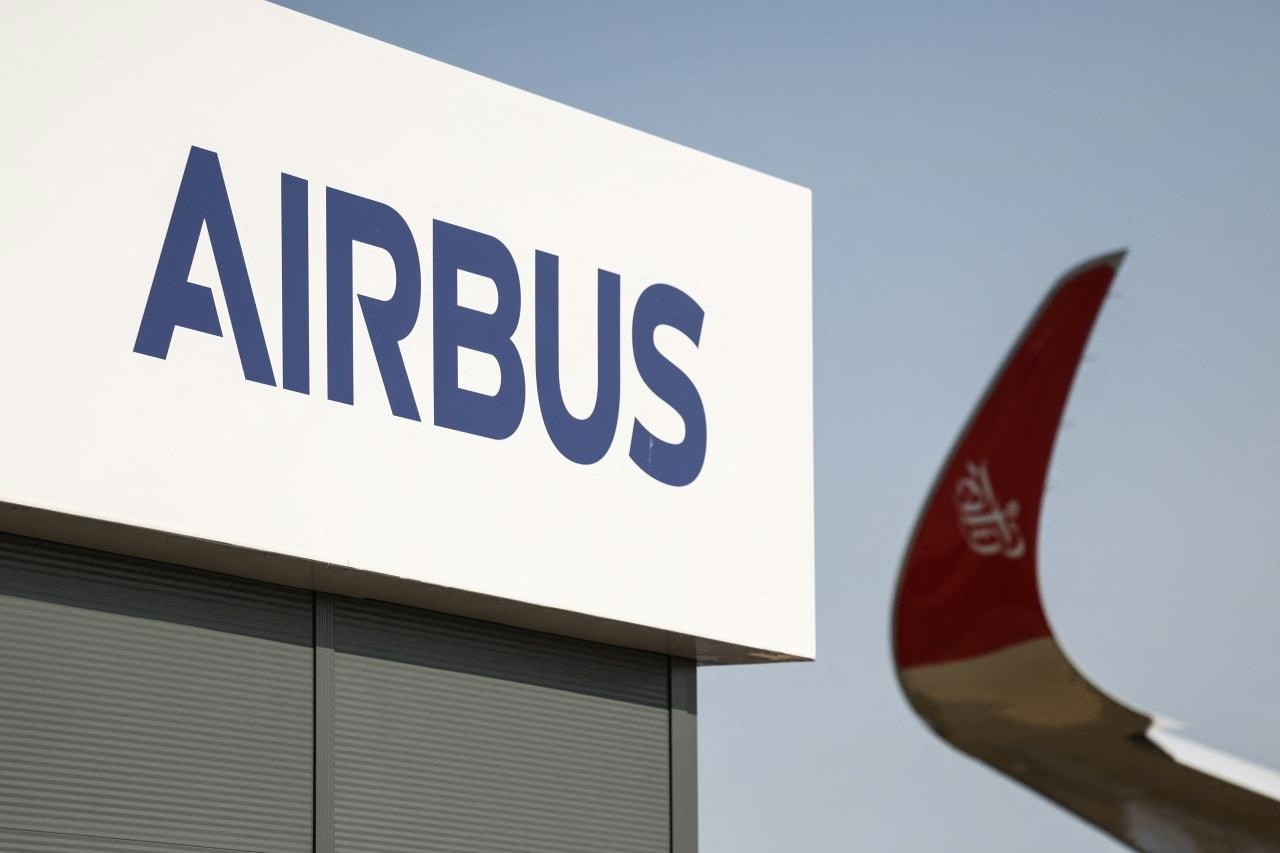
Airbus sharply increases profit as Boeing narrows loss amid higher deliveries
July 31, 2026By ePlane AI
Airbus sharply increases profit as Boeing narrows loss amid higher deliveries
0
0
Airbus Financial Results
Boeing Financial Performance
Aircraft Deliveries

Airbus Profit Surges as Boeing Narrows Loss Amid Higher Aircraft Deliveries

Airbus and Boeing, the world’s two largest aircraft manufacturers, reported increased revenues and higher commercial aircraft deliveries in the first half of 2026. Despite these gains, a significant financial disparity remains between the two companies. Airbus posted a sharp rise in profitability, achieving over €2 billion in net income, while Boeing, although showing improved results, continued to report a net loss.

Airbus Reports Strong Financial and Delivery Performance

Airbus generated €33.2 billion in revenue during the first six months of 2026, marking a 12% increase compared to the same period last year. The company’s adjusted operating profit (EBIT Adjusted) rose by 24% to €2.73 billion, with reported operating profit surging 70% to €2.75 billion. Net income climbed to €2.24 billion from €1.53 billion a year earlier, and earnings per share increased from €1.93 to €2.84.

This robust performance was largely driven by a higher volume of commercial aircraft deliveries. Airbus delivered 351 aircraft in the first half of the year, 45 more than in the previous year, reinforcing its lead over Boeing and positioning the company to meet its full-year target of 870 deliveries. The deliveries comprised 44 A220s, 271 A320 Family aircraft, 10 A330s, and 26 A350s. Revenue in Airbus’ commercial aircraft division rose 15% to €23.9 billion, with adjusted operating profit in the division approaching €2 billion. Airbus Defence and Space also contributed to the improved results, with adjusted operating profit increasing from €265 million to €487 million.

Airbus secured 886 gross orders in the first half, or 821 net after cancellations, bringing its commercial aircraft backlog to 9,222 units by the end of June. Despite the strong profit figures, Airbus reported a negative free cash flow before customer financing of €1.17 billion, primarily due to increased inventories required for ramped-up production. The company’s net cash position declined from €12.2 billion at the end of 2025 to €8.4 billion at the end of June. Airbus reaffirmed its full-year targets, aiming for approximately 870 commercial aircraft deliveries, €7.5 billion in adjusted operating profit, and €4.5 billion in free cash flow before customer financing.

Boeing Shows Improvement but Continues to Post Losses

Boeing reported $46.8 billion in revenue for the first half of 2026, an 11% increase year-on-year. Operating profit more than doubled to $604 million, yet the company still recorded a net loss of $435 million, an improvement from the $643 million loss reported a year earlier. Loss per share narrowed from $1.09 to $0.79. In the second quarter alone, Boeing’s revenue rose 8% to $24.6 billion, with the net loss decreasing from $612 million to $428 million. Operating performance improved significantly, shifting from a $176 million loss to a $156 million profit. Boeing also reported a notable improvement in cash flow, generating $1.36 billion in operating cash flow and $631 million in free cash flow.

Boeing’s commercial backlog expanded to 6,814 aircraft at the end of June, with a net increase of 56 units over May, driven by strong new sales that outpaced deliveries. However, Boeing remains behind Airbus by 37 aircraft on a year-to-date basis. The company’s order book is heavily weighted toward the narrowbody segment, with 4,888 outstanding commitments for the 737 program. Its widebody portfolio includes 1,926 aircraft, led by 1,145 orders for the 787 Dreamliner.

While Airbus has regained momentum in deliveries, its production remains uneven, with several programs yet to reach stable operating rates. Boeing continues to strengthen its order book, particularly in the narrowbody market, as both manufacturers face ongoing challenges in scaling up production to meet strong demand.

More news
Why Airlines Rely on Boeing to Update 787 Software

Why Airlines Rely on Boeing to Update 787 Software

Why Airlines Rely on Boeing to Update 787 Software The Boeing 787 Dreamliner represents a significant departure from traditional commercial aircraft in terms of its software architecture. Unlike earlier models such as the 767 or 777, which utilize numerous independent avionics computers, the 787 consolidates most critical functions onto a unified computing platform known as the Common Core System (CCS). This system oversees approximately 300 Loadable Software Airplane Parts distributed across 1,400 to 1,500 locations throughout the aircraft. This integrated design means that the software is not a separate product but an essential component of the aircraft’s Federal Aviation Administration (FAA) type certificate. Consequently, airlines are unable to independently develop or install software fixes. Any modification to the core system’s code must be executed by Boeing’s engineering team and receive FAA approval before deployment on operational aircraft. Distinctive Software Architecture of the 787 In older aircraft models, each major system—such as the flight management system, autopilot, or weather radar—operates on dedicated hardware units. These modular components function independently, allowing one system to fail without affecting others. Each unit is developed, certified, and maintained as a standalone entity with its own embedded software. The 787’s CCS replaces this modular approach with a smaller number of shared computing modules. Multiple aircraft functions run as software applications on common hardware, sharing processing resources, data buses, and sometimes input/output pathways. While this integration enhances the aircraft’s capabilities and efficiency, it also introduces interdependencies. Updating one application can impact others, rendering software changes considerably more complex. Dependence on Boeing for Software Updates Because the 787’s software is certified as part of the aircraft’s type design, airlines cannot modify or update it independently. Any software issue—whether a bug or a necessary update—must be addressed by Boeing and approved by regulatory authorities. This process ensures safety and consistency but restricts airlines’ ability to respond swiftly to software-related challenges. This dependence on Boeing’s technological expertise and support has intensified in recent years. At industry events such as the Farnborough Airshow, Boeing has underscored its efforts to restore trust following safety concerns and production delays. Despite ongoing challenges, including delayed deliveries of models like the 777X—which has frustrated customers such as Emirates—airlines continue to place substantial orders for the 787 Dreamliner. Carriers like Philippine Airlines and leasing companies such as AerCap have demonstrated confidence in Boeing’s future capabilities through significant purchase commitments. Boeing’s current strategy emphasizes stability over rapid optimization, focusing on resolving supply chain volatility and maintaining robust supplier relationships. For airlines, this approach means continued reliance on Boeing not only for hardware but also for critical software updates that ensure the 787 fleet remains safe and operational. The 787’s advanced, integrated software architecture offers operational advantages but also closely binds airlines to Boeing for ongoing support and updates. As the aviation industry navigates technological advancements and supply chain challenges, this partnership remains central to the Dreamliner’s sustained success.
New US Reactor Technology Aims to Cut Aviation Fuel Emissions by 95%

New US Reactor Technology Aims to Cut Aviation Fuel Emissions by 95%

New US Reactor Technology Aims to Cut Aviation Fuel Emissions by 95% Innovative Modular Platform for Synthetic Aviation Fuel Boston-based clean-fuel developer Lydian has secured $43 million in Series A funding to advance the commercialization of its modular production platform designed to significantly reduce the cost and complexity of synthetic aviation fuel manufacturing. The funding round was led by Breakthrough Energy Ventures, with participation from AP Ventures, Builders Vision, and existing investors. This capital injection will accelerate the deployment of PIVOT, Lydian’s integrated system that combines proprietary reactors, catalysts, process engineering, software, and plant equipment into standardized, factory-built modules. Lydian asserts that its platform can cut plant capital costs by more than 50% compared to conventional synthetic fuel production methods, while achieving up to a 95% reduction in lifecycle emissions. Unlike most synthetic fuel projects that rely on adapting gas-to-liquids technologies for large, centralized facilities, Lydian’s purpose-built reactors are engineered to operate efficiently with renewable electricity, accommodate fluctuating power prices, and support smaller, modular installations. Joe Rodden, CEO and Co-founder of Lydian, emphasized the distinctiveness of the approach: “PIVOT represents a fundamentally different approach to synthetic fuel production. By designing every part of the system for lower capital costs, greater operational flexibility, and faster deployment, we’ve created a platform for commercially competitive synthetic fuel projects. This financing gives us the resources to bring that vision to market.” Flexibility and Standardization to Drive Cost-Effective Production The PIVOT platform integrates reactor technologies and catalysts with advanced software that dynamically adjusts operations in response to intermittent renewable power availability. This operational flexibility enables facilities to increase production when electricity prices are low, addressing one of the most significant cost drivers in synthetic fuel manufacturing. The system’s factory-built, pre-engineered modules are intended to reduce project risk and shorten development timelines by up to two years by minimizing site-specific engineering and simplifying construction processes. Standardization facilitates repeatable plant designs that can be deployed across multiple locations. The platform is designed to produce ASTM-approved, drop-in sustainable aviation fuel compatible with existing aircraft and fuel infrastructure. Carmichael Roberts of Breakthrough Energy Ventures highlighted the importance of this innovation for the aviation sector: “Decarbonizing aviation will require advanced fuels that compete on cost, work within today’s aviation infrastructure, and deliver the performance flyers and airlines expect. Lydian is taking on that challenge with a purpose-built approach to synthetic aviation fuel production. Its PIVOT platform combines strong technical innovation with a practical path to better project economics, offering the aviation industry a low-carbon fuel capable of cost-competitive, commercial-scale production.” Development Timeline and Industry Challenges Lydian currently operates a tonne-scale pilot plant at its Boston research center and plans to establish a commercial demonstration facility by 2028, followed by its first full-scale commercial project by 2030. The recent funding will support the transition from pilot operations to commercial deployment. Despite the promising technology, the path to widespread adoption faces several challenges. Regulatory hurdles, substantial initial investment requirements, and the necessity for extensive testing and validation to ensure safety and efficiency may slow progress. Additionally, market skepticism from traditional fuel suppliers and airlines could pose obstacles, while competitors may intensify efforts to develop alternative technologies such as hybrid-electric generators and other sustainable aviation fuels. The ultimate success of Lydian’s reactor technology will depend on overcoming these barriers and securing broad industry acceptance. If successful, the PIVOT platform could provide airlines and fuel producers with a lower-cost, scalable method for synthetic fuel production, reducing dependence on conventional jet fuel supply chains and supporting domestic fuel production near renewable energy sources.
Volkswagen Exits China’s Air Taxi Market as U.S. Develops $8.3 Million Test Facility

Volkswagen Exits China’s Air Taxi Market as U.S. Develops $8.3 Million Test Facility

Volkswagen Withdraws from China’s Air Taxi Market Amid Intensifying Competition Volkswagen has officially terminated its air taxi program in China, quietly retreating from a market it once approached with considerable optimism. After five years of development, which included the creation of three full-scale prototypes but no passenger flights, the German automaker closed the project in June 2024. Internal documents reviewed by Reuters reveal that this decision highlights the mounting challenges and fierce competition within China’s rapidly evolving low-altitude aviation sector. Development and Challenges in China’s Air Mobility Sector Volkswagen’s venture into urban air mobility began in 2019 with a small team based in Beijing working on the V.MO, an electric vertical takeoff and landing (eVTOL) aircraft designed to serve affluent travelers on routes such as Beijing to Tianjin. Despite producing prototypes like the “Flying Tiger,” developed in partnership with Hunan Sunward Technology, and the luxury “Sky Garden” model, the project never progressed beyond test flights. Even high-profile demonstrations, including one in March 2023 where Chinese Premier Li Qiang sat in a mock-up, failed to translate into commercial success. By March 2024, Volkswagen’s internal strategy documents acknowledged a rapidly shifting landscape. China’s government had elevated the “low-altitude economy” to a national strategic priority, spurring a surge of domestic competitors such as Xpeng and Geely. These companies benefited from robust regulatory support and state-backed infrastructure, which quickly intensified market competition. Despite Volkswagen’s collaborations with aerospace giants Boeing and Airbus, the company struggled to keep pace with local rivals who enjoyed preferential access to resources and policy momentum. China’s commitment to advancing urban air mobility was further underscored in March 2026 with the inauguration of a $523 million national road-air integrated proving ground in Xinfeng County, Guangdong. Covering 573 hectares and offering 100 square kilometers of dedicated airspace for low-altitude testing, the facility provides capabilities unmatched by any U.S. counterpart. Aircraft can operate below 1,200 meters without prior filing, significantly streamlining development and testing processes. The site also includes multiple taxiways, vertical landing pads, a large service hangar, and a specialized powertrain laboratory. In this sector, access to controlled airspace remains a critical bottleneck, often outweighing the importance of advanced hardware. U.S. Developments and Volkswagen’s Strategic Retreat In contrast, the United States continues to face regulatory and infrastructure challenges that hinder progress in urban air mobility. The Federal Aviation Administration’s (FAA) long-anticipated Part 108 BVLOS (Beyond Visual Line of Sight) rule remains delayed, impeding domestic advancements. It was only in June 2026 that the FAA and Department of Transportation broke ground on V-PAR, an $8.3 million test facility at the Mike Monroney Aeronautical Center in Oklahoma City. This site represents the agency’s first dedicated facility for advanced air mobility testing. Volkswagen’s withdrawal from China’s air taxi market reflects broader strategic difficulties. The company is confronting intensifying global competition from Chinese automakers, prompting internal restructuring and a reduction in its model lineup. While Volkswagen steps back from this segment, other international players remain engaged. For instance, Toyota continues to invest in U.S.-based Joby Aviation, signaling sustained interest in urban air mobility despite the sector’s formidable barriers. Volkswagen’s exit was not driven by regulatory bans or trade restrictions but rather by a rapid shift in market dynamics and the accelerated pace at which local competitors, supported by state infrastructure and policy, have taken the lead.
Growth in Aviation Spurs Demand for Mechanical Components

Growth in Aviation Spurs Demand for Mechanical Components

Growth in Aviation Spurs Demand for Mechanical Components The global commercial aircraft fleet is projected to surpass 50,000 within the next two decades, marking an era of unprecedented expansion in the aviation sector. This growth is driving a significant increase in demand for advanced mechanical components, particularly those meeting the stringent standards of the aerospace industry. At the recent MTA Hanoi 2026 International Exhibition, Informa Markets, a leading organizer of B2B exhibitions, convened a seminar dedicated to advancing Vietnam’s precision machining capabilities to better serve this burgeoning market. Expanding Fleet and Modernization Drive Demand William Lim, Brand Director for Manufacturing, Machinery and Equipment in Asia at Informa Markets, opened the seminar by emphasizing the transformative shifts underway in aerospace manufacturing. Historically dominated by a few advanced economies, the industry is now evolving rapidly. Boeing’s Commercial Market Outlook 2026 forecasts the delivery of nearly 44,000 new aircraft over the next 20 years to accommodate rising air travel demand. Complementing this, Airbus’s Global Market Forecast 2026–2045 anticipates that by 2045, almost all commercial aircraft will be next-generation models, a substantial increase from 39% in 2026. This simultaneous expansion and modernization of the global fleet is intensifying the need for sophisticated aerospace components, materials, and precision mechanical parts. The surge in demand presents considerable challenges for supply chain management. Airlines face increasing pressure to maintain operational continuity during peak travel periods, while tighter aftermarket inventories complicate the sourcing of critical parts. Consequently, there has been a marked rise in demand for life-limited parts, rotable components, and high-pressure turbine materials. Industry stakeholders are responding with a strategic focus on rapid aircraft-on-ground recovery and targeted investments. Honeywell, for instance, is broadening its market footprint, while Boeing projects a $4.9 trillion demand for commercial support services over the next two decades. The mechanical equipment forgings market is also expected to grow at a compound annual rate of 5.2% through 2035, propelled by global industrial production and increased automation. Asia-Pacific and Vietnam’s Emerging Role The Asia-Pacific region is becoming a pivotal driver of growth in aerospace manufacturing, prompting a realignment of the global supply chain. Beyond cost considerations, leading aerospace companies are prioritizing partnerships with manufacturers that offer advanced technology, precision machining expertise, a skilled workforce, and rigorous quality management systems. Vietnam is increasingly recognized as a vital link in this evolving supply chain, as evidenced by the expanding presence of major industry players such as Airbus, Safran, Boeing, Hanwha Aerospace, ST Engineering, and several Japanese firms. William Lim underscored that the opportunities in aerospace manufacturing are reserved for companies capable of delivering uncompromising precision and quality. Success in this sector demands not only cutting-edge technology and machining solutions but also a highly skilled workforce and robust quality assurance frameworks. Informa Markets is actively supporting this development through initiatives like the "Enhancing Vietnam's Precision Machining Capabilities for the Aerospace Industry" workshop. This platform aims to bridge technology, knowledge, and business communities, enabling Vietnamese manufacturers to access state-of-the-art solutions, enhance their capabilities, and integrate more deeply into the global aerospace supply chain. Vietnam’s precision engineering sector has already demonstrated significant progress, with companies such as Aerospace Vietnam Co., Ltd. (MHIVA) exemplifying the country’s growing capacity to meet the aerospace industry’s evolving requirements. As the aviation sector continues its expansion, the demand for high-quality mechanical components will remain a defining factor in shaping its future trajectory.
FAA Approves Nationwide Drone Delivery Despite Opposition from 16 State Attorneys General

FAA Approves Nationwide Drone Delivery Despite Opposition from 16 State Attorneys General

FAA Approves Nationwide Drone Delivery Despite Opposition from 16 State Attorneys General The Federal Aviation Administration (FAA) has granted a nationwide Finding of No Significant Impact (FONSI) for drone package delivery, effectively streamlining the environmental review process for commercial drone operations throughout the United States, including Alaska and Hawaii. Announced on July 28, this decision replaces the previous market-by-market environmental assessments that have impeded the expansion of drone delivery services since 2019. Streamlining Environmental Review and Regulatory Requirements Under the new policy, Part 135 drone delivery operations that comply with specified noise and siting standards will no longer require a full environmental impact statement for each new market. Instead, the FAA will apply a single national programmatic environmental assessment to evaluate new applications. This approach is expected to significantly reduce approval times, which previously ranged from six months to a year per location. Despite formal opposition from 16 state attorneys general, who urged the FAA to conduct a comprehensive impact statement before granting nationwide approval, the agency determined that, with appropriate mitigation measures in place, drone deliveries “would not significantly affect the quality of the human environment.” The FAA’s notice of availability was published in the Federal Register on July 30. The approved delivery fleet includes Amazon’s MK30, Walmart’s Wing Hummingbird series, Zipline’s P2, Flytrex aircraft operated by Causey Aviation, the Matternet M2, and DroneUp’s PRISM V2. These models are now eligible for expedited approval, provided operators adhere to strict noise mitigation requirements. For instance, drone hubs managing up to 1,150 average daily deliveries must be situated at least 183 meters (600 feet) from residences and other noise-sensitive areas, a standard derived from the loudest sound exposure levels recorded in the current fleet. While the new assessment accelerates the environmental review process, it does not eliminate oversight entirely. Proposals exceeding national limits will still require supplemental reviews. Additionally, consultations with State Historic Preservation Officers and the U.S. Fish and Wildlife Service will continue on a case-by-case basis until formal agreements are established. Operators must also obtain a Part 135 certificate and an operations specifications amendment for each service area. Community Concerns and Ongoing FAA Initiatives Reactions to the FAA’s decision have been mixed. In communities such as Seabrook, Texas, residents have expressed concerns regarding potential job displacement and privacy issues linked to increased drone activity. Nevertheless, the FAA maintains that the new framework will facilitate the safe and efficient integration of drones into the national airspace. The agency continues to address outstanding challenges through its UAS BEYOND program, which focuses on advancing beyond visual line of sight operations, evaluating societal and economic impacts, and engaging with communities to address public concerns. With this nationwide approval, the FAA seeks to balance innovation in drone delivery with environmental protection and community interests, marking a significant milestone in the expansion of commercial drone operations across the country.
Why the World's Fastest Commercial Aircraft Lacks Winglets

Why the World's Fastest Commercial Aircraft Lacks Winglets

Why the World's Fastest Commercial Aircraft Lacks Winglets The Boeing 747-8 represents the largest, most advanced iteration in the 747 family, combining size, modernity, and aerodynamic sophistication. With a wingspan measuring 224 feet 7 inches (68.4 meters), the aircraft incorporates redesigned airfoils and distinctive raked wingtips—angled extensions that effectively reduce induced drag and enhance fuel efficiency by up to 16 percent compared to its predecessor, the 747-400. This design enables the 747-8 to accommodate up to 467 passengers in a typical three-class configuration while maintaining compatibility with major international airports such as Frankfurt, Hong Kong, and Dubai. A notable departure from earlier 747 models is the absence of traditional vertical winglets. Instead, Boeing has employed integrated aerodynamic solutions, including raked wingtips and span extensions, to optimize lift distribution and overall efficiency. This design choice reflects a broader philosophy: although winglets are effective in reducing induced drag, they are not universally optimal, particularly for aircraft operating at higher speeds. The Role of Winglets Winglets are vertical or canted extensions positioned at the wingtips, designed to disrupt the formation of wingtip vortices—swirling air currents that cause energy loss and contribute to drag. By mitigating these vortices, winglets improve the lift-to-drag ratio, resulting in reduced fuel consumption, extended range, and occasionally enhanced climb performance. However, winglets also introduce additional weight, increase structural stress at the wingtips, and can generate extra parasite drag at higher speeds. Their overall effectiveness is contingent upon the aircraft’s mission profile and operating conditions. Why the 747-8 Uses Raked Wingtips Instead From an aerodynamic standpoint, increasing a wing’s aspect ratio—lengthening the wing relative to its width—is among the most efficient methods to reduce induced drag. The 747-8’s raked wingtips extend the wing’s span and sweep gently backward, promoting a more even lift distribution and minimizing vortex formation at the source. This approach is particularly advantageous for large, fast aircraft, where the additional weight and drag penalties associated with traditional winglets could negate their benefits. The design of the 747-8 prioritizes high-speed cruise performance, making raked wingtips a more suitable solution than vertical winglets. This configuration supports longer nonstop routes, lowers fuel burn per passenger or cargo mass, and offers greater operational flexibility for airlines serving intercontinental networks. Market and Industry Impact The absence of winglets on the world’s fastest commercial aircraft underscores a deliberate trade-off favoring speed and aerodynamic refinement over incremental fuel savings. Market responses have been varied; some airlines appreciate the speed advantage and operational versatility, while others emphasize maximum fuel efficiency. Competitors have reacted diversely, with some developing their own high-speed aircraft and others concentrating on ultra-efficient designs. Looking forward, Boeing’s 2026 Commercial Market Outlook anticipates continued growth in passenger traffic and fleet capacity, indicating sustained demand for modern, efficient airplanes. These trends are likely to influence future design decisions as manufacturers strive to balance speed, efficiency, and operational requirements in the next generation of commercial aircraft.
ALMA Air Granted Provisional Permit for Colombia’s First Amphibious Airline Operations

ALMA Air Granted Provisional Permit for Colombia’s First Amphibious Airline Operations

ALMA Air Receives Provisional Permit to Launch Colombia’s First Amphibious Airline Services Colombia is poised to reintroduce seaplane operations following a landmark decision by the Civil Aviation Authority (Aerocivil), which has granted ALMA Air S.A.S. a Provisional Operating Permit as a non-scheduled public air carrier. This authorization represents a pivotal advancement for amphibious aviation in the country, allowing ALMA Air to move forward with plans to offer commercial passenger, cargo, and mail air taxi services. Advancing Amphibious Aviation in Colombia The permit comes after more than two years of rigorous technical preparation, operational testing, and close collaboration with Colombian regulatory bodies. ALMA Air’s amphibious model is designed to enhance connectivity for regions that lack access to conventional airports, thereby fostering new opportunities for tourism and regional development. The airline’s services are expected to be particularly impactful in remote and riverside communities, as well as popular tourist destinations where alternative transportation options could stimulate local economies. The announcement has been met with widespread enthusiasm, especially among stakeholders in Colombia’s Pacific region, where infrastructure limitations have long posed challenges. While reactions from competitors remain uncertain, industry observers regard the permit as a significant milestone not only for ALMA Air but also for the broader aviation sector in Colombia. Operational Testing and Regulatory Collaboration Eduardo Fairen Soria, a leading figure in the project, acknowledged the operational and logistical challenges that lie ahead in establishing sustainable amphibious airline services. Nevertheless, the initiative has garnered strong support as a means to expand Colombia’s air transport network with greater flexibility for regional travel. As part of the approval process, ALMA Air conducted an extensive operational testing program at locations including Ayapel, Mompox, and the Guatapé Reservoir. The company successfully completed over 75 water takeoffs and landings without any accidents, incidents, injuries, or damage to aircraft. These tests assessed flight procedures, risk management protocols, coordination with authorities, and the implementation of ALMA Air’s Safety Management System (SMS). Additionally, the exercises produced valuable technical data to facilitate coordination between aviation authorities and agencies responsible for inland waterways. The provisional permit is the culmination of a comprehensive development process involving private investment, aircraft testing, regulatory scrutiny, and cooperation with government entities. ALMA Air has expressed gratitude for the support received from Aerocivil, the Ministry of Transport, inspectors, technical teams, and other public officials who contributed to the project. With the provisional permit now secured, ALMA Air will proceed with the remaining operational requirements necessary to commence commercial services. The company’s progress signals the emergence of amphibious air transport as a promising new option within Colombia’s aviation landscape.
United Airlines Declines to Purchase Former Emirates 777X Aircraft

United Airlines Declines to Purchase Former Emirates 777X Aircraft

United Airlines Declines Acquisition of Former Emirates 777X Aircraft Chicago-based United Airlines has formally dismissed speculation regarding the potential acquisition of Boeing’s early-build 777X aircraft, specifically the 777-9 models originally ordered by Emirates. Industry rumors had suggested that United might consider purchasing up to 20 of these widebody jets, which Emirates rejected due to concerns over their age and the extensive upgrades required prior to delivery. Emirates’ chairman, Sir Tim Clark, notably described the early frames as “a can of baked beans,” highlighting that these aircraft—manufactured between 2019 and 2021—would effectively be halfway through their operational lifespan upon entering service. United’s Position on the Early-Build 777X Jets United has confirmed it has no intention of taking possession of these delayed 777X aircraft, which have been held in storage and would necessitate significant modifications, including software updates, before they could enter commercial service. A spokesperson for the airline emphasized that United remains committed to its existing Boeing 787 Dreamliner fleet alongside a longstanding order for the Airbus A350. Both aircraft types are central to the airline’s ongoing fleet renewal strategy, reflecting a preference for modern, efficient aircraft rather than older, heavily modified airframes. The notion that United might acquire the orphaned 777X jets emerged following Emirates’ decision to forgo the early builds. For Emirates, the prospect of introducing aircraft that had already spent several years in storage was deemed an unwise investment, particularly given the airline’s focus on maximizing the operational lifespan of its fleet. Implications for United’s Fleet Strategy and the 777X Program United’s rejection of the early-build 777X frames effectively ends any immediate plans for the airline to become the first U.S. operator of the type. Nevertheless, the carrier has not ruled out future interest in the 777X family once the program achieves full certification and enters regular commercial service. The airline has explicitly stated, however, that it will not purchase these specific early-build aircraft due to the challenges posed by their prolonged storage and the extensive rework required. Currently, United operates the Boeing 777-300ER and 777-200ER as key components of its widebody fleet. Yet, the airline’s fleet replacement program is increasingly focused on the Boeing 787, which offers next-generation efficiency and operational flexibility. This strategy has enabled United to launch new long-haul routes to destinations such as Adelaide and Sapporo. The airline’s commitment to the Dreamliner and the forthcoming Airbus A350 underscores its broader objective to modernize its fleet with the latest technology rather than acquiring older aircraft requiring substantial refurbishment. The future of the early-build 777X aircraft remains uncertain. With both Emirates and United declining to take these jets, it remains possible that another airline could express interest, provided the necessary modifications and certification are completed. For now, United has made clear its decision to forgo these particular aircraft, choosing instead to concentrate on its current fleet modernization initiatives.
Cincinnati Airport Announces New Transatlantic Partnership for Innovation

Cincinnati Airport Announces New Transatlantic Partnership for Innovation

Cincinnati Airport and Germany’s GATE Alliance Establish Transatlantic Innovation Partnership **Erlanger, Ky. (July 31, 2026)** – Cincinnati/Northern Kentucky International Airport (CVG) and Germany’s GATE Alliance have formalized a strategic transatlantic partnership designed to accelerate innovation in airport technology and broaden market access for aviation suppliers. The agreement, signed at the Farnborough International Airshow in the United Kingdom, sets a collaborative framework for technology testing, business introductions, and joint pilot projects between the United States and Germany. Expanding Innovation and Market Access This partnership builds upon a relationship initiated in 2023, with a Memorandum of Understanding that grants GATE Alliance members—comprising leading airport technology companies—access to CVG’s innovation resources and aviation ecosystem in the U.S. Conversely, CVG partners will benefit from connections to GATE’s extensive network within Germany, a key player in the global aviation market. Larry Krauter, CEO of CVG Airport, emphasized the importance of real-world testing and mutual learning in driving innovation. He stated, “This partnership creates a new transatlantic pathway for collaboration and strengthens connections between our region and one of the world’s leading aviation markets.” Jens Reinhard, managing director of GATE Alliance, echoed this sentiment, highlighting the enhanced opportunities for innovation, knowledge exchange, and market expansion on both sides of the Atlantic. Collaborative Focus and Challenges A joint working group will be established to oversee technology demonstrations, pilot programs, and investment opportunities. The partnership prioritizes sectors including aerospace and aviation, automated and electric mobility, advanced manufacturing, low-emissions fuels and energy infrastructure, agri-bioscience, and life sciences. Despite the promising prospects, both organizations recognize the inherent challenges of transatlantic collaboration. Regulatory complexities and logistical hurdles, particularly in integrating new technologies across diverse markets, will require careful navigation. Ensuring compliance with varying standards and facilitating successful technology adoption will be central to the working group’s efforts. Industry Implications and Future Engagements The partnership is expected to influence market dynamics by intensifying competition among airports and airlines, potentially leading to price adjustments and improved services for travelers. Competitors may respond by pursuing similar international collaborations or accelerating their own innovation initiatives to maintain competitiveness. CVG’s established reputation as a testing ground for emerging aviation technologies and innovative operational concepts positions it well to support companies seeking to validate technologies, gather operational feedback, and explore new market opportunities. CVG and GATE will continue their collaboration at GATE FUTURE 2026 in Hamburg on October 21-22, where CVG Chief Innovation Officer Brian Cobb will participate as a speaker. The tenth edition of GATE’s international airport innovation conference is anticipated to draw approximately 250 participants from the global airport technology sector.
IndiGo to End Norse Atlantic Lease by October 31, Shift Amsterdam Route to A321XLR

IndiGo to End Norse Atlantic Lease by October 31, Shift Amsterdam Route to A321XLR

IndiGo to End Norse Atlantic Lease by October 31, Shift Amsterdam Route to A321XLR InterGlobe Aviation Ltd. (IndiGo) has announced a significant restructuring of its long-haul international operations, with plans to terminate its wide-body Boeing 787-9 damp lease agreement with Norse Atlantic Airways by October 31, 2026. In a strategic pivot, the airline will transition its Mumbai-Amsterdam service to the narrow-body, fuel-efficient Airbus A321XLR starting October 25, 2026. Strategic Shift Amid Operational Challenges This decision comes against a backdrop of increasing geopolitical tensions and persistent airspace restrictions, which have complicated operations and escalated costs for Indian carriers. IndiGo has identified these factors as primary drivers behind its move away from wide-body aircraft and the winding down of its partnership with Norse Atlantic Airways. Since early 2025, IndiGo had operated six damp-leased Boeing 787-9s from Norse Atlantic on routes including Amsterdam, London, and Manchester. The transition will see Mumbai-Amsterdam flights operated by the Airbus A321XLR from late October 2026. Concurrently, IndiGo will fully exit the Norse Atlantic lease arrangement by the end of that month, returning all remaining aircraft. The airline will temporarily suspend its direct Mumbai-London Heathrow flights from October 25, 2026, until it takes delivery of its own Airbus A350-900s, anticipated in 2027. Additionally, flights to Manchester will be discontinued by August 31, 2026, with one leased 787-9 returned as early as June 2026. Financial and Operational Implications IndiGo’s recalibration reflects a tactical effort to safeguard operating margins amid a challenging environment. The use of damp-leased wide-body aircraft was initially a costly, interim strategy to establish a foothold on key long-haul routes and gain operational experience. By shifting to the single-aisle A321XLR, the airline is realigning with its core low-cost model, reducing lease expenses and mitigating the impact of expensive airspace detours, particularly those necessitated by restrictions over Middle Eastern airspace. Market responses to the announcement have been varied. Some analysts regard the move as a prudent realignment, concentrating on more profitable routes and aircraft types amid rising cost pressures. The transition is expected to substantially lower lease rental costs and enhance fuel efficiency, despite a temporary reduction in international capacity. The suspension of premium long-haul routes such as London Heathrow and Manchester signals a short-term contraction but is anticipated to improve yields on the remaining network. Competitors may adjust their international strategies to exploit potential market shifts resulting from IndiGo’s changes. The airline’s fleet investment plans, managed through its GIFT City entity, include a projected expenditure of USD 820 million for fiscal year 2026, with eight A321XLR aircraft expected to be delivered by the end of that year. Industry Outlook IndiGo’s withdrawal from expensive wet and damp leases underscores its commitment to cost discipline and operational efficiency. While the temporary suspension of certain long-haul routes highlights the limitations of not yet possessing long-range aircraft, the airline is positioning itself for renewed growth upon the arrival of its own A350-900s. Investors and industry observers will closely monitor whether this selective recalibration translates into improved profitability and yield in the medium term, as Indian aviation continues to navigate a complex and evolving international landscape.
line









