
Orquestre insights de IA em ações

Tendências
Categories
How Ethiopian Airlines Became Africa’s Leading Carrier Amid Gulf Competition
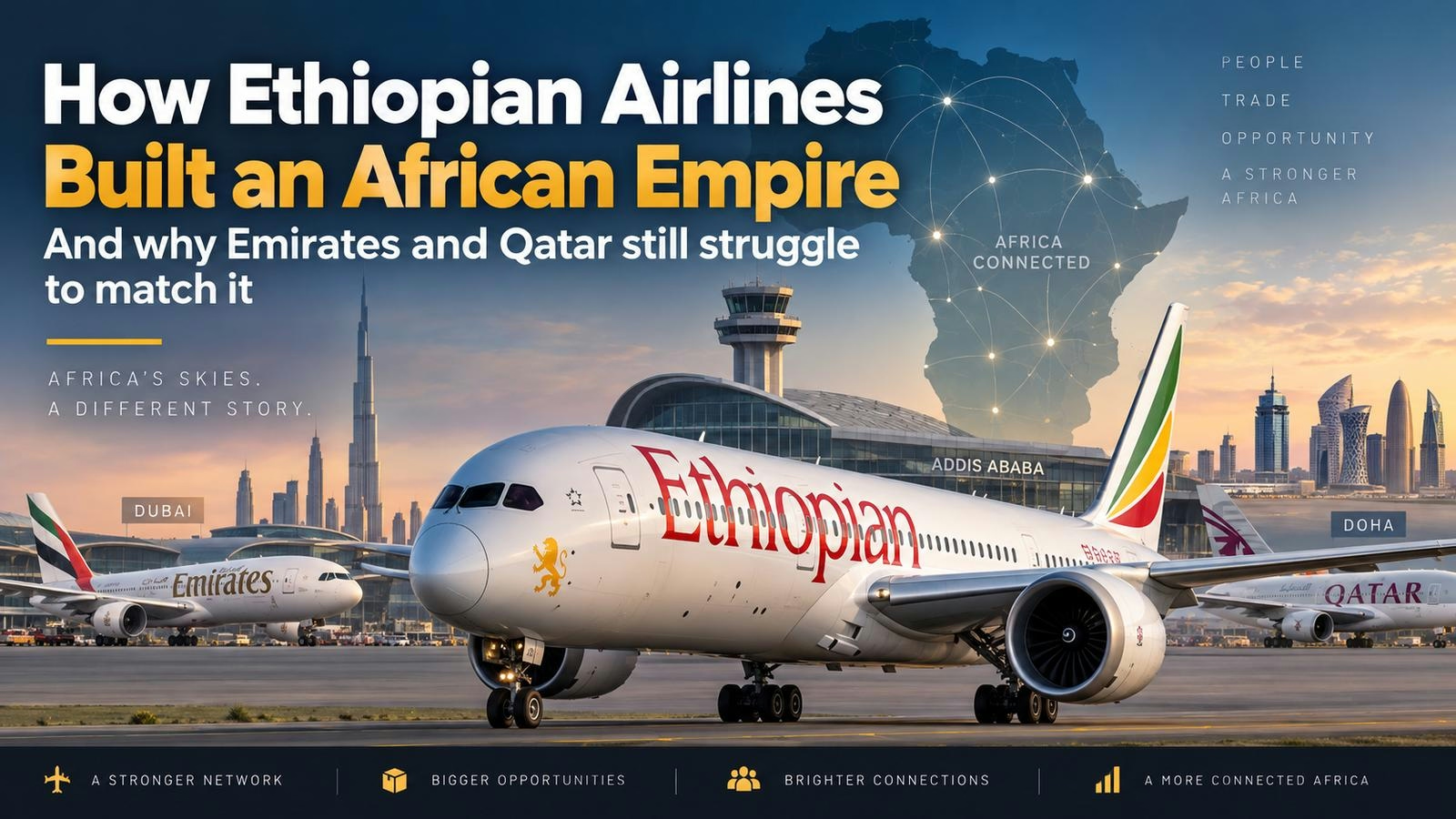
How Ethiopian Airlines Became Africa’s Leading Carrier Amid Gulf Competition
Ethiopian Airlines, unlike the Gulf carriers of Dubai and Doha, does not rely on immense wealth or a luxury brand image. Instead, it has established a deeply embedded and expansive aviation network across Africa—one that Gulf airlines have struggled to replicate. While Emirates and Qatar Airways have transformed global aviation by turning their home cities into major transit hubs with large fleets and premium services, Ethiopian Airlines has carved out a unique and sustainable advantage within the African continent.
A Network Tailored to Africa’s Complex Realities
Africa remains one of the most challenging aviation markets worldwide, characterized by dispersed passenger demand, thin routes, inconsistent airport infrastructure, volatile currencies, and protective government policies. Ethiopian Airlines has successfully navigated these complexities by transforming its base in Addis Ababa into a powerful connecting hub. Rather than relying solely on traffic originating in Ethiopia, the airline aggregates passengers from dozens of African cities, channeling them to destinations across Europe, Asia, North America, and the Middle East. This hub-and-spoke model enables the airline to sustain routes that would otherwise be unprofitable by combining travelers from multiple markets onto single onward flights.
The scale of Ethiopian’s network is a significant competitive advantage. In September 2026, the airline scheduled over 2.09 million seats—a 10% increase year-on-year and substantially more than any other African operator. By contrast, Emirates offered approximately 427,000 seats into Africa during the same period. This stark difference highlights Ethiopian Airlines’ structural integration within the continent, as opposed to Emirates’ external service model.
Strategic Regional Partnerships and Expansion
Central to Ethiopian Airlines’ strategy is its investment in regional carriers. Rather than attempting to serve every market directly from Addis Ababa, Ethiopian has acquired stakes in several African airlines, including ASKY Airlines in Togo, Malawi Airlines, Zambia Airways, and Air Congo. These partnerships provide access to local and regional traffic that non-African carriers find difficult to penetrate. For instance, ASKY Airlines operates from Lomé, connecting destinations across West Africa and feeding passengers into Ethiopian’s broader network.
Ethiopian Airlines has also played a crucial role in enhancing Kinshasa’s connectivity through new routes and partnerships, positioning the city as a key hub in Central Africa. This regional integration further solidifies Ethiopian’s dominance on the continent.
Navigating Challenges Amid Growing Competition
Despite its achievements, Ethiopian Airlines faces significant challenges. The airline currently holds $90 million in trapped overseas revenue due to foreign-exchange shortages and international banking sanctions, with half of these funds frozen in Russia. Nonetheless, the carrier continues to report record revenues and expand its operations.
Competition within Africa’s aviation sector is intensifying. Nigeria’s Air Peace, for example, has increased its scheduled capacity by 55%, re-entering the top ten African airlines by seat capacity. Yet, Ethiopian Airlines’ deeply rooted network, strategic regional partnerships, and adaptive business model maintain its position at the forefront of the continent’s aviation industry.
In a region where aviation is fraught with obstacles, Ethiopian Airlines has developed a resilient and expansive model that not only endures but outpaces even the world’s most powerful carriers.
Korean Air Finalizes $36.2 Billion Deal with Boeing

Korean Air Finalizes Order for 103 Boeing Jets and Engines
Embraer E195-E2 Features Distinctive Engine Placement Among Regional Jets

What Passengers Can Expect on Boeing’s New 777X Jet

Joby Aviation Extends Autonomous Flight Capabilities with Cross-Country Tour

Strengthening Europe's Aviation Supply Chain Amid Uncertainty

The Evolution of the Aircraft Maintenance Engineer Role
He 111Z Zwilling: Twin Fuselages, Five Engines, One Pilot

Monacair Plans Electric Air Taxi Service Between Monaco and Nice by 2029

Somalia’s Starsky Aviation Plans International Expansion
