
Orquestre insights de IA em ações

Tendências
Categories
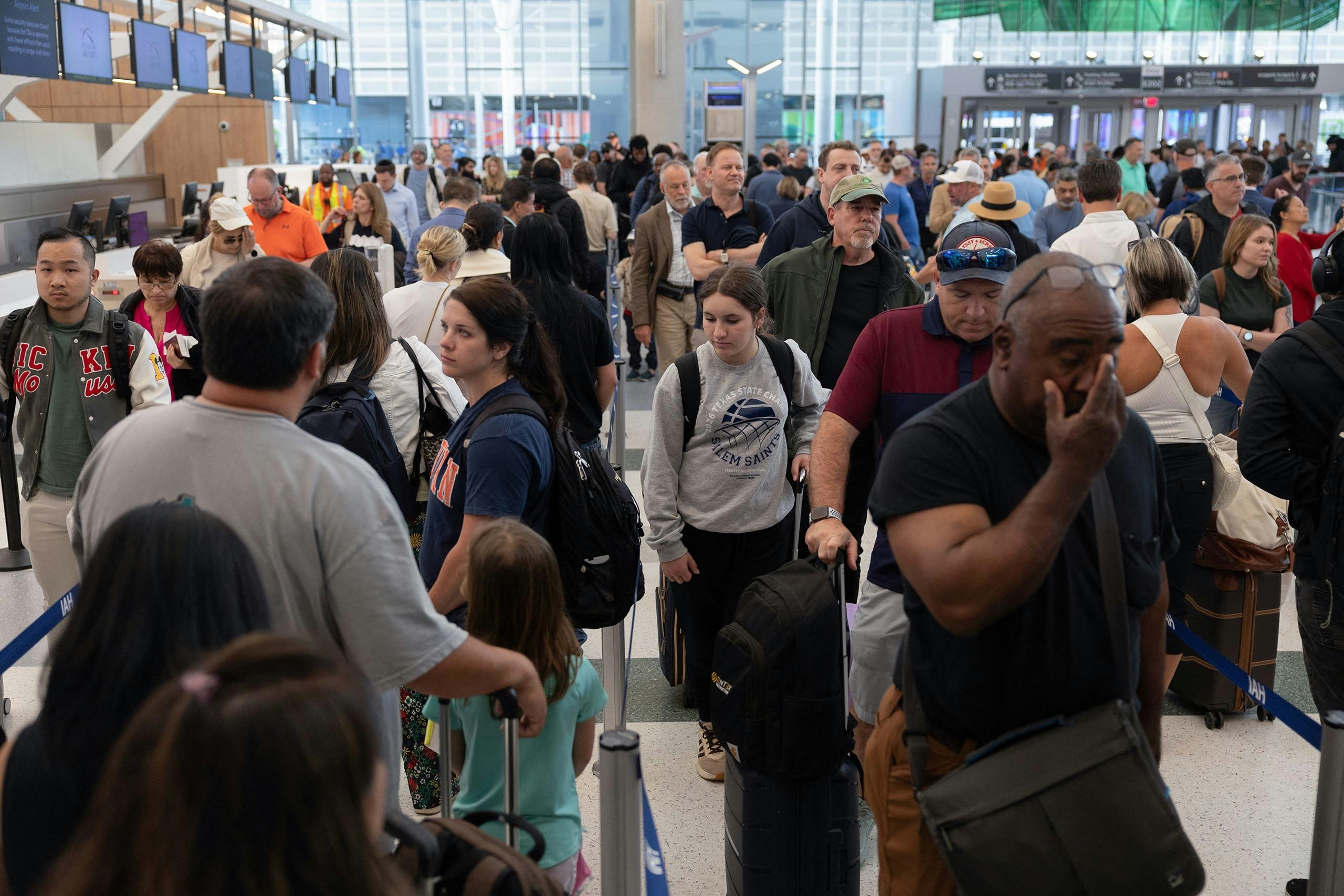
Airlines Turn to AI to Reduce Airport Security Wait Times
Airlines Turn to AI to Reduce Airport Security Wait Times
AI Integration in Airport Operations
The integration of artificial intelligence (AI) into airport and airline operations is driving notable transformations in security screening and baggage handling processes. AI technologies are increasingly employed to perform tasks that once required manual intervention, such as image analysis and regulatory compliance checks. This shift is gradually reshaping airport workflows, enhancing efficiency without supplanting human oversight.
Industry insiders report that domestic airlines and airport authorities are expanding AI applications in security screening and hazardous material detection. Rather than replacing human screeners, AI systems are tasked with managing repetitive identification duties, while final decisions remain the responsibility of trained personnel. Airports, with their complex environments, high passenger throughput, and continuous operations, provide an ideal setting for piloting these advanced technologies.
Case Study: Jeju Air’s AI-Powered Screening System
A prominent example of AI deployment is Jeju Air’s introduction of the JRAG system in June. This AI-driven tool leverages Optical Character Recognition (OCR) and Vision AI to scrutinize labels, ingredient lists, and battery capacities on checked items. By cross-referencing the International Air Transport Association (IATA) dangerous goods regulations alongside Jeju Air’s internal guidelines, the system assists staff in swiftly determining whether items such as portable batteries or electronic devices are permissible as carry-on or checked baggage. This innovation reduces reliance on manual reference checks and fosters consistent enforcement of safety standards.
Jeju International Airport anticipates that the adoption of such AI systems will substantially decrease the time staff spend consulting manuals, thereby streamlining the screening process and potentially shortening passenger wait times. With rising passenger volumes at major hubs including Incheon and Gimpo International Airports, enhancing the efficiency of security and baggage handling has become an operational imperative.
Industry Developments and Challenges
At the 2026 Aviation Security Week held in July, the National Aviation Museum of Korea and the Korea Aviation Security Association unveiled a suite of next-generation security technologies. These included AI-based bidirectional X-ray screening devices and drone detection radar systems. Eight companies and institutions showcased a total of 14 advanced aviation security innovations, underscoring the sector’s commitment to technological advancement.
Despite the promising benefits, integrating AI into airport security presents challenges. Managing false positives generated by AI systems remains a significant concern, as does ensuring that passenger safety is not compromised in efforts to reduce wait times. Additionally, the incorporation of new AI tools into existing airport infrastructure demands meticulous planning and comprehensive staff training.
Market response to these developments has been predominantly positive. The anticipated improvements in operational efficiency and reductions in wait times are expected to enhance passenger satisfaction. Consequently, industry competitors are likely to adopt similar AI technologies to maintain their competitive advantage.
With strong support from the Ministry of Land, Infrastructure and Transport, the adoption of AI-driven security solutions in airport operations is poised to accelerate, heralding a future of faster, safer, and more efficient air travel.

Etihad Airways Suspends Airbus A380 Flights on Key Route

Aditya Birla Group Seeks Approval for Aircraft Leasing in GIFT City

Qatar Airways Highlights Innovation and Connectivity at Arabian Travel Market 2026

Hong Kong's Five-Year Plan Includes Andrew Fan's Aircraft Parts Processing Hub Proposal

ACIA Aero Leasing Delivers ATR72-600 to Air Nostrum

RTX Appoints Jill Albertelli as Head of Pratt & Whitney

TAT Technologies Joins Beyond Aero Hydrogen Aircraft Program

AURAK Study Highlights Barriers to Air Taxi Adoption in Emerging Economies

Xiamen Air Selects Altitude for 787 Maintenance at Heathrow

Etihad and Swissport Extend Global Partnership
