
Orquestre insights de IA em ações

Tendências
Categories
Airlines Use AI to Improve Flight Safety Amid Increasing Turbulence Over North Atlantic, Europe, and Middle East
Airlines Harness AI to Enhance Flight Safety Amid Rising Turbulence Over Key Flight Corridors
Air travel is facing increasing challenges as turbulence intensifies over the North Atlantic, Europe, and the Middle East, regions that encompass some of the world’s busiest air routes. Experts attribute this rise in turbulence largely to climate change, which has altered weather patterns and disrupted jet streams. In response, airlines are turning to artificial intelligence (AI) to improve turbulence prediction and enhance overall flight safety.
Climate Change and the Escalation of Turbulence
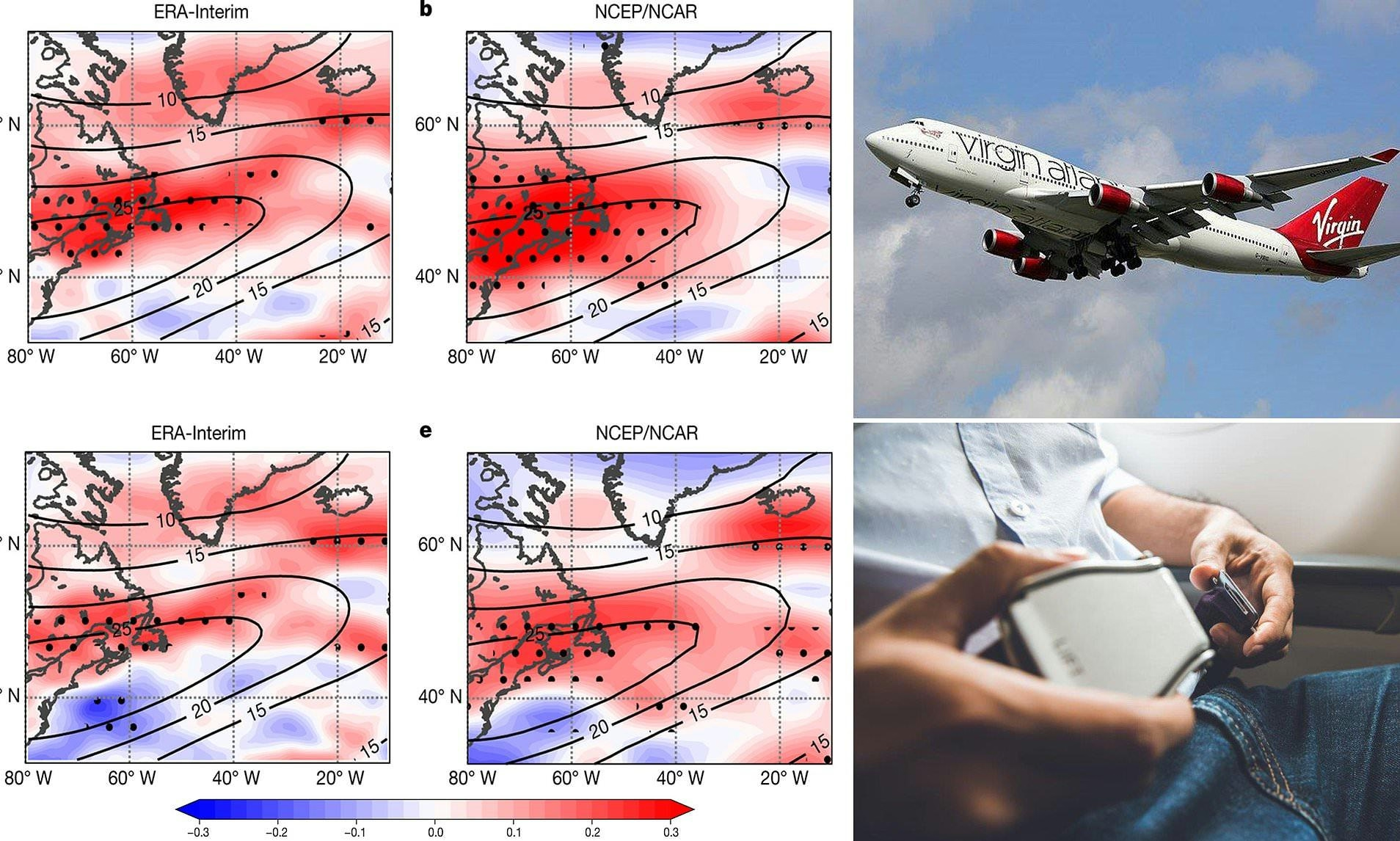
Meteorological research indicates that turbulence has increased by as much as 55% over the past forty years, with the North Atlantic region experiencing particularly sharp rises. The warming atmosphere, driven by elevated carbon dioxide levels, destabilizes the jet stream and intensifies clear-air turbulence—a phenomenon that is difficult to detect and can occur without warning. Data from 1979 to 2020 show a significant increase in the annual duration of turbulence on transatlantic flights, resulting in higher operational costs, increased aircraft maintenance, and elevated safety risks for passengers and crew.
Although fatalities due to turbulence remain rare, it is the leading cause of non-fatal injuries in aviation. Between 2009 and 2021, 146 serious turbulence-related incidents were documented, highlighting the critical need for improved forecasting and mitigation strategies.
The Role of AI in Turbulence Prediction
Traditional methods of forecasting turbulence rely heavily on weather radar and computer models, which often lack the precision to detect localized and small-scale disturbances. AI-powered systems are transforming this landscape by processing vast quantities of real-time data, including pilot reports and crowd-sourced turbulence information, to generate dynamic visualizations of turbulent zones along flight paths.
For instance, Emirates Airlines has adopted an AI-based platform that employs machine learning algorithms to predict and map turbulence. This technology allows pilots to modify routes in real time, thereby reducing encounters with severe turbulence and enhancing passenger comfort.
Implementation Challenges and Industry Implications
Despite the potential benefits, integrating AI into flight operations presents considerable challenges. Airlines must ensure that these advanced systems are compatible with existing flight control infrastructure and adhere to rigorous aviation safety standards. Additionally, the financial investment required to deploy and maintain AI technologies is substantial, necessitating careful evaluation by airline management.
The adoption of AI is also influencing competitive dynamics within the aviation sector. Airlines that prioritize safety technology may attract greater investor confidence, prompting competitors to accelerate their own AI initiatives. Recent leadership changes at major carriers, such as the CEO transition at Virgin Atlantic, may further influence strategic decisions regarding safety and technological innovation.
Future Outlook
As climate change continues to alter atmospheric conditions, the aviation industry faces mounting pressure to adapt its safety protocols. AI offers a promising avenue for more accurate turbulence prediction and avoidance, representing a significant advancement toward safer and smoother air travel. While challenges remain in implementation and cost, the integration of AI into flight safety systems marks a pivotal development in addressing the evolving risks posed by increasingly turbulent skies.

Etihad Airways Suspends Airbus A380 Flights on Key Route

Aditya Birla Group Seeks Approval for Aircraft Leasing in GIFT City

Qatar Airways Highlights Innovation and Connectivity at Arabian Travel Market 2026

Hong Kong's Five-Year Plan Includes Andrew Fan's Aircraft Parts Processing Hub Proposal

ACIA Aero Leasing Delivers ATR72-600 to Air Nostrum

RTX Appoints Jill Albertelli as Head of Pratt & Whitney

TAT Technologies Joins Beyond Aero Hydrogen Aircraft Program

AURAK Study Highlights Barriers to Air Taxi Adoption in Emerging Economies

Xiamen Air Selects Altitude for 787 Maintenance at Heathrow

Etihad and Swissport Extend Global Partnership
