Imagem

Orquestre insights de IA em ações

Entre na lista de espera da AeroGenie hoje mesmo!

Tendências

Categories

ATR Projects 20% Delivery Increase in 2026 Amid Improved Supply Chain

July 24, 2026By ePlane AI
ATR Projects 20% Delivery Increase in 2026 Amid Improved Supply Chain
0
0
ATR
Aircraft Deliveries
Supply Chain

ATR Projects 20% Delivery Increase in 2026 Amid Improved Supply Chain

Ambitious Growth Plans Supported by Market Expansion

ATR has announced plans to increase its aircraft deliveries by 20% in 2026, a target underpinned by enhanced supply chain performance and growing demand in strategic markets such as India and the United States. Speaking at the Farnborough International Airshow 2026, Chief Executive Nathalie Tarnaud Laude outlined the company’s aspirations while acknowledging the complexities involved in scaling production.

India represents a significant growth opportunity for ATR, with the potential for up to 300 additional aircraft orders supplementing the 70 ATRs currently in operation. This surge in demand may necessitate a reassessment of ATR’s existing production capacity, which currently maxes out at 60 aircraft annually. Tarnaud Laude emphasized that if order volumes from India reach anticipated levels, the company will need to evaluate its assembly capabilities, although no decisions have yet been made regarding the establishment of additional assembly lines.

In the United States, ATR is conducting a trial with regional operator JSX under Part 135 regulations, aiming to replace aging 50-seat regional jets. The trial features an innovative island-configuration seating arrangement and has received positive early feedback from customers. Since the onset of the pandemic, approximately 300 regional jets have been retired in the US, with further retirements expected. Tarnaud Laude cautioned that without suitable replacements, about one-third of the communities currently served by these aircraft risk losing air service.

Supply Chain Improvements and Industry Challenges

ATR’s delivery ambitions coincide with notable progress in its supply chain operations. Inputs to the final assembly line have increased by more than 50% in the first half of 2026 compared to the same period in 2025, driven by improved coordination with aerostructure and equipment suppliers. The company has also reduced outstanding work packages and late-arriving components requiring out-of-sequence installation by 40%, with plans to achieve an additional 40% reduction to address the rework backlog and normalize production flow.

Despite these advances, the planned 20% increase in deliveries faces significant risks. Industry analysts highlight ongoing supply chain constraints and rising production costs as potential obstacles to meeting ATR’s targets. These challenges are compounded by broader sector-wide delays affecting narrowbody aircraft deliveries. Market reactions have been mixed, with some skepticism regarding the feasibility of such a rapid production ramp-up, while competitors focus on maintaining their own delivery schedules amid similar supply chain pressures.

Fuel price volatility, influenced by the crisis in the Middle East, has also impacted market dynamics. Tarnaud Laude noted that elevated fuel costs have led some long-haul operators feeding ATR’s regional network to reduce flights. Conversely, certain European customers have responded by shifting capacity from jets to more fuel-efficient turboprops.

Competitive Landscape and Technological Innovation

Addressing competition, Tarnaud Laude acknowledged new entrants such as Deutsche Aircraft’s D328eco, which will compete with ATR’s 42-seat model in a niche segment. However, she emphasized that the larger 72-seat aircraft remains ATR’s core market and is not directly challenged by these new competitors.

ATR is simultaneously advancing its involvement in the EU-backed Clean Aviation programme, collaborating on a hybrid-electric technology demonstrator under the Heracles/Diverdi initiative alongside Leonardo, Airbus, and a Canadian engine partner. This programme aims to test critical technologies, including a battery management system and a new turboprop engine, with flight testing scheduled for 2029. A decision on launching a hybrid-electric aircraft programme is expected following these tests, likely in the mid-2030s.

More news
Aviation Industry Divided Over Jet Servicing Profits

Aviation Industry Divided Over Jet Servicing Profits

Aviation Industry Divided Over Jet Servicing Profits Industry Tensions Surface at Farnborough Airshow The aviation sector is currently embroiled in a significant dispute over the allocation of billions in future jet servicing revenues. Traditionally dominated by engine manufacturers, the lucrative aftermarket profits are now being contested by planemakers such as Airbus and Boeing, who are seeking a greater share. This debate has come to the forefront at the Farnborough Airshow, where industry leaders are confronting the challenges posed by a new generation of fuel-efficient aircraft and evolving market conditions. With both Airbus and Boeing facing sold-out order books and ongoing supply chain difficulties, the focus has shifted to the aftermarket—the high-margin business involving engine repairs and servicing. The anticipated replacement of today’s best-selling narrowbody aircraft by 2040 has intensified longstanding tensions, as airframers aim to renegotiate their role in the profit distribution. Airbus Commercial CEO Lars Wagner described the moment as a “once-in-a-lifetime opportunity” to rebalance the business model and secure participation in the aftermarket revenues expected over the next three to four decades. Divergent Business Models Fuel Dispute At the heart of the conflict are the fundamentally different business models employed by planemakers and engine manufacturers. Airbus and Boeing typically receive payment upon delivery of new aircraft, whereas engine makers such as GE Aerospace and Pratt & Whitney often sell engines at or near cost, recovering profits through long-term maintenance and repair contracts. Planemakers argue that, as the primary gateway to market for engines—which have limited alternative uses—they merit a share of these ongoing revenues. This position is likely to extend to other aircraft components as well. Nick Cunningham, Managing Partner at Agency Partners, explained that airframers leverage their position primarily during the launch of new programs, using this influence to claim a portion of supplier profits. Conversely, engine manufacturers emphasize the greater long-term risks they assume, particularly when offering fixed-cost-per-flight-hour agreements that resemble insurance contracts. Chris Calio, CEO of Pratt & Whitney’s parent company RTX, acknowledged the need to adjust the current model, expressing openness to exploring new approaches to smooth cash flows and investment, noting that preliminary discussions have already taken place. Market Pressures and Infrastructure Challenges This debate over servicing profits is unfolding against a backdrop of broader industry shifts. Infrastructure capacity constraints are becoming increasingly acute, with Signature Aviation CEO Tony Lefebvre highlighting the strain as demand surges. The private jet market, buoyed by new wealth generated from the artificial intelligence sector and the recent SpaceX IPO, is experiencing intensified competition for limited inventory, driving prices upward. The rise in business jet and turboprop deliveries in the second quarter of 2026 further underscores the sector’s robust demand. These market dynamics are influencing strategic decisions across the aviation industry. Boeing, for instance, is maintaining an open stance on open-fan engine technology as it seeks to rebuild production of the 737, reflecting both competitive pressures and the evolving technological landscape. Outlook for the Narrowbody Market Currently, the narrowbody aircraft market is dominated by the GE Aerospace-Safran joint venture CFM, which powers the Boeing 737, and Pratt & Whitney, which competes on the Airbus A320neo. As engine manufacturers push for greater returns and planemakers strive for a larger share of aftermarket profits, the industry faces a rare opportunity to redefine its profit-sharing framework. The outcome of this dispute could shape the financial and operational landscape of aviation for the next generation.
These Airlines Operate Planes With The World's Quietest Widebody Cabin

These Airlines Operate Planes With The World's Quietest Widebody Cabin

These Airlines Operate Planes With The World's Quietest Widebody Cabin Emirates emerges as the largest operator among the select group of ten airlines still flying the Airbus A380, a model that has experienced a notable resurgence since the pandemic. Once considered on the verge of retirement from commercial service, the A380 remains highly favored by passengers, not only for its impressive size as the only full-length double-decker airliner capable of seating over 500, but also for its exceptionally quiet cabin environment. The A380: Engineering for Silence The Airbus A380 was conceived in the early 1990s to address growing airport congestion and to compete directly with the Boeing 747. Its distinctive double-decker design aligned well with the hub-and-spoke model, enabling airlines to efficiently transport large numbers of passengers to major airports. The aircraft’s development introduced several technological innovations, including the use of a full digital mock-up and the incorporation of carbon fiber reinforced plastics—advancements that later became standard in newer Airbus models such as the A350. A key breakthrough in the A380’s design was the implementation of noise-reducing acoustic paneling. This technology was engineered to absorb the sound generated by air rushing around the expansive fuselage and the aircraft’s four Rolls-Royce Trent 900 or Engine Alliance GP7200 engines. Airbus has noted that these acoustic panels were so effective that they set a new industry benchmark for cabin quietness and were subsequently adopted in later aircraft designs. Why the A380 Remains the Quietest The A380’s reputation for having the quietest widebody cabin is the result of a combination of factors. The advanced acoustic paneling employs materials that absorb both engine noise and aerodynamic sounds. The aircraft’s considerable size places passengers farther from the engines and the outer surfaces, thereby reducing the noise perceived inside the cabin. Additionally, the high bypass ratio engines operate at slower rotational speeds, producing less noise compared to older engine designs. Aerodynamic refinements throughout the airframe further minimize sound as the aircraft moves through the air. Multiple studies consistently rank the A380 ahead of other widebody jets in terms of cabin noise levels, making it a preferred choice for travelers seeking a more peaceful and comfortable flight experience. Challenges and Industry Impact Operating aircraft with the world’s quietest widebody cabins presents distinct challenges for airlines. Striking a balance between passenger comfort and operational costs is essential, as quieter technologies often require substantial investment. Airlines must also navigate evolving noise regulations and maintain technological advancements to remain competitive in the market. Demand for quieter flights is increasing, with passengers showing a willingness to pay a premium for enhanced comfort. This trend has the potential to influence ticket pricing and shape airline strategies. In response, competitors are accelerating the development of quieter aircraft and advancing cabin noise reduction technologies to keep pace. As the aviation industry faces slower growth and reassesses capacity planning, the strategic value of quiet cabins has become more pronounced. The A380’s legacy in cabin comfort continues to influence passenger expectations and drive innovation across the sector, even as the aircraft’s retirement approaches.
FL Technics Names Bajarunas as CEO

FL Technics Names Bajarunas as CEO

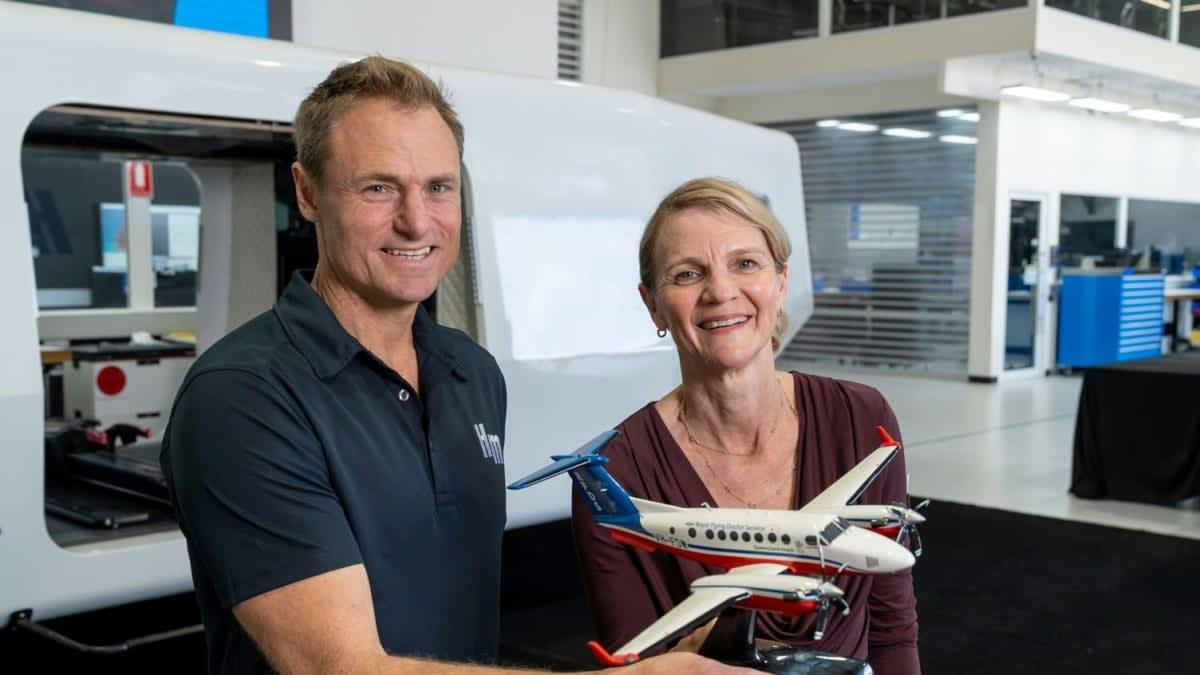
FL Technics Appoints Saulius Bajarunas as CEO FL Technics has announced the appointment of Saulius Bajarunas as its new chief executive officer, effective September 1, 2026. He will succeed Zilvinas Lapinskas, who recently assumed leadership of the company’s parent group, Avia Solutions Group. Bajarunas brings over nine years of leadership experience within the aviation sector, having played a key role in FL Technics’ international expansion and operational development. Leadership and Strategic Vision Bajarunas’s expertise encompasses aircraft maintenance operations, business development, operational excellence, and the management of international teams. In his new role, he will be responsible for overseeing FL Technics’ global operations and strategic growth initiatives. His priorities include enhancing operational performance and delivering sustained value to customers, partners, and employees. Reflecting on his appointment, Bajarunas emphasized the company’s strong reputation as a trusted maintenance, repair, and overhaul (MRO) partner with a significant global presence. He expressed his commitment to maintaining high standards of quality and reliability while supporting customers in navigating the complexities of a dynamic aviation market. Zilvinas Lapinskas, departing CEO, acknowledged the progress made during his tenure, highlighting the company’s strengthened international footprint and robust team. He expressed confidence in Bajarunas’s ability to lead FL Technics through its forthcoming phase of growth and innovation. Challenges and Industry Outlook As Bajarunas assumes leadership, FL Technics faces the challenge of sustaining its momentum amid complex regulatory environments and competitive pressures. Industry analysts are closely monitoring how his leadership will impact the company’s digital transformation, particularly the advancement of its proprietary Sensus MRO platform. This transition may also intensify competition within the MRO sector, as rivals respond to FL Technics’ strategic initiatives and expanding market presence. Bajarunas is expected to prioritize operational excellence and innovation, positioning FL Technics to meet evolving customer demands and adapt to shifting market dynamics in the rapidly changing aviation industry.
How to Become an Air Taxi Pilot

How to Become an Air Taxi Pilot

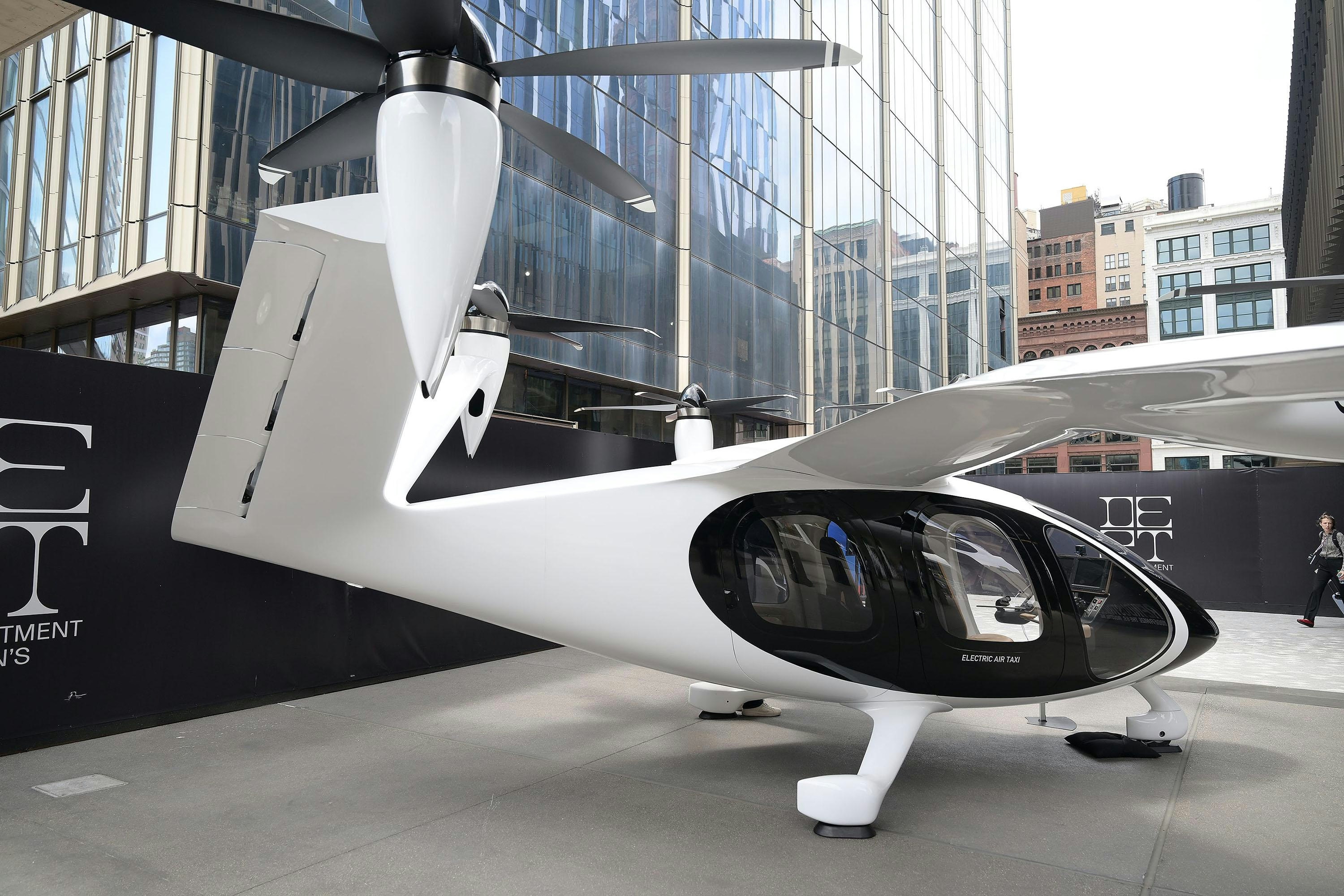
How to Become an Air Taxi Pilot Transitioning from Traditional Aviation to eVTOL Operations Aspiring air taxi pilots are not entering the field as novices. According to Daniyar Uteulin, Head of Investor Relations at Alatau Advance Air Group Ltd., the emerging air taxi industry is primarily retraining already certified aviation professionals to operate electric vertical takeoff and landing (eVTOL) aircraft. Each air taxi manufacturer has developed its own training system, which includes simulators and instructor pilots tailored to specific eVTOL models. Licensed airplane or helicopter pilots undergo additional manufacturer-specific training to qualify for these new aircraft, rather than receiving a universal eVTOL license. Prospective pilots must first obtain a conventional commercial pilot license before enrolling in conversion courses designed for particular eVTOL types. This approach reflects the current state of the industry, where certification remains model-specific rather than standardized across all eVTOL platforms. Human Pilots and Regulatory Challenges Despite the advanced automation integrated into many next-generation air taxis, Kazakhstan’s initial commercial operations will rely exclusively on human pilots. Uteulin emphasized that passenger flights will be conducted only with piloted aircraft, noting that the unmanned vehicle recently demonstrated in Astana served solely for demonstration purposes and to satisfy aviation safety requirements. The transition to air taxi piloting is not without its difficulties. Simulator training has revealed high failure rates as pilots adjust to the unique flight dynamics and technologies of eVTOL aircraft. Additionally, regulatory approval processes remain complex. Kazakhstan is actively developing secondary regulations necessary for advanced air mobility, with the legal framework expected to be finalized ahead of the planned commercial launch of air taxi services by late 2028 or early 2029. Infrastructure and Market Dynamics The development of infrastructure is critical to the success of air taxi operations. The establishment of vertiports, charging stations, and maintenance facilities is essential to ensure safe and efficient service. Safety certification for both aircraft and pilots is under rigorous scrutiny, as authorities and manufacturers collaborate to build public trust in this novel mode of transportation. Market responses to these challenges vary. Some investors and companies, such as Archer Aviation, are expanding their focus beyond air taxis to address regulatory and operational complexities. Meanwhile, competitors are advancing technologically and forming strategic partnerships. For instance, Florida’s collaboration with Eve Air Mobility aims to test electric air taxis and develop the necessary infrastructure, exemplifying broader industry efforts to overcome barriers to commercial deployment. Kazakhstan marked a significant milestone when Astana hosted its first demonstration flight of an electric air taxi, signaling the country’s commitment to advancing its air mobility ambitions. As the sector continues to evolve, becoming an air taxi pilot will demand not only traditional aviation expertise but also adaptability to emerging technologies and regulatory frameworks.
SpaceX Plans Another Attempt for Starship Flight 13 After Engine and Weather Delays

SpaceX Plans Another Attempt for Starship Flight 13 After Engine and Weather Delays

SpaceX Schedules New Attempt for Starship Flight 13 Following Engine and Weather Delays SpaceX is preparing for a renewed effort to launch its Starship rocket after a series of setbacks involving engine malfunctions and adverse weather conditions. The 13th flight test is now slated for a 90-minute window beginning at 17:45 Central Time on Friday, July 24, following a 24-hour delay prompted by poor visibility. Technical Challenges and Preflight Preparations The previous launch attempt on July 16 was aborted moments before liftoff when four of the Super Heavy booster’s Raptor engines failed to ignite. In response, SpaceX CEO Elon Musk confirmed that two of the engines would be removed and replaced. Despite this engine swap, the company chose not to conduct a full static fire test with the new engines on July 22, instead performing what appeared to be a leak check. SpaceX announced on its social media platform X that "additional preflight testing on Super Heavy [is] complete," though it declined to provide further details when questioned. Earlier in the month, a static fire test conducted on July 2 had successfully demonstrated the readiness of Starship’s engines, marking a key milestone ahead of the planned launch. Nevertheless, the recent pattern of last-second shutdowns—whether during static fire tests or launch attempts—has raised concerns about the reliability of the Raptor engines under operational stress. Weather and Mission Objectives Weather conditions have also significantly influenced the launch schedule. SpaceX emphasized that a primary objective of this flight is to obtain clear ground imagery of Starship’s heatshield as it experiences increased dynamic pressure during ascent. The company noted that visibility is expected to be optimal for the Friday launch attempt, underscoring the importance of favorable weather for capturing critical data. Strategic Context and Mission Profile The Starship program faces heightened scrutiny as NASA requires the vehicle to demonstrate orbital capability in preparation for the Artemis III mission scheduled for 2027, which aims to support a lunar landing in 2028. As a publicly traded company, SpaceX is also managing investor expectations amid a recent decline in its stock price below the initial public offering level. Despite these challenges, the broader market has remained resilient, and SpaceX’s Starlink satellite constellation continues to expand rapidly. If the launch proceeds as planned, the mission will last just over an hour. Following liftoff, the Super Heavy booster is expected to execute a controlled splashdown in the Gulf of Mexico. Starship will then use its Raptor engines to enter a suborbital trajectory before descending into the Indian Ocean. Prior to re-entry, SpaceX intends to deploy 20 Starlink V3 satellites, which will accompany the vehicle along its flight path. The mission will also include an attempt to relight a Raptor engine, a critical milestone toward achieving full orbital capability. While competitor responses to SpaceX’s recent challenges remain uncertain, the upcoming launch is widely anticipated as a crucial test of the company’s progress and reliability in advancing its ambitious spaceflight objectives.
GE Aerospace Completes First Hybrid-Electric Flight Above 30,000 Feet

GE Aerospace Completes First Hybrid-Electric Flight Above 30,000 Feet

GE Aerospace Achieves Milestone with First Hybrid-Electric Flight Above 30,000 Feet FARNBOROUGH, England, July 24, 2026 — GE Aerospace concluded the 2026 Farnborough International Airshow by announcing a groundbreaking achievement in hybrid-electric aviation alongside record-breaking engine orders. The company’s latest advancements underscore its strategic commitment to pioneering sustainable technologies and enhancing engine performance in the evolving aerospace sector. Record Engine Orders and Enhanced Durability During the airshow, GE Aerospace, in partnership with CFM International—a joint venture with Safran Aircraft Engines—secured commitments for approximately 1,800 engines. A standout agreement was a memorandum of understanding with IndiGo for over 1,000 LEAP-1A engines, intended to power 510 Airbus A320neo Family aircraft. This deal represents the largest single order for LEAP engines and sets a new record for CFM International. Additional contracts for the GEnx-1B engine were announced, with Philippine Airlines and AerCap selecting the model to equip a combined total of 30 Boeing 787 aircraft. Notably, the GEnx-1B engine has now accumulated more than 50 million flight hours in just over 14 years, marking the fastest milestone achievement for any GE Aerospace commercial widebody engine. In parallel with these commercial successes, GE Aerospace secured certification from both the U.S. Federal Aviation Administration and the European Union Aviation Safety Agency for the LEAP-1B high-pressure turbine durability kit. This innovation is designed to double engine time on wing under demanding operational conditions. The LEAP-1B reverse bleed system also received certification, offering maintenance benefits by reducing the frequency of on-wing fuel nozzle replacements. Pioneering Hybrid-Electric Flight and Technological Innovations A defining moment of the airshow was GE Aerospace’s announcement, made in collaboration with NASA, BETA Technologies, and Boeing, of the first successful hybrid-electric flight above 30,000 feet—altitudes typical of commercial passenger aircraft. This milestone represents a significant advance toward reducing fuel consumption and emissions in commercial aviation, signaling a potential transformation in propulsion technology. Industry experts have welcomed this development, recognizing the promise of hybrid-electric systems to reshape the future of flight. Nonetheless, GE Aerospace faces considerable challenges, including the technical complexities of integrating hybrid-electric propulsion into existing aircraft platforms, navigating stringent regulatory approval processes, and maintaining a competitive edge amid intensified industry investment. Rival engine manufacturers have accelerated their own research efforts and forged new partnerships to advance hybrid-electric propulsion technologies. Further progress was reported by CFM International on its RISE technology demonstration program, which has completed approximately 500 test campaigns and over 3,000 endurance cycles. Airbus and CFM also revealed the livery for the A380 flight test aircraft, which will support Open Fan propulsion testing scheduled for later this decade. GE Aerospace also highlighted its collaboration with BETA Technologies on the MV250, an autonomous hybrid-electric vertical takeoff and landing (VTOL) aircraft designed for military logistics. The MV250 employs a hybrid-electric turbogenerator, extending operational range and enhancing mission flexibility for defense applications. Expanding Defense Partnerships and Capabilities In the defense sector, GE Aerospace signed a memorandum of understanding with Magellan Aerospace to explore sustainment capabilities for the F414 engine in Canada, supporting the Saab Gripen fighter program. Additionally, GE Aerospace and Shield AI announced the successful integration and testing of the Axisymmetric Vectoring Exhaust Nozzle for the X-BAT program, further demonstrating the company’s commitment to advancing next-generation defense technologies. As GE Aerospace continues to invest in innovative propulsion systems and autonomous platforms, the company remains focused on addressing current customer requirements while shaping the future trajectory of aviation in a highly competitive and rapidly evolving industry.
UK Commits £7.3 Million to Advance Zero-Emission Aviation and Flying Taxis

UK Commits £7.3 Million to Advance Zero-Emission Aviation and Flying Taxis

UK Commits £7.3 Million to Advance Zero-Emission Aviation and Flying Taxis The UK government has announced a £7.3 million investment aimed at accelerating the development of zero-emission aviation infrastructure. This funding targets critical areas such as electric charging networks, hydrogen storage, and ground operations necessary for integrating electric and hydrogen-powered aircraft into commercial airports. Unveiled by the Department for Transport, the investment supports eight British companies and forms part of a broader £43 million package designed to foster next-generation aviation technologies, create skilled jobs, and advance the UK’s commitment to achieving net-zero carbon emissions by 2050. Advancing Urban Air Mobility and Flying Taxis A substantial portion of the funding is dedicated to promoting urban air mobility, with a particular focus on the commercialisation of electric “flying taxi” services. Companies including Vertical Aerospace and Beta Technology have been awarded up to £3.2 million to demonstrate the safe operation of electric vertical takeoff and landing (eVTOL) aircraft within standard commercial airport environments. This initiative comes amid rapid growth projections for the global air taxi market, which faces significant operational challenges such as integrating these new aircraft into existing urban infrastructure and ensuring safety in commercial operations. Vertical Aerospace, a prominent player in the eVTOL sector alongside international competitors like Joby Aviation, recently revealed a six-seater aircraft and secured new manufacturing contracts in the UK. The company aims to launch regional passenger services by 2029. While Joby Aviation focuses on real-world testing, Vertical Aerospace benefits from additional government support, underscoring the competitive dynamics within this emerging market. Research conducted by the University of Birmingham highlights the potential advantages of flying taxis, including enhanced regional transport connectivity, reduced travel times, and positive economic impacts on local communities. Expanding Hydrogen Infrastructure and Enhancing Safety Protocols The funding package also supports the expansion of hydrogen infrastructure within the aviation sector. The UK Civil Aviation Authority (CAA), in partnership with industry leaders such as Rolls-Royce, EasyJet, and Exeter Airport, has published new safety and operational guidelines for the integration of hydrogen fuel in aviation. This effort is part of the government-funded Hydrogen Challenge. An additional £2.5 million will be allocated by March 2027 to decarbonise airport ground vehicles and to test hydrogen-powered jet engines for commercial passenger aircraft. Despite these advancements, the transition to zero-emission flights faces considerable challenges. Regulatory barriers and competition from established aviation sectors remain significant obstacles as the UK strives to position itself as a leader in electric and hydrogen-powered flight. Broader Strategy for Net-Zero Aviation The £7.3 million grant is a component of a comprehensive government strategy to transform the aviation industry. This includes the Aerospace Technology Institute (ATI) Programme, which will invest £2.3 billion over the next decade to advance aircraft technologies, including artificial intelligence-driven flight optimisation. Additionally, the Low-Carbon Fuels Fund, with a budget of £219 million, aims to scale up Sustainable Aviation Fuel (SAF) production, targeting £5 billion in economic value and the creation of 15,000 jobs by 2050. The government is also investing £46.5 million to support the development of commercial delivery drones and emergency medical logistics. Transport Secretary Heidi Alexander emphasised the significance of these initiatives, stating, “By powering up electric and hydrogen-powered planes, we’re bringing passengers closer to the flights of the future—while creating skilled jobs, backing UK businesses and spreading economic growth to all four corners of the country.” As the UK intensifies its investment in zero-emission aviation, the sector confronts both promising opportunities and complex challenges in the global effort to redefine air travel for a sustainable future.
THC Expands into Business Jet Market with Bombardier Agreement

THC Expands into Business Jet Market with Bombardier Agreement

THC Expands into Business Jet Market with Bombardier Agreement Strategic Partnership and Fleet Expansion Saudi Arabia’s The Helicopter Company (THC) is set to diversify its aviation portfolio by entering the fixed-wing business jet market through a landmark agreement with Bombardier. Announced at the Farnborough International Airshow, THC has signed a letter of intent for up to 60 Bombardier business jets. The initial firm order includes 12 aircraft, consisting of five Challenger 3500s, five Global 5500s, and two Global 8000s, with options to acquire an additional 48 jets. This development marks THC’s strategic entry into the private charter and aircraft management sector, reflecting the rising demand for business aviation within Saudi Arabia. The kingdom’s expanding tourism industry, increased commercial activity, and the emergence of new destinations are key drivers behind this growth. THC aims to establish a fleet that spans the super-midsize, long-range, and ultra-long-range segments, positioning itself as a significant player in the regional business aviation market. Operational Challenges and Market Dynamics Transitioning into fixed-wing operations presents considerable challenges for THC. The management of business jets entails operational complexities that differ substantially from helicopter services, including distinct regulatory frameworks, maintenance requirements, and crew training standards. Successfully integrating these new capabilities will necessitate substantial investment in both expertise and infrastructure. Industry analysts suggest that THC’s expansion may be met with skepticism from established competitors, who could question the company’s capacity to effectively manage a diverse fleet encompassing both helicopters and business jets. In response, rival operators may intensify their marketing efforts to highlight their experience in business aviation or pursue strategic partnerships to reinforce their market positions. Bombardier emphasized that the agreement reaffirms its long-term commitment to Saudi Arabia and supports the kingdom’s rapidly growing business aviation sector. As THC embarks on this ambitious expansion, it is positioning itself to play a pivotal role in Saudi Arabia’s evolving aviation landscape, while navigating the operational and competitive challenges inherent in the business jet market.
Why Emirates Can Profitably Operate the A380 on Routes Others Serve with Narrowbodies

Why Emirates Can Profitably Operate the A380 on Routes Others Serve with Narrowbodies

Why Emirates Can Profitably Operate the A380 on Routes Others Serve with Narrowbodies The deployment of Emirates’ Airbus A380 on short regional routes may appear counterintuitive in an era when most global airlines are retiring their largest quad-jet aircraft in favor of smaller, more fuel-efficient narrowbodies. While many legacy carriers have shifted towards single-aisle jets for such sectors, Emirates continues to rely heavily on the superjumbo, operating it on routes where competitors typically use narrowbody aircraft. This strategy, far from being a financial misstep, is a fundamental element of Emirates’ highly optimized network and commercial framework. Maximizing Capacity and Efficiency Unlike traditional carriers that treat short routes as isolated, point-to-point markets dependent primarily on local demand, Emirates employs a sophisticated hub-and-spoke system. In this model, short regional flights serve as crucial feeders, channeling high-yield passengers into its extensive intercontinental network. This integration allows Emirates to extract significant commercial value from short sectors, particularly by deploying an aircraft considerably larger than those used by other airlines on similar routes. From an operational perspective, airline planners must balance the overall cost of operating a flight against the cost per seat. Narrowbody jets such as the Airbus A321 are generally low-risk and easier to fill, making them the preferred choice for many carriers. However, when an A380 is fully loaded, the economics shift dramatically. Despite consuming approximately 15.4 tons of fuel per hour—compared to around 2.4 tons for a narrowbody—the A380’s exceptional seating capacity enables Emirates to distribute fixed costs, including landing fees and crew expenses, across more than 500 passengers. When demand is robust and flights maintain high load factors, the cost per seat mile on the A380 can fall below that of smaller aircraft, delivering unparalleled economies of scale. Emirates’ ability to sustain high capacity utilization is central to this model. Even in the face of external challenges such as geopolitical tensions and global disruptions, the airline has restored its operations to 92% of pre-pandemic levels. This resilience is mirrored in its strong financial performance and continued investment in premium services on key routes. The recent introduction of the A380 on the Dubai-Delhi sector, alongside the deployment of the A350 on Dubai-Kolkata, highlights Emirates’ strategic focus on high-demand, commercially significant markets. Strategic Fleet Choices and Network Design The profitability of operating widebody aircraft on short-haul routes also depends heavily on network structure. Emirates’ four-class A380 configuration, which includes multiple premium cabins, is designed to serve both regional travelers and long-haul connecting passengers, thereby maximizing revenue potential. Dubai’s role as a global hub amplifies this effect by capturing substantial “sixth freedom” traffic—passengers traveling between continents via Dubai—enabling Emirates to fill large aircraft on routes where other airlines might struggle to do so. Emirates’ fleet strategy aligns closely with its operational priorities. The airline’s recent decision to forgo the delayed Boeing 777X in favor of Airbus aircraft for future fleet renewal underscores a deliberate commitment to models that support its high-capacity, premium service approach. In an industry where most carriers are downsizing and favoring smaller aircraft, Emirates’ distinctive combination of network design, fleet strategy, and rigorous focus on capacity utilization allows it to profitably operate the A380 on routes typically served by narrowbodies. This approach not only differentiates Emirates but also challenges conventional assumptions about modern airline economics.
Safran and Lufthansa Technik Agree on Landing Gear Support Contract

Safran and Lufthansa Technik Agree on Landing Gear Support Contract

Safran and Lufthansa Technik Sign Decade-Long Landing Gear Support Agreement Safran Landing Systems and Lufthansa Technik have formalized a ten-year support and services agreement (SSA) focused on landing gear and hydraulic equipment for Airbus A320 family, A330, A340, and A350 aircraft. Announced at the Farnborough International Airshow, the contract is intended to strengthen Lufthansa Technik’s global maintenance, repair, and overhaul (MRO) operations by providing original equipment manufacturer (OEM) support. This includes certified spare parts, engineering and technical assistance, and access to the latest maintenance documentation. Collaboration to Enhance Maintenance and Reliability The partnership will see both companies working closely to optimize maintenance planning, component repairs, and operational reliability across Lufthansa Technik’s worldwide network. A key element of the agreement is the expansion of A350 landing gear MRO capabilities at Lufthansa Technik Landing Gear Services UK in London. Simultaneously, OEM support for A320 family, A330, and A340 landing gear maintenance will continue at Lufthansa Technik’s Hamburg facility, ensuring consistent service quality across multiple aircraft types. Industry Challenges and Competitive Landscape This collaboration emerges amid significant challenges facing the aerospace sector. A historic backlog in aircraft orders and maintenance demands is placing considerable strain on resources, raising concerns about the ability of providers like Safran and Lufthansa Technik to maintain high service standards and avoid delays. These pressures are compounded by increased scrutiny from airlines and regulatory authorities, particularly following incidents such as the Lufthansa 787-9 nose-gear collapse, which have highlighted the critical importance of safety and reliability in landing gear operations. Market analysts suggest that the agreement may intensify competition within the MRO sector, with major rivals including GE Aerospace and Rolls-Royce expected to increase efforts to capture market share. As Safran and Lufthansa Technik deepen their collaboration, industry observers will be closely monitoring how the partners address operational challenges while upholding stringent safety standards amid rising demand. Despite these headwinds, both companies stress that the agreement is designed to enhance operational reliability and efficiency for airlines worldwide by leveraging OEM expertise and a comprehensive global support network to meet the evolving needs of the aviation industry.
line