
Orquestre insights de IA em ações

Tendências
Categories
CANAVIA Aviation Academy Orders New Tecnam Aircraft
CANAVIA Aviation Academy Expands Fleet with New Tecnam Aircraft
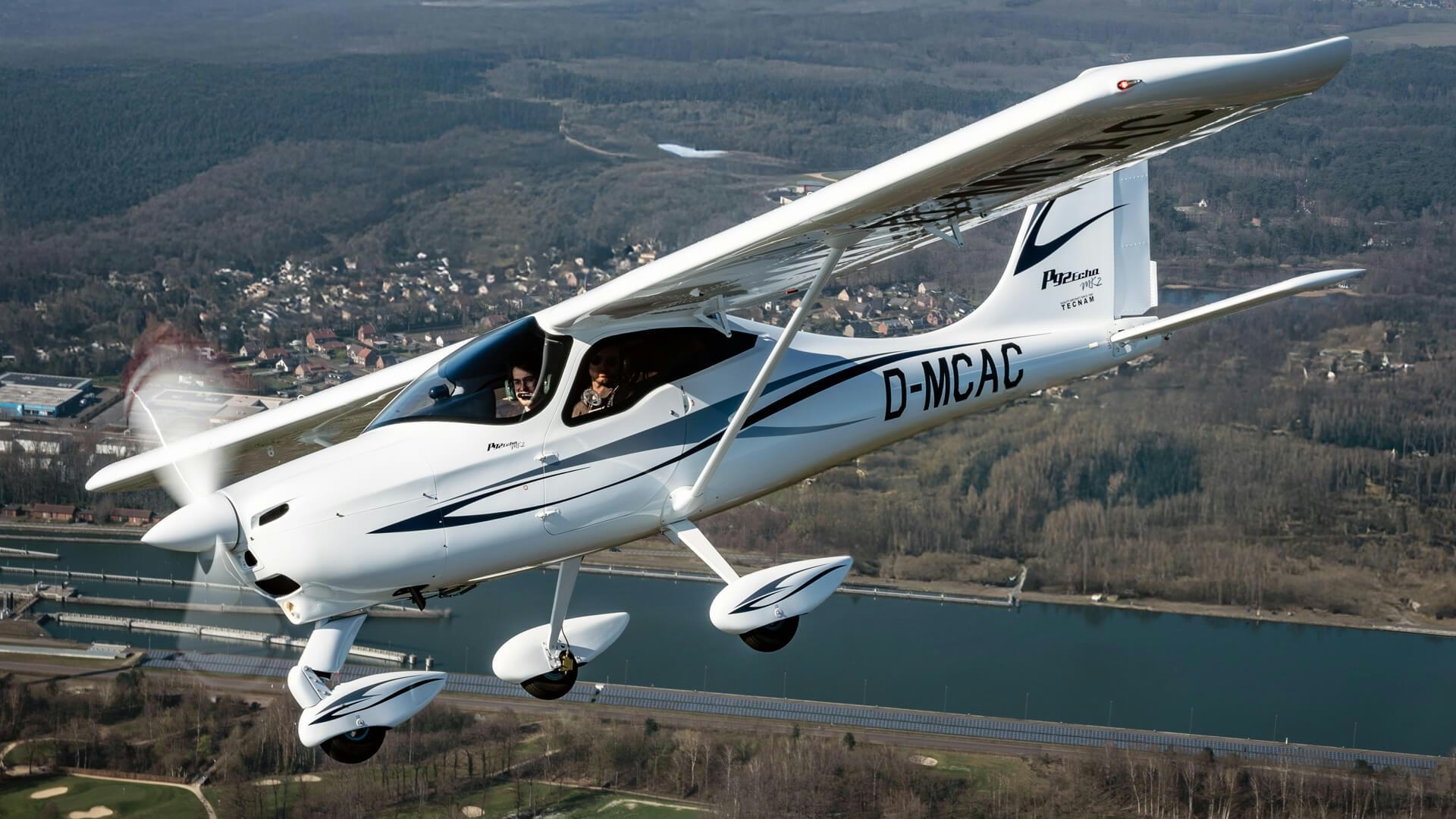
Tecnam has confirmed a substantial fleet expansion for CANAVIA Aviation Academy, located in Spain’s Canary Islands. The academy has placed an order for a P2006T NG twin-engine (MEP) and a P2008JC NG single-engine (SEP) aircraft, both slated for delivery in 2027. These new additions will complement two previously ordered P2008JC NG aircraft expected by the end of 2026, increasing CANAVIA’s total fleet to 16 aircraft within the next 18 months.
Modernizing Training Capabilities
Mario Pons, CEO of CANAVIA Aviation Academy, emphasized the critical role of fleet modernization in meeting the demands of advanced airline pilot training. He stated, “We provide not only ATPL training to get the licenses and ratings, but also to prepare our students as future airline pilots, requiring top-tier technical skills to be developed.” Pons highlighted that the new Tecnam aircraft, equipped with fully integrated glass cockpits, will be central to achieving this objective. The expanded fleet will support the academy’s continuous growth since its inception 17 years ago, reinforcing its position in the pilot training sector.
CANAVIA benefits from a strategic location, operating from a private aerodrome with consistently favorable weather conditions. This advantage, combined with Tecnam’s reputation for dispatch reliability, enables the academy to achieve over 1,000 flight hours per aircraft annually. The high utilization rate is further maintained by CANAVIA’s in-house Approved Maintenance Service Center, which ensures the fleet remains in optimal condition.
Walter Da Costa, Tecnam’s Chief Sales Officer, praised CANAVIA as “a textbook example of a highly successful, high-volume flight academy,” noting the demanding operational environment. He remarked, “Flying an aircraft for over 1,000 hours a year demands incredible robustness and reliability. We are honored that Mario and his team continue to trust Tecnam’s Next Generation fleet—specifically the seamless transition between the P2008JC NG and the P2006T NG—to train their growing roster of 100 ATPL students.”
Navigating a Competitive and Regulatory Landscape
CANAVIA’s decision to expand its fleet with Tecnam aircraft comes amid intensifying competition in the training aircraft market. Manufacturers such as Aura Aero and Piaggio Aero are introducing innovative models that challenge Tecnam’s market position. This competitive environment may drive increased demand for Tecnam’s training aircraft but also invites potential pushback from rivals offering advanced features or more cost-effective alternatives. Industry analysts anticipate that competitors will respond with aggressive marketing and pricing strategies to maintain their market share.
In addition to market competition, integrating new aircraft into CANAVIA’s training programs presents logistical and regulatory challenges. The academy must ensure a smooth incorporation of the new models while maintaining compliance with evolving aviation standards.
Despite these challenges, CANAVIA’s investment in Tecnam’s Next Generation aircraft underscores its commitment to delivering high-quality pilot training and adapting to the evolving needs of the aviation industry.

Bangladesh Launches Initiative to Become Regional Aviation Hub
Russia Transports PD-8 Engine to India for International Certification

Kyrgyzstan to Adopt EMPIC GmbH Software for Flight Safety Oversight

Why Hawaiian Airlines Is Waiting Until 2028 To Add A Premium Economy Cabin To Its Airbus A330 Fleet

Engine Fault Causes Royal Navy Helicopter Crash Fatality

Joby Aviation Begins Texas Air Taxi Test Flights Amid Stock Decline

Iberia Receives Full Approval for Airbus A350 Heavy Maintenance

NetJets to Construct Terminal and Hangar at Dallas Love Field

Using AI in Aircraft Purchases

CIAM Unveils RPD-150T Engine to Replace Rotax 150 hp Model
