
Orquestre insights de IA em ações

Tendências
Categories
China Certifies Pilotless Air Taxi for Export; Sri Lanka First Buyer
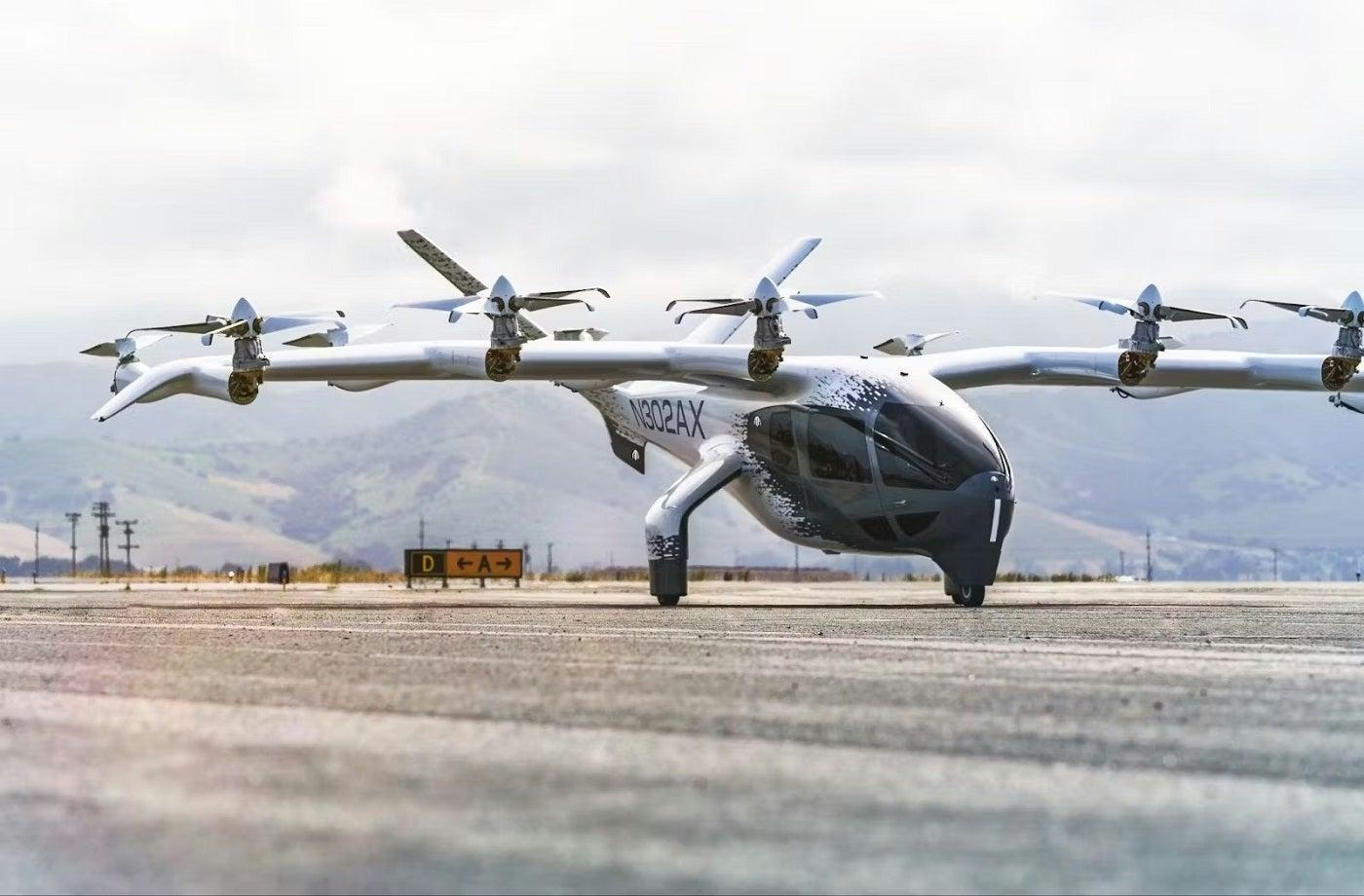
China Certifies Pilotless Air Taxi for Export; Sri Lanka Becomes First Buyer
EHang Holdings Limited (Nasdaq: EH) has announced a major advancement in the global deployment of autonomous air taxis with the launch of its Global Fast Track Program. Unveiled on August 19, this structured, four-phase initiative is designed to assist foreign civil aviation authorities in evaluating and authorizing pilotless electric vertical take-off and landing (eVTOL) operations. Sri Lanka’s Civil Aviation Authority and Ministry of Ports and Civil Aviation have become the program’s first adopters, targeting provisional commercialization within four months, subject to the completion of all necessary safety, technical, and regulatory approvals.
EHang’s approach extends beyond the mere sale of aircraft; it capitalizes on the company’s extensive regulatory experience across 23 countries, offering this expertise as an exportable service. For regulators hesitant to develop new frameworks for autonomous aviation from the ground up, EHang provides a streamlined alternative: validate its aircraft, which already holds certification from China’s Civil Aviation Administration (CAAC), thereby significantly reducing the regulatory burden.
The Only Certified Pilotless eVTOL Stack
At the core of EHang’s offering is the EH216-S, the world’s first pilotless, human-carrying eVTOL to receive a comprehensive certification package from the CAAC. This includes the type certificate, production certificate, and standard airworthiness certificate. In March 2025, two EHang operators were granted China’s first Air Operator Certificates for pilotless passenger eVTOL commercial service, initiating ticketed flights in Guangzhou and Hefei. This full certification suite—covering type, production, airworthiness, and commercial operating authority—constitutes the regulatory foundation that EHang now proposes to export to other countries.
EHang contends that by validating an already-certified aircraft for local airspace, rather than conducting a full regulatory assessment from scratch, foreign authorities can reduce the timeline from initial inquiry to operational trials from several years to mere months. Hu Huazhi, EHang’s Founder, Chairman, and CEO, described the program as a “systemic advance” that transforms regulatory exploration into tangible progress.
Four-Phase Global Fast Track Program
The Global Fast Track Program condenses years of regulatory engagement into a four-stage process. The first phase involves establishing a regulatory workflow and validation pathway tailored to the host country’s aviation framework. The second phase focuses on site selection, infrastructure development, and deployment of operational systems. The third phase consists of validation flights conducted within a designated sandbox zone under agreed safety standards. The final phase is the commercial launch, contingent upon receiving operational approval.
This framework draws on practical experience from early sandbox projects in Thailand, Qatar, and Switzerland. Notably, Thailand’s Advanced Air Mobility Sandbox, launched in October 2025 in Bangkok, serves as the closest operational precedent, although it has yet to secure full commercial authorization.
Opportunities and Challenges Ahead
China’s certification of a pilotless air taxi for export, with Sri Lanka as the inaugural buyer, represents a significant milestone for the autonomous aviation industry. However, it also presents considerable challenges. Regulatory hurdles remain substantial in international markets, as each country’s aviation authority must rigorously assess and validate the technology within its own operational context. Additionally, EHang faces competition from established aviation companies that may accelerate their autonomous flight initiatives or pursue strategic partnerships in response.
The market is expected to witness increased interest from other potential buyers alongside intensified scrutiny from global aviation regulators. As EHang’s regulatory model gains momentum, competitors are likely to expedite the development of comparable technologies, heightening the race to commercialize pilotless air taxis on a global scale.
Sri Lanka’s adoption positions the country as a regional pioneer in autonomous air mobility, with plans to deploy the technology along tourism routes. The forthcoming months will be critical in determining whether EHang’s regulatory framework can fulfill its promise of rapid, safe, and scalable deployment beyond China’s borders.

Etihad Airways Suspends Airbus A380 Flights on Key Route

Aditya Birla Group Seeks Approval for Aircraft Leasing in GIFT City

Qatar Airways Highlights Innovation and Connectivity at Arabian Travel Market 2026

Hong Kong's Five-Year Plan Includes Andrew Fan's Aircraft Parts Processing Hub Proposal

ACIA Aero Leasing Delivers ATR72-600 to Air Nostrum

RTX Appoints Jill Albertelli as Head of Pratt & Whitney

TAT Technologies Joins Beyond Aero Hydrogen Aircraft Program

AURAK Study Highlights Barriers to Air Taxi Adoption in Emerging Economies

Xiamen Air Selects Altitude for 787 Maintenance at Heathrow

Etihad and Swissport Extend Global Partnership
