
Orquestre insights de IA em ações

Tendências
Categories
China Claims New Jet Engine Can Hit Mach 6 Without Changing Modes
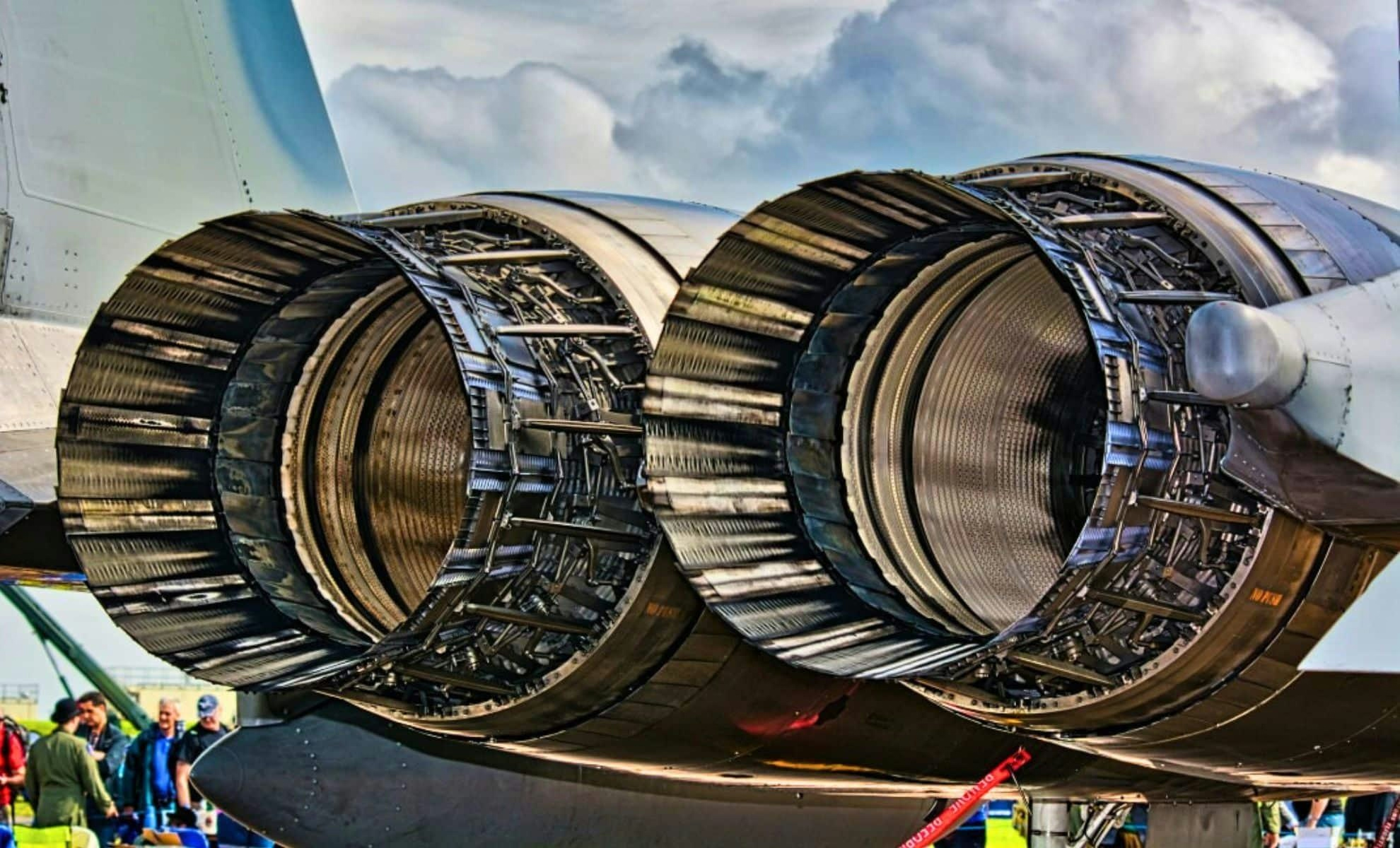
China Unveils Prototype Jet Engine Capable of Sustained Mach 6 Flight
China has announced the development of a jet engine prototype that reportedly can propel an aircraft from takeoff to speeds approaching Mach 6 without the need for switching propulsion modes. This represents a significant technological advancement in jet engine design, which traditionally has faced substantial limitations at extreme velocities.
Historical Context and Technological Breakthrough
Jet engine technology, with origins tracing back to before World War II, has evolved considerably but remains constrained by fundamental challenges at hypersonic speeds. Conventional turbojet engines lose efficiency and reliability as aircraft approach supersonic velocities. For example, the SR-71 Blackbird, capable of exceeding Mach 3, employed a complex hybrid propulsion system that combined turbojet and ramjet modes. The Blackbird’s engine operated as a turbojet up to around Mach 2 before transitioning to ramjet mode to sustain higher speeds. While effective, this approach required intricate engineering and added weight due to the necessity of mode switching.
China’s new engine prototype claims to overcome these limitations by maintaining continuous operation across the entire speed range up to Mach 6, nearly double the speed of the SR-71, without switching modes. According to reports from the South China Morning Post, the engine has been “experimentally verified,” although detailed information regarding testing protocols and operational readiness remains scarce.
Strategic and Geopolitical Implications
The development of this engine could have profound implications beyond aerospace engineering. China’s progress in hypersonic propulsion technology emerges amid escalating geopolitical tensions, particularly with the United States. This advancement is likely to intensify scrutiny of aerospace supply chains and may affect major industry players. For instance, Boeing’s delivery schedules and order book in the Asia-Pacific region could face increased uncertainty as competition intensifies and regulatory pressures grow.
Investor sentiment in the aerospace sector is also being influenced by these developments. Global Engine Group Holding Limited, a company operating within this space, is currently under investigation by the Rosen Law Firm for potential securities claims, highlighting broader market concerns about transparency and risk amid rapid technological change.
China’s strategic control over rare earth elements, essential for advanced engine manufacturing, further complicates the global aerospace landscape. Its dominance in rare earth supply chains could constrain rival firms, potentially affecting global production and innovation. Moreover, China’s recent progress in hypersonic weapons, supported by a new scramjet simulation tool, is expected to provoke strategic responses from other nations, intensifying the race for technological superiority in both civilian and military aviation sectors.
While still at the prototype stage, China’s new jet engine signals a potential revolution in high-speed flight. The global aerospace industry, already navigating complex geopolitical and market dynamics, will be closely monitoring China’s efforts to translate this technological claim into operational capability.

Etihad Airways Suspends Airbus A380 Flights on Key Route

Aditya Birla Group Seeks Approval for Aircraft Leasing in GIFT City

Qatar Airways Highlights Innovation and Connectivity at Arabian Travel Market 2026

Hong Kong's Five-Year Plan Includes Andrew Fan's Aircraft Parts Processing Hub Proposal

ACIA Aero Leasing Delivers ATR72-600 to Air Nostrum

RTX Appoints Jill Albertelli as Head of Pratt & Whitney

TAT Technologies Joins Beyond Aero Hydrogen Aircraft Program

AURAK Study Highlights Barriers to Air Taxi Adoption in Emerging Economies

Xiamen Air Selects Altitude for 787 Maintenance at Heathrow

Etihad and Swissport Extend Global Partnership
