
Orquestre insights de IA em ações

Tendências
Categories
China Develops eVTOL Capable of Serving as Air Taxi, Firefighter, and Cargo Hauler
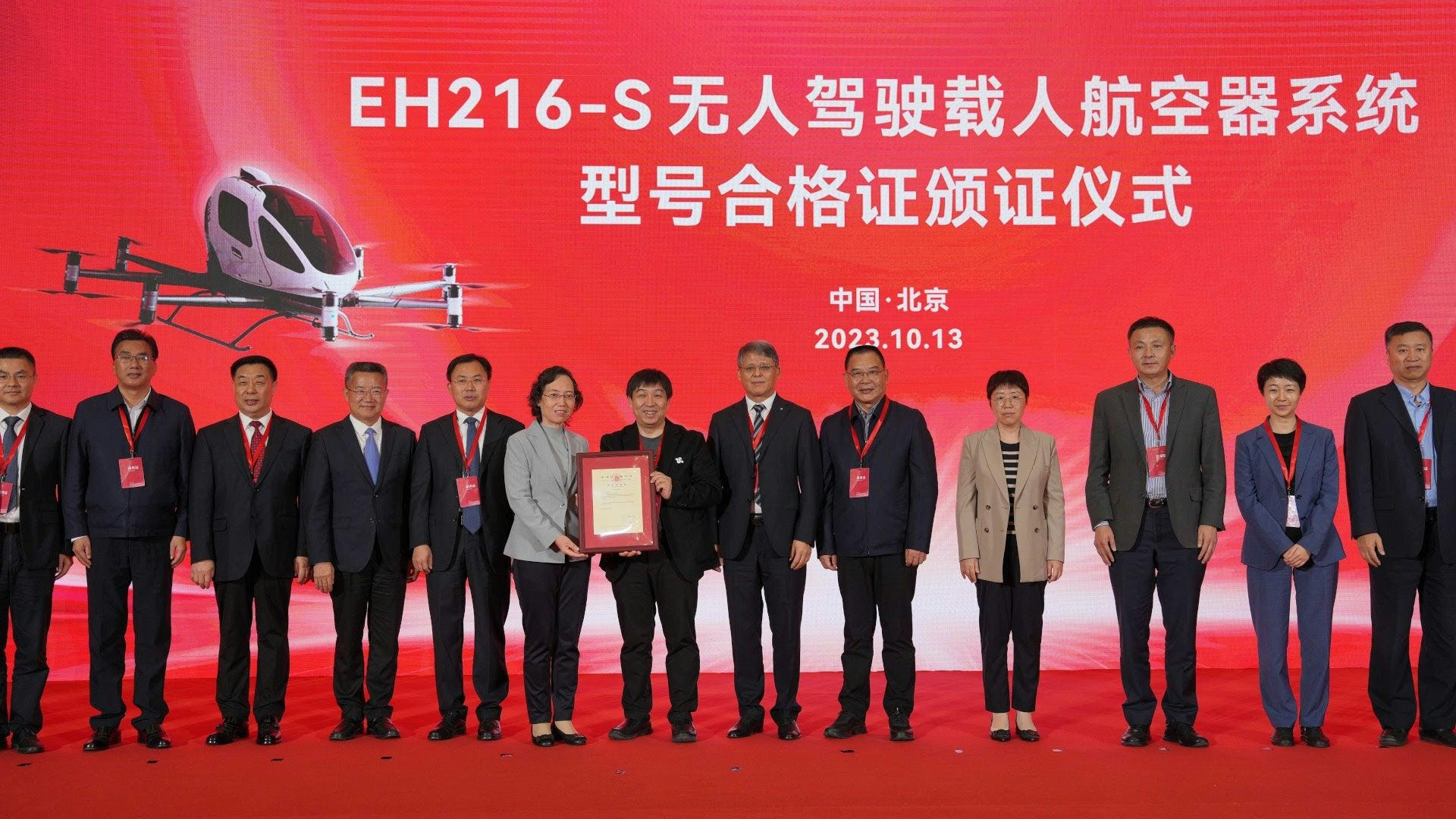
China Develops eVTOL Capable of Serving as Air Taxi, Firefighter, and Cargo Hauler
A Versatile Platform for Multiple Missions
AutoFlight, a Chinese aviation startup, is pioneering a modular approach to electric vertical takeoff and landing (eVTOL) aircraft by developing a versatile 2-ton airframe designed to support a range of applications. This foundational platform underpins a family of aircraft variants, including the Prosperity passenger air taxi, a cargo hauler, a firefighting model, and a larger 5-ton heavy-lift version named Matrix. By employing a single adaptable design, AutoFlight aims to streamline production and certification processes, enabling rapid deployment across diverse operational roles without the need to redesign the core structure.
The Prosperity air taxi distinguishes itself through an innovative wing configuration. Rather than a conventional single long wing, it features two shorter, staggered sets of wings—one positioned above and the other below the fuselage—each equipped with tilting propellers. This diamond-shaped layout significantly reduces the aircraft’s ground footprint, a critical advantage for urban environments where space constraints limit landing pad size, particularly on rooftops. The teardrop-shaped cabin, nestled beneath the wings, contributes to a cohesive and aerodynamic profile, emphasizing the integration of components into a unified vehicle rather than a collection of disparate parts.
Expanding Capabilities Across Sectors
The modular wing-and-boom design serves as the backbone for AutoFlight’s expanding product line. By replacing the passenger cabin with a cargo pod, the aircraft transforms into the CarryAll, which has already completed certified delivery flights. Further modifications, such as reinforcing the frame and installing tanks for water or fire retardant, produce a firefighting variant capable of rapid deployment in areas inaccessible to conventional fire trucks. Scaling the platform upward results in the Matrix, a 5-ton heavy-lift model tailored for industrial applications. Despite their differing roles, all variants share fundamental aerodynamic principles and supply chains, facilitating streamlined certification and manufacturing.
This strategy aligns closely with China’s government initiative to develop the “low-altitude economy,” a sector encompassing passenger air taxis alongside logistics, industrial, and consumer aerial services. The broad scope of this initiative reflects the country’s vast geography and the practical challenges of integrating eVTOL technology into existing infrastructure. While safety regulations, infrastructure development, and economic viability continue to pose challenges for urban passenger air taxi services, industry experts anticipate that logistics and industrial applications will achieve faster growth.
Market Response and Industry Implications
Market reception to AutoFlight’s approach has been measured but optimistic. The company recently secured a contract to supply 50 aircraft to Kazakhstan’s AAAG, underscoring the appeal of a flexible platform capable of fulfilling multiple roles. For governments and operators in regions with diverse needs and limited infrastructure, a single certified airframe adaptable to passenger transport, firefighting, or cargo delivery presents a practical and cost-effective solution.
Competitors are closely monitoring these developments. Major players such as Volkswagen Group China are increasing investments in local research and software capabilities to remain competitive in a sector still defining its parameters. While many eVTOL startups focus on certifying individual models, AutoFlight’s multi-role platform approach may establish a new benchmark for efficiency and adaptability within the emerging low-altitude economy.

Etihad Airways Suspends Airbus A380 Flights on Key Route

Aditya Birla Group Seeks Approval for Aircraft Leasing in GIFT City

Qatar Airways Highlights Innovation and Connectivity at Arabian Travel Market 2026

Hong Kong's Five-Year Plan Includes Andrew Fan's Aircraft Parts Processing Hub Proposal

ACIA Aero Leasing Delivers ATR72-600 to Air Nostrum

RTX Appoints Jill Albertelli as Head of Pratt & Whitney

TAT Technologies Joins Beyond Aero Hydrogen Aircraft Program

AURAK Study Highlights Barriers to Air Taxi Adoption in Emerging Economies

Xiamen Air Selects Altitude for 787 Maintenance at Heathrow

Etihad and Swissport Extend Global Partnership
