
Orquestre insights de IA em ações

Tendências
Categories
Delta CEO Ed Bastian Avoids Term ‘Artificial Intelligence,’ Citing Public Fear
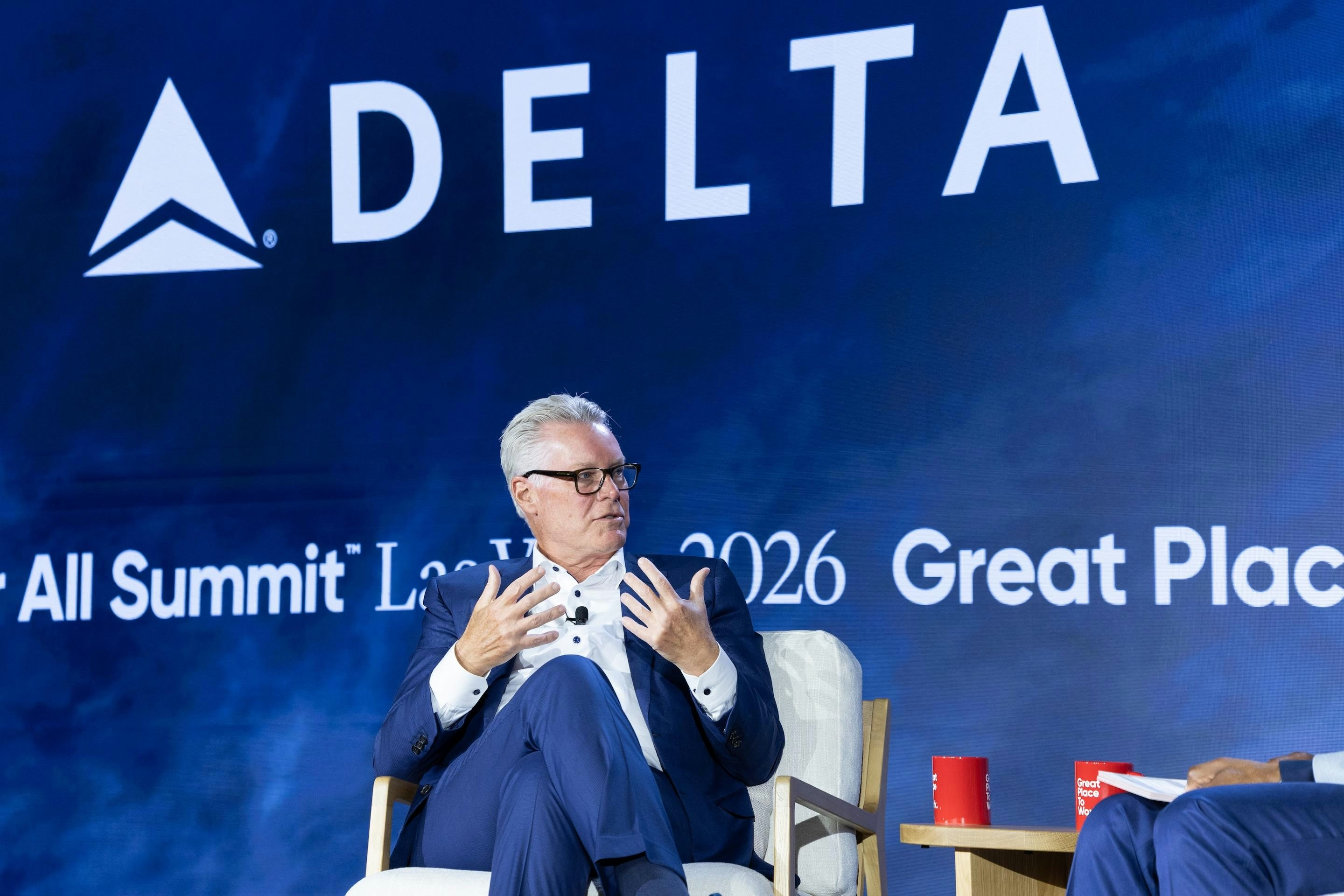
Delta CEO Ed Bastian Avoids Term ‘Artificial Intelligence,’ Citing Public Fear
Reframing the Technology Debate
Delta Air Lines CEO Ed Bastian has deliberately avoided using the term “artificial intelligence” to describe the company’s technological advancements, citing concerns over public fear and misunderstanding. Speaking at the Great Place to Work’s For All Summit in Las Vegas, Bastian expressed that the phrase “artificial intelligence” tends to provoke unnecessary anxiety. “I think it’s a mistake to call anything artificial,” he remarked, adding that the term can alarm people by suggesting a threat to their jobs or livelihoods.
Instead, Bastian advocates for the use of “augmented intelligence,” a term he believes better captures the technology’s purpose as a supportive tool rather than a replacement for human workers. He emphasized that Delta’s approach is to empower employees, enabling them to perform their roles more effectively. “I want our employees to see it as a tool to enable them to do their jobs better, not to replace them, but to enhance them,” Bastian said. He reassured that the airline has no intention of using automation to reduce headcount, but rather to redeploy staff toward improving customer service as routine tasks become automated.
Industry Context and Challenges
Bastian’s cautious stance on AI terminology comes amid growing scrutiny of the airline industry’s adoption of new technologies and their impact on employment. He acknowledged that job roles and skills will continue to evolve, as they have historically, but warned that the rapid pace of AI development combined with media hype can exacerbate fears unnecessarily. Highlighting Delta’s experience, he noted that automation has allowed employees to transition from traditional roles such as gate agents and reservation desk staff to more customer-facing positions, enhancing the overall travel experience.
However, this reluctance to embrace the AI label may pose challenges for Delta in a competitive landscape where innovation is closely tied to investor and consumer confidence. Industry observers suggest that avoiding the term “artificial intelligence” could lead to skepticism about Delta’s technological capabilities, especially as rival airlines aggressively promote their AI initiatives to demonstrate operational efficiency and market leadership.
Navigating Market Volatility and Industry Restructuring
Despite these technological debates, Bastian reported that Delta’s business fundamentals remain robust. He described demand as “pretty strong” and noted that customers continue to travel despite the pressures of rising fuel costs. “Fuel prices can double in 30 days, as they just have. Wars can break out. Geopolitical shocks ripple immediately into airline demand and costs,” he said, underscoring the volatile environment airlines must manage.
Bastian also addressed broader industry challenges, warning that carriers focused solely on low pricing and unable to cover their cost of capital may face significant restructuring. He referenced the recent difficulties faced by Spirit Airlines and the long history of once-prominent carriers that have disappeared, suggesting that survival will require strategic reorganization.
As Delta advances its technological investments while carefully managing public perception, Bastian’s approach highlights the complex balance airlines must maintain between embracing innovation, preserving workforce stability, and sustaining market confidence.

Etihad Airways Suspends Airbus A380 Flights on Key Route

Aditya Birla Group Seeks Approval for Aircraft Leasing in GIFT City

Qatar Airways Highlights Innovation and Connectivity at Arabian Travel Market 2026

Hong Kong's Five-Year Plan Includes Andrew Fan's Aircraft Parts Processing Hub Proposal

ACIA Aero Leasing Delivers ATR72-600 to Air Nostrum

RTX Appoints Jill Albertelli as Head of Pratt & Whitney

TAT Technologies Joins Beyond Aero Hydrogen Aircraft Program

AURAK Study Highlights Barriers to Air Taxi Adoption in Emerging Economies

Xiamen Air Selects Altitude for 787 Maintenance at Heathrow

Etihad and Swissport Extend Global Partnership
