
Orquestre insights de IA em ações

Tendências
Categories
Delta Places First U.S. Order for Airbus A350-1000 Widebody Jets
Delta Places First U.S. Order for Airbus A350-1000 Widebody Jets
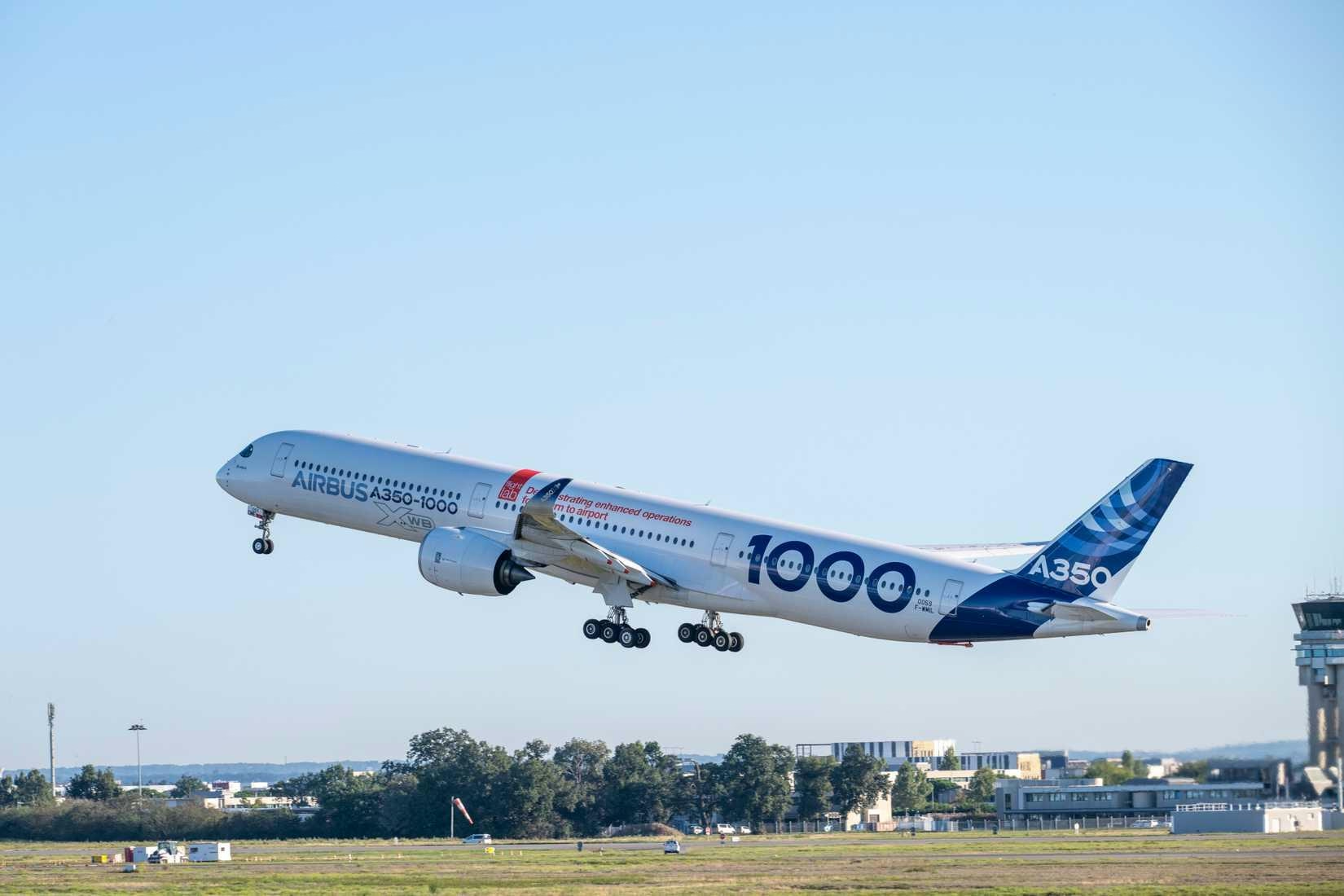
Delta Air Lines has confirmed a firm order for 20 Airbus A350-1000 aircraft, marking the first occasion a U.S. carrier will operate the largest variant of the A350 family. The Atlanta-based airline has also secured options for an additional 20 jets, reflecting its strategic confidence in expanding long-haul international operations and its ambition to capture premium passenger segments on high-demand intercontinental routes, particularly across the Pacific and to Europe.
Strategic Fleet Expansion and Premium Focus
This acquisition represents a deliberate shift by Delta toward premium-focused operations. The A350-1000, Airbus’s flagship widebody model, offers significant advantages in fuel efficiency, advanced cabin technology, and increased passenger capacity compared to competing aircraft. Delta’s investment signals a broader trend among U.S. carriers to prioritize premium revenue generation by enhancing cabin experiences on ultra-long-haul routes, where flight durations often exceed 12 hours.
Delta plans to outfit its A350-1000s with industry-leading business and premium economy cabins, aiming to optimize per-seat profitability on international corridors. The airline intends to leverage these aircraft by 2026 to compete more aggressively with global rivals—many of whom already operate A350 variants—especially on Pacific routes where demand for business travel supports investments in premium seating. The fleet modernization strategy emphasizes both passenger comfort and operational efficiency, incorporating advanced avionics, improved cabin pressure systems, and noise-reduction technologies. Additionally, Delta plans to retrofit select widebodies with premium bedding, enhanced dining options, and upgraded connectivity, supporting elevated ticket pricing and premium passenger yields while maintaining competitive unit costs.
Technical Specifications and Market Positioning
The Airbus A350-1000 distinguishes itself through its technical specifications and operational benefits. It can accommodate up to 440 passengers in standard mixed-class configurations, though Delta is expected to reduce capacity to prioritize comfort. With a range exceeding 8,000 nautical miles, the aircraft enables nonstop service on transpacific and extended European routes. Its airframe, composed of 53% advanced materials, reduces structural weight and cuts fuel consumption by approximately 25% compared to older widebody models. Powered by Rolls-Royce Trent XWB-97 engines delivering 105,000 pounds of thrust, the aircraft consumes 20% less fuel than previous-generation engines. Enhanced cabin pressurization and humidity controls further improve passenger well-being on long-haul flights, aligning with Delta’s premium pricing strategy.
Delta’s A350-1000s will primarily serve high-value international markets, particularly across the Pacific, where premium capacity is a key driver of revenue growth. The airline’s extensive network connects U.S. West Coast hubs to major Asia-Pacific destinations such as Tokyo, Seoul, Shanghai, and Sydney, all of which demonstrate strong demand for premium cabins.
Competitive Landscape and Industry Implications
Delta’s order arrives amid intensifying competition in the widebody market. Other major North American carriers, including Air Canada, have also placed significant orders for the A350-1000, underscoring a broader industry trend toward fleet modernization and premium service. This rising demand for Airbus widebodies may prompt competitors like Boeing to enhance their own offerings to maintain market share. Furthermore, broader market dynamics—including elevated fuel prices and fluctuating airfares—could influence the long-term operational viability and profitability of such large-scale aircraft acquisitions.
By committing to the A350-1000, Delta positions itself at the forefront of U.S. international aviation. However, the evolving competitive and economic landscape will ultimately determine the impact of this landmark fleet investment.

Etihad Airways Suspends Airbus A380 Flights on Key Route

Aditya Birla Group Seeks Approval for Aircraft Leasing in GIFT City

Qatar Airways Highlights Innovation and Connectivity at Arabian Travel Market 2026

Hong Kong's Five-Year Plan Includes Andrew Fan's Aircraft Parts Processing Hub Proposal

ACIA Aero Leasing Delivers ATR72-600 to Air Nostrum

RTX Appoints Jill Albertelli as Head of Pratt & Whitney

TAT Technologies Joins Beyond Aero Hydrogen Aircraft Program

AURAK Study Highlights Barriers to Air Taxi Adoption in Emerging Economies

Xiamen Air Selects Altitude for 787 Maintenance at Heathrow

Etihad and Swissport Extend Global Partnership
