
Orquestre insights de IA em ações

Tendências
Categories
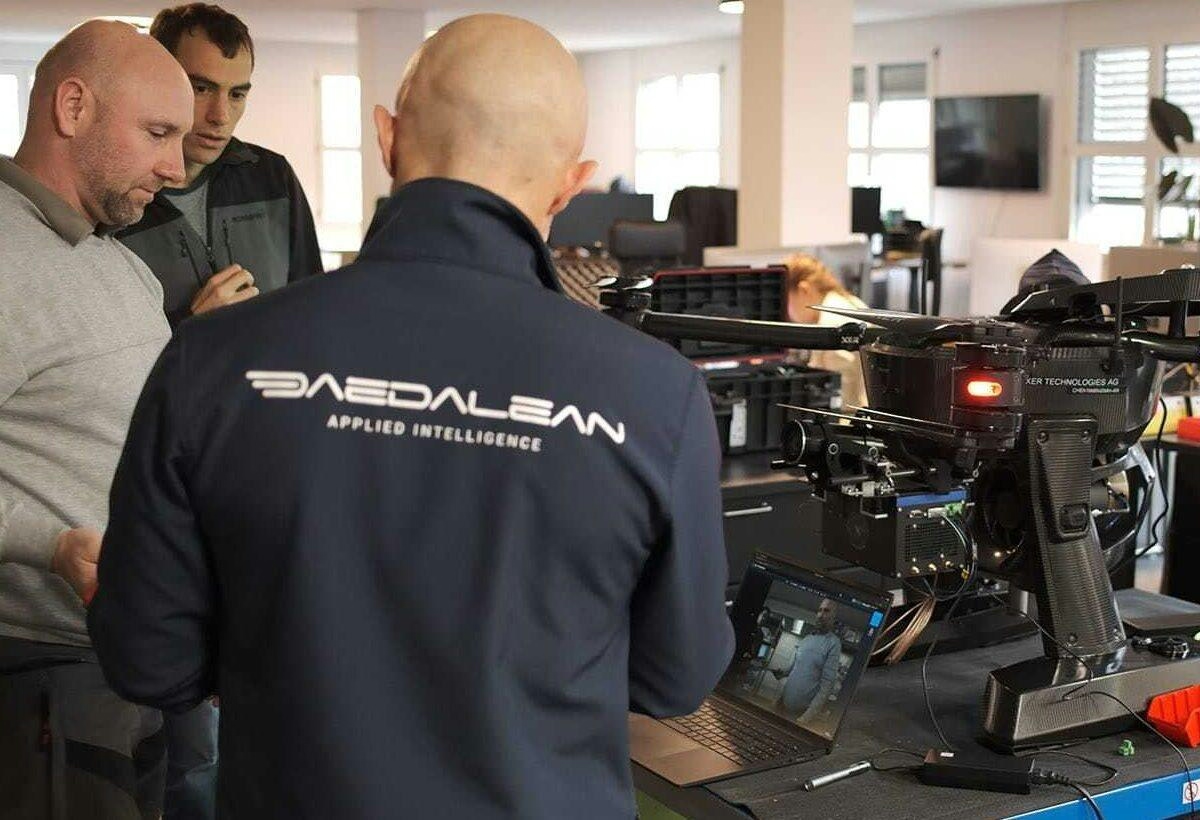
Destinus Acquires Daedalean to Enhance AI in Flight Systems
Destinus Acquires Daedalean to Enhance AI in Flight Systems
The unmanned aerial systems (UAS) industry is experiencing rapid economic and technological transformation, driven by a growing emphasis on integrating advanced artificial intelligence into flight operations. In a notable development within this evolving landscape, Destinus has announced its acquisition of Daedalean, a prominent developer of AI-driven avionics. This strategic move aims to strengthen Destinus’ capabilities in autonomous flight systems, positioning the company at the forefront of innovation in the sector.
Strategic Context and Industry Implications
The acquisition arrives ahead of the 19th annual UAS Summit & Expo, scheduled for October 14-15, 2025, at the Alerus Center in Grand Forks, North Dakota. This event, held in a region often referred to as the "Silicon Valley of Drones," will showcase the latest advancements in UAV technology and highlight the expanding commercial applications of unmanned aerial vehicles. Destinus’ purchase of Daedalean underscores the increasing significance of AI in aviation, as industry players strive to improve safety, efficiency, and autonomy across both commercial and military domains.
Despite the promising prospects, integrating Daedalean’s sophisticated AI technology into Destinus’ existing flight systems presents considerable challenges. Regulatory scrutiny is expected to intensify as authorities evaluate the safety and reliability of AI-enabled flight operations. Moreover, the technical complexities involved in merging the two companies’ platforms require meticulous management to ensure a seamless transition and effective adoption of the new technology.
Market and Competitive Reactions
Market responses to the acquisition have been varied. While some analysts regard the move as a strategic advancement toward leadership in AI-powered flight, others remain cautious about the high costs and uncertainties inherent in such integrations. Investors are closely monitoring Destinus’ approach to overcoming these obstacles, particularly given the substantial resources necessary for successful implementation.
The acquisition is also likely to prompt competitive responses within the industry. Rival firms may accelerate their own research and development initiatives, pursue similar acquisitions of AI technology, or seek strategic partnerships to enhance their flight systems. This trend aligns with broader patterns of aggressive investment in AI capabilities across sectors, exemplified by recent transactions such as SAP’s acquisition of SmartRecruiters and Google’s purchase of Windsurf Technology.
As the UAS industry continues to evolve, the Destinus-Daedalean deal marks a significant milestone in the pursuit of smarter, more autonomous flight systems. The integration’s progress and outcomes will be closely observed by industry stakeholders, regulators, and investors alike, as they seek to understand the future trajectory of artificial intelligence in aviation.

Adobe Warns AI-Driven Trip Planning Challenges Travel Sites
The Global Parts Shortage
GE Aerospace's Robust Capital Position Fuels Higher Shareholder Returns
AI Advances Support Sustainable Aviation and Efficient Flight Paths
Airbus Faces Freighter Deadline Amid Weak Order Growth and Stagnant Shares

Integrated CNS System for Low-Altitude Aircraft
Chinese Robots Debut in Aviation and Military Roles at WRC 2026
Kenya Airways Aims to Resume Operations of Grounded Fleet by Early 2027
Avora Aviation Completes A320 Sale-Leaseback Agreement with FTAI
StandardAero Expands Bombardier Global MRO Services at Van Nuys Facility
