
Orquestre insights de IA em ações

Tendências
Categories
Engine Failure Forces Alaska Airlines 737 MAX 9 to Divert to O’Hare
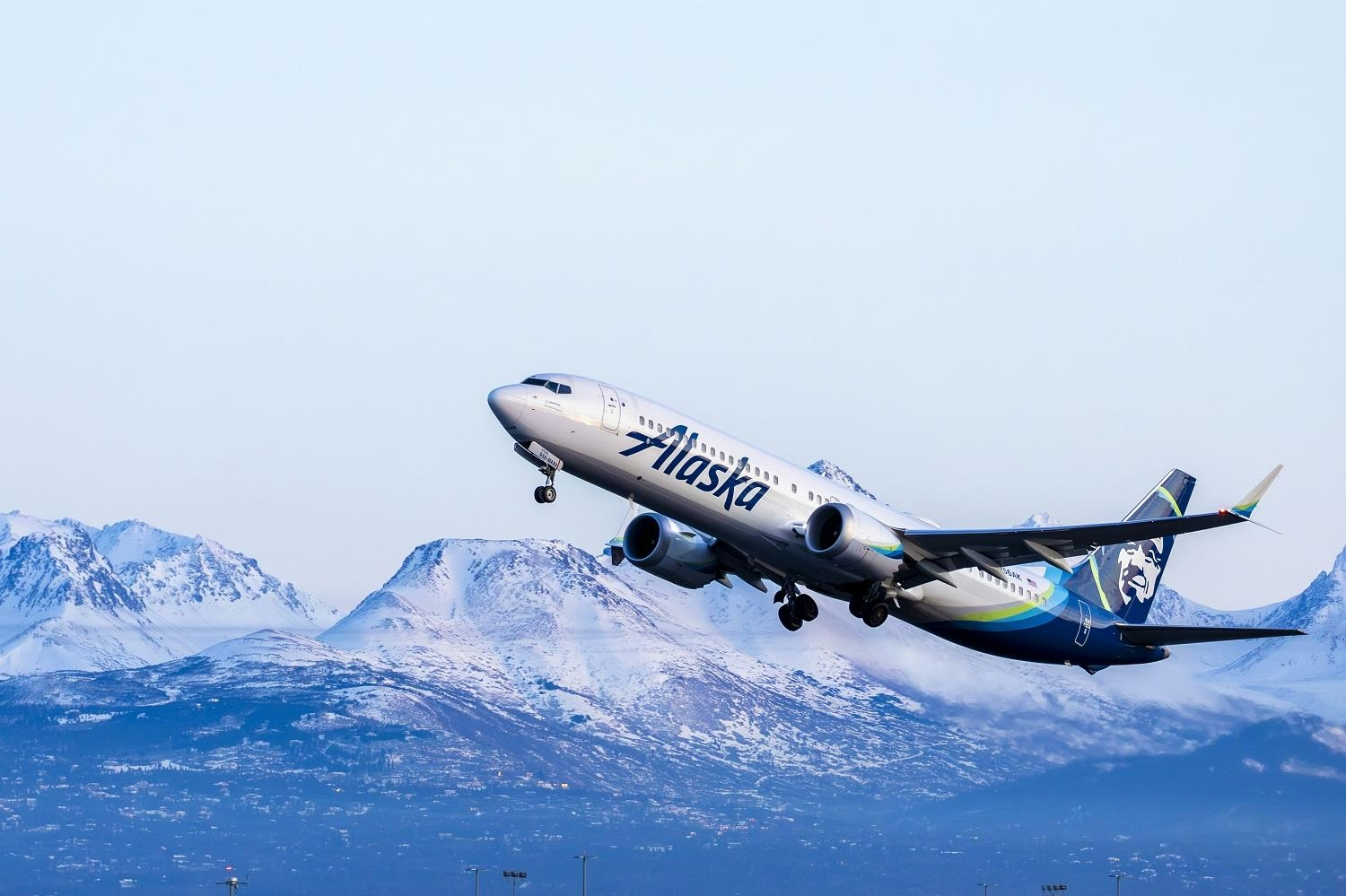
Engine Failure Forces Alaska Airlines 737 MAX 9 to Divert to O’Hare
On August 16, 2026, an Alaska Airlines Boeing 737 MAX 9 was compelled to divert to Chicago O’Hare International Airport following an engine shutdown prompted by a low oil-pressure warning. Flight AS274, operating from Cleveland to Seattle, encountered the issue approximately 40 miles southeast of Chicago while cruising at 34,000 feet. The aircraft, registered as N978AK, safely landed on O’Hare’s Runway 27C roughly 35 minutes after the engine was shut down.
Incident Details and Crew Response
The incident occurred as the aircraft maintained flight level 340. The flight crew detected a low oil-pressure alert in the right-hand CFM International LEAP engine and responded by shutting down the affected engine. Oil pressure is a critical parameter in turbofan engines, as it ensures proper lubrication of moving parts and heat dissipation. A significant drop in oil pressure can indicate a potentially serious malfunction, necessitating immediate engine shutdown to prevent further damage.
The crew’s actions underscore the rigorous safety protocols embedded in commercial aviation operations. The 737 MAX 9, equipped with two engines, is engineered to sustain safe flight and controlled diversion even after losing one engine. There were no signs of an uncontrolled emergency or difficulty in maintaining altitude and course. The pilots adhered to established procedures by diverting to the nearest suitable airport.
Diversion to Chicago O’Hare and Aftermath
Given the aircraft’s proximity to Chicago—approximately 40 miles at the time of the alert—O’Hare was the logical diversion point. Aviation protocols prioritize landing at the closest appropriate airport following an engine failure, regardless of the aircraft’s ability to continue on a single engine. O’Hare’s comprehensive maintenance facilities and airline support infrastructure enabled immediate inspection and investigation of the oil-pressure anomaly.
The official incident report did not identify a specific mechanical cause for the low oil pressure, emphasizing that the engine shutdown was a precautionary measure triggered by the warning rather than confirmation of a component failure.
Broader Context and Industry Implications
This event occurs amid ongoing scrutiny of Boeing’s 737 MAX series, which has faced regulatory reviews and public concern following previous incidents. Such developments can influence market dynamics, as seen in past fluctuations of Boeing’s stock following FAA certification milestones, including the notable surge after the 737 MAX-7’s approval. Competitors may leverage these moments to highlight their own safety records and reliability, aiming to capture market share amid renewed apprehension.
Regulatory authorities may also undertake further investigations, potentially impacting Boeing’s production schedules and delivery commitments. As inquiries into this latest incident continue, both Alaska Airlines and Boeing confront intensified pressure to affirm the safety and dependability of their aircraft.
A replacement aircraft was dispatched to complete the journey to Seattle, while the affected 737 MAX 9 remained at O’Hare for thorough inspection and maintenance.

Etihad Airways Suspends Airbus A380 Flights on Key Route

Aditya Birla Group Seeks Approval for Aircraft Leasing in GIFT City

Qatar Airways Highlights Innovation and Connectivity at Arabian Travel Market 2026

Hong Kong's Five-Year Plan Includes Andrew Fan's Aircraft Parts Processing Hub Proposal

ACIA Aero Leasing Delivers ATR72-600 to Air Nostrum

RTX Appoints Jill Albertelli as Head of Pratt & Whitney

TAT Technologies Joins Beyond Aero Hydrogen Aircraft Program

AURAK Study Highlights Barriers to Air Taxi Adoption in Emerging Economies

Xiamen Air Selects Altitude for 787 Maintenance at Heathrow

Etihad and Swissport Extend Global Partnership
