
Orquestre insights de IA em ações

Tendências
Categories
Europe Faces Potential Jet Fuel Shortage in Coming Weeks
Europe Faces Potential Jet Fuel Shortage in Coming Weeks
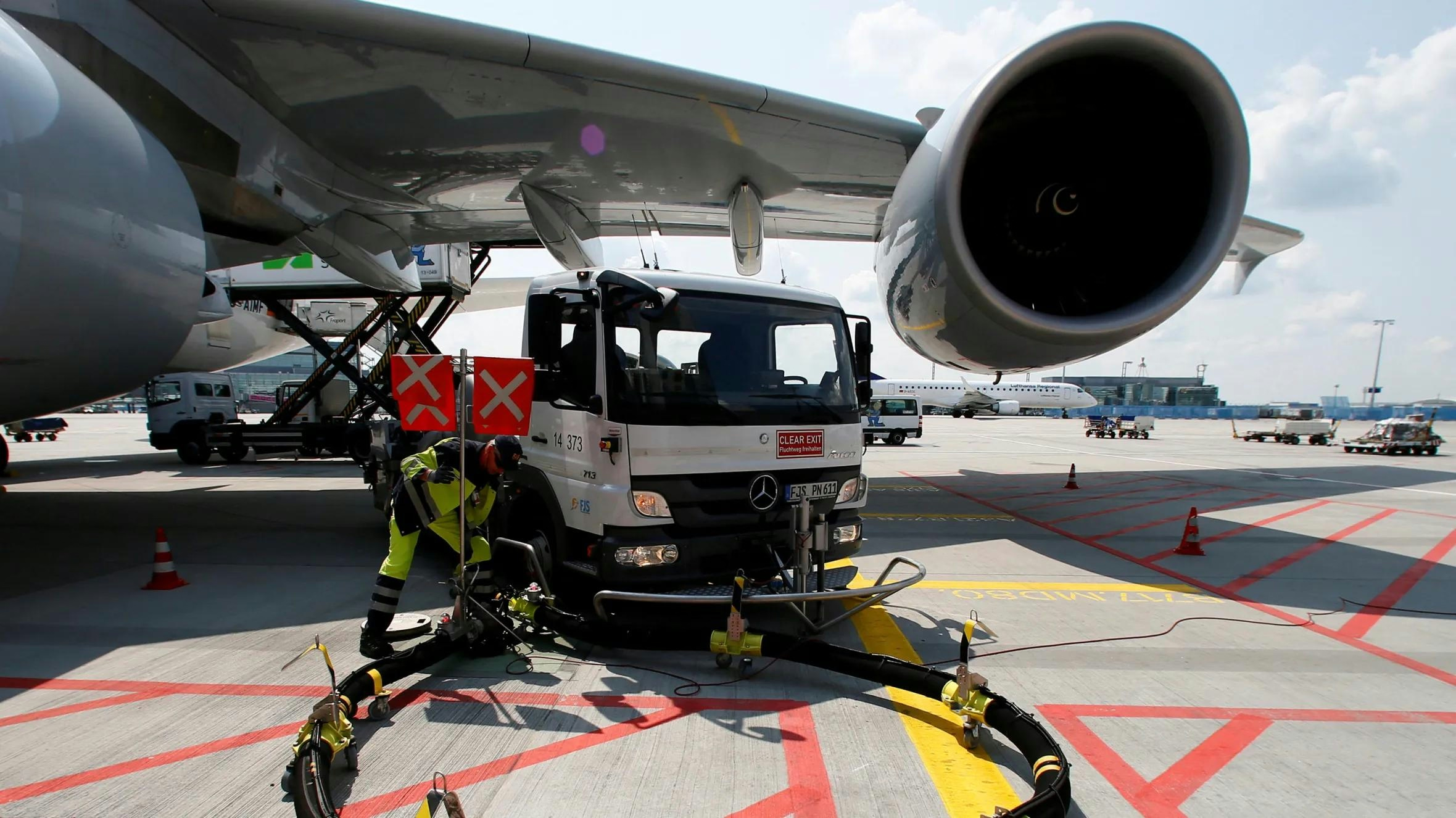
Europe is confronting the prospect of a significant jet fuel shortage in the near term, triggered by the closure of the Strait of Hormuz, a vital conduit in the continent’s aviation supply chain. This disruption is exerting unprecedented pressure across the entire network, affecting Gulf refineries, maritime shipping routes, European terminals, pipelines, and regional airports, all coinciding with the peak summer travel period.
Disruption of Supply Chains and Rising Prices
Approximately half of Europe’s jet fuel imports originate from the Persian Gulf, with 40 to 50 percent of these shipments passing through the Strait of Hormuz. Since the onset of the conflict and the effective closure of the strait, no jet fuel cargoes destined for Europe have transited this route. This has compelled traders to deplete existing reserves and urgently seek alternative supply channels from other regions. The resulting supply constraints have propelled European jet fuel prices to unprecedented levels, currently about 120 percent higher than pre-conflict prices. This sharp increase reflects tangible physical shortages rather than speculative market behavior.
Industry Warnings and Operational Challenges
Leading industry organizations, including the International Air Transport Association (IATA) and Airports Council International (ACI), have issued warnings regarding the escalating risk of jet fuel shortages. Their concerns are heightened by the surge in demand associated with the summer holiday season. Several airports have already reported precautionary flight cancellations, while airlines are vigilantly monitoring their fuel inventories to mitigate potential disruptions.
Although some analysts believe that Europe’s existing jet fuel stocks may suffice for the immediate future, there is widespread consensus on the critical need to reopen the Strait of Hormuz to avert systemic shortages. The prevailing uncertainty has compelled airlines, airports, and fuel suppliers to rapidly adjust their logistics and contingency strategies.
As the situation develops, the aviation sector faces a pivotal challenge in maintaining operational continuity. The coming weeks will be crucial in determining whether Europe can secure adequate jet fuel supplies to sustain flight operations or if travelers will encounter further disruptions during the height of the summer travel season.

Etihad Airways Suspends Airbus A380 Flights on Key Route

Aditya Birla Group Seeks Approval for Aircraft Leasing in GIFT City

Qatar Airways Highlights Innovation and Connectivity at Arabian Travel Market 2026

Hong Kong's Five-Year Plan Includes Andrew Fan's Aircraft Parts Processing Hub Proposal

ACIA Aero Leasing Delivers ATR72-600 to Air Nostrum

RTX Appoints Jill Albertelli as Head of Pratt & Whitney

TAT Technologies Joins Beyond Aero Hydrogen Aircraft Program

AURAK Study Highlights Barriers to Air Taxi Adoption in Emerging Economies

Xiamen Air Selects Altitude for 787 Maintenance at Heathrow

Etihad and Swissport Extend Global Partnership
