Imagem

Orquestre insights de IA em ações

Entre na lista de espera da AeroGenie hoje mesmo!

Tendências

Categories

Evolito Submits E800 Electric Engine for CAA Certification
July 17, 2026By ePlane AI
Evolito Submits E800 Electric Engine for CAA Certification
0
0
Evolito
E800 Electric Engine
CAA Certification

Evolito Submits E800 Electric Engine for CAA Certification

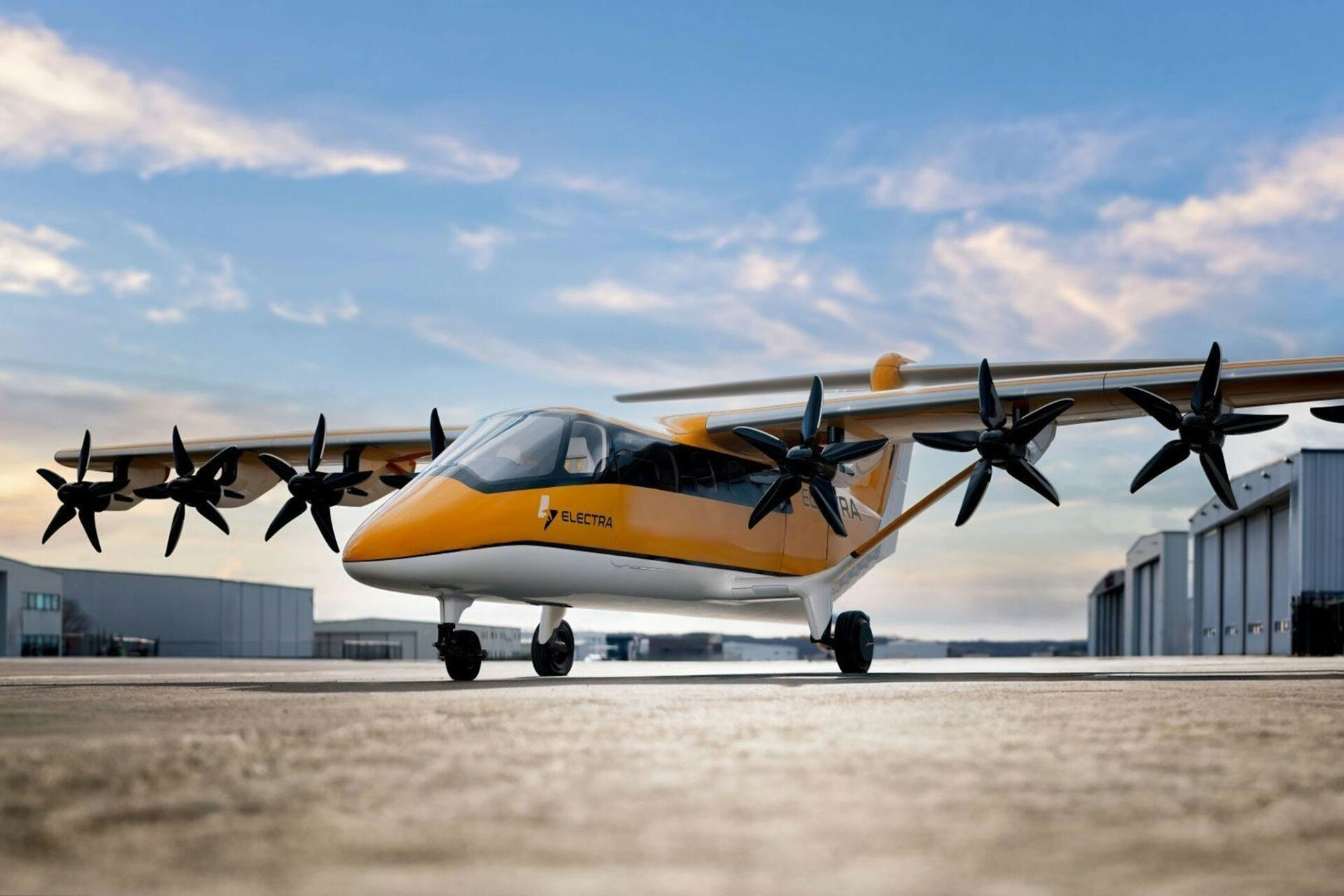
UK-based aerospace developer Evolito has formally submitted its E800 electric engine for type certification with the Civil Aviation Authority (CAA), marking a pivotal advancement in the certification of electric propulsion systems for aviation. The E800, which serves as the power unit for Electra’s EL9 Ultra Short hybrid-electric aircraft, represents the inaugural model in Evolito’s E800 Series and is anticipated to establish the certification framework for future electric aircraft propulsion technologies.

A Milestone in Electric Propulsion Certification

The submission, announced on July 17, 2026, signifies a critical transition for Evolito from development to the production of certified aerospace products. Dr Chris Harris, CEO of Evolito, described the application as more than a regulatory formality, emphasizing it as a testament to the maturity of the company’s products, processes, and organizational capabilities. Over recent years, Evolito has invested heavily in engineering expertise, certification processes, and industrial infrastructure to support the commercialization of electric propulsion systems.

The certification effort is being pursued under SC-E19, the special condition that governs electric and hybrid propulsion systems. The E800 engine incorporates proprietary axial-flux motor technology, integrated control systems, advanced cooling solutions, and a propeller-load-bearing architecture, all designed specifically for aerospace applications and scalable volume production.

Industry and Government Perspectives

Industry experts have underscored the broader implications of Evolito’s certification submission. Dr Richard Shepherd, Head of Airworthiness and former Rolls-Royce Airworthiness lead, remarked that certification is the critical juncture where aerospace innovation transitions into operational reality. He noted that Evolito’s application signals a shift from conceptual and demonstration phases toward certifiable, scalable, and commercially viable electric propulsion technologies.

UK Industry Minister Chris McDonald also lauded the achievement, highlighting its significance for the national aerospace sector. He stated that Evolito’s progress exemplifies how the UK is transforming world-class innovation into next-generation flight technologies, reinforcing the country’s position at the forefront of advanced aerospace development.

Challenges Ahead in a Competitive Market

Despite this milestone, Evolito faces considerable challenges as it advances through certification and market entry. Regulatory frameworks for electric and hybrid propulsion remain in flux, presenting ongoing compliance complexities. The company also contends with competition from established manufacturers such as BYD and Citroen, who are actively developing their own electric propulsion solutions. Additionally, market affordability remains a critical concern. Although recent trends indicate a potential rebound in electric vehicle adoption driven by reduced range anxiety, cost barriers persist, particularly in the United States, which could affect the broader acceptance of electric aviation technologies.

Electra selected Evolito in October 2025 to supply the electric propulsion units (EPUs) for its EL9 aircraft. As Evolito progresses with the certification process, industry observers will closely monitor how the company navigates regulatory, competitive, and market dynamics within the rapidly evolving electric aviation sector.

More news
The Future of U.S. Airpower Depends on Dual-Use Technology

The Future of U.S. Airpower Depends on Dual-Use Technology

The Future of U.S. Airpower Hinges on Dual-Use Technology Challenges to Air Dominance and the Role of Dual-Use Innovation As the United States confronts increasing challenges to its air superiority, industry leaders from JetZero, Joby Aviation, and Mach Industries have called for an accelerated embrace of dual-use aerospace technologies—innovations that serve both commercial and defense sectors. Speaking at the AIAA AVIATION Forum 2026 in San Diego, panelists underscored that the future of U.S. airpower depends not only on technological breakthroughs but also on reimagining the systems and incentives that enable these advances to be rapidly deployed in operational settings. Roberto “Bert” Guerrero, Deputy Assistant Secretary of the Air Force for Operational Energy, Safety and Occupational Health, moderated the discussion and reframed operational energy as a critical combat multiplier. Guerrero emphasized that efficiency should be viewed beyond cost savings, highlighting its potential to extend aircraft range, increase payload capacity, and enhance what he termed “lethality per gallon.” He cited a recent Air Force fuel-efficiency initiative that saved $40 million in a single year, with a portion of those savings reinvested into air bases to foster further innovation. Despite these gains, Guerrero and other panelists warned that incremental improvements will not suffice. “For a 21st-century fight, we need 24th-century aircraft,” Guerrero asserted, advocating for new acquisition models that incentivize risk-taking and accelerate development timelines. Nathan Diller, President and Chief Strategy Officer at Mach Industries, echoed this urgency, recalling congressional debates focused on translating emerging technologies—such as artificial intelligence, digital engineering, and automated assembly—into deployable hardware more swiftly. Innovation Decline and Market Shifts Toward Dual-Use Solutions The panelists collectively identified dual-use technology as the current center of gravity for U.S. airpower. Tom O’Leary, CEO and co-founder of JetZero, highlighted a troubling decline in aerospace innovation. He noted that while the U.S. produced dozens of new commercial jets in the three decades preceding the Boeing-McDonnell Douglas merger, only one large aircraft has been developed since. O’Leary pointed out that fundamental principles of flight have remained largely unchanged even as the complexity of threats has increased, underscoring the urgent need for renewed innovation. This pivot toward dual-use solutions is also reflected in evolving market dynamics. Dean Donovan, managing director and co-founder of DiamondStream Partners, explained that his investment firm, which initially focused on commercial aerospace, now invests almost exclusively in dual-use companies. The defense technology venture capital market remained robust in the second quarter of 2026, with significant funding directed toward firms operating beyond traditional defense sectors. This trend highlights the growing reliance on dual-use innovation across multiple industries. Recent Air Force contracts awarded to General Atomics and Anduril for drone wingman production further illustrate the strategic importance of dual-use companies in advancing U.S. airpower capabilities. However, the competitive landscape is becoming more complex. In response to U.S. sanctions restricting Chinese exports to American defense firms, China has imposed retaliatory sanctions on ten U.S. military-related companies. This assertive move, aimed at protecting China’s national security interests, could reshape global market dynamics for dual-use technologies. Breaking Barriers Between Commercial and Defense Innovation As the United States seeks to maintain its technological edge, panelists agreed that success will depend on dismantling barriers between commercial and defense innovation. Building faster, more flexible pathways from prototype to production is essential to ensuring that emerging technologies can be effectively integrated into military operations. The future of U.S. airpower, they concluded, will rely heavily on the ability to leverage dual-use technologies and foster collaboration across sectors to meet the demands of modern warfare.
Air China Orders 55 Airbus Jets to Modernize Fleet

Air China Orders 55 Airbus Jets to Modernize Fleet

Air China Orders 55 Airbus Jets to Modernize Fleet Air China has placed a significant order for 55 aircraft from Airbus, consisting of 15 widebody A350-900 jets for its own operations and 40 narrowbody A320neo planes for its subsidiary, Shenzhen Airlines. Announced on Friday, this deal represents a major milestone in the airline’s fleet modernization efforts and reinforces Airbus’s foothold in the world’s second-largest aviation market. Details of the Order and Delivery Schedule The transaction carries a combined catalogue value of approximately US$12.4 billion, though the final price is expected to be lower due to customary discounts applied to large-scale purchases. The agreement remains subject to approval by Air China’s shareholders and relevant state authorities. Deliveries of the A350-900 aircraft are planned between 2030 and 2032, while the A320neo jets will be delivered to Shenzhen Airlines from 2029 through 2032. These new-generation aircraft are anticipated to enhance fleet optimization and route network efficiency for both carriers, while reducing operational costs and improving fuel consumption. Air China emphasized that the A350-900 and A320neo models offer superior fuel efficiency and lower operating expenses compared to previous aircraft, aligning with the airline’s goals for carbon peaking and carbon neutrality. This commitment reflects a broader industry trend within Chinese aviation toward decarbonization and environmental sustainability. Strategic Implications and Industry Context While the order signals Air China’s dedication to modernization and sustainability, it also presents several challenges. The airline must manage the substantial financial investment, ensure the timely delivery and integration of the new jets, and adapt operationally to the introduction of more fuel-efficient aircraft. Successfully addressing these factors will be essential to achieving the projected cost savings and environmental benefits. Market response to the announcement has been predominantly positive, with analysts suggesting that the move could bolster investor confidence in Air China’s long-term strategic vision. The deal is also likely to trigger competitive responses from other major Chinese carriers such as China Southern and Hainan Airlines, who are expected to continue placing significant orders with both Airbus and Boeing to maintain fleet efficiency and capacity. This purchase comes amid robust growth in China’s aviation sector and heightened regulatory emphasis on sustainability. The addition of the A350-900 and A320neo aircraft positions Air China and Shenzhen Airlines to better meet evolving market demands while supporting national and industry-wide environmental objectives. As the aviation landscape in China continues to evolve, Air China’s investment underscores the critical role of fleet renewal and sustainability in shaping the future of the industry.
Air China and Shenzhen Airlines Order 55 Airbus Jets in $12.4 Billion Deal

Air China and Shenzhen Airlines Order 55 Airbus Jets in $12.4 Billion Deal

Air China and Shenzhen Airlines Place $12.4 Billion Order for 55 Airbus Jets Air China, together with its subsidiary Shenzhen Airlines, has finalized a significant joint order for 55 Airbus aircraft valued at $12.4 billion. This acquisition is projected to increase the Air China group’s overall capacity by approximately 7.1%, while Shenzhen Airlines is expected to see a 4.3% boost, based on combined seat and cargo volume forecasts for the end of 2025. The new jets will serve a dual purpose: replacing older aircraft within the fleets and supporting expansion efforts. Strategic Implications and Financial Considerations Air China has emphasized that the addition of these aircraft will enable the optimization of its route network and improve operational efficiency. Nonetheless, the magnitude of this purchase presents considerable financial challenges. The substantial investment demands significant capital outlay, which could affect the airlines’ balance sheets. Market responses have been varied, with some investors voicing concerns over the extended delivery timeline and the potential impact on cash flow management. The timing of this deal coincides with intensifying competition in the aviation industry. As Air China and Shenzhen Airlines expand their fleets, rival carriers may respond with comparable orders, potentially saturating the market. This increased competition could exert downward pressure on profit margins and compel airlines to further differentiate their service offerings to maintain market share. Impact on Airbus and the Broader Aviation Market For Airbus, the large-scale order highlights robust demand but also raises questions about the manufacturer’s capacity to sustain production levels and pricing strategies amid a surge in large fleet acquisitions. The transaction may accelerate fleet renewal plans across the industry, placing additional pressure on aircraft manufacturers to deliver aircraft punctually and competitively. Despite these challenges, Air China and Shenzhen Airlines remain committed to leveraging the new aircraft to reinforce their market positions and enhance operational performance in the coming years.
Corsica Technics Pursues ATR 72 Firefighting Conversion Contract

Corsica Technics Pursues ATR 72 Firefighting Conversion Contract

Corsica Technics Advances ATR 72 Firefighting Conversion Initiative Corsica Technics, a maintenance, repair, and overhaul (MRO) provider based in Bastia, has signed a letter of intent to acquire ten modification kits from French developer Kepplair Evolution. The kits are intended to convert ATR 72 passenger or cargo aircraft into firefighting waterbombers, marking a significant step in Corsica Technics’ ambition to establish its Bastia airport facility as a premier maintenance hub for the Mediterranean region. This initiative aims to offer customers a rapidly deployable aerial firefighting solution capable of addressing increasing demands for civil protection. Conversion Capabilities and Development Progress The conversion program utilizes Kepplair Evolution’s Kepplair 72 twin-turboprop platform, designed to provide year-round operational versatility. Beyond firefighting, the modified ATR 72 aircraft will retain the ability to perform cargo transport and medical evacuation missions, enhancing their utility across multiple sectors. Kepplair Evolution, headquartered in Paris, currently holds commitments for 18 aircraft or conversion kits and is preparing to receive its first donor aircraft at Toulouse Blagnac airport. This initial prototype, an ATR 72 cargo aircraft supplied by ACIA Aero Capital, will undergo modification by Aerotec & Concept, including the integration of Kepplair’s proprietary KEDS delivery system. Flight testing and initial water drop trials are scheduled to commence by the end of the year. Challenges and Market Dynamics Despite the promising outlook, Corsica Technics faces considerable challenges in executing the ATR 72 firefighting conversion. The technical complexity involved in adapting a passenger or cargo aircraft into a waterbomber demands extensive modifications to ensure both safety and operational effectiveness. Market reception has been mixed, with some potential customers expressing skepticism about the reliability of this new conversion concept, notwithstanding the ATR 72’s reputation as a robust and widely available platform. The aerial firefighting sector is becoming increasingly competitive. Established players such as Neptune Aviation have recently delivered converted aircraft, including Airbus models, intensifying market comparisons and potentially influencing pricing strategies. As the demand for aerial firefighting solutions evolves, Corsica Technics must demonstrate the operational reliability and effectiveness of its conversion to build customer confidence and secure a foothold in this competitive landscape. Jean-Marc Cristelli, president of Corsica Technics, emphasized the strategic value of the project, stating, “The Kepplair 72 is based on a well-established, robust and readily available platform, with a conversion concept that meets current market needs. Corsica Technics wishes to capitalise on this momentum by drawing on its roots in the aviation sector and its ability to support the development of new solutions for civil protection.” Moving forward, Corsica Technics’ success will hinge on overcoming technical obstacles, addressing market skepticism, and differentiating its offering within a sector that remains in development but is marked by growing competition.
Chinese Airlines Order 95 Airbus Jets Worth $17.8 Billion to Expand Fleets

Chinese Airlines Order 95 Airbus Jets Worth $17.8 Billion to Expand Fleets

Chinese Airlines Place $17.8 Billion Order for 95 Airbus Jets to Modernize Fleets Three leading Chinese airlines have collectively placed an order for 95 Airbus aircraft, with a combined list price of approximately $17.8 billion, as part of a strategic effort to expand capacity and upgrade their fleets with more fuel-efficient models. The announcement, disclosed through filings with the Shanghai Stock Exchange, underscores the carriers’ commitment to fleet modernization amid a challenging economic environment. Details of the Aircraft Orders Air China, the nation’s flag carrier, along with its subsidiary Shenzhen Airlines, will acquire 55 Airbus jets valued at $12.4 billion. Air China’s order includes 15 wide-body A350-900 aircraft, while Shenzhen Airlines will receive 40 narrow-body A320neo-family planes. The A350-900 jets, with a list price of approximately $6.09 billion, are scheduled for delivery between 2030 and 2032. The A320neo-family aircraft for both carriers are expected to be delivered from 2029 through 2032. Separately, Hainan Airlines has committed to purchasing 40 A320neo-family aircraft, valued at up to $5.4 billion, with deliveries planned from 2028 to 2032. Air China emphasized that the actual transaction prices will be lower than the list prices, reflecting Airbus’s customary practice of offering significant discounts on large orders. This pricing approach is standard within the aerospace industry. Context and Industry Implications These orders come as Chinese airlines continue to rebuild and expand their fleets following the disruptions caused by the COVID-19 pandemic. Despite the ongoing recovery, carriers face a more challenging financial outlook. Air China recently forecasted a net loss of up to 2.6 billion yuan for the first half of the year, attributing the decline to elevated fuel costs that have severely compressed profit margins. Other major Chinese airlines have also been actively expanding their fleets. China Eastern Airlines announced plans last month to acquire 25 A330neo jets valued at approximately $9.35 billion, following a March order for 101 A320neo aircraft worth $15.8 billion. In April, China Southern Airlines and its subsidiary Xiamen Airlines agreed to purchase 137 aircraft for $21.4 billion. The new Airbus jets are expected to increase total capacity by about 7.1% for the Air China group and 4.3% for Shenzhen Airlines, based on combined passenger and cargo capacity projections as of December 31, 2025. Some of the incoming aircraft will replace older models being phased out, contributing to fleet modernization and improved operational efficiency. Challenges and Market Impact Despite the ambitious expansion plans, Chinese airlines face several challenges. Potential supply chain disruptions and delivery delays remain concerns amid ongoing global manufacturing issues. The substantial financial investment required for these orders adds pressure on carriers already grappling with tight profit margins. Market dynamics may also shift as competition intensifies among Chinese carriers. The influx of new aircraft could trigger price competition and operational adjustments as airlines seek to capture greater market share. Competitors within China and internationally may respond with their own fleet expansion initiatives to maintain competitiveness and operational efficiency. The Airbus A320neo family, which competes directly with Boeing’s 737 MAX on medium-haul routes, and the A350-900, widely used for long-haul international flights, are central to these modernization efforts, reflecting the airlines’ focus on fuel efficiency and enhanced passenger experience.
Hitachi Energy to Develop Power Grid for Flying Taxis

Hitachi Energy to Develop Power Grid for Flying Taxis

Hitachi Energy and Eve Air Mobility Collaborate to Power Flying Taxi Infrastructure Hitachi Energy and Eve Air Mobility have entered into a Memorandum of Understanding to jointly develop the electrical infrastructure critical to the advancement of urban air mobility. This partnership focuses on addressing the complex challenge of powering electric vertical takeoff and landing (eVTOL) aircraft—commonly referred to as flying taxis—by integrating sophisticated charging and grid solutions within urban environments. Eve Air Mobility, supported by aerospace leader Embraer, is at the forefront of designing eVTOL aircraft tailored for city use. Hitachi Energy, recognized globally for its expertise in grid integration and power electronics, will adapt its Grid-eMotion charging platform to meet the specific demands of eVTOL operations. This collaboration aims to bridge the technological gap between innovative aircraft and the reliable, high-capacity power supply essential for their operation. Developing the Foundation for Urban Air Mobility The partnership encompasses several key areas, including ensuring that vertiports—the designated takeoff and landing sites—have consistent and adequate access to electricity. It also involves the development of high-power charging systems capable of supporting the frequent and intensive charging cycles characteristic of urban air taxi services. Furthermore, the collaboration seeks to integrate these new energy demands seamlessly into existing power grids, which were not originally designed to accommodate such intensive and repetitive loads. As urban air mobility approaches commercial viability, attention is increasingly turning to the infrastructure that will support it. Reliable grid connections and rapid charging capabilities are vital for scaling operations, necessitating substantial investment and coordination among city planners, utility providers, and aviation regulators. Sustainability Initiatives and Market Strategy A significant element of the partnership is the plan to repurpose used aviation batteries for stationary energy storage once they are no longer fit for flight. This strategy aims to enhance the sustainability of the urban air mobility ecosystem by extending battery life and minimizing waste. In addition to technical collaboration, the companies will work together on joint business modeling and coordinated customer engagement, with the goal of scaling infrastructure on a global level rather than on a city-by-city basis. This comprehensive approach is essential as the eVTOL market expands and competition intensifies, with other industry players expected to develop or enhance similar infrastructure solutions. Industry Perspectives and Future Prospects While the concept of flying taxis is gaining traction, the path to widespread adoption involves significant challenges. The development of extensive infrastructure requires considerable investment and cross-sector collaboration. Initial responses from traditional aviation and energy sectors may be cautious, but optimism is anticipated to grow as urban air mobility demonstrates its operational and commercial feasibility. Eve Air Mobility, publicly traded on the New York Stock Exchange (NYSE: EVEX, EVEXW) and Brazil’s B3 (B3: EVEB31), projects certification and commercial operations by 2028. The company currently holds letters of intent for approximately 2,700 eVTOL aircraft worldwide. Meanwhile, Hitachi Energy is investing over $9 billion in research and development, manufacturing, and strategic partnerships to advance electrification and modernize power grids. Johann Bordais, CEO of Eve Air Mobility, emphasized the importance of cross-industry collaboration, stating, “Building a successful urban air mobility ecosystem requires collaboration across industries. As the sector moves toward commercial operations, it is increasingly important to understand how charging infrastructure, grid connectivity, and vertiport energy requirements will be integrated into existing networks. The collaboration with Hitachi Energy supports our ongoing efforts to help enable the infrastructure needed for safe, efficient, scalable, and economically sustainable eVTOL operations worldwide.”
Delta and Shell Launch Five-Year Partnership to Advance Sustainable Aviation Fuel

Delta and Shell Launch Five-Year Partnership to Advance Sustainable Aviation Fuel

Delta and Shell Launch Five-Year Partnership to Advance Sustainable Aviation Fuel Shell Aviation and Delta Air Lines have entered into a five-year partnership designed to accelerate the adoption of sustainable aviation fuel (SAF) across several major U.S. airports. This collaboration aims to increase both the availability and utilization of SAF at key hubs, including Los Angeles International Airport (LAX), Portland International Airport (PDX), John F. Kennedy International Airport (JFK), Logan International Airport (BOS), and Minneapolis-St. Paul International Airport (MSP). Expanding Infrastructure and Supply for Sustainable Aviation Fuel Central to the initiative is the development of infrastructure that can support a reliable, long-term supply of SAF, which is widely regarded as essential to the aviation industry’s decarbonization efforts. Both Shell and Delta have highlighted that this partnership builds upon their longstanding relationship and mutual commitment to reducing carbon emissions. Reema Bari, Head of Aviation Americas at Shell, emphasized that the collaboration addresses both current fuel demands and future aviation solutions. Despite the optimism surrounding the partnership, it emerges amid broader industry concerns regarding the capacity of SAF supplies to meet escalating demand and comply with tightening regulatory mandates. Airlines have expressed reservations about whether SAF production can keep pace with future requirements, citing uncertainties related to government initiatives such as the United Kingdom’s SAF fund and the European Union’s ReFuel EU mandate. While some carriers have welcomed these regulatory efforts, doubts persist about the ability of existing supply chains to deliver sufficient volumes of sustainable fuel. Industry Implications and Market Reactions Market responses to partnerships like that of Delta and Shell have been mixed. On one hand, such collaborations are viewed as constructive steps toward achieving industry-wide sustainability objectives. On the other, questions remain about the scalability of SAF production and the readiness of supply chains to support widespread adoption. Competitor reactions remain largely speculative, though ongoing consolidation among European aviation companies suggests a competitive environment increasingly focused on sustainability and market concentration. As Delta and Shell advance their partnership, its success will likely depend not only on infrastructure development and supply agreements but also on the broader industry’s ability to navigate supply constraints and regulatory challenges. The outcome of this collaboration could establish a significant precedent for how airlines and fuel providers work together to meet ambitious decarbonization targets in a rapidly evolving market.
Czech Air Force Receives First Embraer C-390 Transport Aircraft

Czech Air Force Receives First Embraer C-390 Transport Aircraft

Czech Air Force Receives First Embraer C-390 Transport Aircraft Embraer has officially delivered the first C-390 Millennium tactical transport aircraft to the Czech Air Force, marking a pivotal advancement in the modernization of the nation’s airlift capabilities. The handover ceremony took place at Prague Kbely Air Base, with the presence of key figures including Czech Minister of Defence Jaromír Zůna, Chief of the General Staff General Miroslav Hlaváč, Air Force Commander General Petr Tománek, and Bosco da Costa Junior, President and CEO of Embraer Defense & Security. Notably, the delivery was completed within 20 months of contract signing, underscoring the efficiency of the procurement process. Enhancing Strategic Airlift Capacity The introduction of the C-390 Millennium is set to significantly bolster the Czech Air Force’s strategic airlift capacity, facilitating the long-range transport of personnel, heavy cargo, and oversized equipment. Brigadier General Jaroslav Falta, Commander of the 24th Air Transportation Base, highlighted the aircraft’s dual role in supporting NATO missions as well as domestic emergency response operations. This capability enhancement aligns with the Czech Republic’s broader defense objectives and its commitments within the NATO alliance. Operational Integration and Market Implications Despite the promising capabilities of the C-390, the Czech Air Force faces several challenges in integrating the new platform. Initial operational phases will require addressing logistical complexities and ensuring comprehensive training for aircrew and maintenance personnel. Additionally, adapting existing infrastructure and procedures to accommodate the advanced systems of the C-390 will demand considerable time and resources. The Czech Republic’s acquisition also contributes to the growing footprint of the C-390 among European and NATO operators, potentially influencing regional defense procurement trends. Industry analysts suggest that this delivery may stimulate further interest in the C-390 from other military and defense sectors seeking modern airlift solutions. In response, competitors such as Lockheed Martin are expected to emphasize the capabilities of their own platforms, including the C-130J Hercules, which is slated to enter service with the Turkish Air Force. This dynamic is likely to intensify competition within the medium tactical airlift market, as manufacturers vie to demonstrate the advantages of their respective aircraft to prospective customers. By joining the expanding roster of C-390 operators in Europe, the Czech Air Force reinforces the aircraft’s strategic role in the region and signals a notable shift in the landscape of military transport aviation.
Pilots and Airlines Use AI to Optimize Seatbelt Sign Timing

Pilots and Airlines Use AI to Optimize Seatbelt Sign Timing

Pilots and Airlines Employ AI to Enhance Seatbelt Sign Timing Airline passengers frequently question the timing of the seatbelt sign, particularly why it is not always illuminated during turbulence or why it sometimes activates only after a sudden jolt. Captain Will Ware, a veteran US airline pilot with over four decades of experience, explains that the decision to turn the seatbelt sign on or off involves a complex balance of safety considerations, passenger comfort, and the logistical challenges of managing hundreds of individuals onboard. “We don’t want to just leave the seatbelt sign on for the entire flight; that’s not providing much hospitality,” Ware remarked. Challenges in Turbulence Prediction Turbulence remains a persistent and unpredictable hazard in aviation, capable of causing serious injuries when passengers or crew are unbuckled. Traditionally, pilots have relied on a combination of weather forecasts, reports from other aircraft, air traffic control updates, and their own experience to anticipate turbulence. However, these sources can be incomplete, subjective, or slow to reflect real-time conditions, complicating efforts to optimize seatbelt sign usage. Integration of AI and Real-Time Data In response to these challenges, airlines are increasingly turning to artificial intelligence and real-time data analytics to improve turbulence forecasting and refine the timing of seatbelt sign activation. Captain Ware is actively involved in the development and deployment of SkyPath, an AI-driven platform currently utilized by major carriers including United Airlines, Delta Air Lines, and Japan Airlines. SkyPath aggregates weather data collected from iPads equipped with sensors aboard aircraft already in flight, integrating this information with other sources to deliver pilots a comprehensive, real-time assessment of turbulence conditions ahead. The AI model underpinning SkyPath processes and analyzes this data, enabling predictions of turbulence up to 24 hours in advance with an accuracy rate reportedly around 90 percent. Ware described the system’s functionality: “My iPad gives me a little message that says, ‘You might have moderate turbulence in 13 minutes.’ So I can call the flight attendants and say, ‘Hey, I want you to be sitting down in 10 minutes.’ Then I can turn on the sign, and hopefully, before you hit it, everyone is safely seated.” He compared the platform to Google Maps, where individual vehicles contribute data to create a broader picture of traffic conditions. Industry Implications and Limitations While AI tools like SkyPath are bolstering pilots’ ability to forecast turbulence more accurately, several challenges remain. Scaling these AI solutions across entire fleets, addressing skill gaps among flight crews, and maintaining transparency regarding the use of AI-generated information are ongoing concerns. Additionally, some passengers may remain skeptical about the effectiveness of AI-driven seatbelt sign optimization, questioning whether such innovations truly enhance safety or comfort. The competitive landscape within the airline industry is evolving as more carriers adopt advanced AI systems, prompting rivals to accelerate their own technological initiatives. Concurrently, the Federal Aviation Administration (FAA) is exploring AI-supported solutions to improve the management of U.S. airspace, a development that could further influence industry dynamics. Nonetheless, analysts caution that widespread implementation of these technologies will require considerable time. Despite the growing role of AI, Captain Ware underscores that human judgment remains indispensable in the cockpit. “There’s never going to be a perfect tool that tells us exactly when turbulence is going to happen,” he said. “I think passengers think we have a radar for turbulence, but we’re really just using the best tools available to make the safest call.”
Cutter Aviation Delivers 100th Pilatus Aircraft

Cutter Aviation Delivers 100th Pilatus Aircraft

Cutter Aviation Celebrates Delivery of 100th Pilatus Aircraft Cutter Aviation has reached a significant milestone with the delivery of its 100th new Pilatus aircraft, highlighting the company’s rapid expansion since becoming an authorized Pilatus Sales and Service Center in 2018. The landmark delivery occurred on July 15 at Pilatus Aircraft’s U.S. facility in Broomfield, Colorado. This latest addition will join Cutter Aviation’s Phoenix-based shared ownership program, marking the 10th aircraft in that fleet. Will Cutter, president and CEO of Cutter Aviation, emphasized the achievement as a testament to the strength of the Pilatus product line, the solid partnership with Pilatus Aircraft, and the trust placed in the company by its customers. “To reach 100 new Pilatus aircraft deliveries in such a relatively short period of time says a lot about the strength of the Pilatus product line, the relationship we’ve built with Pilatus Aircraft, and the trust our customers place in our team every day,” he stated. Oliver Moehl, president and CEO of Pilatus Aircraft USA, also praised the collaboration, noting that Cutter Aviation has represented the Pilatus brand with professionalism, integrity, and a customer-first approach for nearly a decade—values that align closely with those of Pilatus Aircraft. Growth, Challenges, and Strategic Focus As Cutter Aviation approaches its centenary in 2028, it remains the oldest continuously family-owned and operated fixed-base operator (FBO) in the United States. The company operates 10 locations across the Southwest, including FBOs at Phoenix Sky Harbor, Phoenix Deer Valley, Prescott, Albuquerque, Colorado Springs, and Georgetown, Texas, establishing a strong regional footprint. The milestone of delivering 100 Pilatus aircraft brings new operational challenges. Maintaining high-quality service standards and managing the increased demands of a growing fleet and customer base will be essential. The achievement is expected to attract greater interest from business jet operators seeking reliable maintenance and modification services, potentially increasing demand for Cutter Aviation’s expertise. Industry analysts anticipate that competitors may respond by intensifying efforts to secure similar FAA Supplemental Type Certificates (STCs) or by forming new partnerships to enhance their service offerings. In light of these market dynamics, Cutter Aviation is strategically focusing on obtaining additional authorizations and expanding support for Global and Challenger business jet operators, according to recent company data. As Cutter Aviation celebrates this milestone, its leadership remains committed to sustaining growth while upholding the high standards that have defined the company for nearly 100 years.
line









