
Orquestre insights de IA em ações

Tendências
Categories
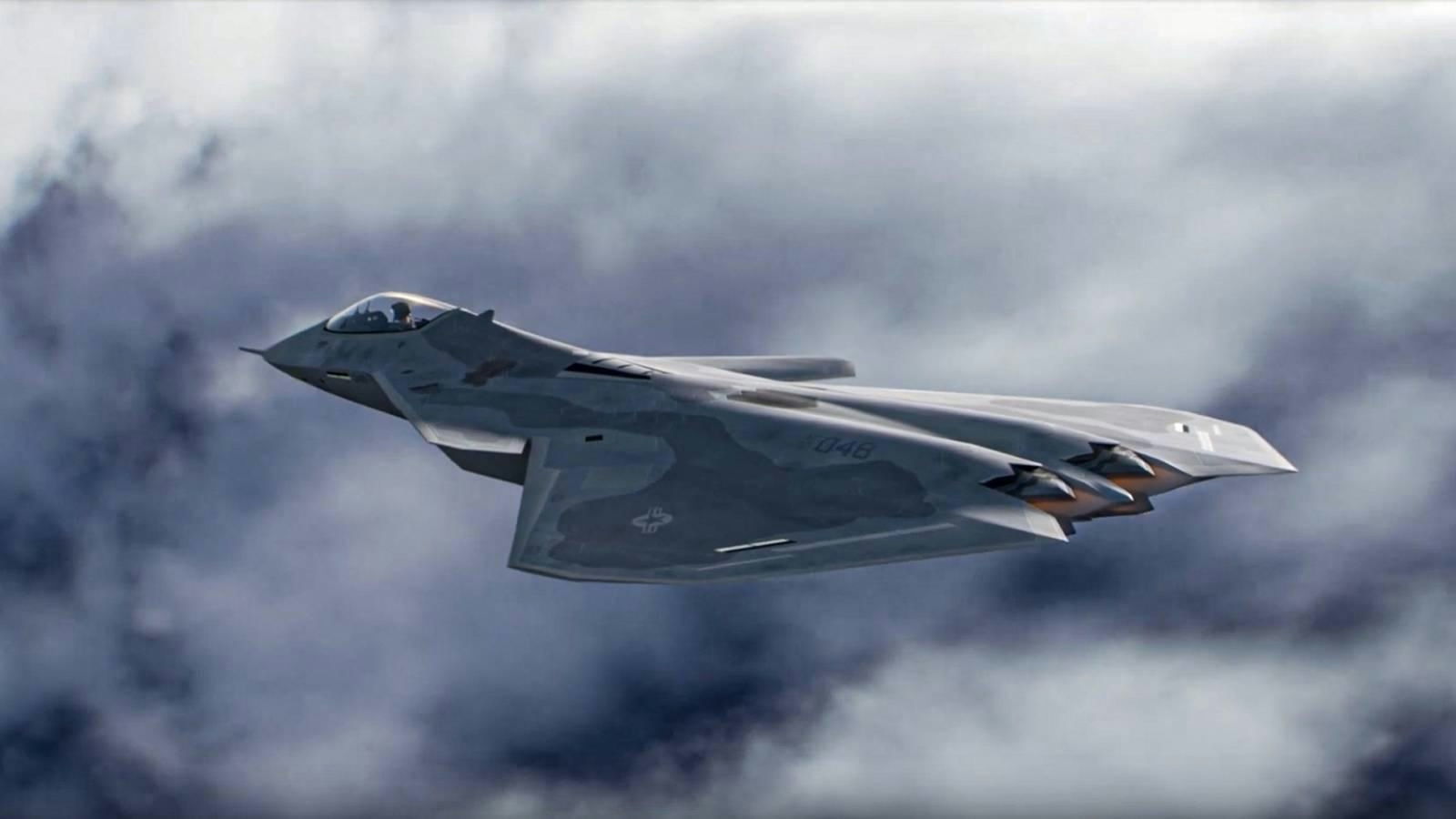
F-47 Set to Fly Three Years Before Engine Completion, Raising Concerns
F-47 Set to Fly Three Years Before Engine Completion, Raising Concerns
Unprecedented Development Timeline
The engine of a fighter jet is fundamental to its overall performance and operational capabilities. Historically, aircraft manufacturers have integrated engines into their demonstrators prior to flight testing, a practice exemplified during the development of the F-22 Raptor. In that program, both Northrop Grumman’s YF-23 and Lockheed Martin’s YF-22 prototypes were each powered by two different next-generation engines—the Pratt & Whitney YF119 and the General Electric YF120—ensuring thorough evaluation before advancing. This dual-engine strategy is mirrored in the current US Air Force Next Generation Air Dominance (NGAD) program, albeit with a notable deviation.
In March 2025, the US Air Force selected Boeing’s F-47 as the manned platform for its sixth-generation NGAD initiative. However, as of mid-2026, a final engine choice for the aircraft remains pending. Despite this, the F-47 is slated for its maiden flight in 2028, a full three years ahead of the anticipated completion of its intended next-generation Adaptive Cycle Engine. This accelerated timeline has elicited concern among defense analysts and industry experts regarding the aircraft’s reliability and operational readiness.
Program Commitments and Industry Challenges
The Air Force maintains its commitment to the 2028 flight target, emphasizing the advanced progress of the program and the close collaboration with industry partners. Officials contend that the F-47’s development benefits from lessons learned in previous fighter programs and ongoing technological advancements. Nevertheless, this approach marks a departure from the more cautious schedules traditionally observed in earlier X-plane and next-generation engine programs, which frequently encountered delays and protracted development periods.
The F-22 Raptor, once regarded as the preeminent air superiority fighter upon its 2005 introduction, has seen its technological advantage erode in the face of evolving threats. The emergence of sophisticated integrated air defense systems and advanced adversary aircraft, such as China’s J-20, has heightened risks to US air assets. Although planned upgrades aim to sustain the Raptor’s relevance into the 2040s, its 1990s-era design imposes inherent limitations on further modernization, particularly in areas such as operational range, thermal management, and stealth maintenance.
The NGAD Vision and Engine Innovation
To overcome these challenges, the NGAD program seeks to deliver a comprehensive family of integrated next-generation systems, including the manned F-47 and unmanned Collaborative Combat Aircraft. Central to the F-47’s capabilities will be its Adaptive Cycle Engine, engineered to enhance fuel efficiency by approximately 25 percent, extend operational range, and provide advanced thermal management to support increasingly power-intensive sensors and avionics.
GE Aerospace has been pioneering variable- and adaptive-cycle engine technologies since the 1980s, leveraging decades of research and development. Although GE’s early variable-cycle engine for the F-22 program demonstrated superior performance compared to its competitor, it was ultimately deemed too risky for deployment at the time. With technological maturity now achieved, the Air Force regards the Adaptive Cycle Engine as critical to achieving a generational leap in fighter performance.
Risks and Oversight Concerns
Despite these ambitious goals, the F-47’s aggressive development schedule has attracted scrutiny. Boeing, which also oversees the B-52 upgrade program, has encountered significant delays and cost overruns in that effort, raising questions about its capacity to meet the stringent deadlines associated with the F-47. These challenges underscore the inherent risks of the program’s accelerated timeline and highlight the necessity for rigorous oversight as development advances.

Etihad Airways Suspends Airbus A380 Flights on Key Route

Aditya Birla Group Seeks Approval for Aircraft Leasing in GIFT City

Qatar Airways Highlights Innovation and Connectivity at Arabian Travel Market 2026

Hong Kong's Five-Year Plan Includes Andrew Fan's Aircraft Parts Processing Hub Proposal

ACIA Aero Leasing Delivers ATR72-600 to Air Nostrum

RTX Appoints Jill Albertelli as Head of Pratt & Whitney

TAT Technologies Joins Beyond Aero Hydrogen Aircraft Program

AURAK Study Highlights Barriers to Air Taxi Adoption in Emerging Economies

Xiamen Air Selects Altitude for 787 Maintenance at Heathrow

Etihad and Swissport Extend Global Partnership
