
Orquestre insights de IA em ações

Tendências
Categories
FAA Investigates Shutdowns of Lycoming IO-360 Engines
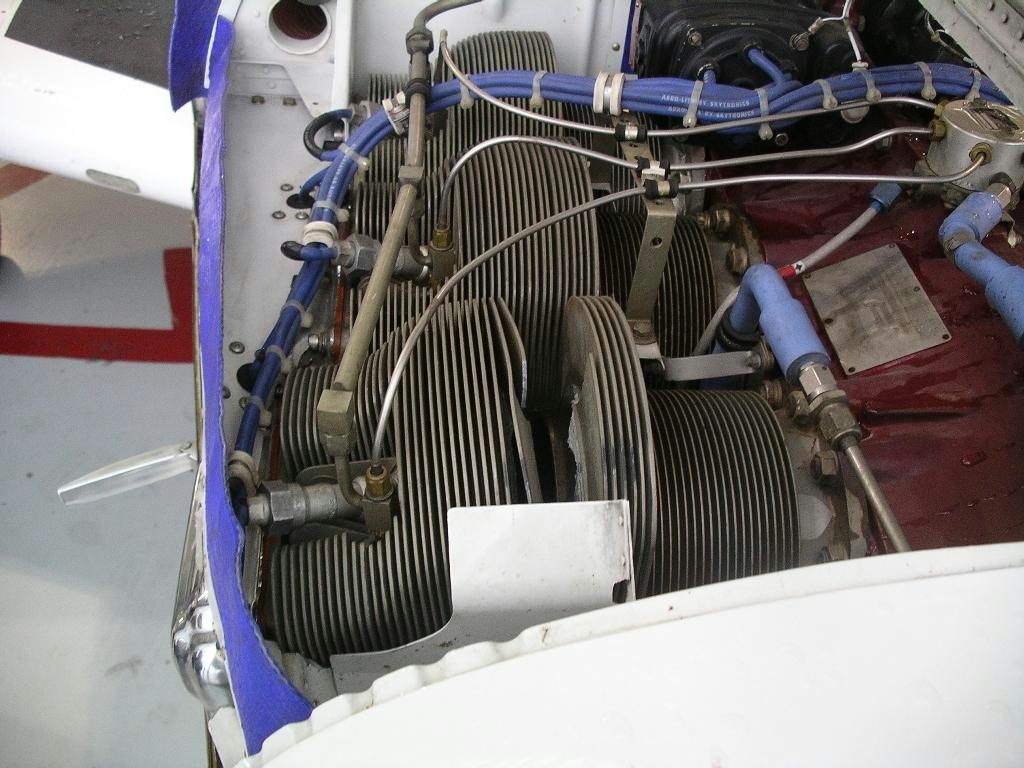
FAA Investigates Shutdowns of Lycoming IO-360 Engines
The Federal Aviation Administration (FAA) has initiated an investigation into a series of engine shutdowns, commonly known as rollbacks, occurring during throttle reductions to idle in aircraft powered by Lycoming IO-360 engines. To address the issue, the agency recently issued an Airworthiness Concern Sheet (ACS) aimed at alerting aircraft owners and maintenance personnel while gathering additional data on these incidents.
Scope and Industry Response
The Experimental Aircraft Association (EAA) reports that the ACS was prompted by multiple accounts of uncommanded engine shutdowns involving IO-360 engines equipped with AVStar-manufactured fuel servos, both vertically and horizontally mounted. These events have been recorded across various aircraft models, including the Cessna 172S, Cessna 172R, Piper Archer III, Piper Pilot 100i, and Piper Seminole.
The FAA is calling on operators, maintainers, and owners of aircraft with IO-360 engines to report any rollback occurrences, irrespective of the fuel servo manufacturer or installation orientation. The ACS functions as a proactive communication tool, enabling the FAA to collaborate with the aviation community and collect critical information on emerging safety concerns before they necessitate mandatory airworthiness directives.
Implications for Operators and the Industry
Industry experts caution that the ongoing investigation may pose considerable challenges for operators. Potential consequences include increased maintenance expenses and operational disruptions as the FAA seeks to determine and rectify the root cause of the shutdowns. The heightened regulatory scrutiny has also attracted the attention of insurance providers, potentially leading to elevated premiums for affected operators. In response, some may explore transitioning to alternative engine manufacturers, a shift that could influence market dynamics and pricing within the general aviation sector.
This investigation unfolds amid broader concerns regarding air traffic control staffing shortages. Although unrelated to the engine issues, these staffing challenges could indirectly affect overall aviation operations if left unresolved.
Collaborative Efforts and Next Steps
The EAA, alongside other aviation associations and type clubs, is supporting the FAA by distributing the ACS and encouraging voluntary incident reporting. This cooperative approach aims to enhance regulators’ understanding of the circumstances surrounding each engine rollback and to identify any mitigating factors.
Owners and operators are urged to review the Airworthiness Concern Sheet carefully and submit detailed reports of any engine rollback events to assist the FAA’s ongoing investigation.

Etihad Airways Suspends Airbus A380 Flights on Key Route

Aditya Birla Group Seeks Approval for Aircraft Leasing in GIFT City

Qatar Airways Highlights Innovation and Connectivity at Arabian Travel Market 2026

Hong Kong's Five-Year Plan Includes Andrew Fan's Aircraft Parts Processing Hub Proposal

ACIA Aero Leasing Delivers ATR72-600 to Air Nostrum

RTX Appoints Jill Albertelli as Head of Pratt & Whitney

TAT Technologies Joins Beyond Aero Hydrogen Aircraft Program

AURAK Study Highlights Barriers to Air Taxi Adoption in Emerging Economies

Xiamen Air Selects Altitude for 787 Maintenance at Heathrow

Etihad and Swissport Extend Global Partnership
