
Orquestre insights de IA em ações

Tendências
Categories
FAA Issues Emergency Directive for 957 Lycoming Engines Over Cracked Piston Pins
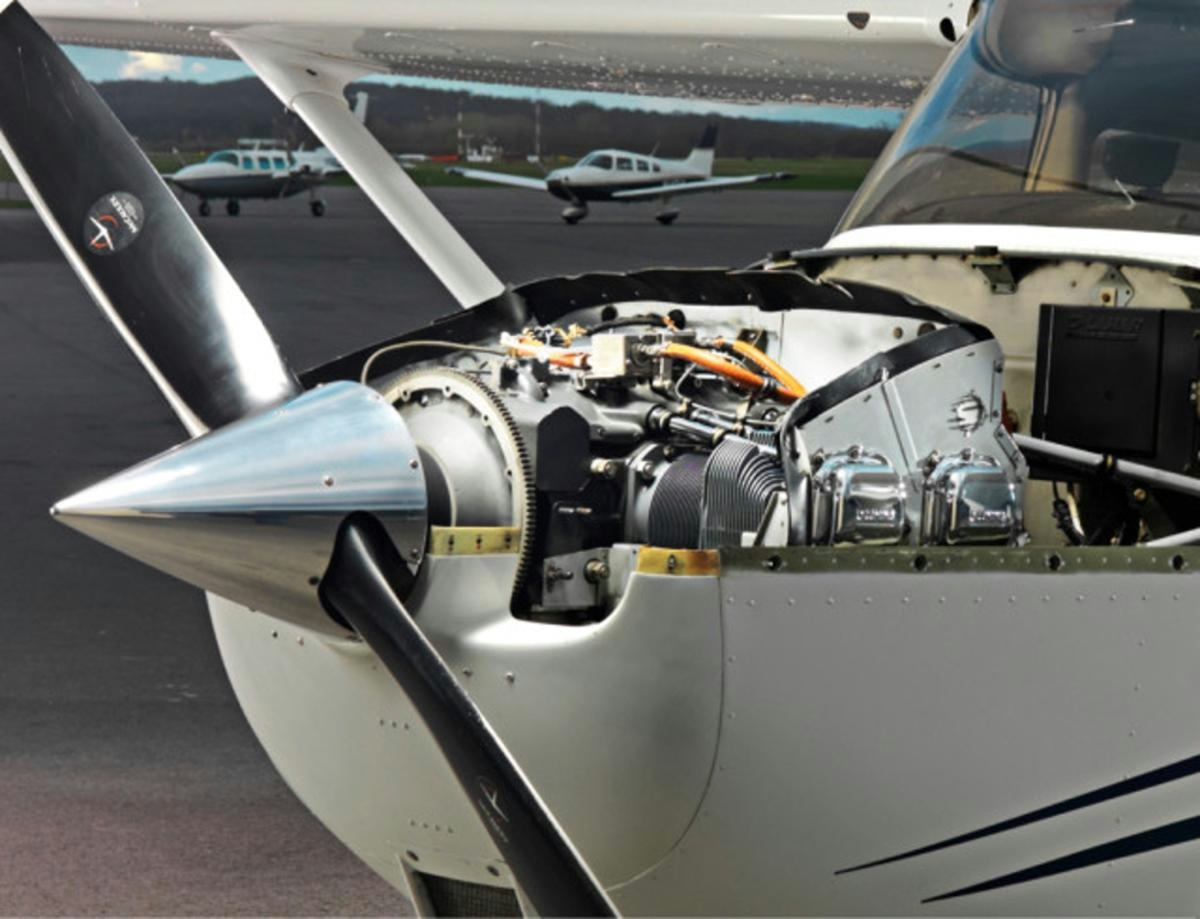
FAA Issues Emergency Directive for 957 Lycoming Engines Over Cracked Piston Pins
The Federal Aviation Administration (FAA) has issued an emergency airworthiness directive addressing a critical safety concern involving 957 Lycoming piston engines. The directive, AD 2026-17-10, published in the Federal Register (91 FR 55451), targets three prominent Lycoming engine families: the O-235, O-540, and IO-540 series. These engines power a broad spectrum of general aviation aircraft, including models such as the Cessna 152, Cessna 182 Skylane, Cessna 206 Stationair, Piper PA-32 Cherokee Six, Piper Saratoga, and the Britten-Norman Islander.
Immediate Inspections and Operational Restrictions
Effective September 14, 2026, the FAA mandates that operators conduct thorough inspections of a specific internal engine component and replace it if necessary before any further flight. In cases where metal particulates are detected during oil inspections, aircraft must be grounded immediately until the required repairs are completed. This directive represents one of the most stringent safety measures imposed in the general aviation sector, carrying significant operational and financial consequences for aircraft owners and operators.
Technical Details: The Cracked Piston Pin
Central to the directive is piston pin part number LW-13445, a thin-walled steel cylinder that connects each piston to its connecting rod. This component is subjected to intense mechanical stresses during engine operation, and its lightweight design offers minimal tolerance for manufacturing defects. Lycoming’s investigation, outlined in a mandatory service bulletin, identified the root cause as changes implemented by a third-party supplier in honing and tooling processes. These alterations introduced microcracks and inclusions into the base metal, defects that evade detection during standard inspections but become critical under the repeated stresses experienced in flight.
Failure of a compromised piston pin can release metal debris throughout the engine, causing damage to bearings, cylinders, and oil passages. Such damage can rapidly lead to oil starvation, engine failure, and potentially catastrophic loss of control. The FAA has already documented two instances of sudden, non-detectable engine failures in the affected models, highlighting the urgency of the directive.
Industry Impact and Broader Implications
The emergency directive poses immediate challenges for the aviation industry. Operators must contend with unplanned inspections, potential aircraft groundings, and increased maintenance expenditures. The surge in demand for replacement parts and repairs may also induce volatility in the aviation components market, potentially affecting prices and availability.
This development may prompt competitors in the engine manufacturing sector to capitalize on the situation by promoting alternative products or solutions, thereby intensifying market competition. Moreover, the issue has ignited broader discussions within the aviation community regarding engine reliability, supply chain oversight, and manufacturer accountability.
As the FAA and Lycoming collaborate to resolve the problem, the directive underscores the paramount importance of rigorous quality control in aviation manufacturing and the extensive consequences that can arise from the failure of a single critical component.

Etihad Airways Suspends Airbus A380 Flights on Key Route

Aditya Birla Group Seeks Approval for Aircraft Leasing in GIFT City

Qatar Airways Highlights Innovation and Connectivity at Arabian Travel Market 2026

Hong Kong's Five-Year Plan Includes Andrew Fan's Aircraft Parts Processing Hub Proposal

ACIA Aero Leasing Delivers ATR72-600 to Air Nostrum

RTX Appoints Jill Albertelli as Head of Pratt & Whitney

TAT Technologies Joins Beyond Aero Hydrogen Aircraft Program

AURAK Study Highlights Barriers to Air Taxi Adoption in Emerging Economies

Xiamen Air Selects Altitude for 787 Maintenance at Heathrow

Etihad and Swissport Extend Global Partnership
