
Orquestre insights de IA em ações

Tendências
Categories
Flying Cars Begin Trials Across America Amid Lack of Urban Landing Sites
Flying Cars Begin Trials Across America Amid Lack of Urban Landing Sites
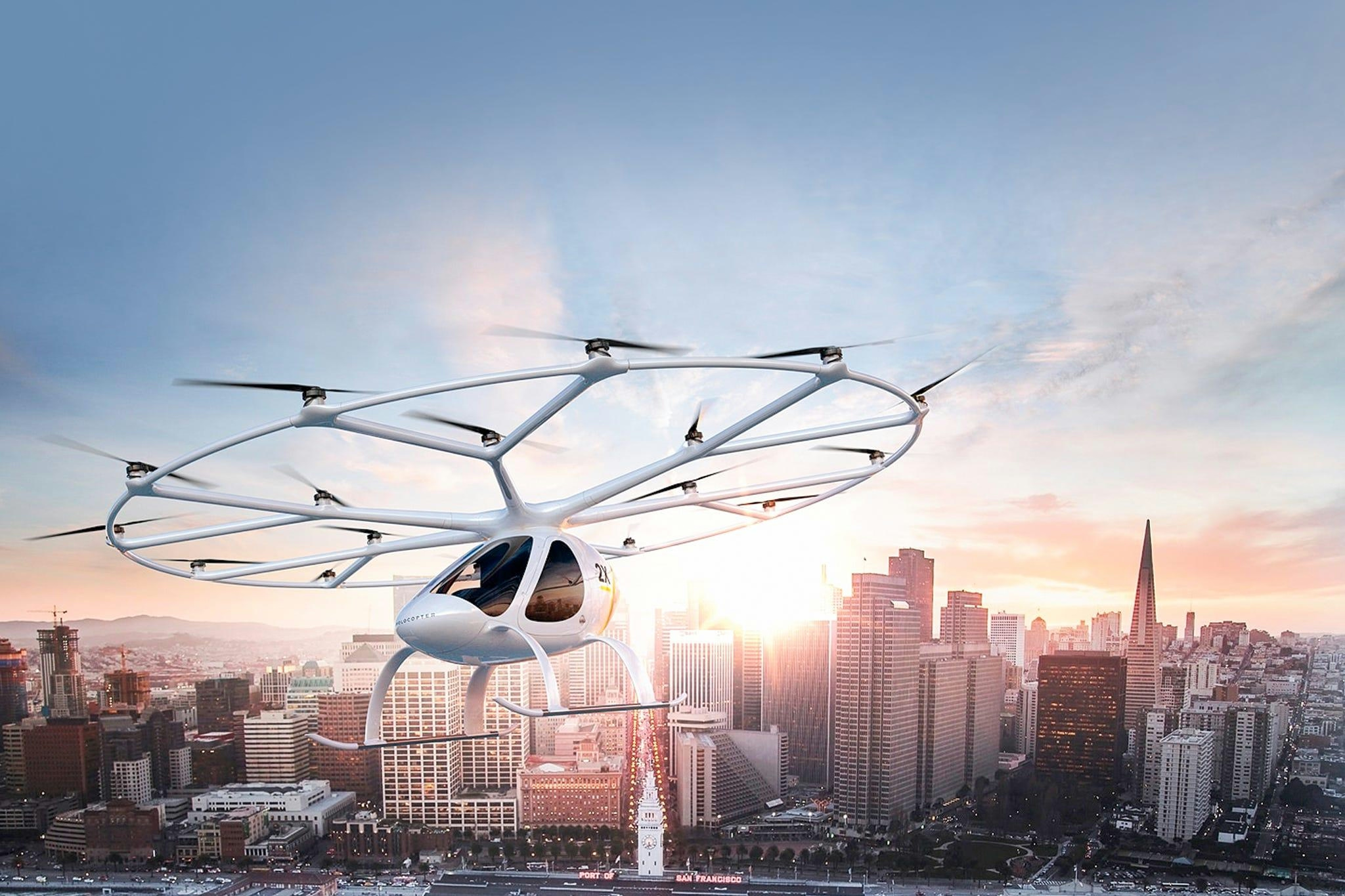
The long-anticipated era of flying cars is gradually taking shape as electric vertical takeoff and landing aircraft (eVTOLs) commence test flights across the United States. These innovative vehicles, designed to function as air taxis, promise to alleviate urban congestion by transporting commuters above city traffic. However, despite significant technological progress, the realization of this vision remains hindered by critical challenges related to infrastructure, regulation, and public acceptance.
Technological Advances and Infrastructure Challenges
eVTOLs differ from traditional airplanes and helicopters by employing multiple electric rotors that enable vertical takeoff and landing, resembling large passenger drones. This capability eliminates the need for conventional runways but introduces a pressing issue: the scarcity of suitable landing sites within densely populated urban areas. Most cities currently lack a comprehensive network of “vertiports”—specialized landing pads equipped with charging facilities—essential for the operational viability of these aircraft. The development of such infrastructure is crucial and requires swift coordination among city planners, property owners, and regulatory bodies.
The Federal Aviation Administration (FAA) has acknowledged the importance of safely integrating eVTOLs into the national airspace. Through its eVTOL Integration Pilot Program, the agency has selected eight projects spanning 26 states to conduct testing, marking a significant step toward eventual commercial deployment. Nevertheless, no company has yet secured full FAA certification for commercial passenger service, with approvals expected to remain at least a year away.
Industry Progress and Regulatory Landscape
Several companies are advancing at varying speeds within this emerging sector. California-based Pivotal has begun selling its Helix personal aircraft for $190,000, though its use is currently limited to short, non-urban flights. Archer Aviation is expanding its manufacturing capabilities in Georgia, while Joby Aviation has conducted demonstration flights in New York City and participates in five of the eight federally supported pilot projects. Joby has also formed a partnership with Delta Air Lines to explore routes connecting city centers with airport terminals, aiming to streamline airport commutes.
Despite these developments, the industry confronts a complex array of obstacles. Urban landing sites remain scarce, necessitating extensive collaboration with zoning authorities and local communities to establish vertiports. Regulatory hurdles persist, with ongoing legal disputes and protracted certification processes delaying progress. Safety concerns in crowded urban airspace are paramount, as highlighted by United Airlines CEO Scott Kirby’s reservations about operating eVTOLs near busy hub airports. Investor sentiment is mixed, reflecting uncertainty about the technology’s commercial viability and the timeline for widespread adoption. Additionally, legal conflicts among competing companies threaten to further complicate the path to market.
Emerging Signs of Progress
Nonetheless, progress is evident. Advances in battery technology and electric propulsion systems continue to enhance eVTOL performance, while investment in the sector grows steadily. Regulatory agencies are beginning to adapt frameworks to accommodate these new aircraft. Some cities are taking preliminary steps to prepare for urban air mobility: New York City is working to electrify its heliport network, and a vertiport has recently opened near Los Angeles’ Century Plaza. These initiatives, while promising, represent initial efforts rather than comprehensive solutions.
For now, the prospect of air taxis revolutionizing daily commutes remains a future goal. The industry’s cautious optimism is tempered by the recognition that achieving widespread adoption will require not only technological innovation but also a coordinated effort to develop the necessary infrastructure and regulatory environment to support a new era of urban flight.

Etihad Airways Suspends Airbus A380 Flights on Key Route

Aditya Birla Group Seeks Approval for Aircraft Leasing in GIFT City

Qatar Airways Highlights Innovation and Connectivity at Arabian Travel Market 2026

Hong Kong's Five-Year Plan Includes Andrew Fan's Aircraft Parts Processing Hub Proposal

ACIA Aero Leasing Delivers ATR72-600 to Air Nostrum

RTX Appoints Jill Albertelli as Head of Pratt & Whitney

TAT Technologies Joins Beyond Aero Hydrogen Aircraft Program

AURAK Study Highlights Barriers to Air Taxi Adoption in Emerging Economies

Xiamen Air Selects Altitude for 787 Maintenance at Heathrow

Etihad and Swissport Extend Global Partnership
