Imagem

Orquestre insights de IA em ações

Entre na lista de espera da AeroGenie hoje mesmo!

Tendências

Categories

From strawberries to aircraft engines: Emirates SkyCargo supercharges UK exports
August 4, 2026By ePlane AI
From strawberries to aircraft engines: Emirates SkyCargo supercharges UK exports
0
0
Emirates SkyCargo
UK Air Cargo
Aerospace Exports

From Strawberries to Aircraft Engines: Emirates SkyCargo Supercharges UK Exports

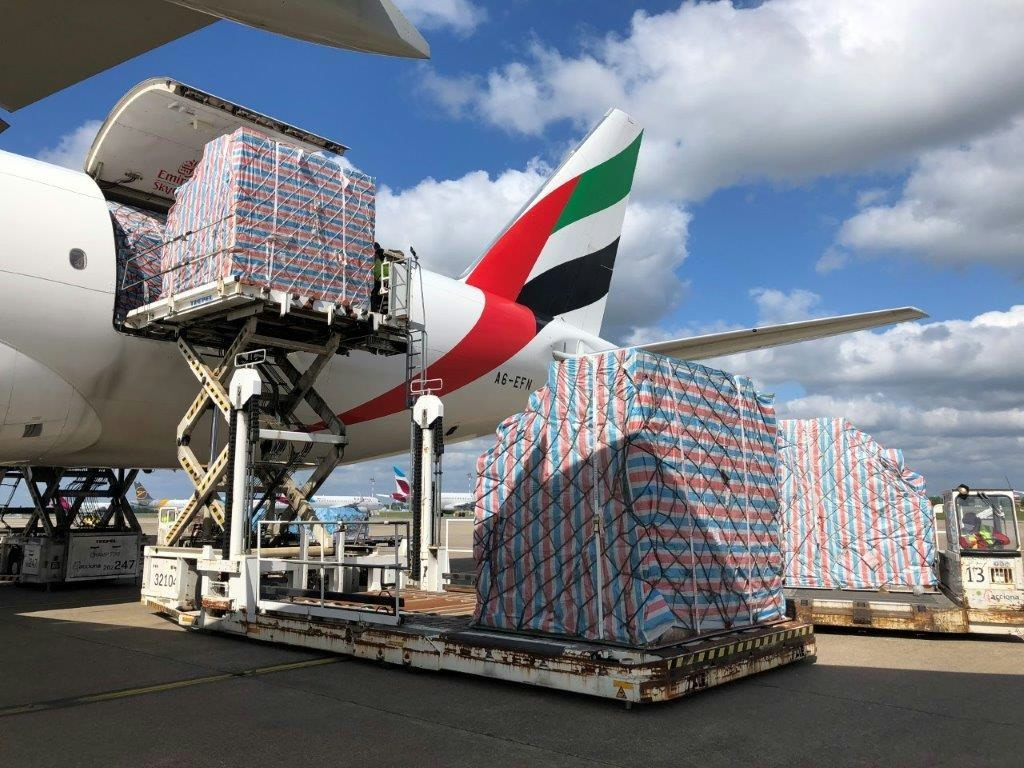
Emirates SkyCargo, the freight division of Emirates airline, is significantly expanding the global distribution of British exports, transporting a diverse range of goods from fresh produce to sophisticated aerospace components and pharmaceuticals. In the 2025-26 financial year, the carrier handled over 57,000 tonnes of UK exports worldwide, marking an 11% increase compared to the previous year. Between April and June 2026, UK exports grew by 7% year-on-year, highlighting the rising demand for efficient and dependable logistics solutions.

Expanding Global Connectivity

Khawla Abdulla, Vice President of Cargo Commercial Europe at Emirates SkyCargo, emphasized the critical role of strong logistics networks in facilitating international trade. She noted that Emirates SkyCargo serves as a vital link connecting UK and European businesses with rapidly growing markets across the Middle East, Asia, Africa, and Australasia. By leveraging its hub in Dubai and specialised cargo services, the carrier directly connects the UK’s regional production centres to a broad global network. This connectivity supports a wide array of industries, including life sciences, aerospace, perishables, and advanced manufacturing.

Operating more than 140 weekly wide-body flights from eight UK airports—Birmingham, Edinburgh, Glasgow, London Heathrow, London Gatwick, Manchester, Newcastle, and Stansted—Emirates SkyCargo’s extensive network underpins the export of British innovation. The carrier’s focus remains particularly strong on sectors such as aerospace, life sciences, and perishable goods.

Aerospace and Advanced Technology Exports

The UK’s aerospace industry continues to be a global leader in innovation and manufacturing. In the first half of 2026, Emirates SkyCargo transported over 570 tonnes of aircraft parts and aerospace components from the UK to destinations across Asia, Africa, Australia, New Zealand, and the Middle East. The carrier’s specialised Aerospace and Engineering product, known as AOG (Aircraft on Ground), experienced a remarkable year-on-year growth exceeding 300% during this period, demonstrating its ability to meet urgent and critical aviation logistics demands.

In addition to aerospace, high-value technology infrastructure such as data centre equipment and server racks featured prominently among exports. Much of this cargo originates from manufacturing hubs in Manchester and London, underscoring the UK’s role in advanced technology production.

Life Sciences and Perishables

Emirates SkyCargo has also been instrumental in transporting pharmaceuticals, biologics, and clinical trial medications from the UK to international markets. The carrier’s expertise in maintaining the integrity and timely delivery of sensitive shipments is a cornerstone of its service. Furthermore, its capacity to preserve the freshness of perishable goods while safeguarding high-value items like aerospace parts remains central to its operational offering.

Challenges and Market Dynamics

The diverse and specialised nature of the cargo Emirates SkyCargo handles presents ongoing logistical challenges, including temperature control for perishables and secure handling of critical technology assets. Despite these complexities, the surge in UK exports has been met with positive responses from the market. Businesses are benefiting from the carrier’s expanded reach and reliability, which in turn is prompting competitors to enhance their own cargo services. This dynamic is likely to intensify competition within the specialised air freight sector.

As international trade demand continues to grow, Emirates SkyCargo remains dedicated to connecting UK businesses with global opportunities, reinforcing the nation’s position as a leader in innovation and international commerce.

More news
Small Plane Makes Emergency Landing on Florida Interstate After Engine Failure

Small Plane Makes Emergency Landing on Florida Interstate After Engine Failure

Small Plane Executes Emergency Landing on Florida Interstate Following Engine Failure A small training aircraft was forced to make an emergency landing on Interstate 10 in Pensacola, Florida, Monday morning after experiencing engine failure. The incident, which occurred just before 11 a.m., saw the pilot skillfully navigate the single-engine plane between highway signs and vehicles, narrowly avoiding a potentially catastrophic collision. The Federal Aviation Administration (FAA) has initiated an investigation into the event, raising broader concerns about safety protocols for small aircraft and the coordination of emergency responses. Details of the Incident The aircraft involved was a Piper PA-28 Cherokee, a single-engine plane that had departed from Pensacola approximately 30 minutes prior to the emergency. As the plane prepared to land at Pensacola International Airport, the pilot reported a critical mechanical issue to air traffic controllers. According to audio recordings obtained from LiveATC.net, the pilot stated, “Our oil pressure is dropping down into the red and we do have fumes in the cockpit from the oil.” The situation rapidly deteriorated, prompting the pilot to declare, “We’re losing our engine. I don’t know if we are going to make the airport.” With two people onboard—a pilot and a flight student—the crew made the urgent decision to attempt an emergency landing on the interstate. The pilot communicated, “We are not making the airport, we are going down on I-10. We are lined up with I-10 trying to avoid the cars.” The maneuver required precise control to avoid highway infrastructure and traffic. Eyewitness Account and Safety Outcome Eric Johnson, a truck driver traveling eastbound on I-10, witnessed the emergency landing firsthand. He described the event as “a miracle,” noting that had he not slowed down after seeing the plane’s shadow over his vehicle, the aircraft might have collided with his truck. Dashcam footage from Johnson’s vehicle captures the plane gliding just beneath a highway sign, missing it by mere feet before safely touching down in the empty lanes of the interstate. Authorities from the Escambia County Sheriff’s Office confirmed that no injuries were reported among the plane’s occupants or motorists. The incident underscores the complex challenges faced by pilots and emergency responders in managing such emergencies, including safeguarding those onboard, coordinating rapid response efforts, and minimizing disruption to public safety and traffic flow. Investigation and Industry Implications The emergency landing has prompted heightened scrutiny of safety protocols governing small aircraft operations. A preliminary report from the National Transportation Safety Board (NTSB) suggests that initial mechanical issues and potential system failures contributed to the engine failure. These findings may influence future regulatory changes and best practices within the aviation industry. The FAA’s ongoing investigation aims to thoroughly review the circumstances surrounding the emergency landing and assess any necessary adjustments to aviation safety regulations. Meanwhile, the incident has sparked discussions within the aviation training sector, with competitors likely to reinforce safety measures and public communications to maintain confidence among clients and the broader public.
Fuel Efficiency of the GEnx-Powered Boeing 787-10 Compared to Other Widebody Aircraft

Fuel Efficiency of the GEnx-Powered Boeing 787-10 Compared to Other Widebody Aircraft

Fuel Efficiency of the GEnx-Powered Boeing 787-10 Compared to Other Widebody Aircraft A recent study conducted by *Aircraft Commerce* has identified the Boeing 787-10, equipped with GE Aerospace’s GEnx engines, as the most fuel-efficient widebody aircraft currently in operation. The analysis reveals that this particular engine-airframe combination achieves the lowest fuel burn per available seat mile (ASM) among all widebody models assessed. This performance surpasses not only the 787-10 variant powered by Rolls-Royce’s Trent 1000 engines but also the Airbus A350 family and older widebody aircraft such as the Boeing 777-200ER, 777-300ER, and 747-400. Comparative Analysis Across Multiple Routes Published in the December 2018/January 2019 issue of *Aircraft Commerce*, the study evaluated 14 widebody aircraft-engine pairings over five routes of varying distances, utilizing fuel consumption data provided by Lufthansa Systems. The aircraft included in the comparison were the Boeing 787-8, 787-9, and 787-10 models, each with both GEnx and Trent 1000 engines, alongside the Airbus A350-900, A350-1000, A330-200, A330-300, and several Boeing 777 and 747 variants. The GEnx-powered 787-10 consistently demonstrated the lowest combined fuel burn and en-route air traffic control charges per ASM across all routes tested. The margin of superiority was notable, with the GEnx-equipped 787-10 leading the rankings, followed closely by its Trent 1000-powered counterpart. The Airbus A350-900 remained competitive but did not match the fuel efficiency of either 787-10 configuration. Older aircraft models, including the 777-200ER and A330 series, showed significantly higher fuel consumption rates, underscoring the advancements embodied in the newer generation of aircraft. Engine-Airframe Synergy and Operational Implications The study highlights the critical importance of selecting specific engine-airframe combinations when evaluating aircraft operating economics. While the Boeing 787-10 offers similar passenger comfort and maintenance profiles regardless of engine choice, the fuel cost per ASM varies substantially over the aircraft’s operational lifespan. The independent, route-based data provided by *Aircraft Commerce* offers airlines a valuable resource that extends beyond manufacturer marketing claims, enabling more informed fleet decisions. The GEnx-1B engine’s superior efficiency is attributed to its advanced design tailored specifically for the 787 program. As a two-spool high-bypass turbofan derived from the GE90 engine used on the 777, the GEnx-1B incorporates lighter materials and an improved thermodynamic cycle. Its 18 composite fan blades, each measuring 111.1 inches in diameter, represent the first commercial application of carbon fiber composite fan blades at this scale, contributing significantly to weight reduction and fuel savings. Market Impact and Competitive Landscape Despite the current lead held by the 787-10 with GEnx engines, competition remains intense. The Airbus A350, the 787-10’s closest competitor, also employs advanced materials and aerodynamic innovations to enhance fuel efficiency. In response to the 787-10’s market success, Airbus continues to refine the A350’s technology to sustain its competitive position. Market demand for the 787-10’s fuel efficiency is reflected in strong order volumes, with the GEnx engine now powering more than two-thirds of all 787 aircraft in service. Recent engine selections by airlines such as Philippine Airlines and Delta Air Lines further demonstrate industry confidence in the GEnx-powered 787-10, reinforcing its status as a preferred widebody option for forthcoming deliveries. As airlines increasingly prioritize fleet economics and environmental considerations, the GEnx-powered Boeing 787-10 establishes a new standard for fuel efficiency among widebody aircraft. Meanwhile, ongoing technological advancements from competitors like the Airbus A350 ensure that the pursuit of greater efficiency remains a dynamic and evolving challenge within the industry.
Qantas Considers Moving Up to 1,000 Jobs to India, Report Says

Qantas Considers Moving Up to 1,000 Jobs to India, Report Says

Qantas Considers Outsourcing Up to 1,000 Jobs to India Amid AI-Driven Transformation Qantas is reportedly exploring the possibility of outsourcing as many as 1,000 positions to India through a potential partnership with consulting firm Accenture. The roles under consideration primarily encompass marketing, finance, human resources, and other back-office functions. This initiative forms part of a broader strategy aimed at leveraging artificial intelligence (AI) to modernize operations and achieve greater cost efficiencies across the airline. Early-Stage Discussions and Strategic Objectives On Tuesday, Qantas confirmed it is engaged in preliminary talks with Accenture regarding a potential outsourcing arrangement. However, the airline emphasized that no formal agreement has been reached and no final decisions have been made. The company described the initiative, known internally as Project iQ, as an effort to accelerate the adoption of technology and AI to improve both employee workflows and customer outcomes. While the Australian Financial Review initially reported that up to 1,000 jobs could be affected, Qantas has not disclosed the precise number of roles under review. The Australian Services Union stated that Qantas has assured it no job losses are currently planned. Nonetheless, the prospect of offshoring has ignited debate over job security and the potential impact on the domestic workforce. Industry and Market Reactions Reactions within the market have been mixed. Some analysts regard the potential outsourcing as a pragmatic and cost-effective measure that could help Qantas maintain competitiveness in an increasingly challenging aviation sector. Conversely, union representatives and other critics have expressed concern about the implications for Australian workers and the precedent such a move might establish within the industry. Qantas CEO Vanessa Hudson has underscored the expanding role of technology and AI at the airline. Speaking at a media roundtable in May, Hudson cautioned against viewing AI solely as a tool for reducing headcount, stating that its value also lies in enhancing customer engagement and operational efficiency. The airline already employs AI technologies such as the Airbus Skywise predictive maintenance system, which helps anticipate aircraft maintenance needs for both Qantas and its subsidiary Jetstar. Industry analysts suggest that if Qantas proceeds with the outsourcing plan and realizes substantial cost savings, other airlines may follow suit. However, responses from competitors remain speculative at this stage. Workforce Expansion and Future Plans Despite the potential outsourcing, Qantas has expanded its operational workforce in Australia in recent years, adding thousands of roles including pilots and engineers. The airline also plans to continue hiring thousands more in the coming years. A final decision regarding the outsourcing proposal is expected later this year. Accenture declined to comment on the matter, directing inquiries back to Qantas.
Impact of AI on Aviation Jobs in Everett

Impact of AI on Aviation Jobs in Everett

Impact of AI on Aviation Jobs in Everett Balancing Innovation and Workforce Concerns The rapid advancement of artificial intelligence (AI) is generating a complex mix of anticipation and apprehension within Everett’s aviation industry. While AI is widely regarded as a catalyst for innovation, it also raises significant concerns about job security among workers. Recent Gallup polling reveals that nearly half of adults aged 18 to 29 (47%) now perceive AI as more harmful than beneficial, marking the largest increase in skepticism among any demographic group. At the Farnborough Air Show in England, Wendy Poischbeg, CEO of The Greater Everett Chamber of Commerce, highlighted the continued importance of human involvement despite the growing integration of AI technologies. She emphasized that in aerospace, where safety is paramount, “The human element is number one. You cannot mess up once. AI has to be perfect every single time, especially when it comes to aerospace and putting people in the sky.” This perspective underscores the industry’s cautious approach to adopting AI, prioritizing human oversight to ensure reliability and safety. Technological Adoption and Workforce Adaptation Everett’s aviation sector, led by major employers such as Boeing, is actively incorporating AI-driven innovations to enhance operational efficiency and safety. Boeing has introduced several AI applications, including a slide-in cart for 767 mechanics, photo-based AI tools for part inspections, and projected instructions for assembling the 777X wing. These advancements aim to improve production quality and streamline processes. However, they also necessitate that workers acquire new skills and adapt to evolving roles, fueling concerns about potential job displacement and the imperative for continuous workforce training. For recent graduates and students, the impact of AI on career prospects is a pressing consideration. Many are carefully evaluating their professional paths in light of AI’s growing influence, while educational institutions are increasingly integrating AI-related skills into their curricula to prepare students for the changing job market. Poischbeg noted that workforce issues were a central topic of discussion with nearly every company she engaged at Farnborough, reflecting Snohomish County’s strong reputation for skilled labor and effective training programs. “Washington State continues to be attractive because of our talent,” Poischbeg remarked. “I love being able to talk about our training programs and what is working.” She stressed that sustaining Everett’s position as a key aerospace production and supply chain hub depends on both technological innovation and a well-qualified workforce. Outlook for Employment in the AI Era Despite the transformative effects of AI, industry forecasts remain optimistic about employment growth in aviation. The sector anticipates a demand for more than 2.4 million new professionals by 2026, indicating that AI is reshaping job roles rather than eliminating them. Companies are responding by investing in workforce development initiatives and leveraging AI to enhance competitiveness without displacing workers outright. As Everett continues to navigate the evolving technological landscape, maintaining a balance between embracing AI advancements and supporting human expertise will be essential. The city’s skilled labor force and commitment to training programs remain vital assets in attracting and retaining aerospace businesses amid the ongoing integration of artificial intelligence.
Seven-Year Delay Renders 30 Completed Boeing 777-9s Financially Obsolete

Seven-Year Delay Renders 30 Completed Boeing 777-9s Financially Obsolete

Seven-Year Delay Renders 30 Completed Boeing 777-9s Financially Obsolete Certification Delays and Regulatory Challenges The 2026 Farnborough Airshow, while highlighting advancements in aviation technology and securing significant aircraft orders, also brought renewed attention to Boeing’s beleaguered 777X program. Emirates President Sir Tim Clark, a prominent customer, publicly rejected the first ten early-production Boeing 777-9s stored at Everett, likening them to “baked bean cans.” His pointed remark underscored a troubling reality: over 30 completed 777-9 aircraft, some already painted in customer liveries, have become financially obsolete without having flown a single commercial mile. This predicament stems from a seven-year delay in certification that has fundamentally disrupted Boeing’s manufacturing and delivery plans. When the 777X program was launched in 2013, Boeing anticipated a relatively smooth regulatory process, expecting early production models to roll off the line by 2019 with only minor retrofits required before delivery. However, following the 737 MAX crisis, the Federal Aviation Administration (FAA) significantly overhauled its compliance standards. The agency abandoned its previous practice of delegated certification, subjecting every aspect of the 777-9 to rigorous scrutiny. This led to repeated shifts in the certified baseline design, forcing Boeing to continuously revise manufacturing drawings and leaving early 2019 and 2020 airframes increasingly misaligned with evolving regulatory requirements. Manufacturing and Financial Implications Boeing’s initial “build-and-store” strategy, designed to protect global supply chains, quickly became a logistical and financial burden. More than 30 early-build 777-9s have accumulated in storage at Paine Field, exposed to the damp climate of the Pacific Northwest. As these aircraft remained idle, their systems became technologically outdated, and the cost of upgrading them to meet the latest standards escalated dramatically. Far from generating revenue, these stored widebodies have instead consumed capital, contributing to an estimated $15 billion in accounting charges and program write-downs. The process of “change incorporation”—retrofitting stored aircraft to comply with new certification standards—has proven far more complex and costly than initially anticipated. Unlike standard assembly, retrofitting requires engineers to dismantle completed cabins, cut into sealed structures, and remove intricate wiring to access components needing replacement. This labor-intensive procedure disrupts production economics and renders restoring early-build aircraft to airworthiness a formidable challenge. Industry Impact and Future Outlook Frustration among airlines over the 777X delays continues to mount, compounded by concerns regarding engine costs, maintenance delays, and overhaul bottlenecks. Emirates, the largest customer for the 777X, now anticipates receiving its first 777-9 deliveries in the second quarter of 2027—several years behind the original schedule. There is a growing risk that by the time these aircraft enter service, they may already be surpassed by newer technologies. The FAA currently expects to certify the 777-9 late this year or early next year, but the damage to Boeing’s program is already extensive. More than 30 completed aircraft remain in limbo, requiring extensive and costly modifications before they can be deployed commercially. The 777X saga serves as a cautionary example of how regulatory upheaval, production miscalculations, and rapid technological change can combine to render even the most advanced airliners obsolete before their inaugural flight.
Electric Air Taxi Reduces California Trip Time from 35 to 9 Minutes

Electric Air Taxi Reduces California Trip Time from 35 to 9 Minutes

Electric Air Taxi Cuts California Trip Time from 35 to 9 Minutes Archer Aviation has achieved a significant milestone with the successful completion of a piloted round-trip flight between Salinas Municipal Airport and Monterey Regional Airport. This demonstration, conducted on July 30 in partnership with the Federal Aviation Administration (FAA) under the White House’s eVTOL Integration Pilot Program (eIPP), featured Archer’s all-electric Midnight aircraft. The flight highlighted the potential of electric air taxis to serve short regional routes, dramatically reducing travel times. Each leg of the journey lasted just nine minutes, a substantial improvement over the typical 35-minute car trip, especially during peak traffic hours. Unlike previous test flights that primarily focused on technical performance, this mission emphasized a practical transportation scenario, connecting two cities in a manner that reflects Archer’s commercial objectives. Adam Goldstein, Archer’s founder and CEO, remarked that this route exemplifies the kind of service planned for the Midnight aircraft under the eIPP and during the upcoming Los Angeles Olympic Games. He also noted that lessons learned from this California operation will inform similar initiatives in Texas, Florida, and New York. Preparing for Commercial Operations Archer’s efforts extend beyond flight demonstrations to include close collaboration with the FAA and other government agencies. These partnerships aim to establish operational procedures, define infrastructure requirements, and ensure seamless integration with existing air traffic management systems. Such groundwork is essential as electric air taxis move closer to regular commercial service in the United States. One of the industry’s primary challenges is the development of new access points, including heliports and vertiports, to enhance the convenience and efficiency of air taxi services. Experts also emphasize the need for advanced automated air traffic control systems capable of managing the anticipated volume of air taxis operating simultaneously in urban airspace. Industry Progress and Market Prospects The advanced air mobility sector is transitioning from demonstrating aircraft capabilities to integrating electric air taxis into everyday transportation networks. Market analysts remain optimistic, projecting significant growth potential for urban air mobility solutions. Nonetheless, the path to widespread adoption faces hurdles. Some competitors have shifted focus toward military applications due to delays in civil certification, while others continue to develop dual-use eVTOL aircraft for both military and civilian markets. California remains central to Archer’s strategic vision. The company is designated as the Official Air Taxi Provider for the LA28 Olympic Games, where it plans to transport passengers between key locations using the Midnight aircraft. Concurrently, partnerships in Texas, Florida, and New York, also part of the eIPP initiative, are expanding Archer’s operational footprint and contributing to the development of regulatory and infrastructure frameworks necessary for commercial launch. As Archer and the broader industry address regulatory, technical, and infrastructure challenges, the recent Monterey roundtrip flight underscores the transformative potential of electric air taxis. This milestone offers a glimpse into a future where regional travel between cities can be measured in minutes rather than hours.
MIA, IAGi, Barich Inc, MWAA, and RNO Collaborate on Trusted Data Sharing and AI in Aviation

MIA, IAGi, Barich Inc, MWAA, and RNO Collaborate on Trusted Data Sharing and AI in Aviation

MIA, IAGi, Barich Inc, MWAA, and RNO Collaborate on Trusted Data Sharing and AI in Aviation Advancing Data Sharing in Aviation Data sharing is increasingly recognized as a critical component in the evolution of airport and airline operations. As the aviation sector embraces digital transformation and artificial intelligence (AI), the secure and real-time exchange of high-quality data across organizational boundaries is unlocking significant opportunities to enhance passenger experience, operational efficiency, and overall business performance. However, achieving these benefits requires more than just technological innovation; it necessitates the establishment of common standards, robust governance, and close collaboration among industry stakeholders. Members of the Future Travel Experience (FTE) Data Sharing Think Tank—including Miami International Airport (MIA), International Airlines Group (IAGi), Barich Inc., Metropolitan Washington Airports Authority (MWAA), and Reno-Tahoe Airport Authority (RNO)—recently convened to discuss the challenges and opportunities associated with trusted data sharing in aviation. The Importance of Trusted Data Maurice Jenkins, Chief Innovation Officer at Miami International Airport, underscores the foundational role of trusted data in enabling AI-driven aviation advancements. He explains that the primary objective is to create a seamless passenger journey from curb to gate and beyond. This goal depends on all stakeholders having access to a common operational picture. When trusted data is shared effectively among partners, it becomes possible to anticipate disruptions, optimize gate and stand allocation, improve passenger flow, reduce turnaround times, and provide travelers with more accurate and personalized information throughout their journey. Jenkins emphasizes that effective data sharing is not merely about transferring large volumes of information between organizations but about generating actionable intelligence. Success hinges on the availability of trusted, high-quality data that is standardized, governed, and shared with a clear purpose. While organizations produce vast amounts of data, its value is realized only when it is accurate, timely, interoperable, and consistently understood. Challenges and Collaborative Solutions The collaboration between MIA, IAGi, Barich Inc., MWAA, and RNO seeks to establish these trusted data foundations to support the future of aviation. Nonetheless, the path forward presents several challenges. High product costs, particularly in markets such as Japan, may impede the widespread adoption of new data-sharing technologies. Market skepticism regarding the reliability and security of shared data also poses a potential obstacle, while competitors may respond by launching similar initiatives or enhancing their own data security protocols. Moreover, the partnership must carefully navigate the complexities of data privacy and regulatory compliance. Ensuring that all shared information adheres to stringent legal and ethical standards requires not only technological solutions but also strong governance frameworks, agreed-upon standards, and a commitment to collaboration across organizational and national boundaries. The Think Tank members concur that when these elements align, data becomes a strategic asset that supports faster decision-making, improves situational awareness, and delivers superior outcomes for both passengers and operators. This topic will be further explored during the FTE Data Sharing Think Tank session at the 20th anniversary FTE Global event, scheduled to take place in Dallas, Texas, from September 8 to 10, 2026.
Pilots' Union Warns of Engine Shutdown Risk in Airbus Aircraft

Pilots' Union Warns of Engine Shutdown Risk in Airbus Aircraft

Pilots’ Union Raises Alarm Over Engine Shutdown Risk in Airbus Aircraft The British Airline Pilots’ Association (BALPA), representing flight crews from major carriers including British Airways, Virgin Atlantic, and EasyJet, has issued a serious warning regarding a latent mechanical defect affecting several Airbus aircraft models. The union’s concerns focus on a fault within the engine fire shutoff buttons, which could inadvertently trigger sudden engine shutdowns during flight, posing significant safety risks. Incident Background and Regulatory Response The issue first emerged following a December 2024 incident involving an Air New Zealand Airbus A320neo. Approximately 15 minutes after takeoff, the aircraft’s right-hand engine unexpectedly shut down while carrying 142 passengers and six crew members. The pilots declared a Mayday after discovering that one of the engine fire shutoff buttons—designed to isolate power to the engine in emergencies—had activated without any manual input. Subsequent investigations revealed that a retaining pin inside the button mechanism had been bent during installation, likely due to mishandling. Routine vibrations during flight caused the pin to dislodge, inadvertently triggering the button. In response, the European Union Aviation Safety Agency (EASA) issued Airworthiness Directive 2026-0134, mandating inspections of the engine fire shutoff buttons on affected Airbus models, including the A319, A320, and A321. Airlines are required to replace the module if a bent pin is detected, with a compliance deadline set for November 2027. BALPA, however, has expressed unease over this timeline, describing it as “understandably uncomfortable” given the severity of the defect. Broader Implications and Ongoing Concerns Despite regulatory measures, the problem appears to extend beyond the aircraft models currently covered by EASA’s directive. In February, a similar event occurred on a British Airways Airbus A350-1000 en route from Las Vegas to London Heathrow. While cruising over Halifax, Canada, the right-hand engine lost power unexpectedly. The cockpit’s Electronic Centralised Aircraft Monitor (ECAM) provided only brief alerts, failing to immediately indicate an engine failure. The crew was able to restart the engine only after resetting the fire switch, following guidance from maintenance control, allowing the flight to continue safely. BALPA has highlighted that the same type of engine fire panel is installed on both narrowbody and widebody Airbus aircraft, including the A350, which is not currently subject to EASA’s inspection directive. The union emphasized the latent nature of the defect, noting that “there is no ECAM cue until the moment it happens,” and that safe outcomes have so far depended heavily on effective crew response. This warning arrives amid broader industry concerns regarding engine reliability. The revelations may prompt increased scrutiny of Airbus aircraft and could potentially affect customer confidence. Competitors such as Boeing, which is contending with its own delivery delays and engine reliability challenges, may seek to leverage Airbus’s difficulties by underscoring their own safety records. Regulatory actions like EASA’s directive are expected to influence airline operations and market dynamics in the near future. Safety Considerations and Industry Impact The engine fire shutoff button on Airbus aircraft is intended solely for use in confirmed engine fire emergencies and does not automatically deploy fire suppressant systems. The recent incidents underscore the critical importance of rigorous inspection and maintenance protocols to safeguard passenger safety. As investigations continue, the aviation industry faces mounting pressure to address these mechanical vulnerabilities promptly to prevent future occurrences.
The Fate of Widebody Aircraft After Their Final Commercial Flight

The Fate of Widebody Aircraft After Their Final Commercial Flight

The Fate of Widebody Aircraft After Their Final Commercial Flight When a widebody aircraft completes its final commercial journey, its operational life does not simply conclude. Although it ceases to generate revenue through passenger or cargo transport, the aircraft remains a valuable asset. Comprising certified components, recyclable materials, and sophisticated engineering, these aircraft can continue to yield economic returns long after retirement. Thus, the end of commercial service marks the beginning of a new phase, driven predominantly by financial considerations. Economic Drivers of Retirement and Storage The ultimate disposition of retired widebody aircraft—such as the Boeing 747 or Airbus A340—is influenced by a range of factors including the aircraft’s age, maintenance record, demand for spare parts, opportunities for cargo conversion, and the residual value of its materials. Owners and leasing companies carefully evaluate these elements, often prioritizing financial outcomes over sentimental value. For many aircraft, the final passenger flight is merely the initial step in a carefully orchestrated retirement strategy. Following retirement, most widebodies are relocated to specialized storage facilities, commonly referred to as aircraft boneyards. These sites, frequently situated in arid regions like the US Southwest—including the Mojave Air and Spaceport in California, Southern California Logistics Airport in Victorville, and various locations across Arizona and New Mexico—offer optimal conditions for aircraft preservation. The low humidity and stable climate significantly reduce corrosion, enabling planes to be stored outdoors for extended periods. Internationally, Alice Springs in Australia has emerged as a notable storage hub, accommodating aircraft from carriers such as Singapore Airlines. During the COVID-19 pandemic, these boneyards assumed a critical role by housing hundreds of grounded aircraft worldwide. Typically, the final commercial flight is succeeded by a ferry flight operated solely by pilots, after which the aircraft undergoes thorough inspection, documentation, and parking. Despite their seemingly dormant state, storage operations are highly systematic, with technicians actively working to maintain and preserve the aircraft’s value. Preserving Value and Exploring Future Options Widebody aircraft may remain in storage for months or even years, incurring considerable costs during this period. Some are parked immediately after retirement due to strong demand for spare parts, while others await favorable market conditions. Throughout this phase, every decision is guided by the objective of maximizing financial return, as these aircraft can retain multimillion-dollar value even after commercial service ends. Not all stored aircraft are destined for dismantling. Some may be converted for cargo operations or potentially returned to service if market dynamics improve. However, such transitions involve significant challenges, including regulatory compliance, substantial upfront investment, and rigorous testing to ensure safety and operational efficiency. Industry Trends and Future Outlook Despite these complexities, market sentiment remains optimistic, particularly for modern, fuel-efficient widebodies like the Boeing 787. In response, manufacturers are investing heavily in the development of high-speed and ultra-efficient aircraft, intensifying competition within the industry. As global air travel continues to expand—especially in emerging markets—the demand for new, efficient aircraft is expected to grow. This ongoing evolution ensures that widebody aircraft, even after their final commercial flight, continue to hold a significant place in the dynamic global aviation landscape.
SAS Airbus A350 Returns to Copenhagen After Engine Shutdown En Route to Tokyo Haneda

SAS Airbus A350 Returns to Copenhagen After Engine Shutdown En Route to Tokyo Haneda

SAS Airbus A350 Returns to Copenhagen Following Engine Shutdown En Route to Tokyo Haneda A Scandinavian Airlines System (SAS) long-haul flight destined for Tokyo was compelled to return to Copenhagen Airport on Thursday after encountering an engine issue while flying over Poland. Flight SK983, operated by an Airbus A350-900 registered SE-RSF, departed Copenhagen at 13:04 local time, embarking on a scheduled 12-hour and 35-minute journey to Tokyo Haneda Airport. Approximately one hour into the flight, at cruising altitude of 37,000 feet, the flight crew detected a loss of oil pressure in one of the aircraft’s Rolls-Royce Trent XWB engines while over Polish airspace. In accordance with established safety protocols, the crew promptly shut down the affected engine and initiated a return to Denmark. The Airbus A350, a modern twin-engine aircraft, is certified to operate safely on a single engine for extended periods. The crew executed a routine approach, and the aircraft landed safely on Copenhagen’s runway 22L at 15:14 local time, just over two hours after departure. Emergency services were on standby as a precaution, but the landing proceeded without incident, and all passengers and crew disembarked safely. SAS confirmed the diversion, describing the return as a precautionary measure. The airline immediately began efforts to re-accommodate passengers and planned to dispatch a replacement aircraft to Tokyo, targeting a departure at 16:00 local time. Implications and Industry Response The incident is expected to attract scrutiny from aviation safety authorities, who may initiate investigations into the cause of the engine malfunction. Depending on the findings, this could lead to further inspections or temporary groundings of similar aircraft models. The reliability of the Rolls-Royce Trent XWB engine may also come under review within the industry, potentially influencing future fleet decisions by airlines. Market reactions could include a short-term decline in SAS’s stock price due to negative publicity and investor concerns. Competitor airlines might leverage the situation to highlight their own safety records, aiming to reassure passengers and gain a competitive advantage. The event is likely to prompt broader discussions about aircraft engine reliability and operational safety standards across the aviation sector. Despite the disruption, SAS emphasized that passenger safety remains its highest priority and affirmed that all procedures were followed in accordance with international aviation standards.
line









