
Orquestre insights de IA em ações

Tendências
Categories
‘Fury’: The AI-Driven Drone Transforming U.S. Military Aviation
‘Fury’: The AI-Driven Drone Transforming U.S. Military Aviation
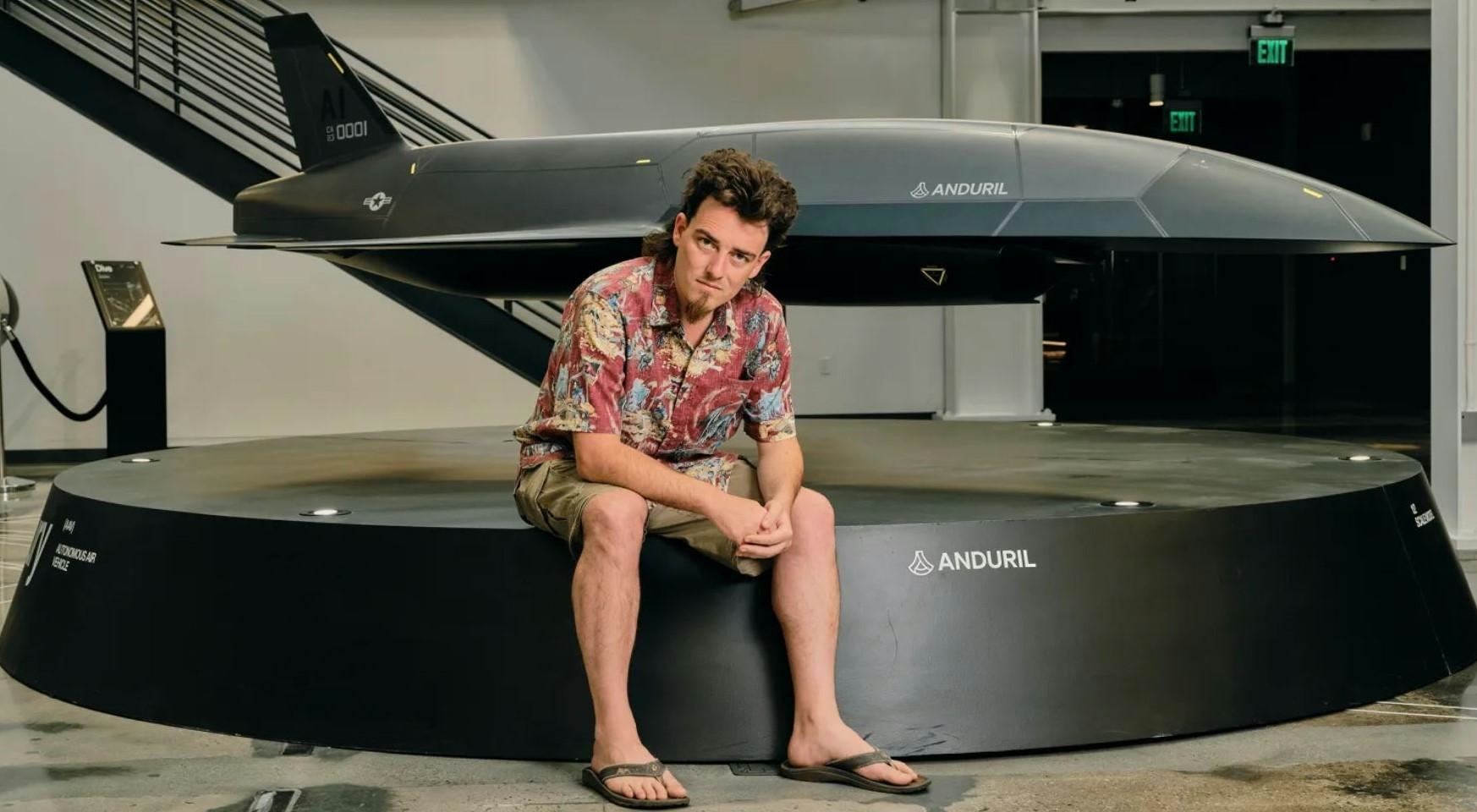
The U.S. Air Force has marked a significant milestone in aerial warfare with the successful test flight of its semi-autonomous combat drone, Fury. Officially designated as the YFQ-44A, Fury transcends the conventional role of unmanned aerial vehicles by embodying a transformative integration of artificial intelligence and automation, signaling a profound shift in the future of military aviation.
A New Breed of Combat Aircraft
Distinct from traditional drones that rely entirely on remote human control, Fury is engineered to operate with a high degree of independence. Developed under the Air Force’s Collaborative Combat Aircraft (CCA) program, this drone is capable of executing diverse missions ranging from surveillance and escort duties to direct combat engagement. Its AI-driven systems allow for semi-autonomous operation, enabling it to perform complex tasks with minimal human intervention, even during high-speed and high-risk scenarios.
Fury primarily functions as a “loyal wingman,” flying in close formation alongside crewed aircraft such as the F-35 and F-15EX. It is equipped to detect enemy threats, share real-time intelligence, and engage offensively when authorized. While many technical specifications remain classified, Fury is believed to incorporate advanced stealth features and possess an extended operational range, making it suitable for missions that are too perilous or costly for human pilots.
The AI Revolution in the Sky
What distinguishes Fury is its sophisticated integration of artificial intelligence into operational military contexts. Rather than supplanting human pilots, Fury’s onboard AI serves to augment their capabilities by interpreting mission data, anticipating threats, and making rapid decisions that exceed human reaction times. This development represents a pivotal evolution in U.S. defense strategy, reflecting the Pentagon’s growing reliance on adaptive, learning machines capable of real-time response.
Despite its autonomy, human operators maintain oversight and command authority, ensuring that Fury’s actions remain consistent with military ethics and strategic directives. This careful balance between autonomous functionality and human accountability highlights the responsible deployment of AI technologies in combat environments amid rapid technological advancement.
Industrial Strategy and Competitive Pressures
Fury also exemplifies a broader shift in defense industrial strategy. The CCA program aims to mass-produce fleets of cost-effective, versatile drones, moving away from dependence on a limited number of expensive, crewed fighter jets. The Air Force envisions deploying hundreds of Fury drones to support a wide spectrum of missions, including air dominance and electronic warfare.
This technological advancement, however, introduces new challenges. The rapid pace of AI innovation necessitates continual upgrades to maintain Fury’s edge against evolving threats. Additionally, the competitive landscape is intensifying, with private sector companies such as Shield AI developing their own autonomous vertical takeoff and landing (VTOL) fighter jets. This competition is accelerating the military’s adoption of advanced drone technologies.
In response, competitors are increasing investments in research and development, securing supply chain resilience, and enhancing data readiness to facilitate swift integration of emerging technologies. These dynamics are shaping not only the trajectory of U.S. military aviation but also the global contest for AI-driven defense superiority.
As Fury takes to the skies, it stands at the intersection of artificial intelligence, industrial innovation, and international competition, defining the next generation of air combat capabilities.

Etihad Airways Suspends Airbus A380 Flights on Key Route

Aditya Birla Group Seeks Approval for Aircraft Leasing in GIFT City

Qatar Airways Highlights Innovation and Connectivity at Arabian Travel Market 2026

Hong Kong's Five-Year Plan Includes Andrew Fan's Aircraft Parts Processing Hub Proposal

ACIA Aero Leasing Delivers ATR72-600 to Air Nostrum

RTX Appoints Jill Albertelli as Head of Pratt & Whitney

TAT Technologies Joins Beyond Aero Hydrogen Aircraft Program

AURAK Study Highlights Barriers to Air Taxi Adoption in Emerging Economies

Xiamen Air Selects Altitude for 787 Maintenance at Heathrow

Etihad and Swissport Extend Global Partnership
