
Orquestre insights de IA em ações

Tendências
Categories
Global Analysis of the Aircraft Water Service Trucks Market
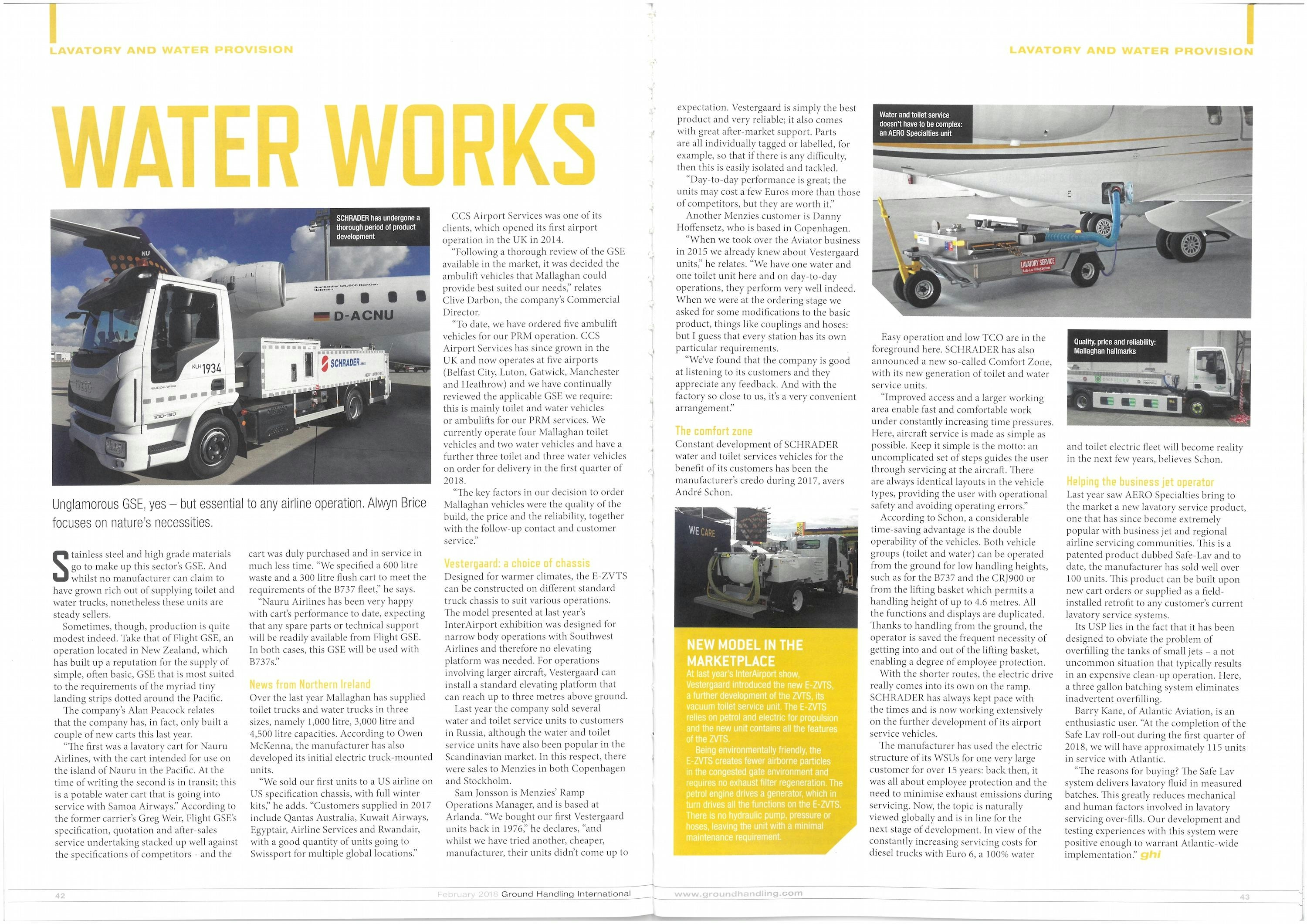
Global Analysis of the Aircraft Water Service Trucks Market
The global aircraft water service trucks market is poised for significant expansion, with projections indicating growth from USD 310 million in 2026 to USD 529 million by 2036. This represents a compound annual growth rate (CAGR) of 5.5%. Having reached USD 296 million in 2025, the market is expected to generate an absolute opportunity of USD 219 million by 2036. This growth is primarily driven by ongoing airport fleet renewals and increased investments in aviation infrastructure worldwide.
Market Drivers and Challenges
The demand for aircraft water service trucks is being propelled by several key factors. Airports globally are undertaking fleet modernization initiatives, replacing aging ground service vehicles with more efficient, low-emission alternatives to enhance operational performance and comply with stringent environmental regulations. Concurrently, rising passenger traffic is intensifying the need for reliable aircraft servicing, including the provision of potable water essential for passenger comfort and operational efficiency.
Environmental sustainability is also a critical driver, with the adoption of electric airport vehicles gaining momentum as part of broader efforts to reduce carbon footprints and align with global climate goals. Airlines and airport operators are increasingly prioritizing faster turnaround times, making dependable and efficient ground support equipment indispensable.
Despite these positive trends, the market faces notable challenges. Fluctuating fuel prices and geopolitical tensions continue to disrupt supply chains, while the stabilization of air cargo rates amid ongoing global uncertainties compels airports and service providers to seek more efficient refueling and servicing solutions. In response, industry players are focusing on technological advancements aimed at enhancing production efficiency and minimizing material waste. These efforts reflect broader trends observed in the aerostructures sector and the rising demand for advanced aircraft-grade fasteners.
Market Segmentation and Regional Outlook
By vehicle type, truck-mounted units are anticipated to dominate, accounting for 44% of the market in 2026, maintaining their status as the preferred choice for commercial airport operations. In terms of capacity, narrowbody units are projected to hold a 36% share, mirroring the prevalence of single-aisle aircraft within the global fleet. Commercial airports are expected to represent 58% of the market, driven by their high volume of daily aircraft movements.
Regarding powertrain, diesel-powered vehicles are forecasted to retain a 52% market share in 2026, although electric alternatives are steadily gaining traction. Ground handlers, who operate extensive service fleets across multiple terminals, are set to capture 37% of the market by buyer type.
Regionally, the United States is projected to experience the highest growth, with a 5.9% CAGR through 2036, supported by expansive airport modernization projects. Germany follows closely with a 5.7% CAGR, fueled by fleet renewal initiatives. China is expected to register a 5.6% CAGR amid ongoing terminal expansions, while Japan and India are forecasted to grow at 5.4% and robust rates respectively, driven by equipment upgrades and infrastructure development.
Strategic Implications for Industry Stakeholders
Shambhu Nath Jha, Senior Analyst at Fact.MR, emphasizes the critical role of aircraft water service trucks in airport ground operations. He notes that suppliers who enhance vehicle reliability and introduce low-emission platforms will solidify their market position as airports continue to modernize their support fleets.
Industry stakeholders are advised to focus on several strategic priorities. Manufacturers should accelerate the development of electric water service vehicles tailored for high-traffic airports. Airport operators are encouraged to modernize aging fleets to improve operational efficiency. Fleet managers would benefit from implementing predictive maintenance programs to reduce downtime, while equipment suppliers should invest in advancing water tank hygiene and monitoring technologies.
Aircraft water service trucks remain indispensable in supplying potable water to commercial aircraft, thereby supporting passenger comfort and enabling airlines to maintain stringent turnaround schedules. As passenger volumes increase and airports invest in modern, efficient service fleets, the market for these vehicles is expected to sustain steady growth despite ongoing challenges in the global supply chain and operational environment.

Hong Kong's Five-Year Plan Includes Andrew Fan's Aircraft Parts Processing Hub Proposal

ACIA Aero Leasing Delivers ATR72-600 to Air Nostrum

RTX Appoints Jill Albertelli as Head of Pratt & Whitney

TAT Technologies Joins Beyond Aero Hydrogen Aircraft Program

AURAK Study Highlights Barriers to Air Taxi Adoption in Emerging Economies

Xiamen Air Selects Altitude for 787 Maintenance at Heathrow

Etihad and Swissport Extend Global Partnership
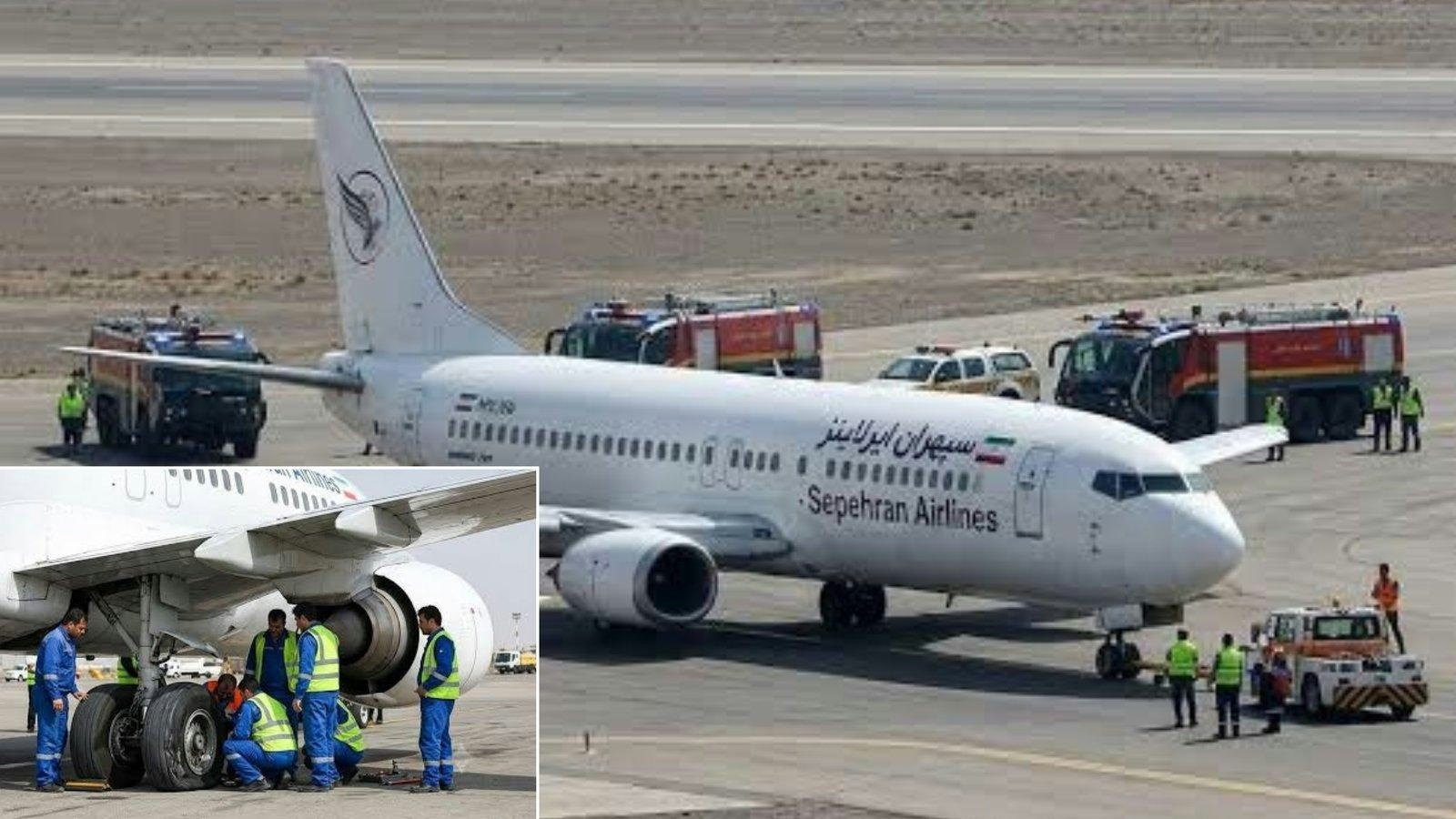
Sepehran Airlines B737 Returns to Mashhad After Tyre and Engine Issues

Etihad Deploys Widebody Fleet to Meet Strong Demand
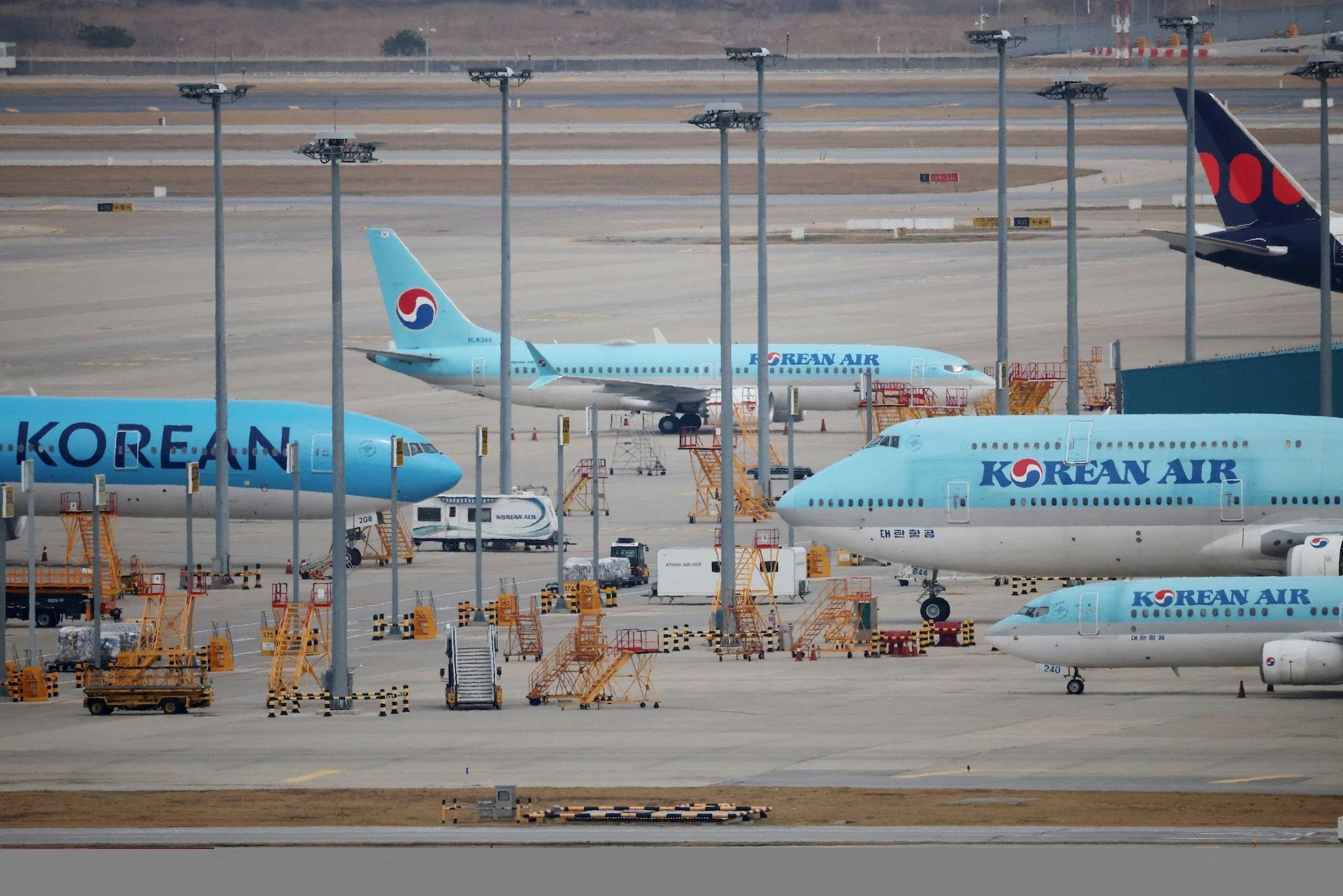
Korean Air Finalizes $36.2 Billion Deal with Boeing
