
Orquestre insights de IA em ações

Tendências
Categories
Growth in Air Traffic and MRO Drives Demand for Advanced Aviation Test Equipment
Growth in Air Traffic and MRO Drives Demand for Advanced Aviation Test Equipment
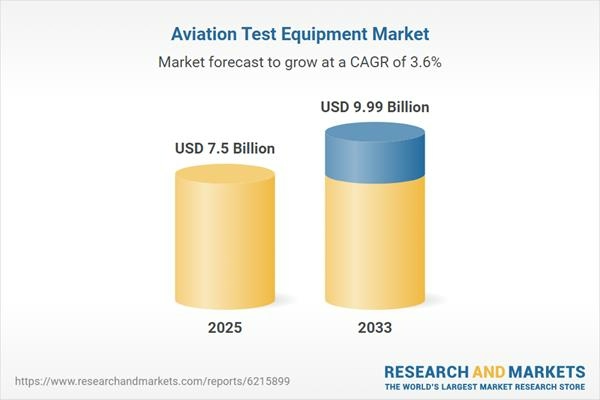
The global aviation test equipment market is set for substantial growth, with its value expected to rise from US$7.5 billion in 2025 to nearly US$10 billion by 2033. This expansion, reflecting a compound annual growth rate (CAGR) of 3.64%, is driven by increasing air traffic, fleet modernization, and the growing complexity of aircraft systems, according to a recent report by ResearchAndMarkets.com.
Drivers of Market Expansion
The rising volume of air travel worldwide has prompted airlines and maintenance organizations to prioritize fleet reliability and safety, thereby boosting demand for sophisticated aviation test equipment. These tools, which include avionics testers, structural test rigs, and engine test stands, are critical for the testing, troubleshooting, and maintenance of aircraft systems. The surge in maintenance, repair, and overhaul (MRO) activities is a key factor underpinning this demand. In particular, the Asia-Pacific region is witnessing notable growth; the in-service business aviation fleet there is projected to increase from 1,600 aircraft in 2026 to over 1,700 by 2035. Correspondingly, the Asia-Pacific engine MRO market, including China, is forecast to surpass $30 billion by 2035, representing approximately one-third of the global engine maintenance market during the 2026-2035 period.
Technological advancements are also reshaping the landscape of aviation test equipment. Modern aircraft, equipped with advanced avionics, fly-by-wire systems, and integrated electronics, require highly sophisticated testing platforms. Automation and data analytics are increasingly incorporated into these systems, enhancing operational efficiency by reducing downtime and improving diagnostic accuracy in MRO processes. Initiatives led by organizations such as NASA aim to further modernize MRO operations by integrating emerging aviation technologies, including those related to advanced air mobility.
Regulatory and Industry Challenges
Stringent regulatory standards imposed by aviation authorities worldwide continue to drive investment in advanced test equipment. As both commercial airlines and military forces expand and upgrade their fleets, the demand for reliable and technologically advanced testing tools grows—not only for new aircraft but also for the maintenance and retrofitting of aging fleets.
Despite the promising outlook, the industry faces several challenges. Sustaining innovation and securing the necessary investment to develop cutting-edge technologies remain critical. Additionally, workforce training is essential to equip technicians with the skills required to operate increasingly complex systems. Competition among manufacturers is intensifying, with companies striving to distinguish themselves through innovation, enhanced product portfolios, and strategic collaborations.
Market trends indicate that investment in advanced aviation test equipment will continue to rise, driven by the sector’s ongoing growth and modernization. These developments underscore the indispensable role of sophisticated testing solutions in maintaining the safety, efficiency, and reliability of global air operations.

Etihad Airways Suspends Airbus A380 Flights on Key Route

Aditya Birla Group Seeks Approval for Aircraft Leasing in GIFT City

Qatar Airways Highlights Innovation and Connectivity at Arabian Travel Market 2026

Hong Kong's Five-Year Plan Includes Andrew Fan's Aircraft Parts Processing Hub Proposal

ACIA Aero Leasing Delivers ATR72-600 to Air Nostrum

RTX Appoints Jill Albertelli as Head of Pratt & Whitney

TAT Technologies Joins Beyond Aero Hydrogen Aircraft Program

AURAK Study Highlights Barriers to Air Taxi Adoption in Emerging Economies

Xiamen Air Selects Altitude for 787 Maintenance at Heathrow

Etihad and Swissport Extend Global Partnership
