
Orquestre insights de IA em ações

Tendências
Categories
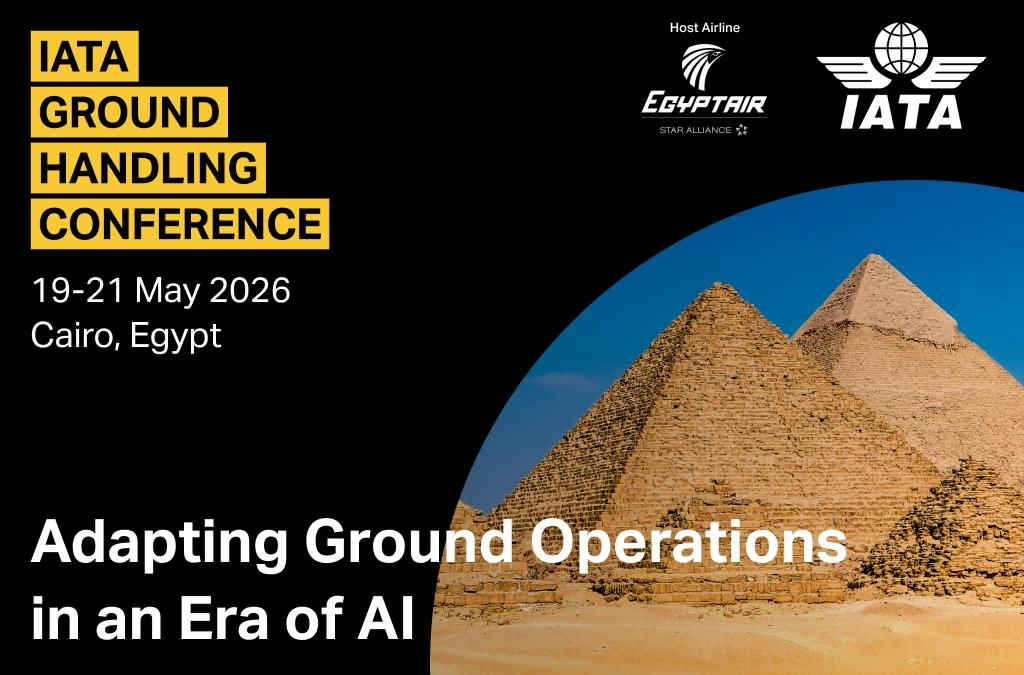
IATA: Adapting Ground Operations in an Era of AI
IATA: Adapting Ground Operations in an Era of AI
Navigating Increasing Complexity in Ground Operations
The aviation industry’s ground operations are confronting unprecedented challenges as rising passenger volumes, constrained infrastructure, workforce shortages, safety concerns, and commercial pressures converge. In response, artificial intelligence (AI) and digital transformation present promising tools to address these issues, provided they are implemented thoughtfully and through collaborative efforts.
The International Air Transport Association (IATA) is addressing these themes at this year’s Ground Handling Conference (IGHC), hosted by EgyptAir in Cairo from 19 to 21 May. Under the banner “Adapting Ground Operations in an Era of AI,” the conference convenes airlines, ground handlers, airports, regulators, and technology providers to explore practical solutions tailored to the current operational landscape.
Embracing Technology Amidst Operational Challenges
The conference agenda centers on the immediate pressures faced by ground operators, highlighting how AI, data analytics, and automation can enhance safety, strengthen operational resilience, and simplify complex processes. Yet, the transition to AI-driven operations is not without significant challenges. Jie Zheng of TUI Group emphasizes that dismantling long-established procedures and cultivating a culture receptive to digital innovation remain formidable barriers. Moreover, skepticism persists within the industry regarding AI’s capacity to fully automate ground operations, underscoring the continued necessity for human judgment and expertise.
IGHC also places considerable focus on the human elements critical to operational performance, including fatigue management, workload distribution, decision-making processes, and the evolving skill sets required in a digitally enhanced environment. As airlines grapple with increasingly volatile conditions—ranging from high-risk operational settings to fluctuating fuel supplies—the imperative for agile planning, enhanced coordination, and robust contingency frameworks grows ever more pressing.
Collaboration and Regulatory Developments
A recurring theme throughout the conference is the importance of collaboration. Greater alignment between airlines and ground handlers, facilitated by improved data sharing, standardized operating procedures, and unified performance objectives, is seen as essential to driving meaningful operational improvements. This collaborative approach gains further urgency in light of impending regulatory changes, such as the European Union’s Ground Handling Regulation, which aims to harmonize industry practices across borders.
Operational priorities under discussion include improving baggage handling performance through enhanced data exchange and addressing safety risks associated with undeclared lithium batteries and the management of mobility aids. As industry players increasingly adopt AI to boost efficiency, they must also navigate the complexities of implementation and develop metrics to assess AI’s impact across various business units.
Keynote speakers representing diverse sectors of the aviation industry will provide insights on strategic priorities, including digitalization, capacity constraints, and workforce transformation. These sessions are designed not only to inform but also to challenge prevailing assumptions and inspire innovative approaches.
Cairo’s strategic position as a major hub linking Africa, the Middle East, and beyond offers an apt setting for these global discussions. As ground operations evolve rapidly, the decisions made today regarding technology adoption, workforce development, and collaborative frameworks will be pivotal in shaping the industry’s capacity to meet future demands.

Etihad Airways Suspends Airbus A380 Flights on Key Route

Aditya Birla Group Seeks Approval for Aircraft Leasing in GIFT City

Qatar Airways Highlights Innovation and Connectivity at Arabian Travel Market 2026

Hong Kong's Five-Year Plan Includes Andrew Fan's Aircraft Parts Processing Hub Proposal

ACIA Aero Leasing Delivers ATR72-600 to Air Nostrum

RTX Appoints Jill Albertelli as Head of Pratt & Whitney

TAT Technologies Joins Beyond Aero Hydrogen Aircraft Program

AURAK Study Highlights Barriers to Air Taxi Adoption in Emerging Economies

Xiamen Air Selects Altitude for 787 Maintenance at Heathrow

Etihad and Swissport Extend Global Partnership
