
Orquestre insights de IA em ações

Tendências
Categories
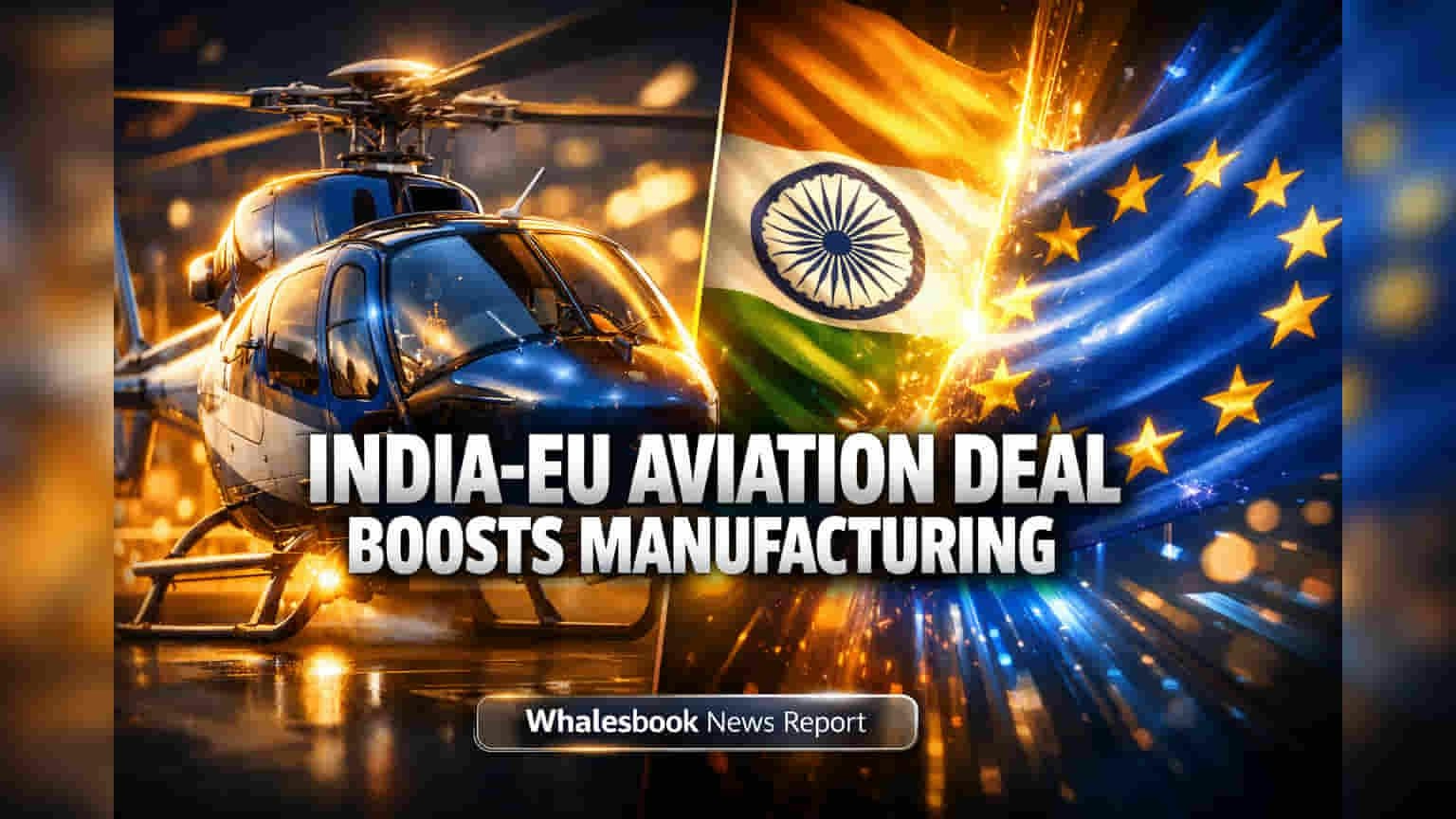
India and EU Sign Aviation Agreement to Strengthen Manufacturing
India and EU Sign Aviation Agreement to Strengthen Manufacturing
India and the European Union have formalized a significant aviation manufacturing agreement aimed at bolstering the 'Make in India' initiative and establishing India as a pivotal player in the global aerospace supply chain. This pact seeks to align Indian production processes with rigorous European safety and environmental standards, promote industrial collaboration, and support the assembly of Airbus Helicopters in Karnataka.
Deepening Industrial Integration
The agreement represents a notable advancement beyond conventional cooperation, focusing on concrete industrial integration that is expected to attract foreign investment and facilitate technology transfer into India’s expanding aviation sector. A key element of the pact is the planned assembly of Airbus Helicopters’ H125/AS350 models in Karnataka, which is anticipated to strengthen bilateral relations and position India as a vital manufacturing hub for European aerospace companies.
By harmonizing regulatory frameworks and enhancing aviation safety standards, the partnership aims to cultivate a resilient aerospace ecosystem. This initiative is projected to draw substantial foreign capital and enable critical technology exchanges, thereby reinforcing India’s domestic aerospace capabilities.
Navigating Global Competition and Challenges
The global aviation industry currently faces supply chain disruptions alongside a resurgence in aircraft demand. India’s large domestic market, growing skilled workforce, and supportive government policies such as 'Make in India' provide it with a competitive advantage. Nevertheless, India contends with intense competition from established aerospace centers and emerging players like Brazil and Turkey, which are also leveraging strategic partnerships and government incentives to expand their manufacturing sectors.
The agreement is likely to intensify competition among European and Indian manufacturers as enhanced trade relations and investment flows benefit both regions. European firms may seek to enhance their manufacturing capacities through initiatives like the Industrial Accelerator Act, while Indian companies could capitalize on their expanding network of Free Trade Agreements to increase their share in the global aerospace and electric vehicle markets.
Despite the opportunities, several challenges persist. Navigating complex regulatory environments in both India and the EU, managing ongoing supply chain disruptions, and ensuring compliance with evolving safety and environmental standards remain critical concerns. There is also apprehension that the partnership may predominantly emphasize foreign-led manufacturing, potentially constraining the growth of indigenous aerospace design and innovation. While the 'Make in India' initiative remains central, reliance on foreign assembly risks perpetuating a 'screwdriver economy' rather than fostering genuine technological independence.
Indian firms may face difficulties competing with established aerospace companies that possess extensive research and development capabilities, especially as international aviation regulations continue to evolve. Additional obstacles include project delays, bureaucratic complexities, and the ongoing need for workforce training, all of which add layers of complexity to the sector’s development.
Outlook
Analysts regard the EU-India aviation agreement as a landmark development for India’s aerospace industry, signaling a transition toward large-scale assembly and production that adheres to Western standards. As global aviation companies reassess supply chain resilience, India’s enhanced manufacturing capacity is increasingly attractive, particularly for firms like Airbus seeking to diversify away from geopolitically unstable regions. The ultimate success of this partnership will depend on India’s ability to integrate European standards while simultaneously fostering domestic innovation and sustainable long-term growth.

Lynchburg Regional Airport Receives $5.2 Million Federal Grant for Infrastructure Expansion
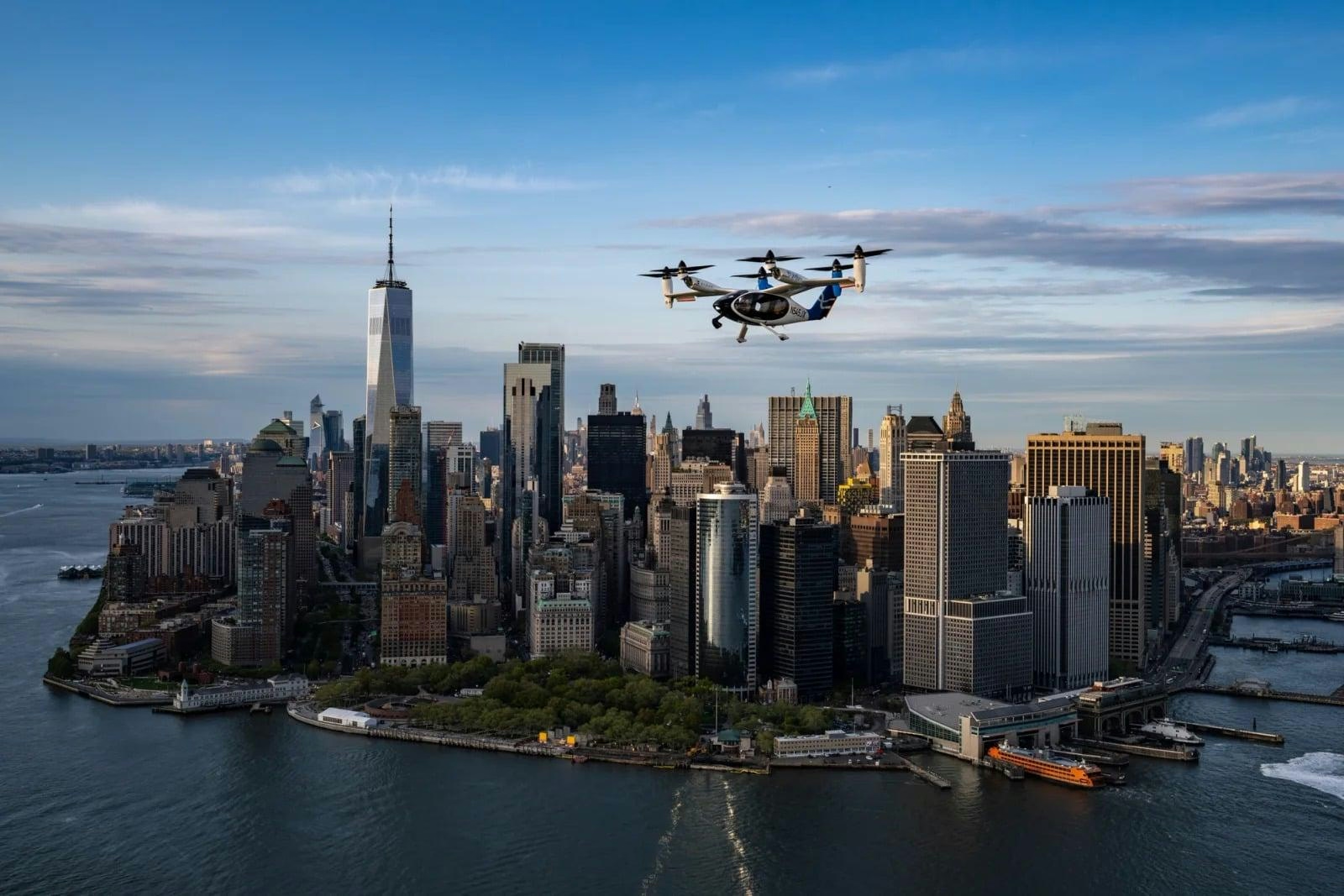
Archer Aviation Projects $5 Million Revenue and $263.2 Million Net Loss for 2026

DeSantis Announces Air Taxi Testing in Central Florida by Year-End

Boeing Maintains Access to Wisk’s Autonomous Flight Technology After Divestment

JetBlue Flight Attendants Call in Sick Amid New Software Glitch
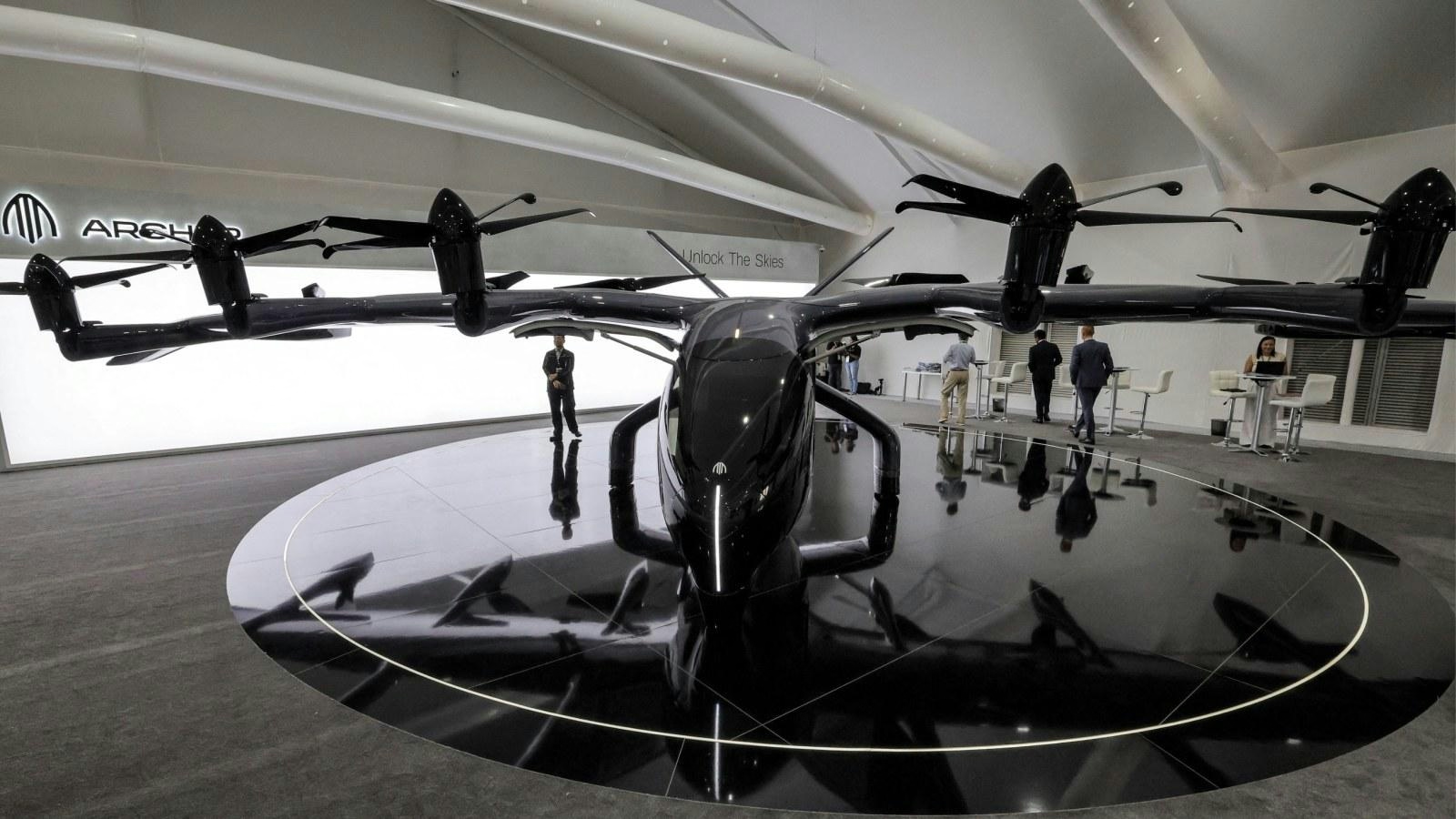
Boeing to Sell Three eVTOL Subsidiaries to Archer Aviation
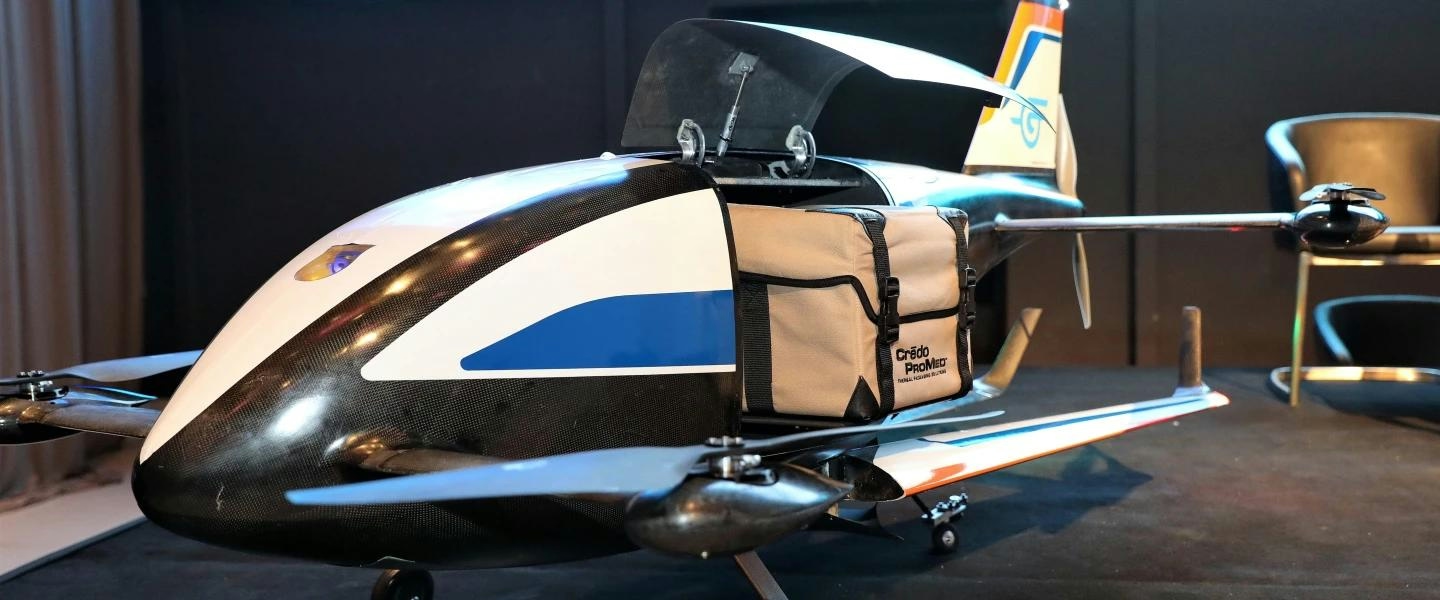
Dominican AI Aviation Technology Named Among Latin America’s Most Disruptive

Gulfstream Partners with Suppliers to Test Sustainable Aviation Fuel
GE and RTX Compete to Supply Engines for Boeing and Airbus
Malaysia Secures $192 Million Boost for Aerospace Sector at Farnborough Airshow
