Imagem

Orquestre insights de IA em ações

Entre na lista de espera da AeroGenie hoje mesmo!

Tendências

Categories

India Linked to Supply Chains Supplying Sanctioned Aircraft Parts to Russia
May 27, 2026By ePlane AI
India Linked to Supply Chains Supplying Sanctioned Aircraft Parts to Russia
0
0
Sanctions Evasion
Aircraft Parts Supply
India Aviation Trade

India Linked to Supply Chains Supplying Sanctioned Aircraft Parts to Russia

Sustaining Russian Aviation Amid Sanctions

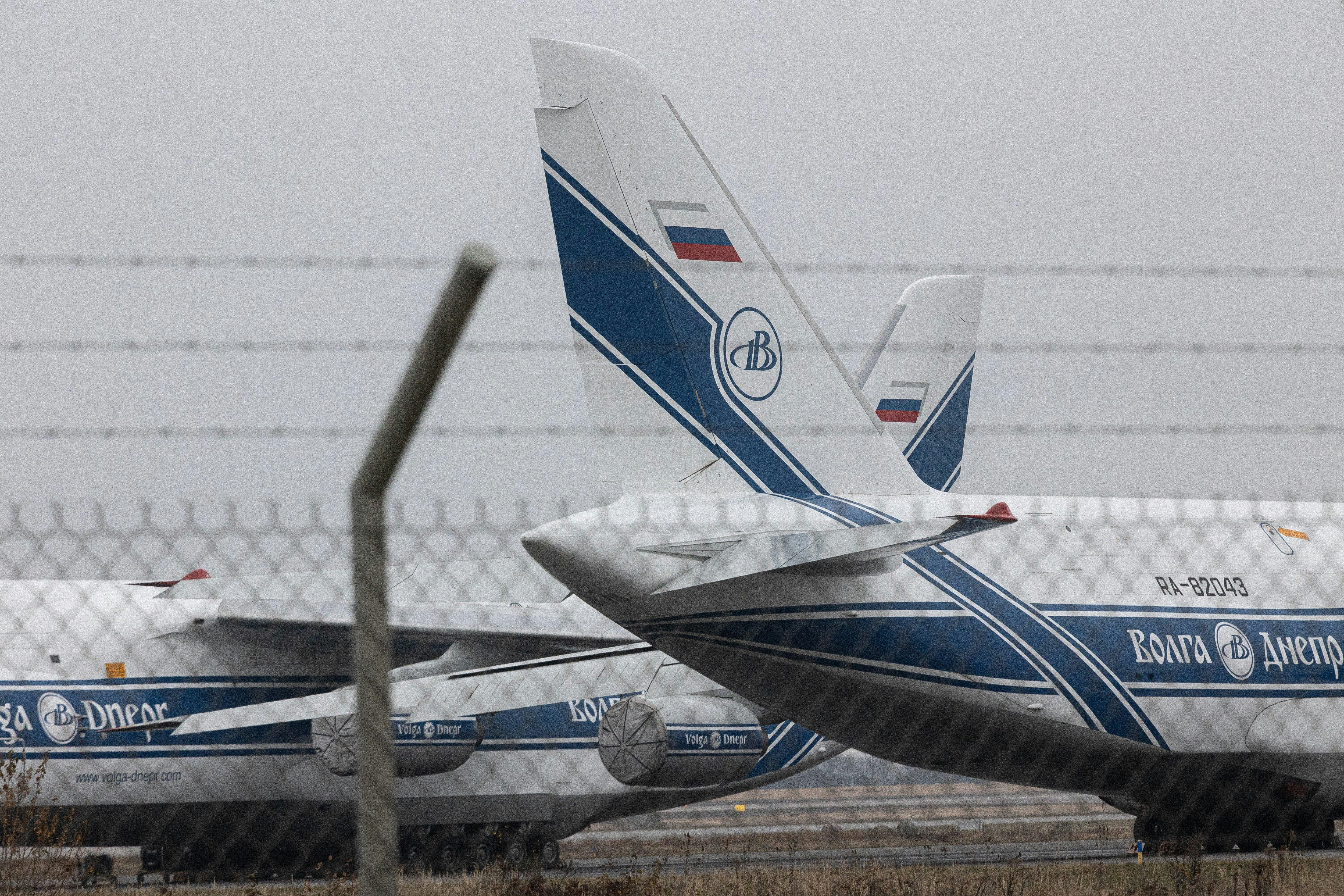
Despite extensive international sanctions imposed following Russia’s full-scale invasion of Ukraine, the country has managed to maintain its commercial aviation sector at near pre-war operational levels. According to The Moscow Times, as of May 2024, Russia’s domestic passenger fleet remains largely functional, comprising 838 aircraft, including 460 models from Airbus and Boeing. This resilience is largely attributed to complex international re-export networks that continue to funnel restricted Western aircraft components into Russia.

Data from Big Trade Data reveals that over the past year, at least 30 companies across China, India, Turkey, the United Arab Emirates, Thailand, Kyrgyzstan, and Kazakhstan have exported aviation parts to Russia. China alone accounted for approximately $961 million in aviation component exports between March 2022 and February 2024, marking a fourfold increase compared to the four years prior to the invasion.

India’s Role in the Supply Chain

Indian firms have emerged as significant contributors within these supply chains. The Marine Equipments Centre, based in Cochin, notably expanded its aviation parts trade in the years preceding the conflict, importing $1.3 million and exporting $172,000 worth of components. Following the imposition of Western transport sanctions, the company began selling parts at elevated prices, primarily to Aeroflot group companies. Initial shipments were directed to Pobeda Airlines, and within two months, engines were transferred to Rossiya Airlines, an Aeroflot subsidiary, for $23.6 million—despite contractual clauses explicitly prohibiting re-export to Russia. In total, the Cochin-based firm supplied $37 million in components to Aeroflot and its subsidiaries, alongside an additional $4.4 million to other Russian carriers.

The illicit supply chain extends beyond major propulsion units, encompassing auxiliary power units, landing gear shock absorbers, multi-functional display blocks, and even cabin galley coffee machines. These alternative acquisition channels have enabled Russia’s internal and international passenger flight capacities to reach 122 million seats in 2024, effectively matching levels seen in 2021.

International Scrutiny and Industry Impact

These activities have increasingly drawn scrutiny from Western governments, raising serious questions about compliance with sanctions and exposing Indian firms to reputational risks. Potential disruptions in global supply chains loom as market reactions could trigger volatility in the stock prices of implicated companies and prompt shifts in international trade policies. Competitors may respond by diversifying their supply chains and intensifying adherence to international regulations.

While the broader fleet of standard Boeing and Airbus models remains resilient, the Airbus A320neo family has experienced a sharp decline, with active aircraft numbers dropping by approximately three-quarters. This decline is largely attributed to the specialized maintenance required for Pratt & Whitney engines, which cannot be legally serviced for Russian operators.

Industry analysts, including Alexander Lanetsky of Lithuanian consulting firm Friendly Avia Support UAB, observe that early forecasts predicting a rapid collapse of Russian aviation underestimated the adaptability of these re-export networks. Alexander Burilkov, a Russia specialist at Leuphana University of Lüneburg, emphasizes that the primary objective remains to ensure the longest possible operation of Boeing and Airbus aircraft models.

Meanwhile, Russia’s attempts to replace Western aerospace technology with domestic alternatives have encountered significant technical setbacks, underscoring the country’s continued dependence on complex international supply chains to sustain its aviation sector.

More news
Why the Airbus A350 Operates Late-Night Slots at London Heathrow When Other Widebodies Do Not

Why the Airbus A350 Operates Late-Night Slots at London Heathrow When Other Widebodies Do Not

Why the Airbus A350 Operates Late-Night Slots at London Heathrow When Other Widebodies Do Not London Heathrow Airport (LHR) remains one of the busiest international hubs globally, managing nearly 84 million passengers and close to half a million aircraft movements in 2024. Despite its scale, Heathrow is subject to some of the strictest noise and environmental regulations in Europe, particularly during overnight hours. The airport operates under a legal cap of 480,000 annual air transport movements, compelling airlines to optimize every available slot while complying with stringent noise restrictions designed to protect the surrounding communities. Heathrow’s Nighttime Noise Regulations and the Quota Count System Night operations at Heathrow are tightly controlled through a Quota Count (QC) system, which assigns each aircraft a QC value based on its certified noise levels during takeoff and landing. This system is designed to limit noise pollution during the night quota period, which runs from 23:30 to 06:00. Aircraft with lower QC ratings consume less of Heathrow’s limited overnight noise budget, allowing them to operate more freely during these hours. QC values range from QC/0 and QC/0.125 for the quietest aircraft to QC/16 for the loudest. Under current UK regulations, aircraft rated QC/4 or higher are generally prohibited from operating during the night quota period, making the choice of aircraft critical for airlines seeking late-night slots. The Airbus A350’s Noise Advantage and Operational Benefits The Airbus A350 has distinguished itself as a leading aircraft in this context due to its advanced design and quieter operation. Its composite airframe and exclusive use of Rolls-Royce Trent XWB engines contribute to noise levels that are up to nine decibels lower than many competing widebody aircraft. The Trent XWB engines, including the powerful XWB-97 variant used on the A350-1000, are among the quietest in their class, benefiting from extensive acoustic optimization. Noise reduction is achieved not only through engine technology but also through aerodynamic refinements across the aircraft, resulting in a significantly reduced overall noise footprint. This quieter profile provides airlines with a crucial operational advantage at Heathrow, enabling them to schedule long-haul flights during late-night slots without breaching the airport’s strict noise quotas. Heathrow further encourages the use of quieter aircraft through its landing charge structure, which imposes lower noise-related fees on newer, Chapter 14-compliant jets. Currently, over 80% of Heathrow’s movements are conducted by aircraft meeting the latest ICAO noise standards, reflecting a rapid modernization of the fleet. Beyond noise considerations, the A350 offers operational flexibility and efficiency that make it the preferred choice for airlines optimizing long-haul schedules at noise-sensitive airports. For instance, Qantas has selected the A350-1000ULR for its record-breaking non-stop Sydney to London flights, capitalizing on the aircraft’s extended range and fuel efficiency for ultra-long-haul operations. Similarly, Japan Airlines operates the A350-1000 on its Tokyo-London route, highlighting the aircraft’s performance and passenger comfort. The Airbus A350’s combination of advanced noise reduction, long-range capability, and operational efficiency thus enables airlines to secure valuable late-night slots at London Heathrow—slots that are often inaccessible to noisier widebody aircraft. This advantage is increasingly shaping the future of long-haul travel at one of the world’s most capacity- and noise-constrained airports.
The Six Most Frequent Domestic Airbus A350 Routes in the U.S. for 2026

The Six Most Frequent Domestic Airbus A350 Routes in the U.S. for 2026

The Six Most Frequent Domestic Airbus A350 Routes in the U.S. for 2026 Evolution of the Airbus A350 and Its Domestic Deployment In the early 2000s, Airbus confronted intensifying competition in the widebody aircraft segment. Boeing’s 777 had established itself as a preferred choice for long-haul travel, while the 787 Dreamliner was rapidly gaining favor among airlines worldwide. Airbus initially responded with the A330-200 Lite concept, which ultimately failed to gain traction. This led to the development of the A350, a clean-sheet design featuring a new fuselage, advanced aerodynamics, and fuel-efficient Rolls-Royce Trent XWB engines. The A350 family, consisting of the versatile A350-900 and the larger A350-1000, now operates globally on both long-haul and select domestic routes. Although the A350 is predominantly associated with international flights, several U.S. domestic routes are scheduled to feature A350 operations in 2026. According to aviation analytics firm Cirium, six domestic routes stand out as the most frequently served by the Airbus A350 in the United States for the upcoming year. The deployment of the A350 on these routes reflects operational requirements and broader industry trends, including the demand for flexible aircraft configurations and evolving route strategies. Key Domestic Routes Featuring the Airbus A350 Among the notable domestic routes, Delta Air Lines operates the A350 between Atlanta and Honolulu International Airport (HNL), with eight scheduled flights in 2026. Earlier in the year, Delta utilized its premium-dense A350 configuration for four one-way flights on this route. However, most services are expected to revert to the Airbus A330-300 for the remainder of the year. Honolulu remains a significant leisure destination for Delta, which also serves the city from multiple major hubs and plans to resume nonstop service from Boston in December. Another important route is Atlanta to Minneapolis–St. Paul International Airport (MSP), which will see nine A350 flights in 2026. The majority of these flights have already taken place, with one remaining service scheduled for July 12. Delta operates its 306-seat A350-900 on this route, designated as DL2825 outbound and DL1036 on the return. Minneapolis serves as a critical hub for Delta, a legacy of its 2008 merger with Northwest Airlines. Industry Trends and Strategic Implications The increasing use of the A350 on domestic routes underscores the necessity for airlines to adapt to shifting demand patterns. The example of Qantas’s Project Sunrise illustrates the growing importance of flexibility in aircraft configuration. Qantas plans to replace its Boeing 787-9 fleet with A350-1000ULRs on ultra-long-haul routes, potentially redeploying the 787s to more appropriate sectors. This strategic shift may influence U.S. carriers to reassess their own fleet compositions and route networks. Competitors might respond by modifying their networks, potentially moving away from traditional hub-and-spoke models toward more point-to-point services—a trend Airbus has actively promoted. The introduction of ultra-long-haul flights by Qantas and other carriers could prompt U.S. airlines to reevaluate their long-haul route structures and aircraft selections to maintain competitiveness in a rapidly evolving market. As airlines strive to balance operational efficiency with passenger demand, the role of the Airbus A350 on domestic U.S. routes will continue to serve as a significant indicator of broader industry developments.
The Rise of Premium Economy on Ultra-Long-Haul Flights

The Rise of Premium Economy on Ultra-Long-Haul Flights

The Rise of Premium Economy on Ultra-Long-Haul Flights A Growing Middle Ground in Air Travel Premium economy class is experiencing rapid expansion worldwide, outpacing the growth rates of both economy and business class tickets. Much like the transformation business class underwent decades ago, premium economy has established itself as a middle ground, bridging the affordability of economy with the enhanced comfort of business class. This development is especially evident on long and ultra-long-haul flights, where shifting passenger demographics and evolving expectations are driving significant changes within the airline industry. Modern travelers increasingly seek a balance between comfort and cost. While budget-conscious flyers continue to support the rise of low-cost carriers, a substantial segment of passengers is willing to pay a premium for improved comfort and amenities without incurring the high expense associated with business class. This demand has positioned premium economy as an appealing choice for leisure travelers desiring additional space and services, as well as for business travelers aiming to control expenses. Economic Implications and Market Trends For airlines, premium cabins—including premium economy—have become vital revenue generators. Amid rising operating costs and ongoing geopolitical uncertainties, carriers are consolidating their market positions by focusing on higher-yield segments. This strategic shift has widened the divide between premium and economy classes, often leaving budget travelers with fewer affordable and comfortable options. Market data highlights this trend clearly. According to Aviation Week, North Atlantic airline capacity increased by 5.9% in 2024, while premium economy capacity surged by 8.0%. Forecasts for 2025 suggest that premium economy will continue to be the fastest-growing cabin class. Although economy and business class seating are still expanding, their growth rates lag behind that of premium economy. Meanwhile, first class is experiencing a steep decline, down approximately 40% compared to 2019. Several airlines, including Air New Zealand, Malaysian Airlines, and South African Airways, have eliminated first class entirely, while others such as Qantas now offer it only on select aircraft. Major U.S. carriers—Delta, American Airlines, and United Airlines—are responding by enhancing their premium offerings to attract high-paying passengers. This competitive emphasis on premium cabins is reshaping the industry landscape, as airlines strive to differentiate themselves and capture a larger share of the lucrative premium traveler market. Future Outlook Industry experts anticipate that these trends will persist, with airlines investing in modernizing air traffic control systems and further refining their premium products. As the sector adapts to changing passenger expectations and economic pressures, premium economy is set to assume an increasingly central role on ultra-long-haul routes. It offers a compromise between luxury and value that aligns with the preferences of today’s global travelers.
Lufthansa Orders GE9X Engines for Jets Scheduled to Arrive in 2027

Lufthansa Orders GE9X Engines for Jets Scheduled to Arrive in 2027

Lufthansa Commits to GE9X Engines for Next-Generation Freighters Arriving in 2027 Lufthansa Group has placed a significant order for GE9X engines from GE Aerospace, marking a strategic step beyond a routine fleet upgrade. This acquisition underscores how leading cargo airlines are preparing for the future of air freight. The order includes GE9X engines for upcoming Boeing 777-8 Freighters, alongside GE90 engines for aircraft currently in operation. This dual procurement reflects Lufthansa Cargo’s commitment to both modernization and maintaining operational continuity. Navigating a Complex Aviation Environment The decision comes amid a challenging period for European aviation, where rising operating costs, tightening environmental regulations, and geopolitical uncertainties continue to disrupt global freight markets. Delays in aircraft deliveries further complicate long-term planning, compelling airlines to carefully balance immediate operational demands with future efficiency objectives. Lufthansa’s strategy of investing simultaneously in next-generation and existing engine models highlights the complexities involved in fleet renewal within the cargo sector. While new aircraft promise enhanced fuel efficiency and reduced emissions, the transition remains gradual. Cargo freighters often remain in service for several decades, necessitating a careful approach that maximizes the value of current assets while preparing for new technology. The Role of the Boeing 777-8 Freighter and GE9X Engine Central to Lufthansa Cargo’s long-term vision is the Boeing 777-8 Freighter, which has attracted interest from multiple major cargo operators despite not yet entering commercial service. Derived from Boeing’s 777X passenger family, the 777-8F is designed to replace older large freighters with a more efficient platform that offers lower operating costs. Lufthansa has announced plans to acquire seven of these aircraft as part of a broader fleet renewal initiative, with deliveries expected later this decade. These jets are poised to become the backbone of Lufthansa Cargo’s intercontinental operations, particularly on high-volume routes connecting Europe with Asia and North America. The GE9X engine, which will power these future freighters, is currently the most powerful commercial aircraft engine in production and serves as the successor to the GE90 family. Developed exclusively for Boeing’s 777X program, the GE9X features a 134-inch fan diameter and incorporates advanced technologies such as fourth-generation carbon-fiber composite fan blades, a lighter composite fan case, and ceramic matrix composite components. These innovations contribute to improved efficiency and durability. Industry Competition and Future Challenges Lufthansa’s investment occurs amid intensifying competition within the aviation industry. American Airlines is reportedly pursuing widebody aircraft orders to keep pace with rivals Delta and United, while engine manufacturers like Rolls-Royce are striving to regain market share through durability enhancements to the Trent 1000 XE engine. Concurrently, the sector is undergoing a broader transition toward greener, more efficient fuels, which may further influence operational strategies and costs. By placing a dual order for both current and next-generation engines, Lufthansa exemplifies how cargo carriers are managing uncertainty. The company’s approach of modernizing its fleet while preparing for new freighters positions Lufthansa Cargo to remain competitive in the present and adaptable to the evolving demands of a more sustainable future.
Aviation Kerosene Deliveries to Russian Airports Placed Under Interdepartmental Control

Aviation Kerosene Deliveries to Russian Airports Placed Under Interdepartmental Control

Aviation Kerosene Deliveries to Russian Airports Under Interdepartmental Oversight Deliveries of aviation kerosene to Russian airports have been placed under intensified interdepartmental control amid persistent fuel supply challenges. The Ministry of Transport, Ministry of Energy, and other relevant government agencies are closely monitoring the situation, according to Dmitry Yadrov, head of the Federal Air Transport Agency (Rosaviatsia). Yadrov affirmed that Russian airports are currently receiving the necessary volumes of aviation fuel and that flight schedules are being maintained despite the difficulties. Fuel Supply Disruptions and Government Response The aviation sector has faced significant disruptions this summer, largely due to changes in logistics and a series of attacks on oil refineries. Deputy Prime Minister Alexander Novak identified these factors as primary contributors to the fuel shortages. In response, the government has introduced several measures aimed at stabilizing the market. These include a temporary ban on gasoline and diesel exports, tax incentives to encourage fuel imports, and initiatives to increase domestic production capacity. Despite these interventions, the shortage of jet fuel remains critical for some airlines. Azimuth Airlines reported that its principal supplier planned to reduce deliveries by one-third, citing force majeure circumstances at oil refineries. This reduction has driven an average 17% increase in jet fuel prices at Russian airports, rendering flight operations economically unviable for certain carriers. Industry Adaptations and Market Pressures The fuel crisis has compelled some operators of light aircraft to experiment with automobile gasoline as an alternative to aviation kerosene, despite the potential risks posed to aircraft engines. This development has intensified calls within the industry for state regulation of aviation fuel prices to ensure market stability and affordability. In light of ongoing pressures in the fuel market, the Russian government is also considering a total ban on diesel exports to further secure domestic supplies. The situation has been exacerbated by Ukrainian drone attacks targeting oil refineries and supply networks, complicating logistics and market dynamics. While authorities maintain that flights continue to operate and schedules are upheld, the aviation industry remains under considerable strain. Officials continue to address the root causes of the fuel shortage to safeguard the ongoing functioning of Russian air transport.
IAG Partners with Verve Motion to Test Exosuits for Baggage Handlers

IAG Partners with Verve Motion to Test Exosuits for Baggage Handlers

IAG Partners with Verve Motion to Test Exosuits for Baggage Handlers International Airlines Group (IAG) has announced a strategic investment in Verve Motion, a wearable robotics startup, to pilot exosuits designed to support baggage handlers and ground operations personnel. This initiative, undertaken through IAGi Ventures, seeks to enhance worker safety, alleviate physical strain, and improve operational efficiency in baggage and cargo handling processes. Collaboration to Advance Wearable Robotics in Aviation Verve Motion, established in 2020 by Spanish entrepreneur Ignacio Galiana and rooted in research from Harvard University, specializes in lightweight exosuits that assist workers with repetitive lifting tasks. The company’s technology is already deployed in logistics and industrial sectors, where it has contributed to reducing injury risks and increasing worker comfort. With the latest funding round, which includes participation from new and existing investors such as HexArmor, Verve Motion has raised over $55 million to accelerate the development and deployment of its wearable robotics solutions. Under the partnership, IAG will collaborate with Verve Motion to pilot an exosuit specifically tailored for the aviation industry, initially focusing on providing shoulder support for baggage handlers. The trial aims to evaluate how wearable robotics can mitigate the physical demands of repetitive lifting, potentially enhancing both employee wellbeing and operational performance in ground and cargo operations. Nacho Tovar, Group Innovation Director at IAG, emphasized the strategic value of the partnership, stating, “Verve Motion is exactly the kind of company we want to back through IAGi Ventures—a business applying innovative technology to solve real operational challenges. This partnership gives us the opportunity to test and shape the technology in a live operating environment, helping us understand how it could improve the day-to-day experience of colleagues carrying out physically demanding work while also supporting more efficient operations.” Challenges and Industry Implications Despite the promising potential of exosuit technology, its adoption faces several challenges. The high cost of implementing wearable robotics on a large scale may present a significant barrier, especially as airlines continue to navigate financial pressures. Furthermore, some workers may express skepticism regarding the benefits of exosuits or resist changes to established routines, necessitating comprehensive training and adaptation efforts. Market observers have raised questions about the long-term cost-effectiveness and measurable benefits of such technology. This development occurs amid a broader industry focus on enhancing workforce safety and operational resilience. IAG’s investment could encourage competitors to explore similar ergonomic solutions or conduct their own exosuit trials aimed at reducing physical strain on baggage handlers and improving workplace conditions. IAG’s wider innovation strategy prioritizes emerging technologies that offer tangible benefits across its operations. By partnering with companies like Verve Motion, IAG aims to tailor these solutions to the specific demands of the aviation sector, ultimately fostering safer and more efficient working environments. As the trial advances, IAG will closely assess both the operational impact and workforce reception of the exosuits, informing future decisions regarding their broader adoption within the group.
Airbus Strike in Getafe Disrupts Deliveries

Airbus Strike in Getafe Disrupts Deliveries

Airbus Strike in Getafe Disrupts Deliveries and Raises Operational Concerns Industrial Action at Getafe Facility Workers at Airbus’s Getafe plant in Spain have initiated a large-scale strike over working conditions, involving approximately 3,000 employees. This ongoing industrial action has significantly disrupted aircraft inspections, engineering checks, and delivery processes at the site. The resulting operational bottlenecks are affecting key Airbus programmes and raising concerns about the company’s capacity to meet its delivery targets. The strike occurs at a critical juncture for Airbus, which has set an ambitious internal goal of delivering 900 aircraft in 2026. While the company officially maintains guidance of around 870 deliveries, the disruption at Getafe exposes vulnerabilities within the aerospace supply chain. Prolonged delays at such a major facility risk impacting handovers to both airline customers and defense clients, potentially complicating fleet planning and maintenance schedules. Broader Labor Tensions and Industry Context The situation at Getafe is compounded by wider labor unrest within Airbus. In France, unions have protested changes to remote work policies, resulting in additional stoppages and demonstrations. These developments highlight the internal execution risks Airbus faces as it strives to compete not only on product performance but also on delivery reliability. In contrast, Boeing has reported stronger delivery performance, with a 13% increase in May 2026 compared to the first five months of 2025. Airbus’s delivery growth for the same period stands at 7.82%, intensifying pressure on the company as it navigates operational challenges alongside labor disputes. Market Performance and Outlook Despite these challenges, Airbus shares (ENXTPA:AIR) recently closed at €197.26, reflecting a 12.7% increase over the past month and a 9.7% rise over the past year. However, the stock remains down 3.2% year to date. Over a longer timeframe, Airbus has delivered gains of 57.1% over three years and 94.3% over five years, indicating a mixed performance profile for investors. The duration and scale of the Getafe strike, along with the speed of resolution between management and workers, will be closely monitored by investors and industry observers. Prolonged disruption could have significant implications for project timelines, client relationships, and Airbus’s ability to sustain its competitive position in the global aerospace market.
Airline That Introduced Low-Cost Long-Haul Widebody Service Ends the Model

Airline That Introduced Low-Cost Long-Haul Widebody Service Ends the Model

AirAsia X Ends Low-Cost Long-Haul Widebody Service Model In a significant development for the budget aviation sector, AirAsia X and Airbus have jointly agreed to cancel the remaining 15 Airbus A330-900 aircraft from the manufacturer’s backlog. This decision, finalized in mid-2026, effectively terminates the airline’s long-standing ambition to expand its low-cost, long-haul widebody operations—a strategy that once held the promise of transforming affordable travel across the Asia-Pacific region. Challenges Undermining the Low-Cost Long-Haul Model AirAsia X, a pioneer in the low-cost long-haul market, has faced increasing economic pressures that have eroded the viability of its original business model. The airline’s approach relied on filling nearly 400 seats on high-density, twin-aisle jets to minimize per-seat costs. However, this model has been severely challenged by volatile fuel prices, currency fluctuations, and the broader unpredictability of global markets. Unlike legacy carriers, which benefit from premium cabins and loyalty programs to mitigate financial risks, budget airlines are particularly vulnerable when passenger demand weakens. An unfilled widebody aircraft quickly becomes a costly liability rather than an asset. The cancellation of the A330neo order reflects wider industry difficulties. Rising operating expenses, geopolitical uncertainties, and mounting sustainability demands have prompted a reassessment of the feasibility of long-haul, low-cost widebody operations. Concurrently, the competitive environment is evolving, with larger full-service airlines such as Lufthansa and Air France-KLM consolidating their market positions. These carriers leverage extensive resources to maintain service quality and customer loyalty, intensifying the pressure on smaller, budget-focused airlines to adapt or face obsolescence. Strategic Shift Towards Single-Aisle Aircraft In response to these challenges, the AirAsia Group is shifting its focus toward a more flexible, single-aisle strategy. The airline has committed to acquiring 50 Airbus A321XLR aircraft, with options for an additional 20, in a deal valued at approximately $12.25 billion. These long-range narrowbody jets provide greater operational flexibility, enabling the airline to better align capacity with demand and reduce exposure to market volatility. This transition also allows AirAsia to optimize capital allocation and streamline operations, favoring sustainable, route-specific growth over reliance on the scale of widebody fleets. The shift is not without its own challenges. As AirAsia reconfigures its network, it must also reconsider its in-flight connectivity solutions. The diminishing accessibility of SpaceX’s Starlink service could affect the quality of onboard internet, a critical factor in maintaining competitiveness within the low-cost segment. AirAsia X’s withdrawal from the widebody, long-haul model marks the end of a notable chapter in budget aviation. The initiative that once aimed to democratize intercontinental travel has proven unsustainable under current market conditions. The airline’s new approach emphasizes agility and financial resilience over expansive growth, potentially offering a strategic framework for other carriers navigating the complexities of modern air travel.
The Challenges and Prospects of ASEAN Aviation in 2026

The Challenges and Prospects of ASEAN Aviation in 2026

The Challenges and Prospects of ASEAN Aviation in 2026 As 2026 reaches its midpoint, the Asia-Pacific aviation sector, anchored by the Association of Southeast Asian Nations (ASEAN), is confronting an unprecedented and complex environment. A striking paradox has emerged: passenger demand is surging, yet airlines are simultaneously reducing capacity. This contradiction stems not merely from ticket sales fluctuations but from a multifaceted interplay of refinery bottlenecks, disrupted supply chains, and escalating geopolitical tensions that are fundamentally reshaping the region’s aviation landscape. Fuel Crisis and Cost Pressures The defining challenge of 2026 has been the extreme volatility in global energy markets, exacerbated by ongoing geopolitical tensions in the Middle East. Although crude oil prices have remained relatively stable, fluctuating between US$90 and US$95 per barrel, the critical issue for airlines has been the soaring crack spread—the margin between crude oil and refined products such as jet fuel. Historically stable at US$15 to US$20 per barrel, this spread has surged dramatically due to severe refinery bottlenecks, particularly in Gulf and Asian facilities that supply a significant portion of the world’s jet fuel. By the second quarter, jet fuel prices had doubled, averaging over US$140 per barrel. For ASEAN’s low-cost carriers, which operate on extremely thin margins and have limited capacity for fuel hedging, these conditions pose an existential threat. Fuel now accounts for 35% to 45% of operational costs, meaning that each additional route risks rapid financial losses. Compounding this challenge, the introduction of Sustainable Aviation Fuel (SAF) mandates—while essential for environmental sustainability—has further increased operational expenses, as SAF remains substantially more costly than conventional jet fuel. Capacity Reductions and Rising Airfares In response to these pressures, airlines have adopted a strategy marked by pragmatic capacity reductions. Across the Asia-Pacific region, available seat capacity was cut by 8% to 10% between March and June compared to initial forecasts. This contraction is not driven by a lack of passenger demand—travellers remain eager to fly, with load factors in the region reaching near-record highs of 85%. Rather, airlines are withdrawing seats they cannot profitably fill under current cost structures. Consequently, airfares across ASEAN have surged by 20% to 30% year-on-year, as rising fuel, labour, and airport charges are passed on to consumers. Infrastructure Constraints and Geopolitical Risks Beyond immediate cost pressures, the region faces deeper structural challenges. Infrastructure capacity is increasingly strained, with airports and air traffic management systems struggling to keep pace with growing demand. Signature Aviation CEO Tony Lefebvre has highlighted these limitations, emphasizing the urgent need for investment and modernization. Inflationary pressures and ongoing supply chain disruptions further complicate operational efficiency. Additionally, geopolitical instability poses a significant risk; tensions between Thailand and Cambodia threaten to disrupt logistics and tourism flows, injecting further uncertainty for airlines and investors alike. Competitive Dynamics While ASEAN carriers contend with these headwinds, European aviation giants are consolidating and strengthening their market positions, demonstrating resilience despite facing similar challenges. This trend underscores the imperative for ASEAN airlines to adapt swiftly, enhance operational efficiency, and navigate an increasingly complex and competitive global landscape. Outlook For industry stakeholders—including planners, investors, and passengers—2026 is characterized by elevated costs, constrained supply, and structural shifts that will redefine the economics of air travel in the region. The future trajectory of ASEAN aviation will hinge on its capacity to manage volatility, invest in critical infrastructure, and respond effectively to both regional and global uncertainties.
Archer Aviation Escalates Patent Dispute with Joby as Delta Voices Concerns

Archer Aviation Escalates Patent Dispute with Joby as Delta Voices Concerns

Archer Aviation Intensifies Patent Dispute with Joby Aviation Amid Industry Concerns Archer Aviation (NYSE: ACHR) has escalated its legal confrontation with competitor Joby Aviation, intensifying a critical patent dispute that could significantly influence the trajectory of the nascent U.S. electric vertical takeoff and landing (eVTOL) sector. Archer recently lodged a formal complaint with the U.S. International Trade Commission (ITC), accusing Joby of infringing on its patents through the importation of aircraft components. Should the ITC grant Archer’s request for exclusion orders, Joby may face prohibitions on importing certain eVTOL aircraft or parts into the United States, potentially disrupting its market access. Legal Battle Amidst Industry Race This dispute unfolds as both companies compete to commercialize urban air mobility solutions, attracting the attention of major airline partners and investors. Delta Air Lines, a prominent stakeholder in the industry, has publicly expressed apprehension regarding the broader ramifications of the legal conflict. Delta cautions that regulatory decisions stemming from this dispute could have a ripple effect across the entire U.S. eVTOL market, potentially impeding the deployment of future air taxi services. The complexity of the legal proceedings has increased, with Archer simultaneously pursuing its patent claims at the ITC while seeking to dismiss a separate trade secret lawsuit filed by Joby. Joby alleges that Archer, along with a former Joby employee, misappropriated confidential information. A federal judge recently allowed the core elements of Joby’s trade secret case to proceed, rejecting Archer’s counterclaims and paving the way for a potential jury trial. Archer’s attempts to have these trade secret claims dismissed have thus far been unsuccessful. Implications for Market and Development The timing of this legal wrangling is critical for both companies. Archer is advancing through regulatory approvals and preparing for initial operations within the United States. Concurrently, Joby continues to develop its aircraft and anticipates securing a second $250 million investment from Toyota by the end of the year, contingent upon finalizing a manufacturing supply agreement. For investors and industry analysts, the resolution of these disputes carries significant weight. Legal outcomes may determine the competitive landscape in the U.S. eVTOL market, influencing not only which companies can operate freely but also the pace at which infrastructure and aircraft deployment progress. The heightened scrutiny from regulators and airline partners such as Delta underscores that the future of eVTOL services will be shaped by a confluence of technological innovation, legal rulings, regulatory frameworks, and intellectual property considerations. As Archer navigates these multifaceted challenges, including its inclusion in several Russell value benchmarks and its strategic focus on both commercial and defense applications, the company faces uncertainties related to legal expenses, capital requirements, and market access. This evolving legal environment highlights the pivotal role that certification, safety standards, and intellectual property rights will play in defining the future of the U.S. eVTOL industry.
line









