Imagem

Orquestre insights de IA em ações

Entre na lista de espera da AeroGenie hoje mesmo!

Tendências

Categories

IndiGo Discusses Potential Order of Embraer E2 Regional Jets
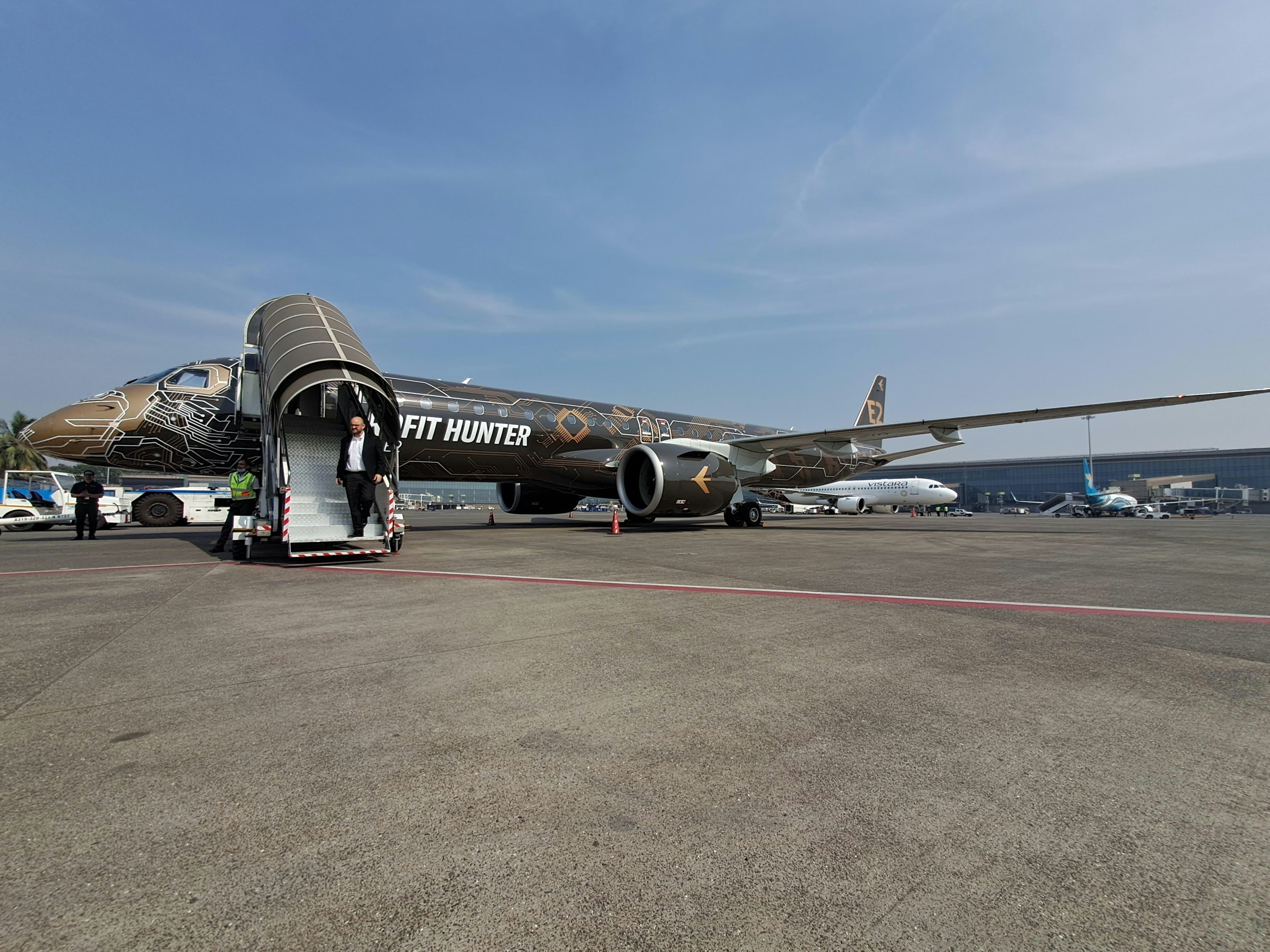
August 8, 2026By ePlane AI
IndiGo Discusses Potential Order of Embraer E2 Regional Jets
0
0
IndiGo
Embraer E2
Fleet Expansion

IndiGo in Preliminary Talks with Embraer for E2 Regional Jets

India’s largest airline, IndiGo, is engaged in early-stage discussions with Brazilian aircraft manufacturer Embraer SA regarding a potential order for E2 regional jets. This development, reported by Bloomberg sources, could signal a strategic shift for IndiGo, which has traditionally maintained a fleet dominated by Airbus aircraft. As of now, the negotiations remain preliminary, with no formal agreement reached.

Potential Fleet Diversification and Capacity Expansion

The prospective deal would involve IndiGo evaluating the acquisition of several Embraer E2 jets to replace its existing ATR 72 turboprop fleet and to enhance capacity across its extensive domestic network. Such a move would mark a significant departure from IndiGo’s established fleet composition, which currently includes one of the world’s largest Airbus fleets. The airline operates approximately 420 aircraft, comprising 192 A320-family jets, 179 A321-family aircraft, and 44 ATR 72 turboprops. IndiGo also maintains one of the industry’s largest outstanding orders for the Airbus A320neo family and has recently selected the Airbus A350 for its forthcoming long-haul international routes.

While IndiGo’s fleet strategy has historically favored Airbus, the consideration of Embraer’s E2 series suggests a willingness to diversify its aircraft portfolio. Industry analysts observe that opting for Embraer’s E2 jets is a less predictable choice compared to remaining within the Airbus ecosystem by selecting the A220, Airbus’s smallest jetliner.

Embraer’s Growing Presence and Industrial Ambitions in India

For Embraer, securing an order from IndiGo would represent a significant breakthrough in the Indian aviation market. To date, the Brazilian manufacturer has not secured any E2 orders in India, although regional carrier Star Air operates the E175 through leasing arrangements and is reportedly negotiating to acquire up to 20 additional Embraer aircraft, including leased E190s.

Embraer has recently experienced a surge in demand for its E2 series. At the Farnborough International Airshow, the company announced 28 new orders, including a firm commitment from Abra—the holding company behind Gol and Avianca—for 20 E195-E2 jets. This positive market response has strengthened Embraer’s production outlook and plans for expansion, with India identified as a key growth opportunity.

The ongoing discussions with IndiGo also revive Embraer’s industrial ambitions in India. The company has previously indicated that establishing a final assembly line for the E175 would require a minimum order of 200 aircraft. Indian media outlets, including The Economic Times, have reported that the Adani Group is prepared to support such a facility if sufficient demand materializes, although no formal agreement has been announced.

Neither IndiGo nor Embraer have issued public statements regarding the reported negotiations. Should a deal be finalized, it would constitute Embraer’s largest commercial aircraft sale in India to date, further intensifying competition within the country’s rapidly expanding aviation sector.

More news
Honda Aircraft Company Marks 20 Years of Aviation Innovation

Honda Aircraft Company Marks 20 Years of Aviation Innovation

Honda Aircraft Company Marks Two Decades of Aviation Innovation GREENSBORO, NC – Honda Aircraft Company celebrated its 20th anniversary this week at its global headquarters in Greensboro, North Carolina, marking two decades of pioneering advancements in aviation, community engagement, and manufacturing excellence. Since its inception in 2006, the company has delivered over 275 HondaJet HA-420 aircraft worldwide and remains deeply committed to the Piedmont Triad region through extensive STEM programs and educational partnerships. A Legacy of Innovation and Community Commitment The anniversary was commemorated with a banner signing by company associates, reflecting on Honda Aircraft’s journey from the successful first flight of the HondaJet to its current position as a leader in the light jet market. The company currently manufactures the HondaJet Elite II at its Greensboro facility, an aircraft recognized as the fastest, farthest, and highest-flying in its class. In addition, development is underway on the HondaJet Echelon, a larger model designed to become the world’s first single-pilot certified light jet with U.S. transcontinental range, aimed at expanding global mobility options for customers. Hideto Yamasaki, President and CEO of Honda Aircraft Company, emphasized the company’s pride in its North Carolina roots and its commitment to future growth. “As we celebrate our legacy of aircraft manufacturing in North Carolina and our incredible pride in serving our HondaJet customers, we look forward with confidence to the next chapter of Honda skyward mobility,” Yamasaki said. He highlighted the vital role of the company’s associates and community partners in shaping the future of flight. Employing nearly 1,000 associates on a 133-acre campus at Piedmont Triad International Airport, Honda Aircraft has established strong collaborations with local schools, universities, and workforce development organizations. These partnerships focus on nurturing the next generation of aviation and manufacturing talent through educational outreach and STEM initiatives. North Carolina Senator Michael Garrett acknowledged the company’s milestone on the Senate floor, underscoring the state’s historic connection to aviation. “North Carolina, as we all know, is the birthplace of flight,” Garrett stated. “In Guilford County, that legacy isn’t just history; it’s a living industry building the future of aviation right now. On its 20th anniversary, we honor Honda Aircraft Company for its innovation, its investment, and its people.” Navigating Industry Challenges Amid Growth Despite its accomplishments, Honda Aircraft faces significant challenges within a complex and evolving aviation industry. The company continues to navigate the demanding aircraft certification process while striving to scale production to meet increasing demand. The broader sector is contending with supply chain disruptions and shortages of aircraft components and engines, factors that may affect Honda’s delivery schedules. Competition remains intense, with established manufacturers such as Bombardier and Embraer also grappling with production inefficiencies. Meanwhile, Airbus is exploring new product launches, including a larger version of the A350, to respond to shifting market dynamics and delays from other manufacturers. As Honda Aircraft Company marks 20 years, it remains focused on building upon its legacy of innovation while adapting to the challenges of a rapidly changing industry. “The dream that began in North Carolina continues to take flight,” Yamasaki affirmed. Historical Milestones Honda’s entry into the very light jet market was announced in 2005 following the HondaJet’s first public flight at EAA AirVenture in Oshkosh, Wisconsin. The following year, Honda Aircraft Company was formally established, launching sales of the HondaJet at the National Business Aviation Association (NBAA) event and setting the foundation for its vision in business aviation.
ODK Unveils Technologies for PD-35 Engine: 400-Ton Unit and New Manufacturing Methods

ODK Unveils Technologies for PD-35 Engine: 400-Ton Unit and New Manufacturing Methods

ODK Introduces Advanced Technologies for PD-35 Engine Production United Engine Corporation (ODK) has unveiled a range of cutting-edge manufacturing technologies designed to support the development and production of next-generation aircraft engines, including the PD-35 demonstrator. These innovations were presented at the ODK-Salut facility during a meeting of the scientific department of the Academy of Aviation and Aeronautics Sciences, which gathered over 40 industry experts. Innovations in Manufacturing Techniques A centerpiece of the presentation was the PSTI-400 friction welding unit, a powerful machine capable of exerting more than 400 tons of force. This technology facilitates the joining of dissimilar materials by generating heat through friction and subsequently pressing the components together under high axial pressure. The process creates strong, durable joints without melting the materials, a critical advantage in engine manufacturing. A model rotor section for the PD-35 demonstrator has already been successfully fabricated and tested using this method. ODK also highlighted advancements in the production of blisks—integral rotor components where the disk and blades are manufactured as a single piece. Electrochemical processing emerged as a key technique, enabling the creation of complex geometries with exceptional precision. Additional technologies discussed included isothermal forging, laser shock peening, and additive repair methods for monowheels. These approaches collectively aim to improve production efficiency and allow for the restoration of expensive parts, reducing the need for full replacements. Industry Implications and Challenges While these technological advancements position ODK at the forefront of engine manufacturing innovation, they also introduce significant challenges. The implementation of sophisticated methods such as friction welding and electrochemical processing requires substantial capital investment and operational expertise. Market responses have been varied; some investors express concern over the financial and logistical demands of adopting these technologies, whereas others remain optimistic about the potential improvements in engine performance and efficiency. The competitive environment further complicates the landscape. The global turbofan engine market is currently dominated by established manufacturers including GE Aerospace, Rolls-Royce, and Safran. ODK’s new manufacturing capabilities may prompt these competitors to adopt similar techniques or develop alternative innovations to preserve their market share. Industry analysts suggest that ODK’s advancements could serve both as a competitive threat and as a catalyst for broader technological progress within the sector. Some of ODK’s newly introduced solutions have already been validated through practical application in previous projects. Notably, experience gained from the PD-14 engine program—especially in the use of high-efficiency brush seals—is being considered for integration into ground-based gas turbine units. As ODK advances the PD-35 program, its commitment to pioneering manufacturing technologies highlights both the opportunities and the complexities inherent in developing the next generation of aircraft engines.
The Sikorsky Ilya Muromets: History’s First Heavy Bomber

The Sikorsky Ilya Muromets: History’s First Heavy Bomber

The Sikorsky Ilya Muromets: History’s First Heavy Bomber In 1913, while much of the world was still grappling with the limitations of fragile single-engine biplanes, a young Russian engineer named Igor Sikorsky introduced a revolutionary aircraft: the Ilya Muromets. Named after a legendary figure from Russian folklore, this four-engine behemoth was a remarkable achievement, featuring innovations such as a heated passenger lounge, electric lighting, and even an airborne lavatory—amenities that were far ahead of its time. From Luxury Airliner to Military Bomber Originally designed as a luxury airliner, the Ilya Muromets offered an insulated saloon furnished with wicker chairs, a private compartment equipped with a bed and table, and heating systems that utilized engine exhaust pipes. Electric lights powered by a wind generator illuminated the cabin, while passengers could enjoy views through real windows at the rear of the aircraft. Mechanics were able to walk along the broad wings during flight to service the engines, an extraordinary capability for the era. On February 11, 1914, the aircraft set a world record by carrying sixteen people aloft. Later that summer, it completed a round-trip journey from St. Petersburg to Kiev, covering over 2,000 kilometers. This demonstrated the practical value of large, multi-engine airplanes and quickly caught the attention of the Russian Army, which ordered ten units, thereby ushering in a new chapter in aviation history. With the outbreak of World War I, Sikorsky adapted the Ilya Muromets into the world’s first four-engine heavy bomber. In December 1914, Russia formed the Squadron of Flying Ships, the first dedicated heavy-bomber unit centered around this aircraft. Throughout the war, these bombers flew approximately 400 sorties and dropped 65 tons of bombs. Remarkably, only one was lost to enemy fighters, underscoring the aircraft’s durability and defensive capabilities. German pilots soon learned to avoid direct confrontations with these formidable flying machines. Challenges and Enduring Legacy Despite its groundbreaking design and operational success, the Ilya Muromets faced significant challenges. Its large size and advanced technology required complex maintenance and extensive logistical support, resulting in high operational costs. These factors limited its widespread deployment and necessitated a dedicated infrastructure to maintain mission readiness. Nonetheless, the legacy of the Ilya Muromets endures. Its recent appearances at airshows have rekindled interest among military historians and aviation enthusiasts, highlighting its historical importance and engineering ingenuity. The aircraft’s pioneering role has also drawn renewed attention from global competitors, inspiring the development of advanced heavy bombers such as the U.S. B-52 and Russia’s Su-34, as nations continue to vie for aerial supremacy. Igor Sikorsky, who later fled the Russian Revolution and gained renown in America as a helicopter pioneer, left behind the Ilya Muromets as a testament to innovation. This “flying ship” redefined the possibilities of early aviation and remains a symbol of engineering excellence and visionary design.
Air Taxi Cuts 26 Minutes From Central Coast Trip

Air Taxi Cuts 26 Minutes From Central Coast Trip

Air Taxi Cuts 26 Minutes From Central Coast Trip SFO Faces Summer Delays Amid Runway Rehabilitation and FAA Restrictions San Francisco International Airport (SFO) has long contended with summer travel disruptions, exacerbated this year by persistent fog and extensive runway construction. The situation intensified following a six-month runway rehabilitation project and an unexpected Federal Aviation Administration (FAA) decision in March to reduce the maximum hourly arrivals to 36 aircraft, a significant decrease from previous levels. According to SFO spokesperson Doug Yakel, approximately one-third of flights since the implementation of the FAA’s new regulation and ongoing construction have experienced delays of 15 minutes or more, compared to just one-fifth during the same period last year. The FAA has announced plans to ease these restrictions starting August 12, increasing allowable arrivals to 40 aircraft per hour, with a further rise to 42 by the end of the month. While this adjustment will not fully restore the airport’s previous arrival capacity, Yakel described it as a positive development. The runway rehabilitation is also progressing on schedule, with completion expected by October 3, which should mark the end of one of the most challenging summers in recent memory for SFO. Emerging Air Taxi Services Promise Faster Regional Travel Amid these operational challenges, innovation in regional air travel is gaining momentum just south of the Bay Area. Archer Aviation, a San Jose-based manufacturer specializing in all-electric vertical takeoff and landing (eVTOL) air taxis, has announced plans to commence short-haul flights later this year. Although specific routes have yet to be disclosed, Archer claims its air taxi service could reduce travel time along the Central Coast by 26 minutes, signaling a potential shift toward faster and more sustainable regional transportation. However, the introduction of commercial air taxi services faces significant obstacles. Archer and its primary competitor, Joby Aviation, are navigating a complex regulatory environment as the FAA implements a pilot program to evaluate eVTOL operations under real-world conditions—a crucial step toward commercial certification. Infrastructure development remains a critical challenge, as these aircraft require new takeoff and landing facilities beyond conventional airports. The competition between Archer and Joby is intense, with both companies currently engaged in legal disputes while racing to secure regulatory approvals and announce initial commercial customers. Joby is preparing for real-world testing across multiple U.S. locations, and Archer is expected to soon reveal its first customer base for its commercial air taxi model. Airlines Adapt to Changing Travel Patterns Meanwhile, traditional airlines are adjusting their strategies in response to evolving travel demands. Southwest Airlines is introducing three new routes within California, United Airlines plans to add two new routes, and Delta Air Lines is launching a new in-flight game on its Delta Sync Wi-Fi platform. In contrast, American Airlines is increasing prices for its Admirals Club lounges and the Citi/AAdvantage Executive Mastercard, while Chase Sapphire Lounges will no longer grant access to members of a prominent airport lounge network. Additionally, Delta is raising cancellation fees for Basic fares in premium cabins, and American Airlines is tightening its refund policies for cancellations. As San Francisco International Airport anticipates a return to smoother operations, the race to transform regional air travel is intensifying. The promise of faster, greener transportation options is tempered by ongoing regulatory, infrastructure, and competitive challenges that lie ahead.
Airbus Maintains Lead Over Boeing

Airbus Maintains Lead Over Boeing

Airbus Maintains Lead Over Boeing Delivery Performance and Market Position In July 2026, Airbus delivered 67 aircraft to 39 customers, marking a decline from 89 deliveries in June and 81 in May. Despite this reduction, the figure aligns with the company’s recent delivery patterns and sustains its lead in the global aircraft delivery race—a critical benchmark for airlines, lessors, and investors. By the end of July, Airbus had delivered a total of 418 jets for the year, up from 373 at the same point in 2025. The first half of 2026 alone saw Airbus hand over 351 aircraft, representing a 15% year-on-year increase. CEO Guillaume Faury attributes this growth to improved engine supplies and a more stable supply chain. Narrowbody aircraft remain the primary driver of this expansion, with IndiGo receiving seven additional A320neo-family jets in July, China Southern taking four, and American Airlines acquiring three A321neos. Emirates also added three A350-900 widebodies to its fleet. Boeing, meanwhile, is experiencing its strongest delivery performance since 2018, with an estimated 365 aircraft delivered through July. The U.S. manufacturer recorded 314 deliveries in the first half of the year, trailing Airbus but demonstrating clear momentum. Boeing’s July delivery figures are anticipated shortly and may narrow the gap further. The company’s recent production ramp-up, including the inauguration of a new Max assembly line and FAA-approved increases in output, signals potential gains in the coming months. Expanding Order Books and Market Demand Although Airbus’s deliveries declined in July, its order book continued to grow robustly. The company secured 204 gross orders during the month, highlighted by a significant commitment from SMBC Aviation Capital for 100 A320neo-family aircraft. Additional orders were placed by Hainan Airlines, China Eastern for 25 A330-900s, Riyadh Air for six A350-1000s, and an undisclosed buyer for six A321neos. This strong demand reinforces Airbus’s dominant market position even as Boeing’s recovery gains traction. Industry Challenges and Competitive Dynamics Both Airbus and Boeing continue to contend with ongoing supply-chain disruptions and engine shortages, yet delivery volumes remain resilient. Airbus maintains its full-year delivery target of approximately 870 aircraft, within a guidance range of 850 to 890, indicating a busy second half of the year. Boeing’s improving market perception, bolstered by positive reception at the recent Farnborough International Airshow, suggests intensifying competition ahead. However, operational setbacks persist for Boeing. A recent tyre burst incident involving a Kenya Airways Boeing 737-800 has raised concerns about reliability, potentially affecting market confidence as the company strives to regain its footing. Outlook for the Delivery Race The competition between Airbus and Boeing remains closely contested. Airbus’s steady delivery performance secures its current lead, but Boeing’s production acceleration and strengthening order pipeline could alter the landscape as the year progresses. For now, Airbus continues to set the pace, while the rivalry is expected to intensify as both manufacturers pursue ambitious year-end delivery targets.
Turkey Restructures Aviation Engine Programs to Accelerate Development

Turkey Restructures Aviation Engine Programs to Accelerate Development

Turkey Restructures Aviation Engine Programs to Accelerate Development Consolidation Under TEI Teknoloji Turkey has announced a significant reorganization of its indigenous aviation engine programs, consolidating several initiatives under a newly formed entity, TEI Teknoloji. This strategic move, reported by the state-run Anadolu Agency, aims to accelerate development timelines and optimize engineering resources, reinforcing Turkey’s ambitions in the global aerospace sector. The restructuring is designed to enhance the efficiency and focus of the country’s engine development efforts. As part of the reorganization, TRMOTOR will be renamed TEI Teknoloji. Key projects, including the TF35000 and TS3000 engines, which were previously managed by TUSAŞ Engine Industries (TEI), along with related materials research, will be transferred to the new organization. Additionally, TRMOTOR’s existing engine and auxiliary power unit programs will be integrated into TEI Teknoloji. The Defense Industries Secretariat (SSB) will retain intellectual and industrial property rights for the TF35000 and TS3000 programs, ensuring continued governmental oversight. Operational Focus and Continuity The transition will see engineering and technical teams currently engaged with these projects at TEI move to TEI Teknoloji, preserving institutional knowledge and maintaining continuity across ongoing developments. TEI Teknoloji’s mandate will center on the development of indigenous engines, auxiliary power units, advanced materials, and research and development activities. Meanwhile, TEI will focus on manufacturing, deliveries, product support, established engine programs, and sustaining international partnerships. Certain programs, such as the TS1400 and PD170 engines, will remain under TEI’s management. The company’s parts and module manufacturing, servicing, and product support operations will continue unaffected. Importantly, the restructuring will not alter TEI’s ownership structure or its international commitments, including its collaboration with GE Aerospace and its role in global civil and military engine manufacturing programs. Challenges and Industry Context While the reorganization is intended to streamline operations and expedite progress, it also introduces challenges. The integration of restructured programs and the management of project transitions will require meticulous coordination to prevent disruptions. Aligning new initiatives with the evolving demands of the global aerospace market remains a critical concern, particularly as Turkey seeks to compete with established industry leaders such as Rolls-Royce, which continues to advance its operational and strategic capabilities. Market analysts have expressed skepticism regarding Turkey’s capacity to meet the technological and production standards set by long-standing competitors. In response to Turkey’s ambitions, rival companies may intensify investments in their own engine development programs to maintain or enhance their market positions. Despite these hurdles, Turkish officials express confidence that the new organizational structure will strengthen the country’s ability to develop advanced aviation engines and support its broader defense and aerospace objectives.
How the Boeing 777-300ER Became a Flagship for Leading Airlines

How the Boeing 777-300ER Became a Flagship for Leading Airlines

How the Boeing 777-300ER Became a Flagship for Leading Airlines The Boeing 777-300ER has fundamentally transformed long-haul aviation, establishing itself as the flagship aircraft for many of the world’s premier airlines. Building on the legacy of Boeing’s earlier widebody twinjet, the 767, the 777 series showcased how a twin-engine design could deliver both economic efficiency and enhanced passenger experience. Its success played a pivotal role in diminishing the dominance of larger four-engine aircraft such as the Boeing 747, as airlines increasingly favored models that combined high capacity with exceptional fuel efficiency. Engineering Excellence and Operational Impact Central to the 777-300ER’s ascendancy was its ability to merge substantial passenger and cargo capacity with the dependable performance of its GE90 engines. Historically, twin-engine aircraft faced regulatory restrictions that limited their operation on long-haul transoceanic routes, requiring them to remain within close proximity to land. The 777-300ER disrupted this norm by achieving an ETOPS-180 certification, enabling it to operate on routes once exclusive to four-engine aircraft. The GE90 engines not only provided the thrust necessary to match or surpass the range and payload capabilities of larger jets but did so with significantly improved fuel consumption. This technological advancement had far-reaching consequences for airline economics. While aircraft like the Airbus A380 and Boeing 747 offered greater seating capacity, their large size often made it challenging to maintain consistently high load factors, exposing airlines to financial vulnerabilities during periods of reduced demand. In contrast, the 777-300ER’s more moderate capacity allowed carriers to sustain profitability even with lower passenger loads. Its expansive cargo holds, which exceed those of the 747, frequently generate sufficient freight revenue to offset fuel expenses, rendering passenger ticket sales a primary source of profit. Market Adaptation and Industry Influence The emergence of point-to-point route networks further solidified the 777-300ER’s strategic importance. Unlike the traditional hub-and-spoke system that favored larger aircraft, point-to-point travel demands flexibility and operational efficiency. The 777-300ER’s ability to break even with fewer passengers made secondary city pairings economically viable, expanding airlines’ route options. Reflecting this success, Boeing has delivered over 800 units of the 777-300ER, a stark contrast to the mere 48 passenger versions of the 747-8 Intercontinental sold. Far from merely competing with the 747 and A380, the 777-300ER effectively rendered the era of quadjets obsolete. Airlines rapidly adopted the 777-300ER for its optimal balance of payload, range, and efficiency. Introduced in 2002, the aircraft featured an extended fuselage capable of accommodating nearly 400 passengers, achieved with only a modest increase in fuel consumption. This “right-sized” widebody quickly became the backbone of global long-haul fleets, offering a modern and economical solution for international travel. Challenges and Future Prospects Despite its dominance, the 777-300ER faces challenges as airlines pursue fleet modernization. Integrating new aftermarket technologies and converting older aircraft for alternative roles has proven complex. Companies such as Ascent Aviation are employing advanced technological solutions to address these issues, while carriers like China Southern Airlines plan to introduce converted 777 freighters to meet rising cargo demand. Additionally, Air New Zealand has unveiled new cabin designs for its 777s, underscoring ongoing investments in enhancing passenger experience. At the same time, delays in the production of Boeing’s next-generation 777X have caused frustration among key customers, including Emirates, raising concerns about the future competitive landscape. These manufacturing setbacks highlight the evolving dynamics of the widebody market, as airlines weigh the proven reliability and efficiency of the 777-300ER against the potential benefits—and uncertainties—of newer aircraft models. The Boeing 777-300ER’s distinctive combination of efficiency, capacity, and adaptability has secured its status as a flagship aircraft for leading airlines worldwide, even as the industry confronts new technological and operational challenges.
Williamson County Opens $15 Million Innovation Center for Students

Williamson County Opens $15 Million Innovation Center for Students

Williamson County Opens $15 Million Innovation Center to Enhance Student Career Training WILLIAMSON COUNTY, Tenn. — Williamson County has inaugurated a $15 million Innovation Center aimed at expanding career pathways for students through hands-on training in high-demand industries such as aviation, hospitality, cybersecurity, machinery, and fire management. The 26,000-square-foot facility, situated near Franklin High School, is expected to serve approximately 400 students in its inaugural year. Equipped with specialized tools including industrial ovens, flight simulators, and fire suits, the center offers students practical experience designed to complement traditional classroom instruction. Bridging Education and Real-World Experience The Innovation Center seeks to close the gap between academic learning and career readiness by providing students with immersive, real-world opportunities. According to Assistant Director Kris Schneider, the center’s approach intentionally blurs the lines between conventional education and vocational training, allowing students to engage in meaningful, applicable learning. “They need to feel like their learning is real,” Schneider explained, emphasizing the center’s commitment to preparing students for diverse career options. Admission to the center is competitive, with students from across the county applying and interviewing for placement in their chosen programs. Sophomore Jack Gero from Page High School expressed profound gratitude for the aviation program, which he believes will help him pursue his ambition of becoming a military pilot. “I’m very, very grateful, almost in tears, especially after the first flight on the simulator. That’s something I never thought I’d have growing up,” he said. Another student drawn to the hospitality track highlighted the program’s appeal as a way to engage with and assist others in a professional setting. The center is staffed by a multidisciplinary team of ten educators, including local teachers, college professors, and industry experts. Students who qualify for their selected pathways attend the center during their regular school day, with applications currently open for the upcoming semester. The facility also supports students planning to enter the workforce immediately after graduation. Schneider noted the importance of validating these career choices, stating, “We’re making it OK for kids to say, ‘I’m gonna graduate high school and then go straight to the workforce.’” Economic Context and Community Implications The launch of the Innovation Center coincides with significant economic changes in Williamson County. The growing presence of data centers has intensified competition for land, driving up housing prices and exacerbating affordability challenges for many families. This dynamic presents a complex backdrop for the county’s educational advancements, as rising living costs may impact the community’s ability to fully benefit from new opportunities. The center’s establishment may also prompt increased investment in similar educational initiatives within the region, as neighboring districts and competitors seek to enhance their own programs in response. For local families, the Innovation Center represents both a promising avenue for student development and a reminder of the ongoing balance between technological progress and affordable living. Families interested in learning more about the Innovation Center are encouraged to visit the facility and explore the programs available to students.
Joby Aviation Opens Texas Facility Ahead of Dallas-Fort Worth Air Taxi Service

Joby Aviation Opens Texas Facility Ahead of Dallas-Fort Worth Air Taxi Service

Joby Aviation Opens Texas Facility Ahead of Dallas-Fort Worth Air Taxi Launch Joby Aviation has inaugurated a new operational facility in Texas, marking a pivotal advancement toward the introduction of electric air taxi services in the Dallas-Fort Worth metropolitan area. The California-based aerospace company’s expansion aligns with its broader ambition to deploy commercial electric vertical takeoff and landing (eVTOL) flights across major U.S. markets. The company has secured a 45,000-square-foot lease at Perot Field, located within Fort Worth Alliance Airport (KAFW), part of the extensive 27,000-acre AllianceTexas development owned by Hillwood. This new site will serve as a critical base for future passenger operations, allowing Joby to establish local infrastructure, recruit personnel, and coordinate with regional stakeholders well in advance of the anticipated service launch. Strategic Expansion in a Key Market Dallas-Fort Worth stands as one of the largest and fastest-growing metropolitan regions in the United States, characterized by a dense network of airports, corporate campuses, entertainment venues, and business districts spread over a vast area. Joby views this environment as particularly conducive to point-to-point electric aviation, aiming to reduce typical ground travel times from approximately an hour by car to mere minutes in the air. By establishing a presence in Texas at this stage, Joby is positioning itself to work closely with local government officials, real estate developers, and transportation authorities. The company must identify appropriate locations for vertiports—specialized facilities designed for eVTOL aircraft takeoff and landing—and develop the necessary charging and maintenance infrastructure before commercial operations can commence. Additionally, Joby has formed a partnership with Delta Air Lines to integrate air taxi flights with commercial airline travel and is collaborating with real estate firms to explore vertiport sites within its target cities. The Aircraft and Industry Landscape Joby’s piloted, all-electric eVTOL aircraft is engineered to carry four passengers alongside a pilot. Equipped with six tilting rotors, the aircraft can perform vertical takeoffs and landings like a helicopter and transition to forward flight akin to a conventional airplane. It achieves speeds of up to 200 miles per hour and offers a maximum range of approximately 100 miles per charge. A significant advantage of the aircraft is its low noise profile, designed to operate substantially quieter than traditional helicopters, a critical factor for public acceptance of urban air mobility. The aircraft is currently undergoing the Federal Aviation Administration’s certification process, having reached several milestones with ongoing flight testing at Joby’s California facilities. Full type certification, which would authorize the company to carry paying passengers, remains the final regulatory hurdle. Challenges and Market Response Despite its progress, Joby faces multiple challenges, including navigating complex regulatory requirements, developing vertiport infrastructure, and competing with other eVTOL manufacturers. Nevertheless, market response to Joby’s Texas expansion has been positive, with investors expressing confidence in the company’s strategic positioning. Competitors have adjusted their own approaches to maintain competitiveness within the rapidly evolving advanced air mobility sector. As Joby Aviation establishes its foundation in Texas, the company is positioning itself at the forefront of a transformative era in urban transportation, with the Dallas-Fort Worth region set to become a significant hub for electric air taxi services in the United States.
Replacing the Fuel Filter Element on the GEnx 1B2B Engine

Replacing the Fuel Filter Element on the GEnx 1B2B Engine

Replacing the Fuel Filter Element on the GEnx 1B2B Engine A recent GE Aviation Maintenance Minute offers a detailed overview of the procedures involved in replacing the fuel filter element on the GEnx 1B2B engine, a vital task for maintaining engine performance and reliability. The instructional video emphasizes the inspection of the hydraulic fuel manifold while the engine remains mounted on the wing, highlighting the necessity of following approved aircraft and engine manuals. It also stresses the importance of employing appropriate safety equipment throughout the maintenance process to ensure technician safety and operational integrity. Regulatory and Market Challenges The replacement of the fuel filter element presents several challenges, particularly in navigating the stringent regulatory landscape. Emissions and environmental standards have become increasingly rigorous, reflecting the aviation industry's growing commitment to sustainability and reducing its environmental footprint. Compliance with these regulations is critical, requiring maintenance teams to remain vigilant and up to date with evolving requirements. Despite these regulatory pressures, the market for engine repairs and spare parts, including fuel filter elements, continues to demonstrate resilience. Industry analysts report sustained demand even amid high fuel prices and reductions in airline schedules. This persistent demand has contributed to supply constraints, as operators strive to maintain fleet readiness and operational efficiency in a competitive environment. Market Competition and Technological Innovation The spin-on fuel filter market is highly competitive, with leading manufacturers such as GE Aerospace, Pratt & Whitney, Rolls-Royce, and Safran actively leveraging their technological expertise to expand market share. The growing focus on fuel efficiency serves as a primary driver in this sector, as airlines and operators seek to optimize engine performance while minimizing operational costs. These companies are investing in innovations that enhance fuel filter design and functionality to meet the evolving needs of the aviation industry. As the sector advances, maintenance practices like the replacement of fuel filter elements on sophisticated engines such as the GEnx 1B2B remain critical to operational success. Technicians are reminded that while instructional materials provide valuable support, strict adherence to official manuals and safety protocols is indispensable for ensuring compliance and safeguarding both personnel and equipment during engine maintenance.
line









