
Orquestre insights de IA em ações

Tendências
Categories
Industrial Heartbeat: How Wales Became a Hub for Generations of Aviation Excellence
Industrial Heartbeat: How Wales Became a Hub for Generations of Aviation Excellence
A Legacy Rooted in Industrial Strength
The narrative of aerospace is often told through the spectacle of flight and the technological marvels soaring above us. Yet, the foundation of every aircraft’s journey lies firmly on the ground, in regions like Wales where industrial heritage and skilled craftsmanship have long underpinned the sector’s development. Wales’ aerospace story is deeply intertwined with its industrial past, particularly during the Second World War when its coal and steel industries, coupled with proximity to Bristol, played a crucial role in supporting wartime scientific advancements.
In 1940, as the threat of war intensified, Imperial Airways relocated its engine overhaul operations from London to South Wales under the British Overseas Airways Corporation. This strategic move capitalized on the region’s workforce, honed through the industrial revolution, and laid the groundwork for Wales’ sustained contribution to aviation. The region’s industrial capacity supported pioneering British innovations such as the Spitfire fighter and Frank Whittle’s jet engine, providing essential manufacturing and maintenance capabilities.
Following the war, as civil aviation expanded globally, Wales quietly evolved into a centre of aerospace excellence. This transformation was bolstered by strong academic collaborations with universities in Aberystwyth, Swansea, and Bangor, fostering a skilled talent pool and research environment that further cemented the region’s role in the aerospace sector.
Contemporary Aerospace Excellence in Wales
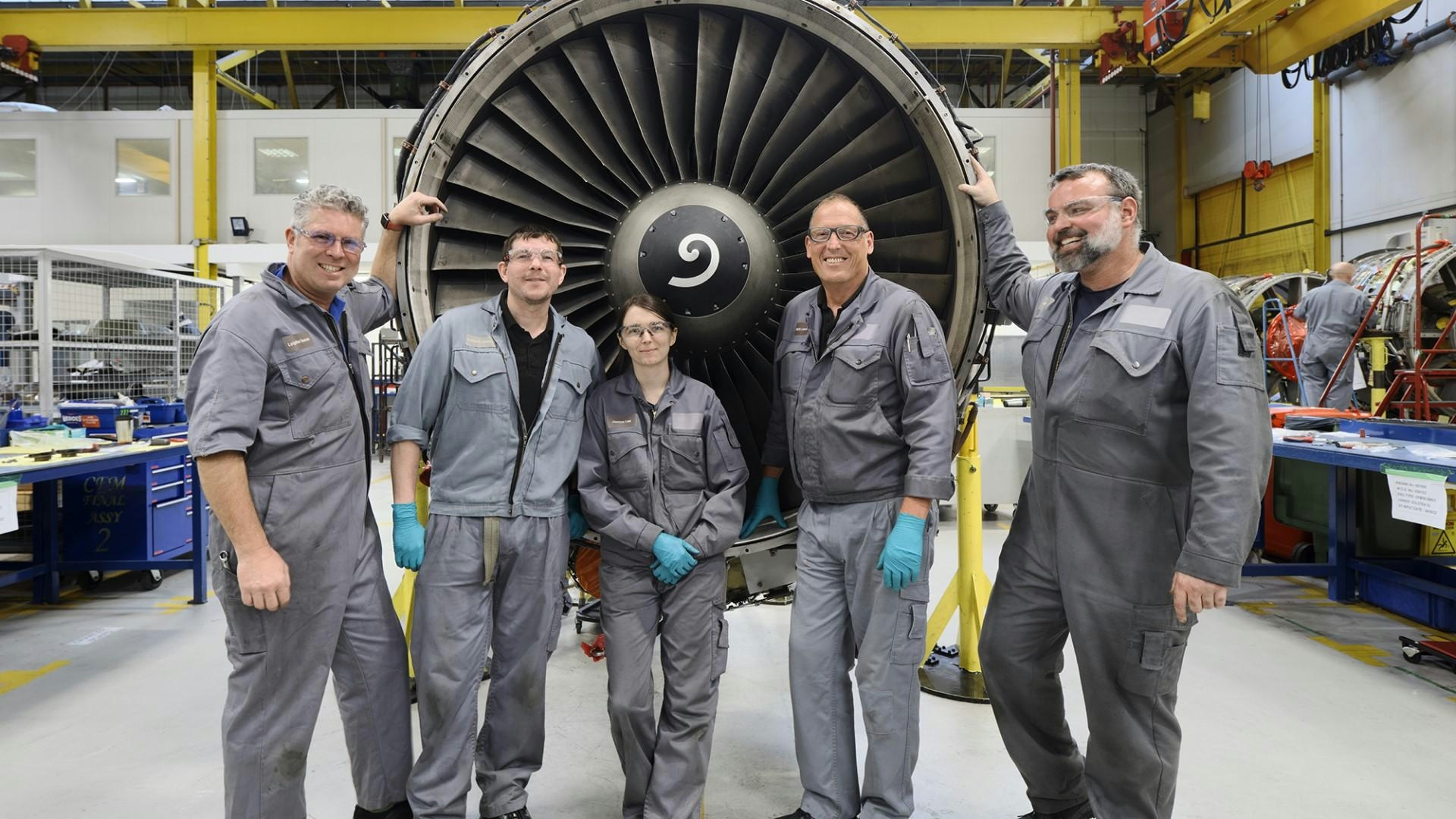
Today, the legacy of Welsh aerospace is epitomised by the GE Aerospace facility in Nantgarw, near Cardiff. This expansive maintenance, repair, and overhaul (MRO) site covers over 1.2 million square feet and services engines for airlines worldwide, contributing in excess of £70 million annually to the UK economy. Equipped with advanced testing infrastructure and extensive repair capabilities, the Nantgarw facility maintains some of the most significant engines in commercial aviation history, including the GE90—the world’s most powerful commercial engine at its introduction—and the widely used CFM56.
Wales’ strategic location within the UK’s aviation network enhances its importance, supporting major airlines and ensuring operational continuity for fleets. GE Aerospace’s footprint extends beyond South Wales, encompassing sites in Scotland and avionics specialists in Cheltenham, thereby combining local expertise with a global operational reach.
Challenges and Strategic Responses
Despite its strengths, Wales’ position as an aviation hub faces notable challenges. Regulatory pressures from the UK government have raised concerns among airlines regarding future competitiveness. While Cardiff Airport has experienced growth in passenger numbers, the broader industry remains volatile, as evidenced by difficulties faced by carriers such as Spirit Airlines. Additionally, regional competition is intensifying, with airports like RIX Riga expanding their route networks and potentially diverting traffic away from Welsh airports.
In response, Welsh airports are increasingly adopting innovative, data-driven tools such as Aviation Week Network’s Catchment Analyzer. This technology enables airports to better understand market demand and tailor their strategies accordingly. For Cardiff Airport, such approaches are critical to sustaining growth and reinforcing Wales’ reputation as a centre of aviation excellence.
Aerospace in Wales is more than a sector; it is a testament to a legacy of innovation, resilience, and adaptation. This enduring heritage ensures that Wales remains a vital force in the global aviation landscape for generations to come.

Etihad Airways Suspends Airbus A380 Flights on Key Route

Aditya Birla Group Seeks Approval for Aircraft Leasing in GIFT City

Qatar Airways Highlights Innovation and Connectivity at Arabian Travel Market 2026

Hong Kong's Five-Year Plan Includes Andrew Fan's Aircraft Parts Processing Hub Proposal

ACIA Aero Leasing Delivers ATR72-600 to Air Nostrum

RTX Appoints Jill Albertelli as Head of Pratt & Whitney

TAT Technologies Joins Beyond Aero Hydrogen Aircraft Program

AURAK Study Highlights Barriers to Air Taxi Adoption in Emerging Economies

Xiamen Air Selects Altitude for 787 Maintenance at Heathrow

Etihad and Swissport Extend Global Partnership
