
AeroGenie — Seu Copiloto Inteligente.

Tendências
Categories
Is the Boeing 777X Longer Than the Airbus A340-600?
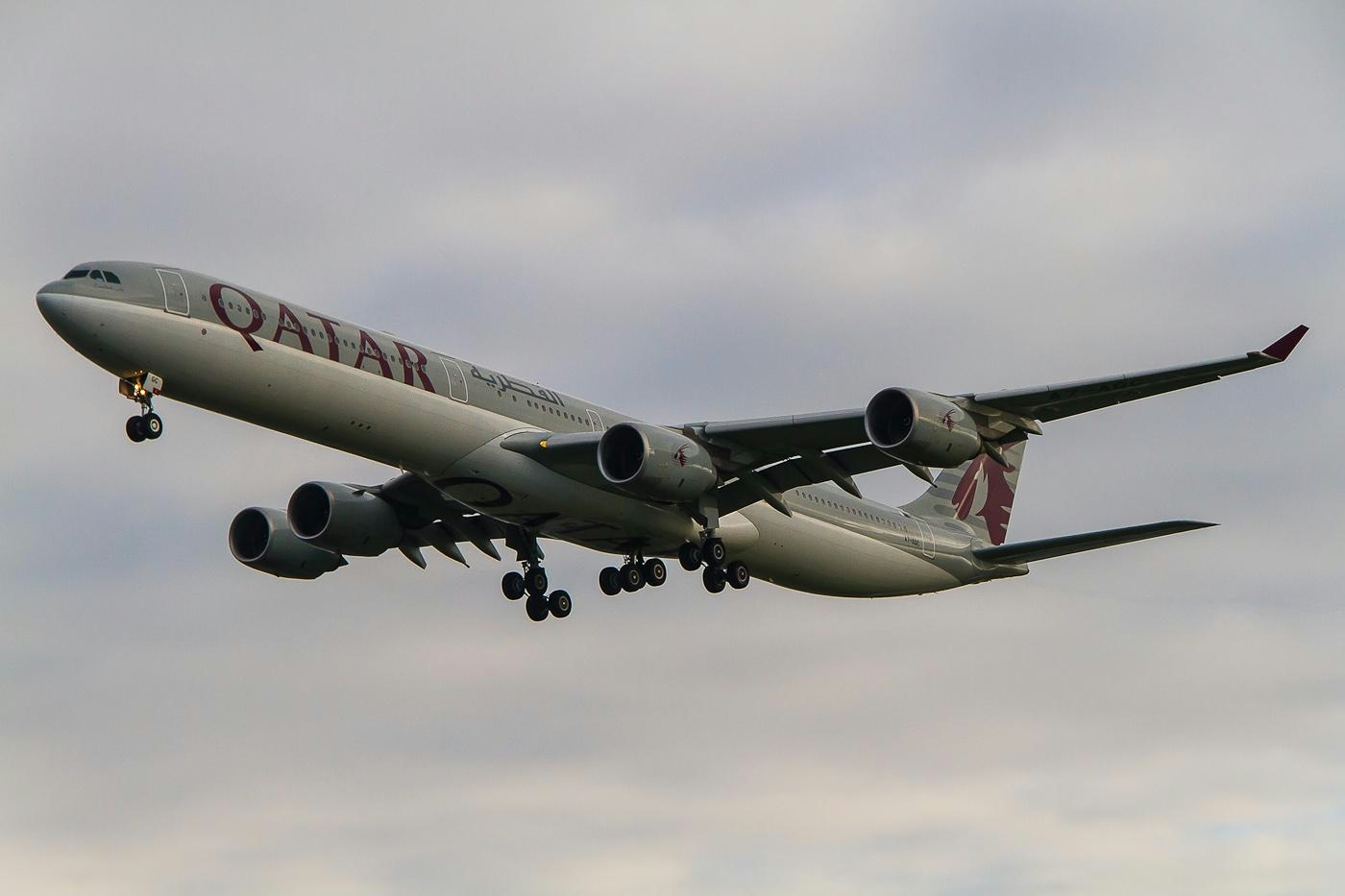
Is the Boeing 777X Longer Than the Airbus A340-600?
For many years, the Airbus A340-600 held the distinction of being the world’s longest passenger aircraft. Its notably slender and elongated fuselage earned it the nickname “the long pencil,” symbolizing an era when aircraft length and multiple engines were the primary means to achieve extended range and high passenger capacity. However, as the aviation industry has increasingly favored more efficient twin-engine designs, Boeing introduced a new contender: the 777X.
The key question among aviation experts and industry observers has been whether Boeing’s latest flagship, the 777-9—the largest model in the 777X family—has surpassed the A340-600 in length. The answer is affirmative. The Boeing 777-9 is now the longest passenger aircraft in the world, narrowly but definitively exceeding the length of the A340-600.
Marginal Differences, Major Implications
The Boeing 777-9 measures 76.72 meters (251 feet 9 inches) from nose to tail, while the Airbus A340-600 is 75.36 meters (247 feet 3 inches) long. This difference of approximately 1.36 meters (4.5 feet) places the 777-9 ahead of the Airbus quadjet. Although the A340-600 held the title for nearly a decade, it was first overtaken by the Boeing 747-8 in 2011. Now, the 777-9 has extended the record further, marking the first time a twin-engine jet has claimed the title of the longest passenger aircraft.
This milestone is enabled by the powerful General Electric GE9X engines, which provide the necessary thrust to lift a fuselage even longer than that of the 747-8. The additional length allows the 777-9 to accommodate between 400 and 426 passengers in a typical multi-class configuration, matching the capacity of older four-engine aircraft while delivering superior fuel efficiency.
Design Philosophies and Industry Shifts
The Airbus A340-600 epitomized the “long and thin” design philosophy, engineered to cover long distances with high passenger loads without the infrastructure demands associated with larger aircraft like the 747. In contrast, the 777-9 represents a new era in aircraft design. By stretching the fuselage of the 777-300ER by nearly three meters, Boeing has produced not only the longest twin-engine jet but also the longest passenger aircraft ever to enter production.
This evolution reflects broader industry trends. When the A340-600 was developed in the late 1990s, airlines and regulators remained cautious about twin-engine jets operating over remote oceanic routes. Today, advances in engine reliability and efficiency have made such operations routine, enabling aircraft like the 777X to dominate the long-haul market.
Operational Realities and Future Prospects
Despite facing production delays and stringent safety mandates that have challenged both Boeing and Airbus, Boeing’s renewed emphasis on safety and an industrial reset have positioned the 777X as a formidable competitor in the widebody market. Deliveries of the 777X are expected to commence in 2027, offering airlines a combination of record-breaking size, enhanced efficiency, and cutting-edge technology.
For passengers, the 777-9’s extended cabin promises a spacious and comfortable interior. For pilots, the aircraft’s unprecedented length requires careful handling during ground operations. As the 777X prepares to enter service, it not only sets new records but also heralds a new chapter in the evolution of widebody aircraft.
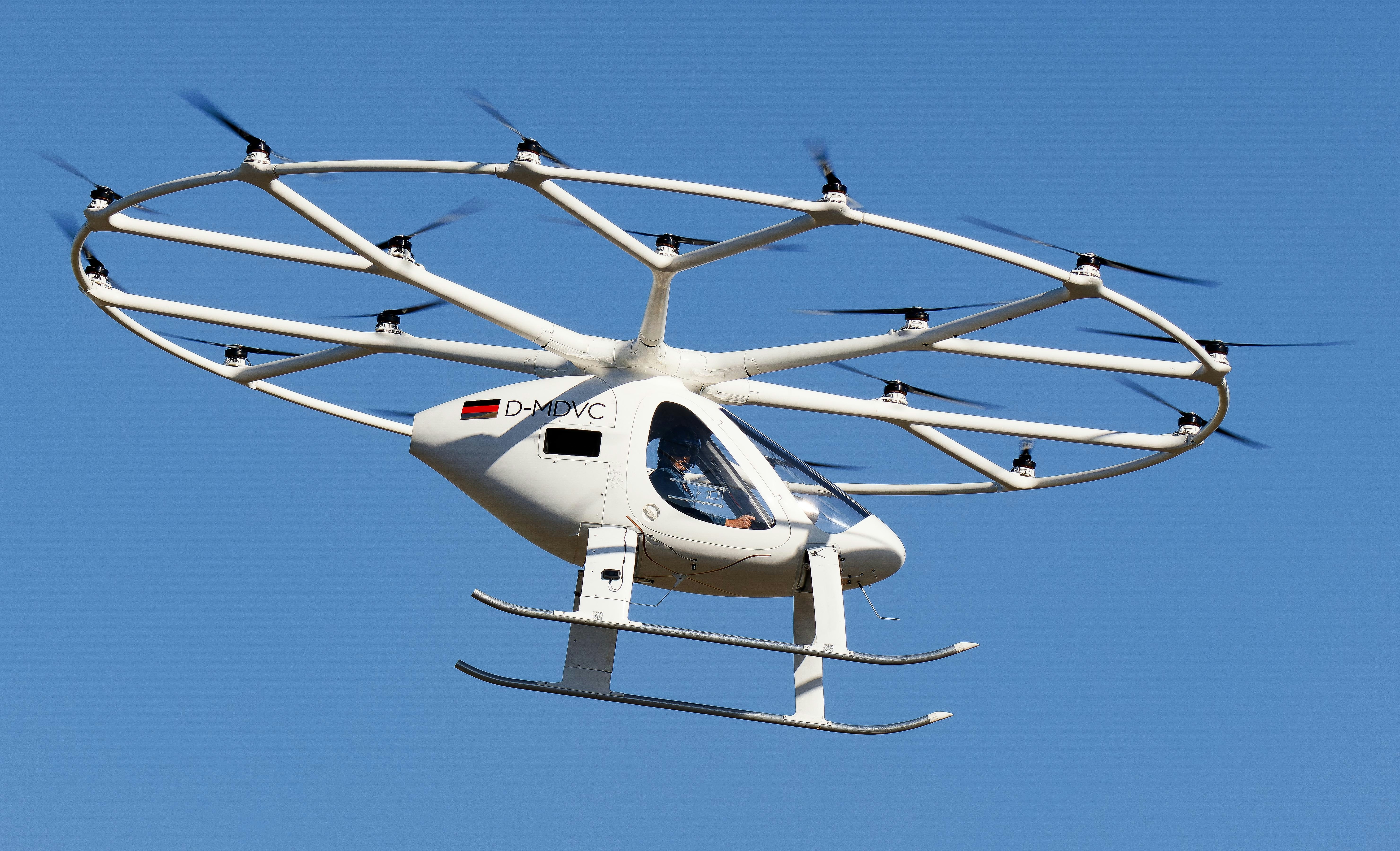
USF Researcher Advances Flying Taxi Project in Florida

Aviation Leasing Firms Connected to Saudi Travel Tycoon Shut Down

Fuel Shortage Disrupts Flights in Sydney, Melbourne, and Brisbane
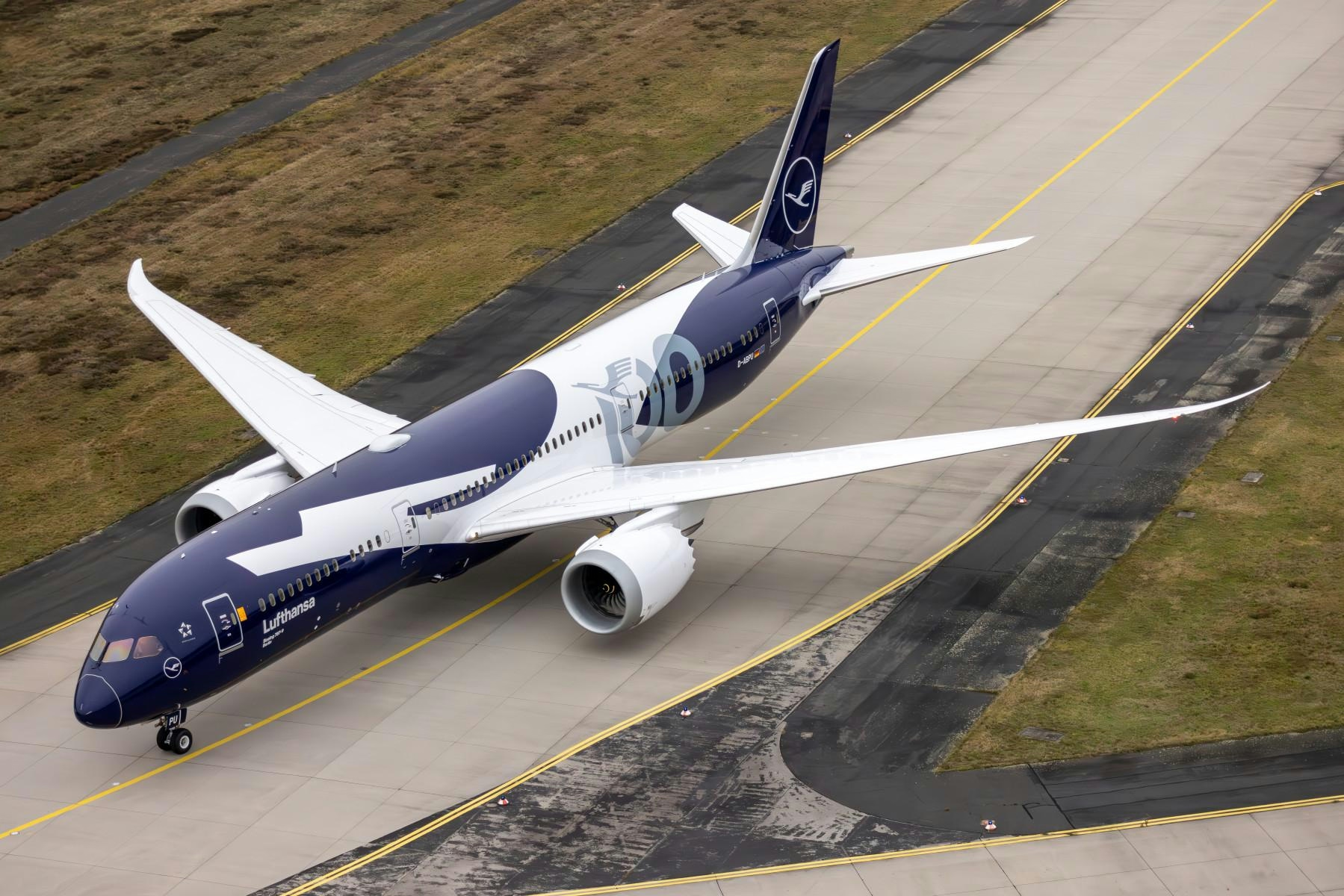
Lufthansa at 100: A Century of Fleet Evolution to the Airbus A350-900 and Boeing 777X
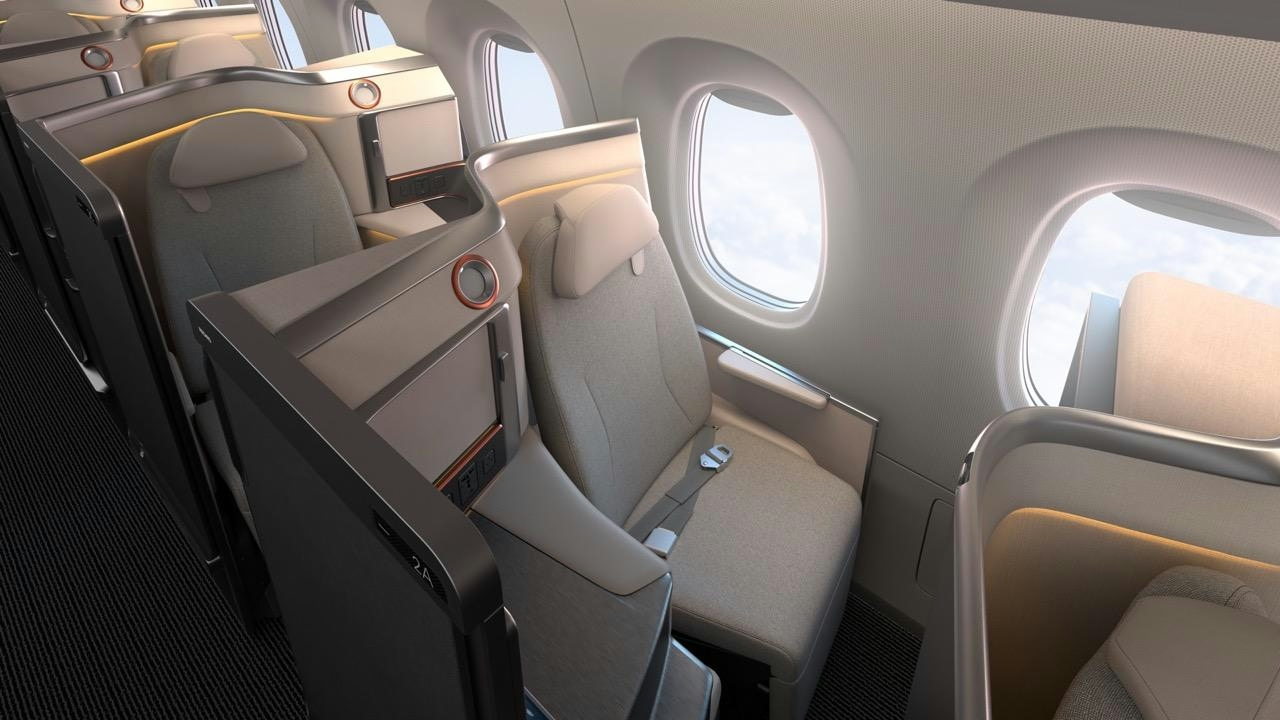
RECARO Unveils New Aircraft Seating at AIX
Jet Aviation Expands In-House MRO and CMS Software Capabilities

Jet Fuel Prices Surge Nearly 100% in Weeks; XCF Global Notes Domestic SAF Less Affected

Airhart Launches New Initiative

Turkish Airlines Appoints New CEO and Board Chairman Amid Strategic Shift
Sherwood Aviation Sells 80% Stake to HEICO
