
Orquestre insights de IA em ações

Tendências
Categories
Jet Engine in December 29 Passenger Plane Crash Required Five Safety Upgrades
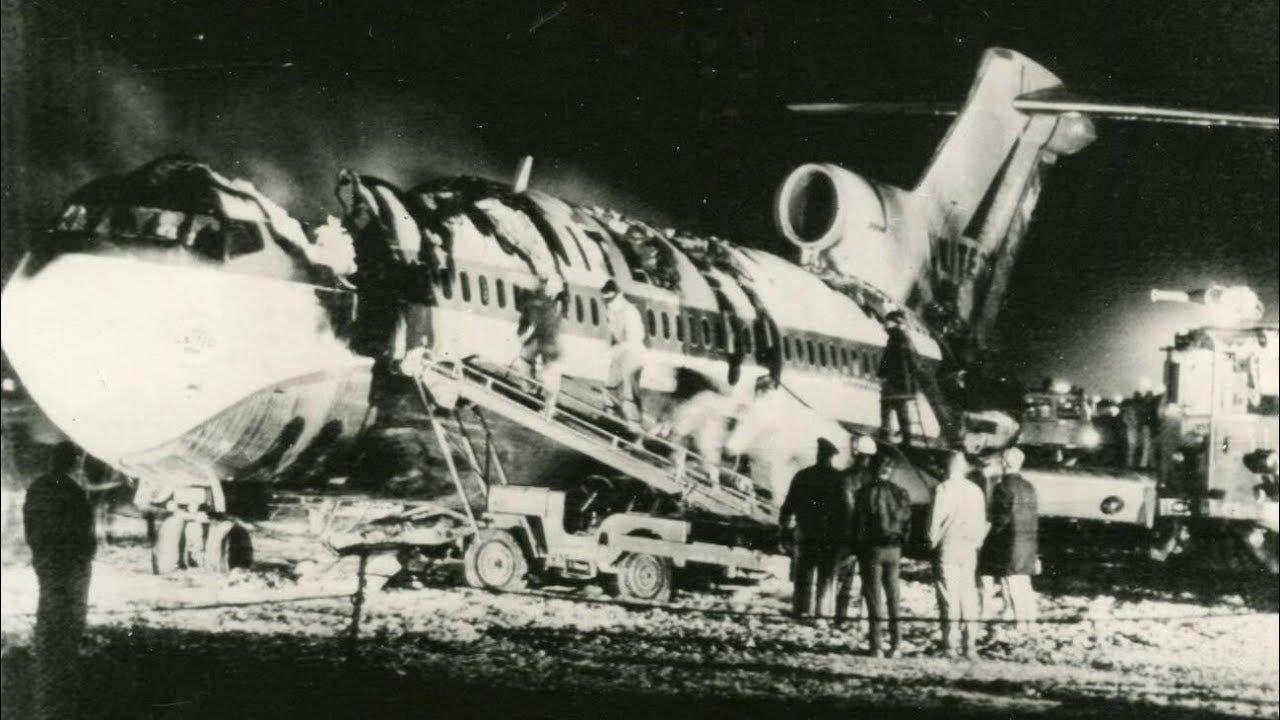
Jet Engine in December 29 Passenger Plane Crash Required Five Safety Upgrades
The jet engine installed on the Boeing 737-800 involved in the December 29 passenger plane crash had undergone five mandatory safety upgrades within the four years preceding the accident. This revelation has raised significant concerns about the engine’s reliability and prompted calls for a more comprehensive investigation into the incident.
Safety Directives and Engine Components
Data provided by the Ministry of Land, Infrastructure and Transport (MOLIT) to National Assembly member Jeong Jun-ho of the Democratic Party of Korea revealed that the aircraft’s engine was subject to five Airworthiness Directives between November 2020 and March 2024. These directives, akin to recalls in the automotive sector, mandate inspections, repairs, or modifications to address manufacturing defects or unsafe conditions in aircraft systems. The corrective measures focused on critical internal components, including the power transmission system—specifically the accessory gearbox—and the high-pressure turbine (HPT). One of these directives was classified as an emergency action, highlighting the severity of the identified risks.
Industry Response and Regulatory Context
The repeated need for safety improvements has intensified scrutiny of the engine’s performance and the broader safety protocols within the aviation industry. In the aftermath of the crash, market analysts anticipate increased pressure on airlines and manufacturers to implement more rigorous safety measures. Competitors are also expected to reassess and potentially enhance their own safety standards to maintain public confidence and comply with regulatory requirements.
These developments coincide with ongoing efforts by global aviation authorities, including the U.S. Federal Aviation Administration (FAA), to strengthen safety oversight. The FAA’s "Flight Plan 2026" initiative exemplifies this trend, aiming to improve hiring and training practices to better identify and mitigate potential hazards. This reflects a growing industry-wide emphasis on proactive risk management and enhanced regulatory vigilance.
Calls for Thorough Investigation
Jeong Jun-ho stressed the necessity of a meticulous and impartial investigation into the engine’s condition, stating, "Now that the past safety improvement history of the accident aircraft’s engine has been confirmed, a more thorough examination of the engine is necessary to ensure an objective accident investigation." He urged the Aviation and Railway Accident Investigation Board (ARAIB) to undertake additional in-depth inquiries, including independent investigations and consultations with both domestic and international experts.
As the investigation proceeds, the incident underscores the persistent challenges of maintaining aircraft safety amid evolving technical standards and regulatory expectations. The findings may have significant implications for future industry practices and regulatory frameworks as stakeholders work to restore confidence and prevent similar tragedies.

Etihad Airways Suspends Airbus A380 Flights on Key Route

Aditya Birla Group Seeks Approval for Aircraft Leasing in GIFT City

Qatar Airways Highlights Innovation and Connectivity at Arabian Travel Market 2026

Hong Kong's Five-Year Plan Includes Andrew Fan's Aircraft Parts Processing Hub Proposal

ACIA Aero Leasing Delivers ATR72-600 to Air Nostrum

RTX Appoints Jill Albertelli as Head of Pratt & Whitney

TAT Technologies Joins Beyond Aero Hydrogen Aircraft Program

AURAK Study Highlights Barriers to Air Taxi Adoption in Emerging Economies

Xiamen Air Selects Altitude for 787 Maintenance at Heathrow

Etihad and Swissport Extend Global Partnership
