Imagem

Orquestre insights de IA em ações

Entre na lista de espera da AeroGenie hoje mesmo!

Tendências

Categories

Joby Aviation Shares Rise 5% Following Air Taxi Demonstration in California
October 7, 2025By ePlane AI
Joby Aviation Shares Rise 5% Following Air Taxi Demonstration in California
0
0
Joby Aviation
Air Taxi Demonstration
eVTOL Aircraft

Joby Aviation Shares Rise 5% Following Air Taxi Demonstration in California

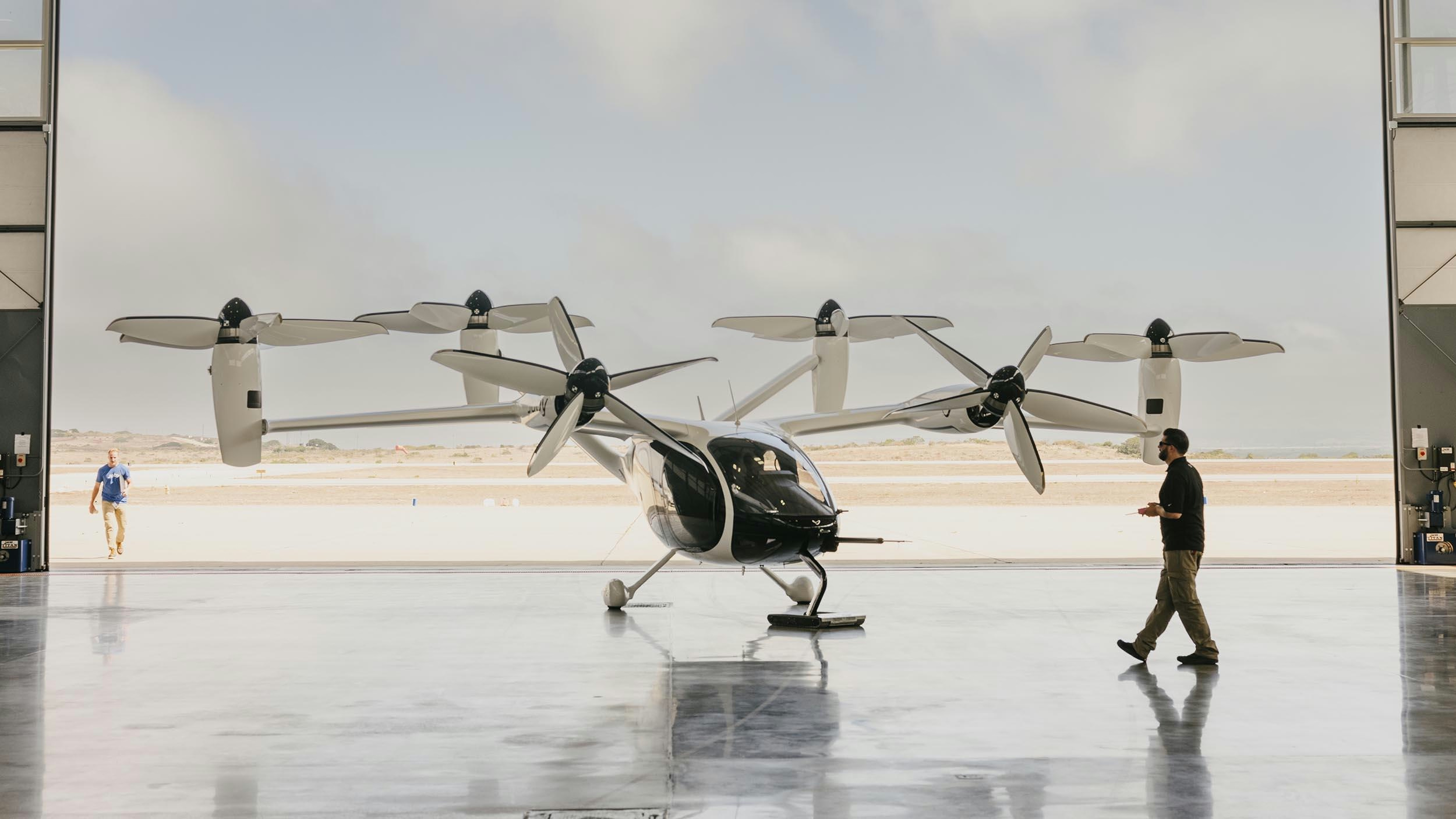
Joby Aviation (NYSE: JOBY) saw its shares increase by nearly 5% on Monday morning after successfully demonstrating its all-electric air taxi at the California International Airshow in Salinas over the weekend. The demonstration highlighted the aircraft’s vertical takeoff and landing capabilities, seamless cruise transitions, and notably quiet operation—features that are critical to the future of urban air mobility. Attendees witnessed round-trip flights between Marina and Salinas, providing an up-close view of the technology that aims to transform urban transportation.

Expanding Demonstrations and Strategic Partnerships

This California event forms part of Joby’s broader strategy to position itself as a frontrunner in the competitive electric vertical takeoff and landing (eVTOL) market. Concurrently, the company is conducting demonstration flights in Osaka, Japan, in collaboration with ANA Holdings, with activities scheduled through October 13. Founder and CEO JoeBen Bevirt emphasized that showcasing the aircraft in real-world conditions highlights the transformative potential of urban air transport.

Joby has accumulated over 40,000 miles in demonstration flights globally, including in Dubai, South Korea, and New York City. The company is also a participant in the White House eVTOL Integration Pilot Program, which seeks to accelerate the deployment of electric air taxis across the United States. Flight testing for Federal Aviation Administration (FAA) type inspection authorization is anticipated to commence early next year.

Investor confidence has been further bolstered by Joby’s recent $125 million agreement with Blade Air Mobility. This partnership will integrate helicopter and seaplane services into the Uber app, with a rollout expected as early as 2026. Meanwhile, Blade Urban Air Mobility plans to operate flights projected to transport approximately 3,000 passengers to the 2025 Ryder Cup.

Challenges and Market Outlook

Despite the positive market response and strategic collaborations, Joby and the wider eVTOL sector face significant challenges. Regulatory approval remains a critical obstacle, and public acceptance of air taxis is yet to be fully established. Competition is intensifying, with rivals such as Archer Aviation preparing to join the White House’s flying taxi program and planning public demonstration flights by October 2025. Both companies are actively pursuing sustainable revenue streams, including military contracts and ride-sharing services.

Analysts, including those at Cantor Fitzgerald, currently maintain a neutral rating on Joby, reflecting the balance between the promising potential and inherent risks within the emerging urban air mobility market.

More news
FTAI and AEI Collaborate on 737-800 Freighter Conversion

FTAI and AEI Collaborate on 737-800 Freighter Conversion

FTAI and AEI Collaborate on 737-800 Freighter Conversion Strategic Partnership Targets Cost-Effective Freighter Solutions FTAI Aviation and Aeronautical Engineers, Inc. (AEI) have announced a strategic partnership designed to deliver a more affordable Boeing 737-800 freighter conversion solution to airlines worldwide. This collaboration leverages FTAI’s expertise in CFM56 engine maintenance alongside AEI’s established passenger-to-freighter conversion services. Together, they aim to provide customized freighter aircraft that offer reduced operating costs and enhanced long-term economic benefits. The partnership emerges amid growing demand for narrow-body freighters, with the Boeing 737-800 poised to play a pivotal role in the expanding global cargo market. FTAI will supply and maintain lower-cycle CFM56 engines specifically optimized for cargo operations, while AEI will apply its extensive experience in aircraft conversions. AEI is recognized as the industry’s largest provider of passenger-to-freighter conversions, having developed over 130 Supplemental Type Certificates (STCs) and completed more than 625 aircraft conversions. With nearly 6,000 Boeing 737-800 units delivered, the aircraft presents a substantial platform for future freighter conversions. Navigating a Competitive and Saturated Market Despite the promising outlook, the partnership faces challenges in an increasingly competitive market. The sector for converted freighters is becoming saturated, with major carriers such as Emirates already operating converted aircraft, including the 777-300ER freighter. This intensifying competition may prompt other airlines and conversion specialists to initiate similar projects to secure market share. Market responses to the FTAI-AEI collaboration are expected to be mixed. Some carriers may benefit from declining prices of 737-800 Next Generation (NG) aircraft, which could make conversions more financially attractive. Conversely, others may exercise caution due to the growing availability of freighter options. The influx of converted freighters is also likely to exert downward pressure on lease rates and resale values, factors that could influence the economic viability of future conversion projects. Nonetheless, FTAI and AEI remain confident that their combined capabilities will present airlines with a compelling value proposition. By emphasizing cost efficiency and operational reliability, the partnership seeks to meet the evolving demands of cargo operators and sustain a competitive advantage in a rapidly changing market.
How the B-52’s New Engines Will Outperform Jets Built Decades Later

How the B-52’s New Engines Will Outperform Jets Built Decades Later

How the B-52’s New Engines Will Outperform Jets Built Decades Later A Transformative Upgrade for an Iconic Bomber The U.S. Air Force’s decision to replace the Boeing B-52’s eight aging engines under the Commercial Engine Replacement Program marks a significant milestone in the bomber’s operational history. This upgrade, which will re-designate the aircraft as the B-52J, is projected to enhance fuel efficiency by 30%, extend the bomber’s unrefueled range substantially, and reduce maintenance costs dramatically. Remarkably, these improvements will make the B-52J cheaper to operate per flight hour than the Rockwell B-1 Lancer, a bomber introduced more than 30 years after the B-52’s initial flight. The B-1B, which entered service in 1986 as the intended successor to the B-52, is now being phased out, while the B-52 is slated to remain in service well into the 2050s. This unexpected reversal is largely attributed to the replacement of the outdated Pratt & Whitney TF33 engines, which have powered the B-52H since 1962, with modern Rolls-Royce F130 engines. Although both engines produce approximately 17,000 pounds of thrust, the F130’s high-bypass turbofan design—validated through over 27 million flight hours in both military and civilian applications—represents a generational leap in efficiency, reliability, and maintainability. From Obsolescence to Modern Efficiency The TF33 engine, a first-generation turbofan developed in the late 1950s, is now considered obsolete. Its low-bypass design results in higher fuel consumption, increased noise levels, and elevated exhaust temperatures compared to contemporary engines. Since the TF33 production line closed in 1985, the Air Force has faced significant challenges in maintaining these engines. Frequent depot-level overhauls are required, often involving extended downtime and the procurement of scarce or custom-made parts at premium costs. Operational deployments are further complicated by the need for specialized support equipment, including external pneumatic air carts and explosive cartridge starters, as well as dedicated C-17 transport flights solely for TF33-specific spares and tools. In contrast, the Rolls-Royce F130 engine features a self-contained architecture supported by a robust commercial supply chain, designed to alleviate these logistical challenges. The new engines promise not only enhanced operational efficiency but also a streamlined maintenance profile, reducing the need for extensive support infrastructure and specialized parts. Challenges and Strategic Implications Integrating state-of-the-art engines into an airframe that first took to the skies in the 1950s presents technical and operational challenges. The complexity of adapting modern technology to an aging platform introduces risks that have come under increased scrutiny, particularly following recent incidents such as the crash at Edwards Air Force Base. These events may influence future funding decisions and the overall trajectory of the B-52 modernization program. Industry observers are closely monitoring the program’s progress, focusing on the reliability and cost-effectiveness of the upgrades. Meanwhile, global competitors may accelerate their own bomber development efforts in response to the B-52’s enhanced capabilities. Ultimately, the engine replacement initiative transcends a mere technical upgrade. It represents a strategic effort to extend the operational life and relevance of a Cold War-era bomber well into the 21st century, ensuring that the B-52 remains a vital component of U.S. airpower even as newer aircraft are retired.
Deucalion Acquires Vueling-Leased A320 Aircraft

Deucalion Acquires Vueling-Leased A320 Aircraft

Deucalion Expands Portfolio with Acquisition of Vueling-Leased A320 Aircraft Deucalion has acquired an Airbus A320-200 currently leased to Vueling Airlines, the Spanish low-cost carrier and a member of the International Airlines Group (IAG). Acting as arranger on behalf of an institutional investor, Deucalion will continue to serve as lease servicer throughout the term of the agreement. Financial details of the transaction have not been disclosed. The aircraft was sourced through Deucalion’s global origination network and represents the 86th Airbus A320ceo managed by the company since 2004. This acquisition further diversifies Deucalion’s portfolio across airlines, geographies, and aircraft types, reflecting sustained investor interest in current-generation narrow-body assets. Nate Riggs, Chief Commercial Officer at Deucalion Aviation, emphasized the strategic value of the deal, noting the resilience of demand for narrow-body aircraft despite constrained original equipment manufacturer (OEM) production. He highlighted the company’s commitment to deploying capital into assets with strong long-term value, supported by reputable operators such as Vueling, which holds a significant position in Europe’s dynamic short-haul market. Market Context and Industry Challenges The transaction occurs amid a challenging environment for the European aviation sector, which is grappling with rising operating costs, geopolitical uncertainties, and increasing sustainability demands. These pressures are accelerating industry consolidation, as evidenced by Air France-KLM’s recent securing of a €1 billion credit facility aimed at supporting mergers and acquisitions. This move signals a broader trend toward greater market concentration among major carriers. Competitors are also responding to volatile market conditions. LATAM’s CEO, Roberto Alvo, has cautioned that further capacity reductions may be necessary if fuel prices remain high, underscoring the ongoing cost management challenges faced by airlines. At the same time, innovation continues to drive the sector’s evolution. Airbus CEO Guillaume Faury has expressed confidence in the development of a replacement for the A320 by 2030, reflecting the industry’s focus on modernization and adaptation to future demands. Deucalion’s acquisition not only enhances its managed portfolio but also exemplifies the persistent demand for efficient narrow-body aircraft within a rapidly changing aviation landscape.
Saudia Cargo to Add Four Boeing 777 Freighters to Fleet

Saudia Cargo to Add Four Boeing 777 Freighters to Fleet

Saudia Cargo to Expand Fleet with Four Boeing 777 Freighters Saudia Cargo has announced a significant expansion of its fleet with the addition of four Boeing 777-200 freighters. This strategic move aims to double the airline’s dedicated cargo capacity and enhance its operational capabilities in line with Saudi Vision 2030 and the National Transport and Logistics Strategy. By increasing its freighter fleet, Saudia Cargo seeks to strengthen its global network, meet rising demand for air freight, and improve Saudi Arabia’s connectivity with key international markets. Fleet Expansion and Delivery Timeline The first Boeing 777 freighter is expected to be delivered in the fourth quarter of 2026, with the remaining three aircraft scheduled to join the fleet throughout 2027. These new freighters will expand Saudia Cargo’s reach across four continents, providing the additional capacity necessary to support growing global trade flows. This expansion is poised to reinforce the carrier’s position as a major player in the international air cargo sector. In 2025, Saudia Cargo transported over 570,000 tonnes of freight to more than 90 destinations, maintaining an on-time performance rate exceeding 90%. The carrier’s operational excellence is further demonstrated by its three IATA CEIV certifications and six ISO certifications. Its Net Promoter Score (NPS) of 57 reflects strong customer satisfaction and confidence in its services. Operational Challenges and Market Competition The integration of the new Boeing 777 freighters will present operational challenges, including the need for comprehensive crew training and the management of logistical complexities associated with scaling up dedicated freighter operations. Ensuring a seamless transition while maintaining high service reliability will be essential as Saudia Cargo expands its fleet. This expansion occurs amid evolving dynamics in the regional air cargo market. Saudia Cargo faces increasing competition, notably from the forthcoming launch of Riyadh Air, which is expected to end Saudia’s monopoly on direct flights between Saudi Arabia and the United States. Other regional competitors are also enhancing their fleets; Emirates is expanding its freighter capacity with converted Boeing 777-300ERs, while Cathay Cargo is adding an Airbus A330 freighter to support its growth ambitions. Despite these challenges, Saudia Cargo’s investment in new aircraft highlights its commitment to broadening its global presence and delivering enhanced value to customers and partners. The carrier’s ongoing efforts to modernize its fleet and improve operational efficiency are integral to supporting Saudi Arabia’s aspirations to become a leading global logistics hub.
Embraer Delivers 65 Aircraft in Second Quarter

Embraer Delivers 65 Aircraft in Second Quarter

Embraer Reports Strongest Second-Quarter Deliveries in 16 Years Embraer delivered 65 aircraft in the second quarter of 2026, marking its most successful Q2 performance since 2010. This achievement highlights robust demand across both commercial and executive aviation sectors. The Brazilian manufacturer’s deliveries increased by 48% compared to the previous quarter and rose 7% year-on-year, demonstrating sustained momentum despite persistent supply chain challenges affecting the global aerospace industry. In the first half of 2026, Embraer delivered a total of 109 aircraft, representing a 20% increase from the 91 aircraft delivered during the same period in 2025. This growth was supported by the company’s production leveling initiatives, which have helped mitigate supply chain disruptions and maintain consistent output. Commercial and Executive Aviation Drive Growth The commercial aviation segment delivered 20 new aircraft in the second quarter, including six E195-E2 jets, Embraer’s largest model currently in production. This segment doubled its deliveries compared to the previous quarter and posted a 5% increase over Q2 2025. Executive aviation experienced even stronger growth, delivering 45 aircraft—an increase of 55% from the first quarter and 18% year-on-year. This surge was driven by higher deliveries in both small and medium jet categories, reflecting sustained demand and effective operational execution. There were no deliveries in the Defense & Security segment during the quarter. Embraer’s commercial aircraft backlog currently stands at $14.5 billion, underscoring strong market demand while also placing pressure on the company to maintain production rates and meet delivery schedules. The company remains confident in achieving its 2026 delivery targets, projecting between 80 and 85 commercial aircraft and 160 to 170 executive jets for the year. Both targets represent a midpoint increase of 6% compared to 2025. Market Response and Industry Context Investor response to Embraer’s performance has been positive, with confidence in the company’s ability to navigate supply chain challenges and capitalize on rising demand. Nevertheless, Embraer faces intensifying competition from rivals such as Gulfstream, Bombardier, and Dassault, all of which are expanding their offerings in the lucrative business jet market. Since its founding in 1969, Embraer has delivered more than 9,000 aircraft. Today, an Embraer-built aircraft takes off somewhere in the world approximately every 10 seconds, transporting over 150 million passengers annually. In related industry developments, Air India recently inducted VT-AWC, its third line-fit Boeing 787-9, into its fleet. The aircraft completed a 17-hour, 14-minute non-stop flight from Boeing’s Charleston facility to Delhi on July 4, 2026. Featuring a three-class cabin with 30 Business Class suites, 28 Premium Economy seats, and 238 Economy seats, the new 787-9 is equipped with Thales’ AVANT Up inflight entertainment system. This addition furthers Air India’s fleet modernization efforts and enhances the long-haul travel experience for its passengers.
Striving for 85% Localization in Fighter Jet Development

Striving for 85% Localization in Fighter Jet Development

Striving for 85% Localization in Fighter Jet Development Breakthroughs in Aerospace Engine Technology At Hanwha Aerospace’s Changwon Business Establishment 1 in Changwon, Gyeongsangnam-do, South Korea, a significant advancement in aerospace technology was recently unveiled. On June 6, the company showcased two prototype long-life aerospace engines: a 5,500-pound-class turbofan engine measuring approximately two meters in length, and a 1,400-horsepower turboprop engine. These engines represent South Korea’s first independent development of powerplants capable of thousands of hours of repeated operation, marking a departure from the short-life engines traditionally used in missile systems. This milestone underscores South Korea’s transition from merely localizing unmanned aircraft engines to pursuing full self-sufficiency in advanced aerospace engine technology. The 5,500-pound-class turbofan engine is intended for integration into a low-observable unmanned aerial vehicle (UAV) squadron tasked with reconnaissance, electronic warfare, and attack missions, operating in conjunction with the KAI KF-21 Boramae fighter jet. Meanwhile, the 1,400-horsepower turboprop engine will power medium-altitude UAVs designed for extended surveillance and reconnaissance operations. Both engines have completed assembly and initial test runs, with further ground and flight testing scheduled. Upon successful development, South Korea aims to deploy an unmanned aircraft system powered entirely by domestically developed engines. The long-term objective is to achieve 85% localization of parts, reflecting broader ambitions within the nation’s defense industry to enhance technological independence and reduce reliance on foreign suppliers. Challenges and Global Context Achieving such a high degree of localization in fighter jet development presents considerable challenges. The complexity and cost associated with developing advanced, sixth-generation aerospace technologies can strain even the most established aerospace sectors. South Korea’s efforts are emblematic of a wider global trend, as seen in initiatives like the Global Combat Air Programme (GCAP), led by the United Kingdom, Italy, and Japan. While GCAP offers an alternative to American, Chinese, and Russian fighter jets, its ambitious technological demands and financial burden have raised questions about the feasibility of meeting similar localization targets. These challenges are not unique to South Korea. Other countries, including Indonesia, have reportedly reconsidered their manufacturing strategies, sometimes opting to purchase off-the-shelf warplanes rather than engage in co-production of advanced jets such as the KF-21. Market dynamics are also evolving, with growing interest in European-led defense programs driven by their geopolitical significance. For Europe, successful defense modernization depends on balancing innovation with established manufacturing capabilities and maintaining effective international partnerships. Jung Hyeong-dong, head of Hanwha Aerospace’s Changwon Business Establishment 1, highlighted the strategic importance of these developments, stating, “Independence in aerospace engine technology is a core element of self-reliant national defense and will provide a foundation for expanding the defense export market without restrictions or approvals from other countries.” As South Korea advances its aerospace capabilities, the pursuit of 85% localization in fighter jet and engine development remains an ambitious goal that reflects the shifting dynamics of the global defense landscape.
SOCAR Türkiye and Pegasus Airlines Agree on Sustainable Aviation Fuel Partnership

SOCAR Türkiye and Pegasus Airlines Agree on Sustainable Aviation Fuel Partnership

SOCAR Türkiye and Pegasus Airlines Announce Partnership to Promote Sustainable Aviation Fuel SOCAR Türkiye and Pegasus Airlines have formalized a cooperation agreement aimed at accelerating the development and adoption of Sustainable Aviation Fuel (SAF) in Türkiye. This collaboration marks a significant advancement in efforts to decarbonize the country’s aviation sector and foster a more sustainable future for air transport. Objectives and Collaborative Efforts The memorandum of understanding between the two companies focuses on expediting the energy transition within aviation by promoting lower-carbon alternatives. Together, SOCAR Türkiye and Pegasus Airlines will assess the national demand for SAF, undertake technical and economic feasibility studies, and work on developing the SAF value chain. Their partnership also encompasses supporting business development initiatives and raising awareness about sustainable aviation, while exploring opportunities for SAF projects both within Türkiye and internationally. To oversee these efforts, a joint working group composed of senior executives from both organizations will be established. This group will evaluate Türkiye’s readiness for producing and utilizing sustainable aviation fuel, contributing to the growth of the country’s sustainable aviation ecosystem and helping to reduce carbon emissions from the industry. Roles and Strategic Importance As Türkiye’s largest integrated industrial group, SOCAR Türkiye is expanding its activities in SAF production, supply chain development, and technological partnerships. Pegasus Airlines intends to leverage its operational expertise to assess market demand and facilitate the integration of SAF into existing aviation fuel supply chains. Elchin Ibadov, CEO of SOCAR Türkiye, highlighted the importance of the partnership, stating, “Sustainable aviation fuel plays a vital role in reducing the aviation industry’s carbon footprint, and we attach great importance to collaborating with strong, forward-looking partners in this field. The agreement we have signed with Pegasus marks an important step toward evaluating Türkiye’s potential in sustainable aviation fuel and expanding future cooperation. We are confident this initiative will benefit both the industry and the country as a whole.” Pegasus Airlines CEO Güliz Öztürk underscored the airline’s commitment to sustainability, noting that Pegasus has been utilizing SAF since 2022. She remarked, “Our agreement with SOCAR Türkiye will enable us to deepen our expertise in sustainable aviation fuel while contributing to the development of Türkiye’s SAF ecosystem. We view this partnership as a strategic step that will help us better understand the industry’s needs and unlock new opportunities for the development of cleaner, more sustainable aviation.” Challenges and Industry Context Despite the promising outlook, the partnership faces potential challenges. Airlines in the UK and EU have expressed concerns regarding the sufficiency of SAF supplies, which could affect the reliability and cost-effectiveness of such initiatives. Additionally, the partnership will be scrutinized in the context of evolving regulatory demands and increasing competition, particularly as other major collaborations, such as the recent alliance between American Airlines and Google, gain momentum. This competitive environment may prompt other airlines to pursue similar agreements to maintain their market position in the rapidly evolving aviation sector. Nonetheless, the agreement between SOCAR Türkiye and Pegasus Airlines represents a proactive and strategic effort to advance sustainable aviation in Türkiye, positioning the country to play a more prominent role in the global transition toward greener air travel.
Avia Solutions Group Appoints Director of MRO Division as CEO

Avia Solutions Group Appoints Director of MRO Division as CEO

Avia Solutions Group Names New CEO Amid Strategic Restructuring Avia Solutions Group, a prominent global provider of wet-lease services, has announced the appointment of Zilvinas Lapinskas as its new chief executive officer, effective July 7. Lapinskas, who currently leads the company’s FL Technics maintenance, repair, and overhaul (MRO) division, will assume the top executive role as the group undertakes a significant restructuring process and contends with increasing operational complexities across its international fleet of 136 aircraft. Leadership Transition and Strategic Focus Lapinskas succeeds Jonas Janukenas, who will transition from CEO to chief financial officer. Janukenas will concentrate on maintaining the company’s financial discipline and strategic agility during this period of transformation. “As head of finance, I will concentrate on ensuring the company maintains financial discipline and strategic agility,” Janukenas remarked, underscoring the importance of financial stewardship amid ongoing changes. The appointment of Lapinskas reflects a strategic decision to leverage his extensive operational expertise. He is widely credited with transforming FL Technics into a robust and scalable MRO division, successfully navigating the challenges of complex and highly regulated markets. His leadership is expected to be instrumental as Avia Solutions Group adapts to evolving market conditions and continues its restructuring efforts. Navigating Challenges and Future Priorities Lapinskas emphasized the group’s solid foundation for sustainable growth built over recent years and expressed his commitment to accelerating this momentum. His immediate priorities include strengthening Avia Solutions’ operational footprint and reinforcing long-term partnerships critical to the company’s future success. The leadership change occurs at a pivotal moment for Avia Solutions Group, which has recently witnessed the cessation of operations by some of its carriers as part of its restructuring strategy. Lapinskas faces the challenge of managing the operational intricacies of the group’s global wet-lease providers while addressing the impact of geopolitical pressures on supply chains within the MRO sector. Industry analysts are closely monitoring the transition, particularly how Lapinskas’ experience in regulated environments will shape the company’s strategic direction. Competitors may also adjust their maintenance strategies in response to potential shifts in Avia Solutions’ market positioning. Under Lapinskas’ leadership, Avia Solutions Group remains committed to sustainable growth and operational excellence as it navigates industry headwinds and positions itself for future opportunities.
RateGain Secures Philippine Airlines Deal to Deploy AI Pricing for 25+ Global Flight Markets

RateGain Secures Philippine Airlines Deal to Deploy AI Pricing for 25+ Global Flight Markets

RateGain Partners with Philippine Airlines to Deploy AI Pricing Across 25+ Flight Markets RateGain Travel Technologies (NSE: RATEGAIN) has announced a strategic partnership with Philippine Airlines (PAL), marking a significant expansion of its AI-driven pricing solutions in Southeast Asia. Under this collaboration, PAL will integrate RateGain’s AirGain platform, enabling real-time fare tracking and dynamic pricing insights across more than 25 international and domestic markets. This move represents a shift from traditional manual fare monitoring to automated, AI-powered data streams, allowing for near-instantaneous fare updates and enhanced revenue management capabilities. Technology Integration and Strategic Impact The adoption of AirGain positions PAL to improve its pricing agility amid a recovering travel demand that is approaching pre-pandemic levels in the region. By leveraging AI, the airline can respond more effectively to market fluctuations, volatile fuel costs, and intense pricing competition. For RateGain, securing a major flag carrier like PAL broadens its SaaS client base and reinforces its foothold in the high-growth Southeast Asian aviation sector. This partnership exemplifies the broader industry trend toward real-time intelligence and revenue optimization, as airlines increasingly prioritize efficiency in their pricing strategies. Challenges and Market Dynamics Implementing AI pricing solutions across PAL’s extensive network presents operational and logistical challenges, particularly in the context of ongoing global supply chain disruptions. Additionally, external factors such as fluctuating energy prices and trade tariffs may affect the pace and effectiveness of AI adoption within the aviation industry. RateGain also faces intensifying competition from both established and emerging AI travel technology providers, who are accelerating their own innovations to capture market share. Despite these challenges, the partnership underscores robust demand for AI-centric SaaS solutions in travel technology amid persistent macroeconomic uncertainties. For RateGain, onboarding PAL is expected to drive higher revenue per customer and support a projected 15–18% revenue growth trajectory for its SaaS business units. The deal further highlights a capital shift toward technology providers delivering clear returns through revenue optimization, while traditional global distribution system (GDS) platforms face declining relevance. Recent Performance and Outlook In the most recent quarter, RateGain reported a 20% year-over-year revenue increase and successfully integrated advanced ‘Navigator’ features into its hotel SaaS suite, enhancing demand forecasting for global online travel agencies. The company also completed the integration of recent acquisitions, achieving cost synergies of approximately ₹12 crore. Market sentiment remains bullish, with key growth drivers including new airline contracts, expansion of EBITDA margins beyond 19%, and continued growth in Asia-Pacific air travel volumes. The sector outlook favors travel technology, enterprise SaaS, and aviation support services, while legacy GDS providers are viewed less favorably over the medium term. Risks and Considerations Potential risks to this partnership and RateGain’s growth include geopolitical instability affecting Southeast Asian travel volumes, currency fluctuations impacting international SaaS billing, and escalating competition from regional AI travel startups. Nonetheless, the collaboration with Philippine Airlines highlights the increasing ‘stickiness’ of AI-led pricing solutions in aviation, where real-time, data-driven insights are becoming essential for navigating pricing volatility and operational complexity despite ongoing economic and competitive pressures.
Air Data Test System Market Expected to Grow Through 2035 Amid Fleet Expansion and Maintenance Demand

Air Data Test System Market Expected to Grow Through 2035 Amid Fleet Expansion and Maintenance Demand

Air Data Test System Market Expected to Grow Through 2035 Amid Fleet Expansion and Maintenance Demand The global Air Data Test System (ADTS) market is projected to experience steady growth through 2035, propelled by the expansion of commercial aircraft fleets and an increasing demand for maintenance, repair, and overhaul (MRO) services. According to the latest IndexBox report, airlines worldwide anticipate a 30 to 40 percent increase in fleet size between 2026 and 2035. This growth is expected to accelerate the need for ADTS units, which are essential for simulating and measuring pitot-static pressure parameters critical to aircraft air data systems. Market Dynamics and Pricing Trends Currently, replacement and lifecycle support account for 60 to 70 percent of annual ADTS procurement. This demand is largely driven by mandatory recalibration cycles and regulatory compliance enforced by civil aviation authorities. The remaining 30 to 40 percent of demand arises from new-system purchases, primarily for original equipment manufacturer (OEM) integration and facility expansion. This segment benefits from increased production rates of both narrowbody and widebody aircraft. Pricing for ADTS units varies significantly depending on the system’s capabilities. Standard-grade units are priced between $12,000 and $35,000, while high-precision, automated multi-channel systems command prices ranging from $40,000 to $80,000. The premium segment is expanding rapidly, reflecting the stricter accuracy requirements of next-generation aircraft. Portable and handheld units now constitute 35 to 45 percent of global shipments, highlighting the growing need for flexible line-maintenance solutions and cost-effective options favored by regional MRO providers. Technological Innovation and Supply Chain Evolution Technological advancements are reshaping the ADTS market, with digital pressure-sensing and wireless data-logging capabilities becoming standard features. These innovations have contributed to rising average selling prices but have also extended service intervals, thereby offering greater value to operators. However, the rapid pace of technological progress presents challenges, as existing systems risk obsolescence more quickly, compelling operators to seek innovative and cost-effective solutions. The market’s supply chain is undergoing significant transformation. Southeast Asia and the Middle East are emerging as key demand centers and regional assembly hubs, with calibration service centers proliferating in cities such as Singapore, Dubai, and Doha. This geographic shift is helping to diversify supply architecture and reduce lead times, although critical pressure-sensor components continue to face delivery windows of 20 to 30 weeks. Supply-side constraints are expected to ease after 2027 as new manufacturing capacity comes online in Asia. Challenges and Competitive Strategies Despite positive growth prospects, the market faces several challenges. High initial investment costs for advanced testing equipment and the need for skilled technicians to operate increasingly sophisticated systems remain significant barriers. Regulatory fragmentation across civil aviation authorities complicates qualification processes, although ongoing harmonization efforts by the European Union Aviation Safety Agency (EASA) and the Federal Aviation Administration (FAA) may gradually reduce compliance costs. In response, industry competitors are focusing on developing more efficient and user-friendly products, forming strategic partnerships, and pursuing acquisitions to strengthen market share and technological capabilities. The shift toward digital and automated test systems is expected to support value growth, with higher-priced multi-channel units gaining traction. Market Outlook Looking ahead, the baseline scenario projects a compound annual growth rate (CAGR) of approximately 5.8 percent for the global ADTS market from 2025 to 2035. The market index is expected to reach 176 by 2035, using 2025 as the base year (2025=100). Recurring demand will be driven by the typical 7 to 10-year replacement cycle for installed units, while new installations in emerging markets and expanded airline maintenance bases will contribute additional volume. Demand is anticipated to become increasingly concentrated in the Asia-Pacific region and the Middle East, whereas North America and Europe will remain mature markets focused on technology upgrades and compliance-driven replacements.
line









