
Orquestre insights de IA em ações

Tendências
Categories
Keilum Positioned to Benefit from Aircraft Engine Supercycle with Key NADCAP Certifications

Keilum Positioned to Benefit from Aircraft Engine Supercycle with Key NADCAP Certifications
Strategic Positioning Amid Industry Growth
Keilum, a specialist manufacturer of aircraft engine components, is well-positioned to leverage the ongoing expansion of the global aviation sector and persistent supply constraints in engine parts. The company’s distinctive technological advantage—being the sole Korean firm to hold all four major NADCAP special process certifications—combined with a solid base of long-term contracts, is expected to underpin its growth trajectory.
A recent report by independent research firm ValueFinder, dated July 15, projects that the global operating aircraft fleet will double by 2044. The report also highlights continuing bottlenecks in engine parts production, forecasting an average annual growth rate of 5.5% in the global aircraft engine market through 2033. As of May, Boeing and Airbus collectively held a backlog of approximately 16,000 aircraft orders, equivalent to around 12 years of average industry production, underscoring sustained demand.
Company Profile and Technological Edge
Founded in 2009 and publicly listed on KOSDAQ since 2017, Keilum specializes in manufacturing aircraft engine parts and plant equipment. It distinguishes itself as Korea’s only Tier-1 supplier with a direct contract with France’s Safran and uniquely holds comprehensive NADCAP certifications across all four critical special processes—Electrical Discharge Machining (EDM), Heat Treatment (HT), Non-Destructive Testing (NDT), and Welding (WLD)—which are essential for producing high-temperature engine components. The company also possesses advanced capabilities in 5-axis Cubic Boron Nitride (CBN) creep feed grinding and designs its own CBN grinding wheels in-house.
Financially, Keilum reported consolidated sales of 8.17 billion won in 2025. In the first quarter of the same year, the company posted sales of 2.66 billion won, an operating profit of 900 million won, and an operating margin of 3.3%. ValueFinder analyst Jeon Woobin emphasized Keilum’s order backlog of approximately 200 billion won, secured through long-term agreements with global clients including Safran and Hanwha Aerospace. This backlog represents roughly 2.4 years of consolidated sales for 2025 and, specifically for aircraft components, about eight years of sales within the engine division, providing strong revenue visibility.
Growth Prospects and Challenges
Jeon further noted that as CFM plans to increase production of its LEAP engines from 1,407 units in 2024 to 2,600 units by 2028, Keilum’s orders for Low Pressure Turbine (LPT) vanes are expected to rise correspondingly. The company’s profitability could see significant improvement if it successfully internalizes the Honeycomb Liner material process later this year and obtains NADCAP VPA coating certification by 2027. These developments would enable Keilum to expand its parts portfolio beyond LPT to include High Pressure Turbines (HPT) and Thermal Barrier Coating (TBC) modules, potentially elevating the operating margin of its engine division to over 16%.
Despite these promising prospects, Keilum faces formidable competition from established global players such as RTX and MTU, which hold substantial market shares and offer extensive aftermarket services. As demand for advanced engine technologies intensifies, these competitors are expected to increase investment in research and development and broaden their service capabilities to maintain market dominance. Additionally, the cyclical nature of the aircraft engine market may temper investor enthusiasm, resulting in mixed market responses.
The industry’s transition toward sustainability, including the adoption of green hydrogen and alternative fuels, presents both opportunities and challenges for Keilum. Successfully adapting to these evolving trends will be critical for the company to sustain its competitive advantage amid shifting market dynamics.

Etihad and Swissport Extend Global Partnership

Sepehran Airlines B737 Returns to Mashhad After Tyre and Engine Issues

Etihad Deploys Widebody Fleet to Meet Strong Demand

Korean Air Finalizes $36.2 Billion Deal with Boeing
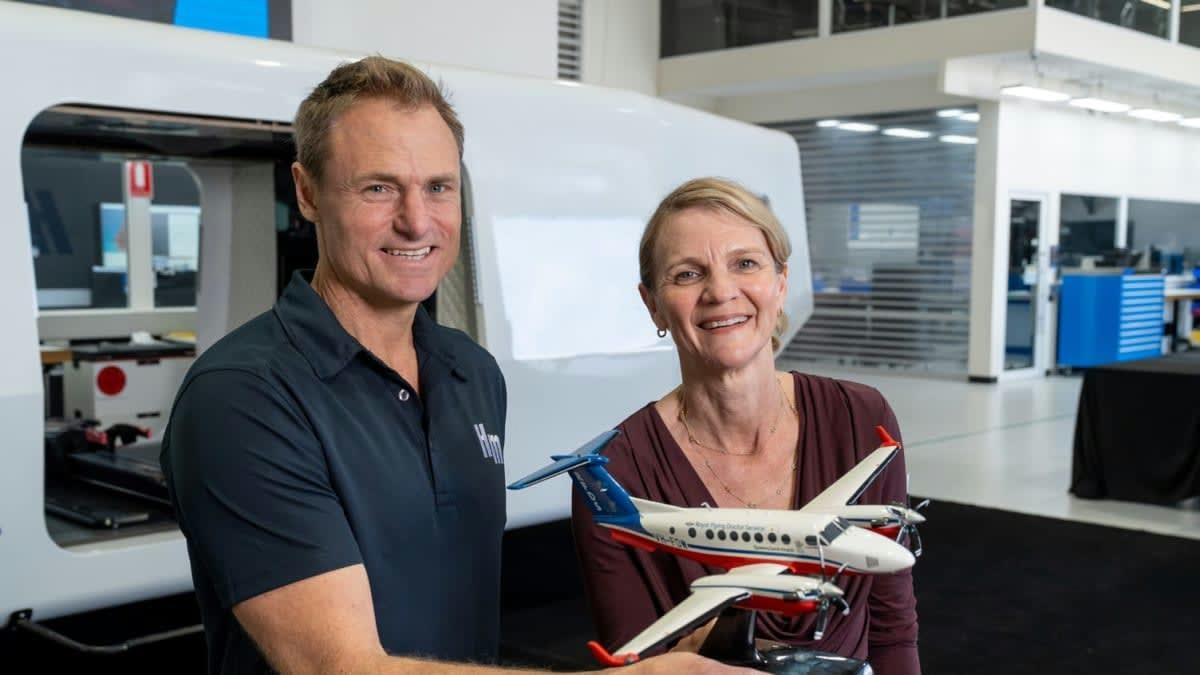
Australia’s RFDS Queensland Section Orders Six King Air 260Cs
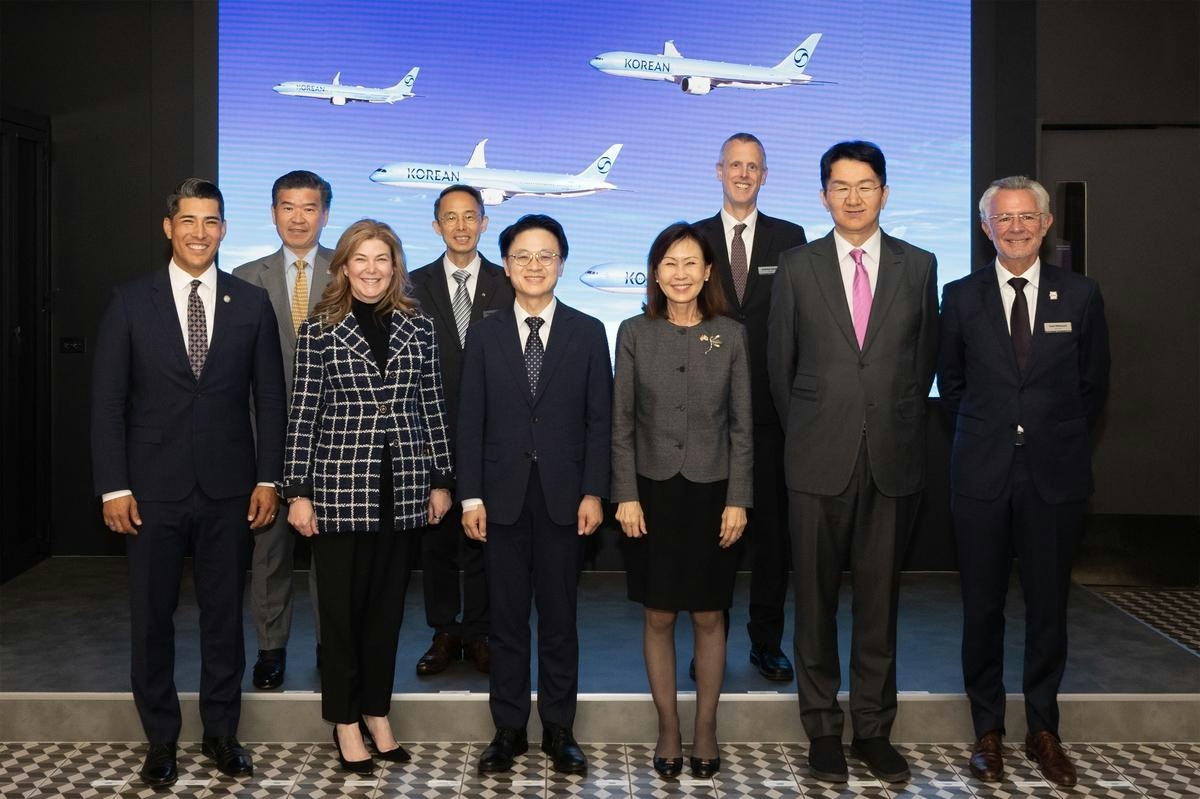
Korean Air Finalizes Order for 103 Boeing Jets and Engines
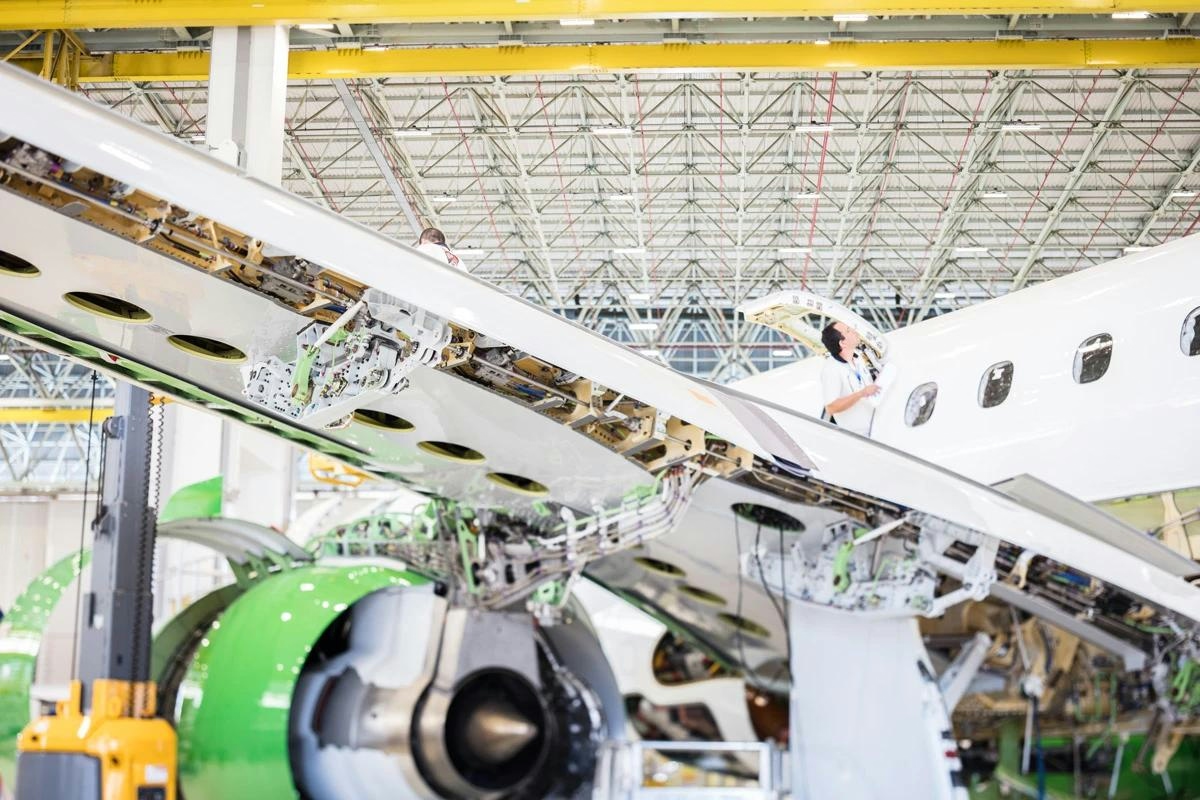
Embraer E195-E2 Features Distinctive Engine Placement Among Regional Jets
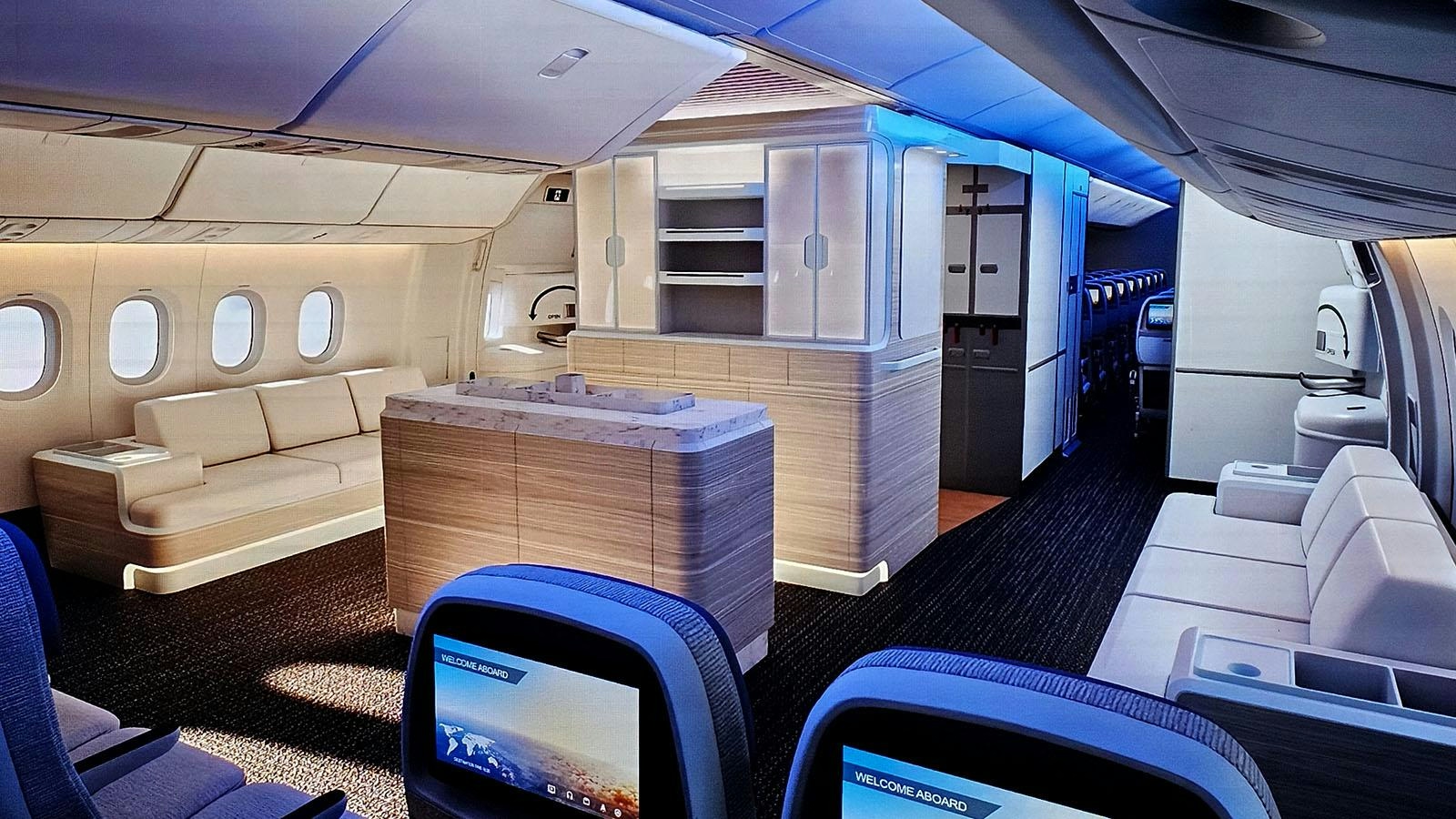
What Passengers Can Expect on Boeing’s New 777X Jet
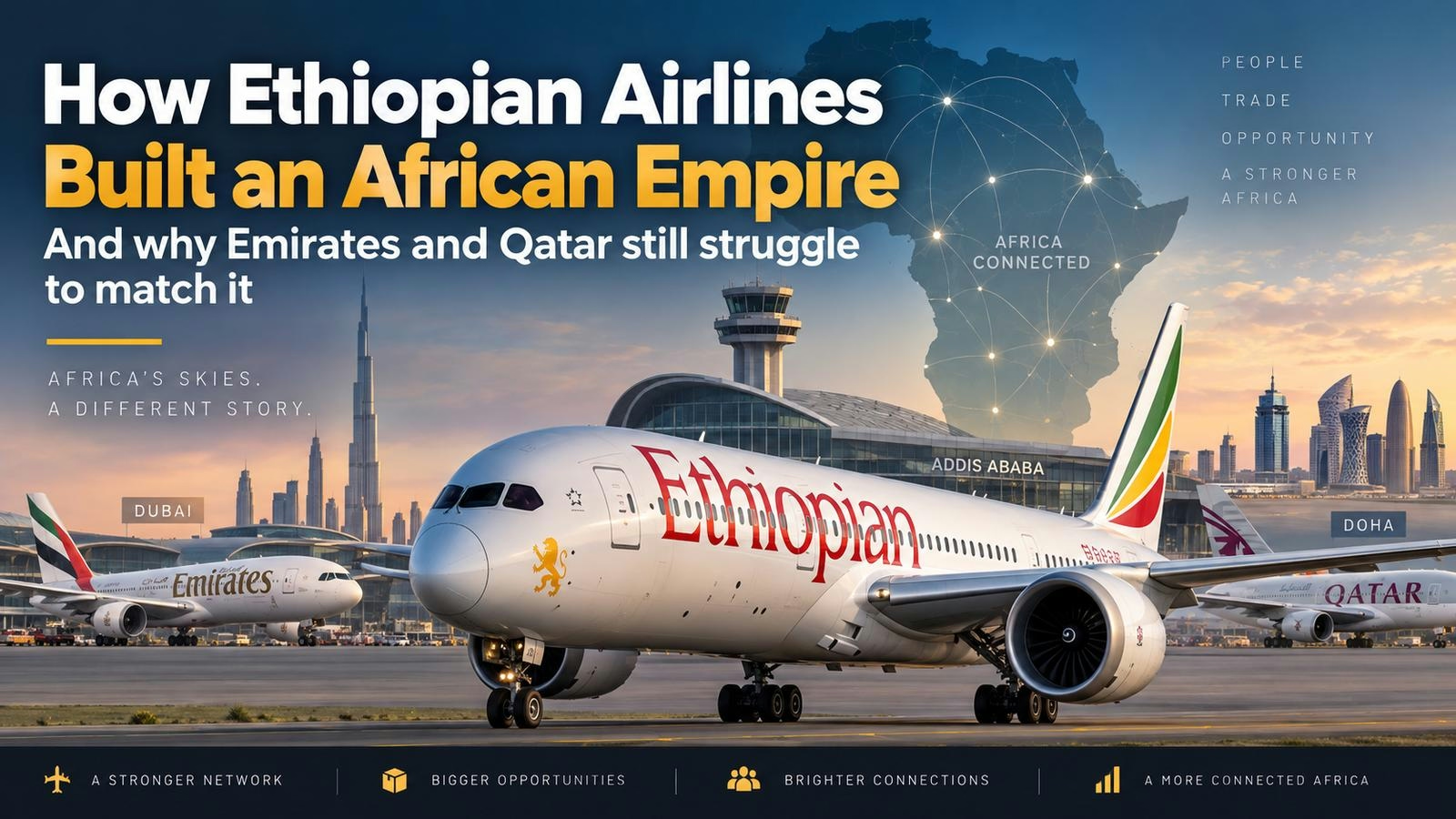
How Ethiopian Airlines Became Africa’s Leading Carrier Amid Gulf Competition

Joby Aviation Extends Autonomous Flight Capabilities with Cross-Country Tour
