
Orquestre insights de IA em ações

Tendências
Categories
Malaysia Airlines Considers C919 for 2035 Fleet Plans
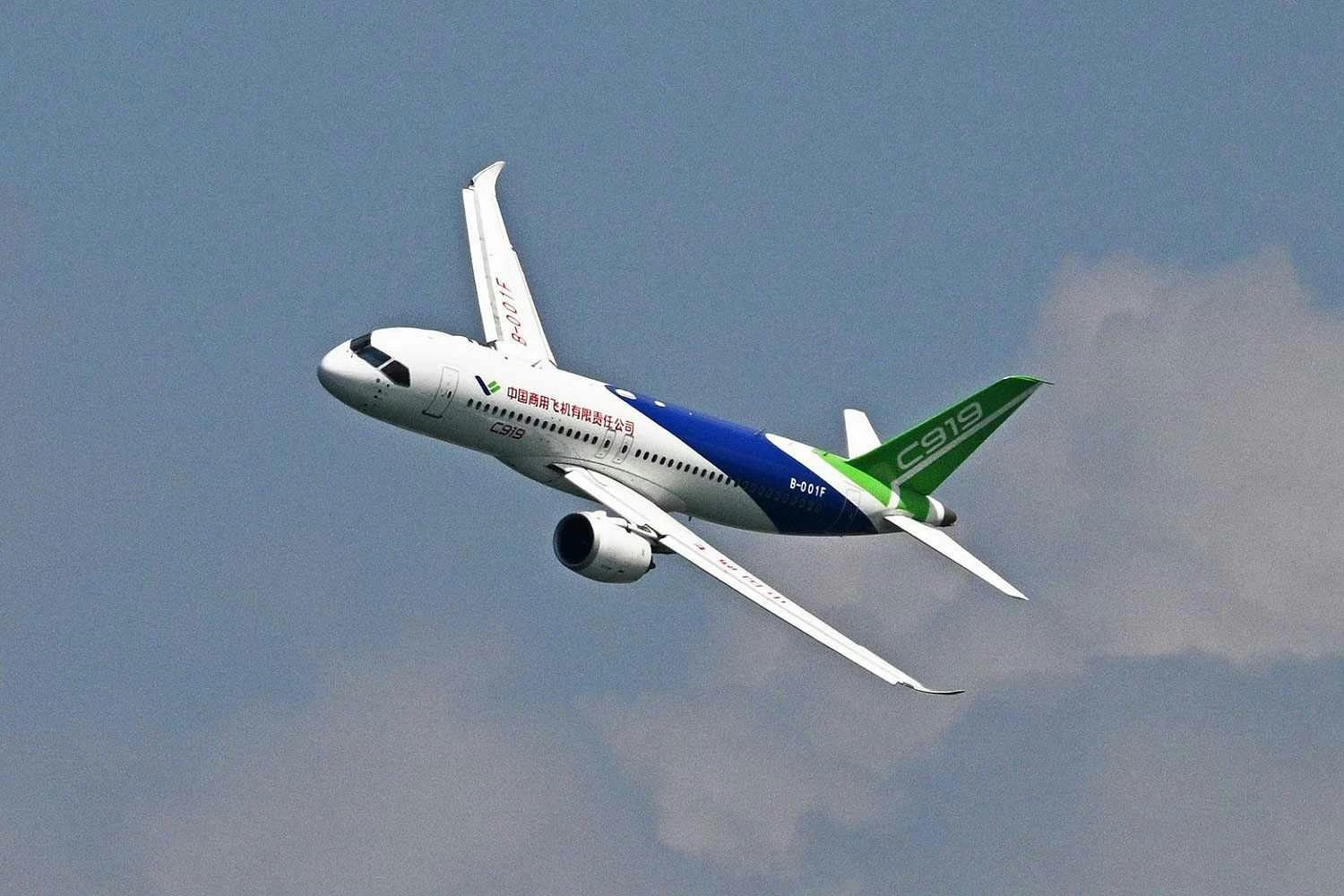
Malaysia Airlines Evaluates COMAC C919 for 2035 Fleet Renewal
Malaysia Airlines is exploring the possibility of incorporating the Chinese-manufactured COMAC C919 into its narrowbody fleet renewal plans slated for the mid-2030s. However, airline executives stress that the aircraft must first secure certification from Western regulatory bodies before any formal order can be considered.
Bryan Foong, chief executive of the airline business at Malaysia Aviation Group, explained that the C919 was not available in time to be included in the current fleet renewal program, which already defines narrowbody requirements through approximately 2035. “It is a credible fleet option, but it needs a bit more maturity,” Foong remarked. “At that time, the C919 was not ready, it missed the window.” He further emphasized that certification by the European Union Aviation Safety Agency (EASA), and ideally the US Federal Aviation Administration (FAA), would be essential for the aircraft’s acceptance in Malaysia and other international markets served by the airline.
Foong also highlighted that Malaysia Airlines would conduct a thorough evaluation of the C919’s operational performance, economic viability, and the manufacturer’s capacity to provide comprehensive maintenance, repair, and overhaul (MRO) support throughout Southeast Asia. While the airline maintains regular communication with COMAC, which has established a representative office in Singapore, there are currently no active discussions regarding orders. Notably, COMAC’s smaller ARJ21 regional jet is already in service with carriers in Vietnam, Laos, and Cambodia.
Fleet Strategy Amid Industry Challenges and Regional Competition
Malaysia Airlines’ fleet planning occurs against a backdrop of significant industry challenges and evolving market dynamics. The global supply chain disruptions experienced in 2024, which affected Malaysia Airlines alongside other carriers, have underscored the critical importance of dependable aircraft delivery schedules and robust after-sales support. Looking toward 2035, the airline faces intensifying competition from both regional and international players. For instance, Royal Jordanian Airlines is expanding its fleet with Airbus A330 freighters, while Turkish Airlines is growing its third-party MRO business. Within Southeast Asia, competitors such as AirAsia are actively renewing their fleets and retiring older Airbus A320 models, reflecting a broader regional drive toward modernization and operational efficiency.
For its current narrowbody renewal, Malaysia Airlines has committed to Boeing 737 MAX aircraft. According to ch-aviation data, the airline has firm commitments for twelve Boeing 737-10s and twenty-five additional Boeing 737-8s. The existing fleet comprises 94 aircraft, including three A330-200s, three A330-200 freighters, thirteen A330-300s, ten A330-900neos, seven A350-900s, eighteen Boeing 737-8s, and forty Boeing 737-800s.
As Malaysia Airlines continues to assess future fleet options, the maturity of emerging aircraft models, regulatory approvals, and the resilience of global supply chains will remain pivotal factors shaping its long-term strategic direction.

Hong Kong's Five-Year Plan Includes Andrew Fan's Aircraft Parts Processing Hub Proposal

ACIA Aero Leasing Delivers ATR72-600 to Air Nostrum

RTX Appoints Jill Albertelli as Head of Pratt & Whitney

TAT Technologies Joins Beyond Aero Hydrogen Aircraft Program

AURAK Study Highlights Barriers to Air Taxi Adoption in Emerging Economies

Xiamen Air Selects Altitude for 787 Maintenance at Heathrow

Etihad and Swissport Extend Global Partnership

Sepehran Airlines B737 Returns to Mashhad After Tyre and Engine Issues

Etihad Deploys Widebody Fleet to Meet Strong Demand

Korean Air Finalizes $36.2 Billion Deal with Boeing
